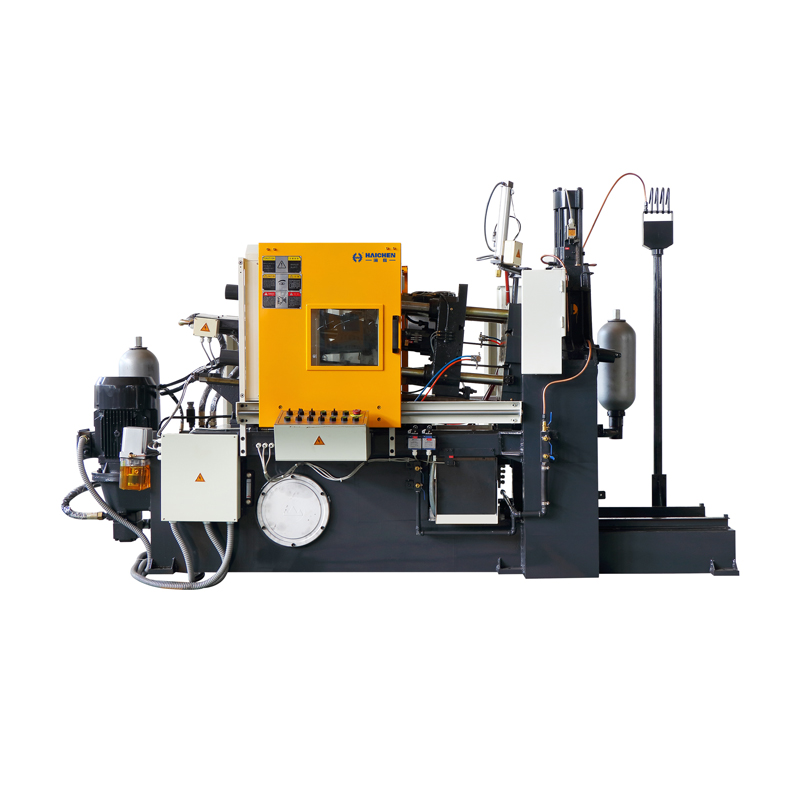
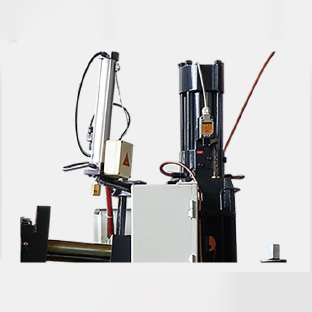
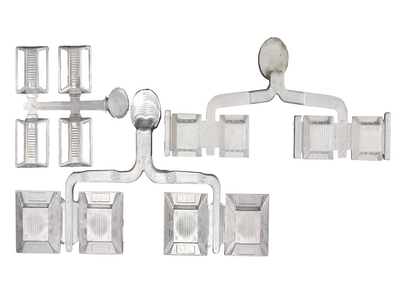
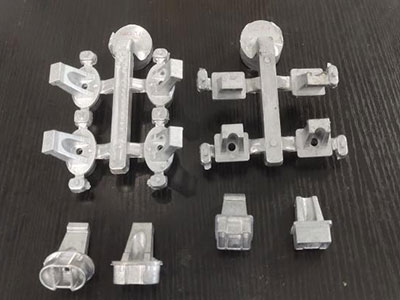
Hot Chamber Die Casting Machine HCD-H Series

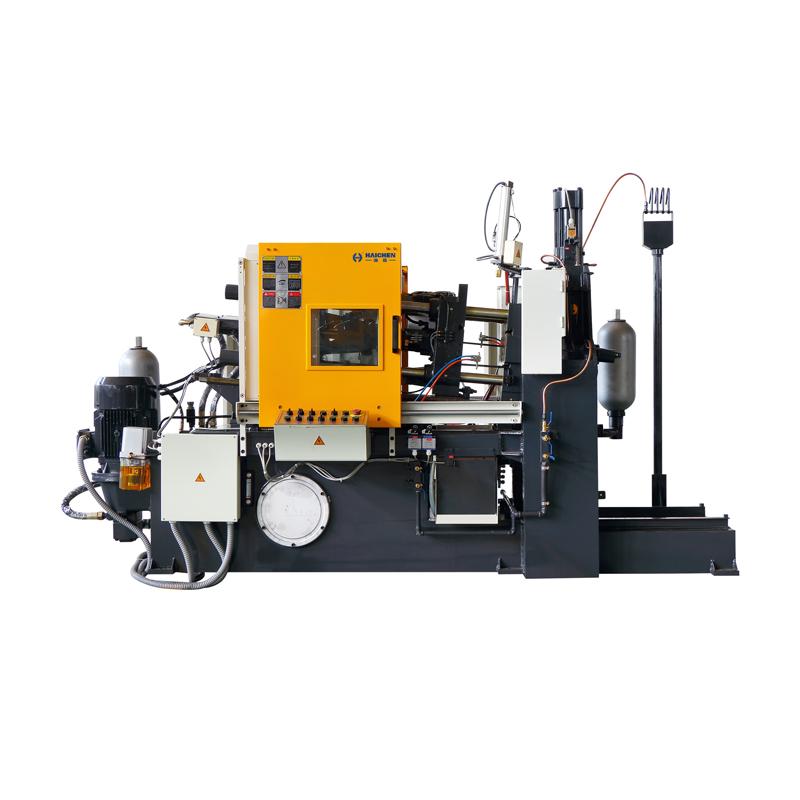
We are one of a professional Hot chamber die casting machine manufacturers, the design of the Haichen H series horizontal hot chamber die-casting machine is mainly  for metals with low melting points, such as zinc and lead alloys.

The hot chamber die casting machine will keep the chamber inside the gooseneck,like the injection runner. The gooseneck and chamber will be submerged in the melted high-temperature Zinc liquid,waiting for injection.

Hot chamber die casting machines normally will not need very higher clamping force. So the tonnage of machine will not higher.Haichen hot chamber die casting machine with range from 15 ton to 280 ton.

Distinguishing between a hot chamber die casting machine and a cold chamber die casting machine depends on whether the chamber is in the metal alloy or not.As the melting temperature of zinc and lead alloys is lower and aluminum,so the chamber die casting can be kept inside the furnace.In this case the chamber die casting will also be heated and keep the higher temperature,so we call it is hot chamber die casting machine.

The hot chamber kept inside the melt alloys,so no need to feed,the machine just need to do injection directly without feed the alloys into chamber.

    Get A Quote

    Apple Advanced Hydraulic Component From Europe And America

    Hydraulic Component, on our hot chamber die casting machine, we choose Vickers, Yuken… It will be easy for users to find the same one in the local market so that the maintenance will be more convinced.

    Adjustment Structure With Celerity & Equation

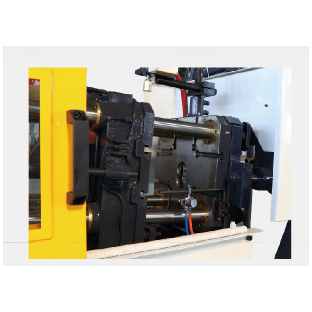
    Mold adjustment is easy to operate. The users can adjust the mold to thin or thick on the machine.

    Optimized Design For Five Point Double Toggle Link Mechanism

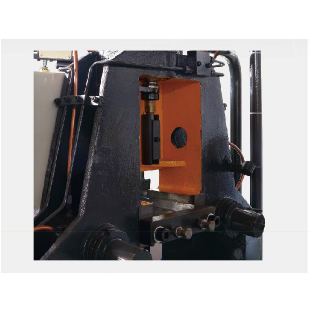
    Structure Of Injection Unit

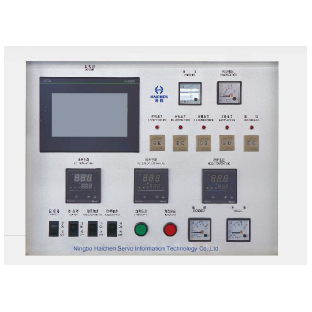
    Imported High-Class Industrial Controller Screen Display Test-Control System

    Up-To-Date Die Casting Technology High-Speed Press-Injection Device

    DIE CASTING MACHINE CONFIGURATION 

    MODELHOT CHAMBER
    ControlMITSUBISHI
    Oil pumpvickers/sannishi
    Directional valvevickers/sannishi
    PQ valveHNC/YUKEN
    Position SwitchSCHNEIDER
    SealsBUSAK+SHAMBAN/VALQUA
    Auto  mold thickness adjustmentYES
    Automatic Sprayer UnitOptional
    Automatic ExtractorOptional
    Automatic LadlerOptional
    NINGBO HAICHEN MACHINERY CO., LTD
    All above technical parameters are subject to change without prior notice.

    HOT CHAMBER DIE CASTING MACHINE CONFIGURATION 

    MOLD CLOSING UNITS
    Mold Closing Low-Voltage Protection FunctionS
    Oil Pressure Motor Adjusting Mechanism Of Gear SystemS
    Multi-Time And Multi-Stroke Oil Pressure Lift-Out SettingS
    Lift-Out Holding Time Setting FunctionS
    Draw -Back Holding Time Setting FunctionS
    Core-Drawing Control Of Two Groups Of Before Forming And After FormingS
    Automatic Toggle Lubrication System With Low-Pressure, Low Oil Quantity Alarm FunctionS
    Alarm Function For Lubrication System Wire BreakingS
    INJECTION SYSTEM UNITS
    Two Step Press-Injection Control SystemS
    Nozzle heaterS
    Goose neck heaterS
    Inclined clamping unitS
    HYDRAULIC SYSTEM
    Pressure Meters Indication Of  PumpsS
    Pressure Meter Indication Of Press Injection CylinderS
    Pressure Meter Indication Of Increased PressureS
     Pressure Meter Indication Of Quick PressureS
    Oil Filter Of Hydraulic PumpS
    Choke Alarm For Oil Sucking And Oil FilterS
    Over-Pressure Alarm Of SystemS
     CONTROL SYSTEM
    The Forming Cycle Time And Finished Products CalculationS
    Zero Resetting Of Finished Products CalculationS
    Abnormal Condition Warn Lighting And Buzzer AlarmS
    Monitoring Of Input/Output ConditionS
    Safe Device For Emergency StopS
    Standard Configuration: S 

    HOT CHAMBER DIE CASTING MACHINE CONFIGURATION 

    MOLD CLOSING UNITS
    Automatic Taking MachineO
    Automatic Mist ProjectorO
    Electronic Scaling For Lift-Out MotionO
    Lift-Out Function During Mold OpenO
    Simultaneous Core Drawing Function Of Mold OpenO
    INJECTION SYSTEM UNITS
    Automatic Lubrication System Of MonkeyO
    Slow Press-Injection Scaling Control SystemO
    Automatic Soup FeederO
    Quick Press, Pressure Increasing Scaling Control SystemO
    Electric-injection furnaceO
    HYDRAULIC SYSTEM
    Returned Oil FilterO
    Quick Press-Injection, Pressure Increasing Control SystemO
    HCD16-H16
    Machine Die-Locking Force – Metric (Metric Tons)
    230*220 MM
    Tie Bar Distance
    0.21 KG
    Dosage of fluid metal per shot(Zinc)
    220-150 mm
    Max-Min Die thickness
    HCD30-H30
    Machine Die-Locking Force – Metric (Metric Tons)
    240*240 MM
    Tie Bar Distance
    0.6 KG
    Dosage of fluid metal per shot(Zinc)
    320-120 mm
    Max-Min Die thickness
    HCD38-H38
    Machine Die-Locking Force – Metric (Metric Tons)
    270*270 MM
    Tie Bar Distance
    1.1 KG
    Dosage of fluid metal per shot(Zinc)
    320-120 mm
    Max-Min Die thickness
    HCD50-H50
    Machine Die-Locking Force – Metric (Metric Tons)
    290*290 MM
    Tie Bar Distance
    1.1 KG
    Dosage of fluid metal per shot(Zinc)
    320-120 mm
    Max-Min Die thickness
    HCD58-H58
    Machine Die-Locking Force – Metric (Metric Tons)
    311*311 MM
    Tie Bar Distance
    1.3 KG
    Dosage of fluid metal per shot(Zinc)
    320-120 mm
    Max-Min Die thickness
    HCD68-H68
    Machine Die-Locking Force – Metric (Metric Tons)
    320*320 MM
    Tie Bar Distance
    1.5 KG
    Dosage of fluid metal per shot(Zinc)
    350-150 mm
    Max-Min Die thickness
    HCD90-H90
    Machine Die-Locking Force – Metric (Metric Tons)
    360*360 MM
    Tie Bar Distance
    1.6 KG
    Dosage of fluid metal per shot(Zinc)
    360-120 mm
    Max/Min Die thickness
    HCD130-H130
    Machine Die-Locking Force – Metric (Metric Tons)
    430*430 MM
    Tie Bar Distance
    2.2/2.6 KG
    Dosage of fluid metal per shot(Zinc)
    500-250 mm
    Max-Min Die thickness
    HCD180-H180
    Machine Die-Locking Force – Metric (Metric Tons)
    480*480 MM
    Tie Bar Distance
    2.5/3.5 KG
    Dosage of fluid metal per shot(Zinc)
    580-200 mm
    Max-Min Die thickness

    RULES OF GUARANTEE PERIOD FOR DIE CASTING MACHINE

    WELCOME TO USE    “HAICHEN”  DIE CASTING MACHINE,HERE UNDER IS THE
    RULES OF GUARANTEE PERIOD.
    1. THE STARTING DATE FOR GUARANTEE PERIOD WILL BE CALCULATED FROM THE DATE THE
    MACHINE IS SHIPPED FROM HAICHEN
    2. CUSTOMER CAN ENJOY THE FOLLOWING GUARANTEE SERVICE DURING THE GUARANTEE
    PERIOD ONLY UNDER THE CONDITION THAT THEY OPERATE HAICHEN MACHINE CORRECTLY
    WITH RIGHT MATERIAL AND NORMAL OPERATION.
    3. THE CATEGORY AND INSTRUCTION OF THE MAIN GUARANTEE ITEMS (REFER TO THE
    FOLLOWING
    CLOD CHAMBER DIE CASTING MACHINE
    1CATING CYCLINDER2 MONTHES
    2PLATEN12 MONTHES
    3TIE BAR12 MONTHES
    4OTHER MECHANICAL PARTS12 MONTHES
    5HYDRAULIC COMPONENT12 MONTHES
    6ELECTRICAL ELEMENT12 MONTHES
    HOT CHAMBER DIE CASTING MACHINE
    1NOZZLE2 MONTHES
    2PLUNGER2 MONTHES
    3PLATEN12 MONTHES
    4TIE BAR12 MONTHES
    5OTHER MECHANICAL PARTS12 MONTHES
    6HYDRAULIC COMPONENT12 MONTHES
    7ELECTRICAL ELEMENT(Except heating band)12 MONTHES
    8GOOSENECK2 MONTHES
    9CRUCIBLE2 MONTHES
    NOTE :FOLLWING POINTS ARE NOT INCLUDED DURING WARRANTY TERMS
    1 、  MACHINE IS DAMAGED BY INCORRECT OPERATION;
    2 、  THE PLATEN AND TIE BAR ARE DAMAGED DUE TO THE UNPARALLEL MOLD MOUNTED
    ON THE MACHINE OR NET&BOLT OF TIE BAR IS REMOVED WITHOUT AUTHORIZATION;
    3 、  THE CONTACTION AREA BETWEEN MOLD AND PLATEN IS LESS THAN SPECIFIED
    INSTRUCTION IN USER MANUAL OR IRREGULAR PRACTICES OF BOLT CAUSE THE PLATEN
    TO BE DAMAGED;
    4 、  THE HYDRAULIC PARTS GOT DAMAGED AFTER USING POOR QUALITY HYDRAULIC OIL;
    5 、  LACK OF LUBRICATION OR DAILY MAINTENANCE, DURING THE MACHINE RUNNING;

    About Hot chamber die casting machine

    To the die casting machine,hot chamber is usefully.About hot chamber die casting machine,we also call it Zinc die-casting machine or Lead die-casting machine.

    Hot chamber die casting machine is mainly used for zinc and other low-melting point alloys

    Which do not easily corrode the metal pot, cylinder and plunger.

    The hot chamber die casting machine is used for both zinc and lead production.

    It is different with cold chamber die casting machine:

    • The hot chamber die casting machine’s chamber keep inside the furnace,and heated together with alloys.So the chamber is always keep higher temperature,that’s way we call this kinds of die casting machine,hot chamber.
    • Compear with cold chamber,hot chamber no need to feed the materials,as the melted materials will flow into chamber automaticly.

    As the chamber keep inside the furnace,so we can not use higher temprature to 600 degree.That why the hot chamber also use zinc and lead alloy which with lower melting temperature.

    About hot chamber die casting machine,Haichen has more than 20 year experiance.We will share here in further about hot chamber die casting machine.

    About Hot chamber die casting machine

    Hot chamber die casting is a highly practical manufacturing technique for low melting point metals such as magnesium, lead and zinc.

    This high-pressure die casting method offers manufacturers many benefits such as high throughput, low maintenance, and less waste.

    Due to its diverse material compatibility, the hot chamber die casting process has a wide range of applications.

    Some of its applications are in the automotive, electronics, aerospace and other industries.

    In this article, we will explore the ins and outs of hot chamber die casting. Our discussion will focus on its processes, components, advantages and disadvantages, and industrial applications.

    Hot chamber die casting machine is mainly used for zinc and other low-melting point alloys. Which do not easily corrode the metal pot, cylinder and plunger. The hot chamber die casting machine is used for both our magnesium and zinc production.

    Hot chamber casting is a die casting method

    Suitable for alloys that have low melting points such as lead, tin, zinc, and a few magnesium alloys

    With this method, molten metal is automatically supplied to the die cast machine via a “gooseneck

    That is submerged in furnace full of molten metal.

    At the beginning of the cycle, a piston is retracted, allowing the gooseneck to fill with molten metal.

    The piston is activated and metal is plunged through the gooseneck and into the die.

    After the metal has solidified, the plunger is withdrawn, the die opens, and the casting part is ejected.

    The injection mechanism of a hot chamber machine is immersed in a molten metal bath of a metal holding furnace. The furnace is attached to the machine by a metal feeding system called the gooseneck.As the injection cylinder plunger rises, a port in the injection cylinder opens allowing the molten metal to fill the cylinder.

    As the plunger moves downward, it seals the port and forces metal to fill the cavity through the gooseneck and nozzle to the die cavity.After the metal has solidified in the cavity, the plunger is withdrawn. The die opens and the casting ejected.

    Our Haichen hot chamber machines are characterized by exceptional cost efficiency and a pioneering safety design concept.

    Components of a hot chamber die casting machine

    Gooseneck:

    This is an important component unique to hot chamber depositing units. It is submerged in pools of molten metal.

    So it must have high thermal resistance. Therefore, it is ideal to manufacture it with high-quality cast or forged steel.

    Most goosenecks are replaceable, since their mass still drops for a long time under high-intensity working conditions.

    In this case the quality of the gooseneck will be very important.

    Nozzle:

    The nozzle regulates the flow of molten metal through the gooseneck into the mold. It acts as a gateway for the metal to enter the mold in a smooth, well-oriented manner. In addition, at the end of the casting cycle, the additional metal raw material is returned to the furnace through the nozzle.

    Hydraulic Plunger/Piston:

    This component transports the molten metal into the die and maintains it at high pressure. The plunger traverses up and down through the hot chamber.

    Die:

    It contains the cavity and ejector pins to eject the part. Moreover, it might house additional components like cores, depending on the part geometry.

    The process of hot chamber casting

    Here is the step-by-step process of hot chamber casting: First, the metal or metal alloy is placed on the pot inside the furnace. A burner is then used to apply enough heat to the furnace to melt the metal. After that, the machine lifts the piston or plunger so that the molten metal can enter the cylinder through the air intake. Next, it pushes the plunger down so that the molten metal can reach the nozzle through the cavity. Continue to apply pressure to the piston/plunger until the mold cavity is filled with liquid metal. After that, wait for the liquid metal to solidify in the cavity. Finally, the solid part is ejected using a thimble and post-processed.

    How Does a hot chamber die machine work

    The hot chamber die casting machine work with the following 5 steps:

    1. Melt the alloy inside the furnace
    2. The alloy liquid running into the chamber 
    3. Injecte the liquid through the gooseneck to mold
    4. Cooling down the alloy
    5. take out the products

    -Melting of alloy metals

    Low melting point alloys such as Lead and Zinc are melted in a mechanically built-in furnace, which can be powered by electricity or fuel gas to provide the required heat.

    Metal solution casting process: Hot chamber machines have an alloying furnace as part of the machine itself.

    As the plunger of the injection cylinder rises, a port in the cylinder opens and the molten metal fills the hot chamber. The plunger then moves to the cover mould and 700psi to 5000psi pressure is applied to hold the casting in place.

    Once the metal has solidified in the mould cavity, the plunger retracts and the casting is ejected.

    Hot chamber die casting is a simplified and cost-saving means of production and is ideal for the manufacture of sink faucets, door and window fittings, furniture connectors toys, gears, vehicle parts, and other consumer, commercial and industrial products.

    -The liquid alloy running into the chamber

    The liquid alloy will be running automatically into the chamber, as the chamber is kept inside of the furnace.

    This is the reason we call the machine is hot chamber die casting machine.

    -Inject the liquid through the gooseneck

    After the alloy runs into the chamber, the piston will work.

    The hydraulic system will support high pressure to the piston, then the piston will go through the chamber and push the liquid alloy go forwarder.

    The alloy will follow the way inside the gooseneck, with high pressure.

    After it leaves gooseneck, the alloy will go into the mould(die).

    -Cooling down the alloy

    After the alloy was injected into the mould, we just waited some seconds to cool down.

    As the temperature decreases, the liquid alloy will solidify into a solid state.

    -Take out the products

    When the alloy solidify, the hot chamber die casting machine will eject the products down from the mould.

    Die casting machine principle of operation:

    The clamping mechanism drives die casting mould to close, the mould locking, to ensure that in the process of ejection filling mould parting surface will not be expanded。

    The ejection mechanism according to the prescribed speed pushes the compaction within the metal liquid, flow through the mould inside the sprue and gate, filling the mould cavity。

    The hydraulic system to maintain a certain amount of pressure is transmitted to the solidification of the metal liquid, die casting, die casting shape, and the ejection head to return to the reset.

    After cooling the machine pushes to open the mould, and the finished product is taken out manually or by the picker, into the next cycle of production.

    Haichen die casting machine’s story

    Haichen was established in 2005, at the beginning of the company, we were committed to providing customers with complete solutions for the production of metal products in die casting machines.

    At first, we focus on the independent design of die-casting machine and production line quality control, over the years we have used each generation of customer experience for uninterrupted analysis, continuous improvement, and enhancement of our haichen die-casting machine performance.

    In the latest exploration, we work with customers to develop and explore the potential of die-casting machines, has been able to complete according to the customer’s ideal, from mould design to machine configuration one-stop solution for everyone’s production needs.

    Eco-friendly production

    Haichen new generation of die-casting machine in the realization of multi-function use, automation to strengthen the stable operation at the same time pay more attention to environmental protection and energy saving, equipped with precise control of the servo system, the more intelligent PLC computer is easy to operate, the whole die-casting machine production process visualization greatly strengthened, can provide your business plan to provide the greatest production assistance.

    We offer on-line and engineer support, and our die casting machines are delivered with sufficient wear parts to ensure that our customers’ short-term usage needs are met.

    Haichen’s die casting machines are designed to help you streamline your production process and achieve your goals. With fast delivery times, comprehensive equipment solutions, and reliable customer support, we’re confident we can help take your business to the next level. Contact us today to learn more about our products and services, and see how we can help transform your manufacturing process.

    What materials are used in hot chamber die casting machine?

    Hot chamber die casting machine is mainly used for zinc, lead, tin, copper and other low melting point alloys.

    Alloy Zine and lead will be use more and more on the hot chamber die casting machine.

    Zinc

    Zinc is the most popular metal when it comes to hot chamber pressure die casting. The zinc casting boasts high strength and hardness along with good wear properties. Its alloys melt at a relatively low temperature of around 420oC, making it compatible with this process.

    It also possesses good electrical and thermal conductivity, making it an exceptional choice for components containing electronic circuitry. Moreover, it has high fluidity in molten form, which improves its dimensional tolerance and allows for the manufacturing of complex geometric features like thin walls.

    Common zinc die casting alloys include:

    Zamak 3: A general-purpose zinc alloy that is easy to cast and offers excellent dimensional stability. In North America, more than two thirds of zinc die castings use Zamak 3. Example uses include ceiling fans and plumbing components.

    Zamak 2: A slightly stronger and more expensive alloy with added copper content. It is often used to produce tooling for plastic injection molding.

    Zamak 5: A zinc alloy close in composition to Zamak 3 but with greater tensile strength and lower ductility. Popular for products like automotive parts and wheel balancing weights.

    Finally, it is a cheap raw material with good recycle ability. Overall, it is a great option for hot chamber die casting machine.

    Lead and tin

    High density; extremely close dimensional accuracy; used for special forms of corrosion resistance. Such alloys are not used in foodservice applications for public health reasons. Type metal, an alloy of lead, tin and antimony (with sometimes traces of copper) is used for casting hand-set type in letterpress printing and hot foil blocking.

    Choosing the right metal for your die cast components can determine the overall quality and durability of your component.

    Learn more about the most commonly used metals for hot chamber die casting machine and see which metal is best for your fabrication needs.

    Becasue the alloy Zine and lead is more suit for the hot chamber die casting,so this two materials are increasingly being used on hot chamber die casting machines.

    What is the difference between hot and cold chamber die casting machines?

    We are often asked about the difference between a Hot chamber and a Cold chamber in die-casting machines. It is easy to separate the hot chamber or the cold chamber die casting machine.

    The difference between Hot chamber die casting machines and Cold chamber die casting machines is whether the chamber is maintained at a high temperature in the furnace for heating or not: The chamber of a Hot chamber die casting machine, is heated by the furnace and keeps hot; The chamber of cold chamber die casting machine, is not heating by furnace, as it’s kept outside of furnace.

    What is the difference besides whether the chamber is heated by high temperature or not? We can check the following 4 points:

    • The materials used
    • The die-casting method
    • Metal Temperature
    • Application areas

    Let’s take a look at the difference between hot and cold chamber die casting machines in details.

    The materials used

    Cold chamber die casting machine is best suited for metals with higher melting points, such as aluminum, magnesium, and copper. A hot chamber die casting machine is best suited for metals with low melting points, such as zinc and lead alloys.

    The die-casting method

    The main difference between the two methods is that in the hot chamber, hot chamber die casting is a method of internal processing of metal, the metal is melted inside the pot of the machine’s furnace. In the cold chamber, the metal is melted in a furnace separate from the machine. The metal is melted/heated in a separate furnace and then transferred to the casting chamber. The molten metal is scooped into the casting machine and then shot into the mold cavity through the hydraulic plunger.

    Metal Temperature

    Hot chamber die casting machine: Metal is placed at high temperatures and remains molten between cycles. And the hot chamber equipment processes low-temperature non-ferrous metal alloys. The maximum temperature of alloys that can be safely die-cast in hot cell equipment is approximately 450°C, which includes alloys of zinc,  lead, etc.

    Cold chamber die casting machine: Instead, cold chamber equipment deals with high-temperature non-ferrous metal alloys. The metal is injected when needed and solidified in an unheated chamber after each cycle.

    Application areas

    Hot chamber die casting machines are suitable for the mass production of small, simple parts with thin walls and complex geometry. Such as low melting point alloys, such as zinc and lead. Hot chamber die casting single piece mold cost is lower production cycle is shorter. Cold chamber die casting machine is best used for low- to medium-volume larger, thicker castings alloys with higher melting temperatures, such as aluminum, magnesium, and copper.

    This is the main 5 difference between hot chamber and cold chamber die casting machines.

    Company:

    Ningbo Haichen Servo Information Technology CO., Ltd.

    Address:

    Add: BAIZHANG EAST ROAD, NINGBO CHINA

    Mobile/WhatsApp:
    Tel:

    +86-574-87762980

    Fax:
    +86-574-87768570

    GET In Touch

    Please feel free to contact us if you have any needs.

      Get A Quote