
Maintenance of the machine is critical to ensuring their longevity, efficiency, and safety.
Safety is critical to production operations, and the plastic injection molding machine process comes with its own set of hazards and safety concerns. High temperatures, high-pressure hydraulic circuits, and harmful fumes all pose risks to operators, and the popularity of injection molding provides many opportunities for accidents. There are precautions to prevent safety incidents from happening, but they all involve education about how plastics work and where the hazards lie in the process.
- Before using the machine
- While using the machine
- Maintenance and cleaning of barrel screw
- Nozzle, Hydraulic oil replacement, and Replacing the fuel tank air filter
- Cleaning the oil suction filter
- Check the hose circuit
- Cleaning the transparent window on the protective door
- Physical and chemical properties and injection molding
- Selection and maintenance of hydraulic oil and lubricating oil
To ensure operator safety, maximize machine efficiency, and extend the machine’s service life, please pay attention to the following items when using the machine:
Before using the machine:
Ensure all guards are fitted, secure, and functional. Do not operate if guards are missing or faulty.
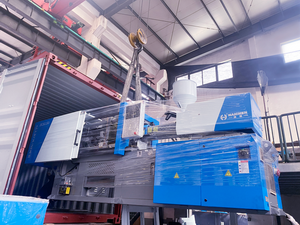
Please familiarize yourself with the machine’s performance and operating procedures before starting it.
Only trained operators who are familiar with the structure and performance of the injection molding machine should operate it.
Ensure all guards are fitted, secure, and functional. Do not operate if guards are missing or faulty.
Check workspaces and walkways to ensure no slip/trip hazards are present.
Verify that the safety device is in effect before starting the machine.
While using the machine:
Pay attention to machine lubrication and strictly follow the operation requirements. Running the machine without sufficient oil will cause severe wear on the parts, particularly the lock.
Do not touch the moving, heating, and live parts of the machine while it is running.
Except for mold installation, do not operate the machine with two people simultaneously.
When there is no material in the screw or barrel, avoid using high screw speed (preferably below 30 rpm).
Increase the screw speed to the required value only after the screw groove is filled with the raw material to prevent damage to the screw.
Wear heat-resistant personal protective equipment (PPE) when necessary to prevent burns from contact with hot surfaces or splashes of thermoplastics and gases.
Heat the barrel from room temperature to the desired temperature for about thirty minutes.
If there is residual cold material in the barrel, keep it warm for an additional ten minutes before starting the screw for feeding to ensure that the residual material is fully melted and avoid damaging the screw. The pre-molding motor should not be started until the temperature of each section of the barrel reaches the temperature set by the molding process to avoid machine damage.
Gradually open the valve of the cooler and adjust the water intake during use to ensure that the oil temperature remains below 55°C. The cooling water flow rate should be 75 liters/min or more.
Pay attention to machine lubrication and strictly follow the operation requirements. Running the machine without sufficient oil will cause severe wear on the parts, particularly the lock.
Lack of oil can cause the connecting rod and steel sleeve of the die mechanism to become jammed, preventing work from being performed.
When disassembling and assembling heating and plasticizing parts such as barrels and screws, coat the threaded parts with heat-resistant lubricant (red grease molybdenum disulfide) to prevent them from getting stuck.
The parallelism error of the two planes of the mold installation should be within 0.24 mm when the mold clamping force is zero.
Avoid keeping the mold clamped for a long time (more than ten minutes) to prevent damage to the connecting rod lock and steel sleeve if there is a power failure.
Check the electric heating ring frequently and tighten it if it becomes loose due to heating expansion.
Ensure good contact between the plug of the thermocouple and the measuring hole end of the barrel.
Carefully connect the ground wire and regularly check the insulation of each electrical component to prevent electric shock.
When using the machine for the first time or after a long period of non-use, let the oil pump run idle for a few minutes after starting it.
The above is in the use of injection molding machine before and in the use of the problems to be noted and precautions, if there is a problem you can always come to consult us.
Maintenance and cleaning of barrel screw
Typically, the color changes after 20-30 injections before a decision is made to clean. Depending on the degree of contamination, partial or full cleaning may be performed.
Partial cleaning and handling of maintenance of the machine
After the screw has gone through the self-cleaning process, the screw head and check ring behind the nozzle can still be contaminated with particles and residual material. These contaminants may cause uniform staining in the same location on the molded part, which is caused by colored residue flowing along the nozzle channel or gate in the mold. If the residue is not sticky, cleaning the seals, nozzle holes, and sealing surfaces of the barrel head at the same time as inspecting the screw head is usually sufficient.
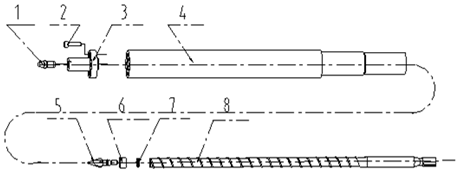
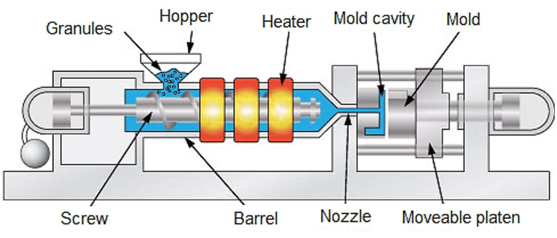
- nozzle; 2. (Grade 12.9) high-strength hexagonal screw; 3. front machine barrel (nozzle flange); 4. machine barrel; 5. screw rod head; 6. check ring; 7. thrust ring; 8. screw rod
CAUTION: Always wear a protective face shield and eyeglasses when performing maintenance work, especially on heated screw barrels.
Cleaning step:
Turn off the barrel heating system and disconnect the power supply;
After heating for about 15 minutes, remove the nozzle heating ring unscrew the nozzle; and
Re-heat the screw barrel until the screw turns gently. Observe the material decomposition reaction and maintain good ventilation; and
Remove the heating ring from the barrel head and unscrew the barrel head, reheat the barrel until the excess melt flows out from the barrel wall.
Scrape off the residue with a wooden stick wrapped in cloth. Then, wrap a cloth around the wire brush, which should be about 2 mm larger than the barrel hole. Clean the barrel using a flexible rotating shaft (e.g. eccentric unit). Polish the drum with an emery cloth (#240 to #280) wrapped around the wire brush.
Full cleaning and handling of maintenance of the machine
If there are uneven and fine stains on the molded parts, mainly in the area of the inlet, screw, check valve, or barrel head, a complete cleaning operation is required. Pay special attention to the screw barrel and nozzle, as well as the sealing surfaces between the screw and screw head, as these areas are more prone to problems.
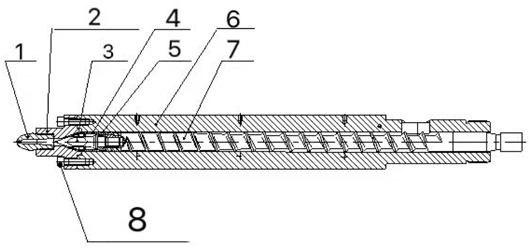
- Nozzle; 2.Front machine barrel (nozzle flange); 3.Screw rod head; 4. Check ring; 5. Thrust ring;6. Charging barrel; 7. screw rod;8. (Grade 12.9) high-strength hexagonal screw
CAUTION: Always wear a protective face shield and eyeglasses when performing maintenance work, especially on heated screw barrels.
cleaning step:
Spray glue several times to empty the barrel as much as possible;
Turn off the power;
Remove the heating ring and remove the charging drum assembly;
Heat the components and remove plastic residue:
Cleaning screws:
Rotate the screw at an even speed so that the surface is heated evenly. The temperature of the screw should not exceed 400℃ (including the thread), so as not to reduce the hardness and wear resistance of the screw.
Clean the screw with a wire brush and polish the screw surface with an emery cloth (grit level 240 to 280).
Remove residues on the internal threads (left-hand threads) with a flame, and then clean the threads thoroughly with a wire brush.
Apply HSC grease when tightening the screw head. Under no circumstances is it permissible to lubricate screw threads with other types of lubricants or grease. Residues may clog the screw head due to reaction of the lubricant at high temperatures.
Nozzle, Hydraulic oil replacement, and Replacing the fuel tank air filter
Nozzle, Hydraulic oil replacement, and Replacing the fuel tank air filter are important parts of the injection molding machine, now let’s look at the use of the injection molding machine in the process of these points needing attention.
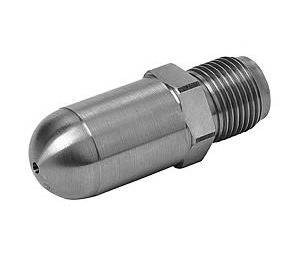
The injection nozzle is a key part of the bottom ejector system of the injection molding machine. Its main job is to move the molten plastic from the barrel into the mold, which is a critical part of manufacturing the final product.
Straight nozzle
Use an open flame to carefully burn any remaining material from the nozzle. Then wire brush and polish with emery cloth, grade 240-280.
Do not grind the surrounding area of the sealing surface.
The nozzle has a variety of functions:
During the pre-injection process, back pressure is generated on the screw head to prevent the melt from flowing out of the nozzle.
In the injection molding process, the injection pressure and shear effect are generated, the animation conversion is accelerated, and the melt temperature homogenization effect is improved.
In the process of pressure holding, it plays the role of heat preservation and shrinkage.
Notice of maintenance of the machine:
When installing parts, the temperature of all parts must be balanced!
When carrying out maintenance work, especially on heated screw barrels, a protective mask and glasses must be worn.
Hydraulic oil replacement
The hydraulic transmission of the injection molding machine uses hydraulic oil as the working medium and uses the pressure energy of the hydraulic oil in the sealed working volume to transmit energy, power, or signal. The quality of hydraulic oil and seals directly affects the stable work of the hydraulic system and indirectly affects the product quality. To prevent and reduce the failure of the hydraulic system, reduce wear and tear, and prolong the service life, we should strictly use and maintain the hydraulic oil.
Recommendation:
Regular filtration through an external oil filter will prolong the life of the filter and
improve the Reliability of the hydraulic system.
Equipment such as filter carts can be used.
Connect the oil drum hand pump or siphon device to empty the oil tank through the
oil tank filling port a.
Notice of maintenance of the machine:
It is very important to empty the fuel tank. If there is any residual oil left,
it will cause the new oil to age rapidly. Check the bottom of the tank for residue.(oil
slurry)
If necessary, open the fuel tank cover for cleaning.
39 When the cleaning process is over, refill the tank.
Hydraulic oil must meet the quality standard ISO:11158 Hydraulic oils with different
product names cannot be mixed.
Pay attention to pollution control:
Used oil must be disposed of properly.
Return to oil supplier etc.
Replacing the fuel tank air filter
Unscrew the cover
Replace the filter element
Screw the cover back on
Notice of maintenance of the machine:
The tank air filter is a very important and useful part. Tighten the cap, otherwise oil
leaks will occur. Do not start the machine without a properly installed ventilation
filter.
These are the considerations for the Nozzle, Hydraulic oil replacement, and Replacing the fuel tank air filter for injection molding machines. Haichen has a lot of experience in this area and we will give you professional answers, if you have any questions, please come to consult us!
Cleaning the oil suction filter of maintenance of the machine
Maintenance of the machine and inspection of hydraulic devices
The hydraulic transmission of the hydraulic system of the plastic machine uses the hydraulic oil as the working medium, and the mechanical energy of the prime mover is changed into the pressure energy of the hydraulic oil through the power element (oil pump), and then through the control element, and then the pressure energy is converted into mechanical energy with the help of the oil cylinder or oil motor, and the load is driven to achieve linear or rotary movement.
In the process of using the injection molding machine, the hydraulic oil should be checked and replaced regularly, and for the newly put-into-use hydraulic equipment, the oil tank should be cleaned and replaced with new oil after about 3 months of use.
In the future, cleaning and oil changes should be carried out every six months to one year, because after the injection molding machine runs for some time, the iron filings and iron powder in the pipeline will enter the oil tank with the hydraulic oil, and reaching a certain amount will affect the normal operation of the injection molding machine.
Therefore, cleaning the oil tank of the injection molding machine is essential for the normal operation of the hydraulic system.
When the traditional oil tank is cleaned, the hydraulic oil in the oil tank needs to be pumped out, because the bottom of the oil tank is flat, the pumping work can not be carried out thoroughly, usually, it is difficult to remove the oil when the oil is almost to the end, the bottom will remain 10-15mm layer high oil, and the iron dust iron powder will also stay in the residual oil and cannot be thoroughly cleaned the oil tank.
When replacing or replenishing hydraulic oil, the following should be noted:
- The replenished hydraulic oil must be exactly the same as the pressure oil in the system. When different hydraulic oils are mixed, there will be a chemical reaction that affects the quality of the pressure oil.
- If the hydraulic oil is reduced for no reason, the cause should be found out first, and then supplemented.
- When replacing the hydraulic oil, all the oil in the oil tank should be pumped out. At the same time, the inside of the tank is cleaned.
- The oil filter should be cleaned first every time the oil is changed.
- The hose used to add hydraulic oil must be kept clean.
- When adding hydraulic oil, it should not be directly added to the oil tank but should be filtered by a strainer, do not clean with rags as the remaining layer of hair can clog the oil filter.
Check the hose circuit
Please refer to Section 5.2 of the Maintenance Schedule to determine the frequency of this test.
It is crucial to test the hose loops according to the specified standards.
Any violation of the following standards requires immediate replacement: Damage to the inner serpentine, such as friction marks, cuts, or breaks.
Brittle skin with cracks in the hose material.
Deformation that alters the natural shape of hoses and hose lines, even under normal or bending conditions.
Damaged or deformed sealing function (minor damage may be repaired).
Hose detached from the collar. – Collar function and strength compromised due to
corrosion.
Exceeding the storage time and working life, as mentioned in Section of the Maintenance Schedule.
Notice:
Please consider the storage time when estimating the machine’s hose line life.
Cleaning the transparent window on the protective door
To ensure the cleanliness and visibility of your injection molding machine protective door, follow these instructions for effective window cleaning:
Preparation materials: Prepare weak detergent, soft cloth, and warm water.
Dilute detergent: Mix a small amount of weak detergent with warm water in a container at an appropriate dilution ratio.
Wet the cloth: Dip a soft cloth into the diluted detergent solution, making sure it’s damp but not dripping.
Clean the window: Gently wipe the transparent window on the protective door with a damp cloth.
Rinse the cloth: Rinse the cloth with clean warm water to remove residual detergent.
Wipe the window again: After rinsing the cloth, use it to wipe the window again to remove any remaining detergent or dirt.
Dry the windows: Use a dry, clean cloth to gently dry the windows. Make sure there is no residual moisture on the surface.
Note: You must use weak detergent and a soft cloth when cleaning clear windows. Strong chemicals or abrasive materials can damage or scratch the window, affecting its clarity.
Physical and chemical properties and injection molding
Understanding the physical and chemical properties of the materials used in injection molding is crucial for subsequent high-quality production. Therefore, there are a few points to pay attention to when injection molding.
Material selection: Commonly used materials for injection molding include ABS, PVC, PP, PE, EVA, etc. Each material has unique properties such as strength, flexibility, impact resistance, and chemical resistance. Therefore, it is necessary to choose the appropriate injection molding material to produce the product.
Remove moisture: Before starting the injection molding process, use a dryer or preheating to remove the moisture content of the material.
Machine settings: Adjust the temperature, pressure, injection speed, and cooling time of the injection molding machine according to the physical and chemical properties of the selected material.
Maintain melt temperature: Temperature affects the fluidity and viscosity of the molten material and affects the filling and solidification processes. Therefore keep the melt temperature of the selected material within the specified range.
Mold design: During the mold design process, factors such as wall thickness, gate design, and cooling channels should be optimized to ensure that the molded parts are filled, cooled, and ejected correctly.
Regular inspection: Check the molded parts for any defects such as warping, sink marks, or air pockets to ensure stable product quality.
Physical and chemical properties and injection molding.
Selection and maintenance of the machine hydraulic oil and lubricating oil
Choose hydraulic oil
The criteria presented in the table below are the criteria used when selecting hydraulic oil. The purpose of using the hydraulic equipment and its environment will determine whether to choose mineral oil or non-combustible fluid. Other factors that must be considered include: hydraulic pumps and other devices type, pressure used, temperature, lubricating quality of the fluid, economy, and suitability with the material used for
Choose viscosity
Since hydraulic oil is the medium that transmits power in hydraulic equipment, the abnormal operation and fault conditions of this oil listed in the following table will help identify hydraulic oil with unsuitable viscosity. For this reason, the appropriate viscosity must be chosen to best suit the structure of the hydraulic equipment, as well as the operating temperature and transfer pressure of the oil, etc., to obtain maximum efficiency and performance.
Lubricants and Greases
Selection of lubricating oil In addition to hydraulic oil, the lubricating oil used includes gear oil and grease for sliding surfaces. When selecting such oils, please refer to the recommended oil type and viscosity information, it is important to limit the use of as few oil types as possible.
Maintenance of the machine lubricating oils
Unlike hydraulic oils, which are commercially available and can be used for oil changes almost immediately, lubricating oils must be stored for long periods, and care must be taken in their maintenance and storage.
Oil drums must be stored on wooden floors.
Tightly seal the drum, if possible, cover the can or drum with waterproof paper or other suitable cover.
Make sure the oil container is out of direct sunlight.
Make sure that the temperature of the place where the oil is stored does not exceed 40°C.
Keeping the injection molding machine clean and dry is the top priority of maintenance. Regularly remove dust, dirt and residue inside and outside the injection molding machine to ensure that the plastic raw materials are dry and avoid humidity from adversely affecting production.
Daily maintenance of the machine:
Regularly check the various components of maintenance of the machine injection molding machine, such as the hydraulic system, circuit board, manipulator, etc.
Clean the inside of the machine to prevent impurities from accumulating and affecting the performance of the equipment.
Conclusion
Haichen has more than 20 years of experience in plastic injection molding machines, and we have well-trained workers, experienced engineers, and service teams to manufacture plastic injection molding machines. We can provide each customer with professional advice and machine tooling options. Come and consult us.