As people become increasingly concerned about environmental protection, we are also beginning to recognize the impact of plastics on the environment. PLA material injection molding is breaking the limits of plastic manufacturing. With its unique biodegradability, PLA material is an alternative to traditional plastics. It also builds a new bridge between the rational application of plastics and environmental protection.
PLA material injection molding provides us with more environmentally friendly solutions and more options for plastic molding. PLA material injection molding is slowly replacing PP and PS from the packaging industry to automotive components production. Due to its excellent thermoplastic properties, PLA material injection molding ensures that manufacturers do not need to compromise on product functionality or design.
Today, we will explore the impact of PLA material injection molding on the plastic industry and its advantages. Also, we will show the application of PLA material by Haichen Machinery in the last 5 years. We will share some of Haichen’s successful cases also.
What is PLA?
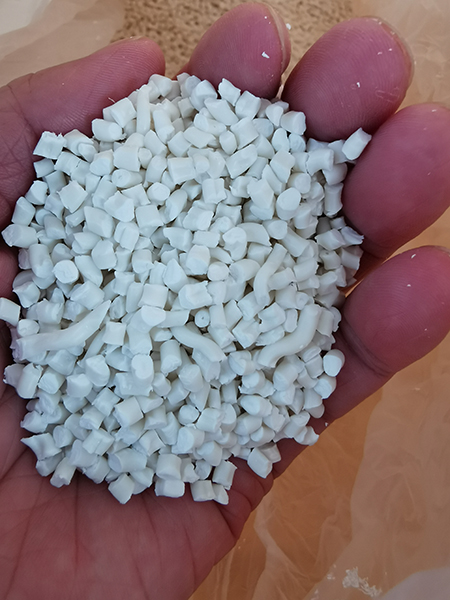
PLA is a new type of biodegradable material formed by the polymerization reaction of lactic acid.
PLA: Polymerization reaction of Lactic Acid.
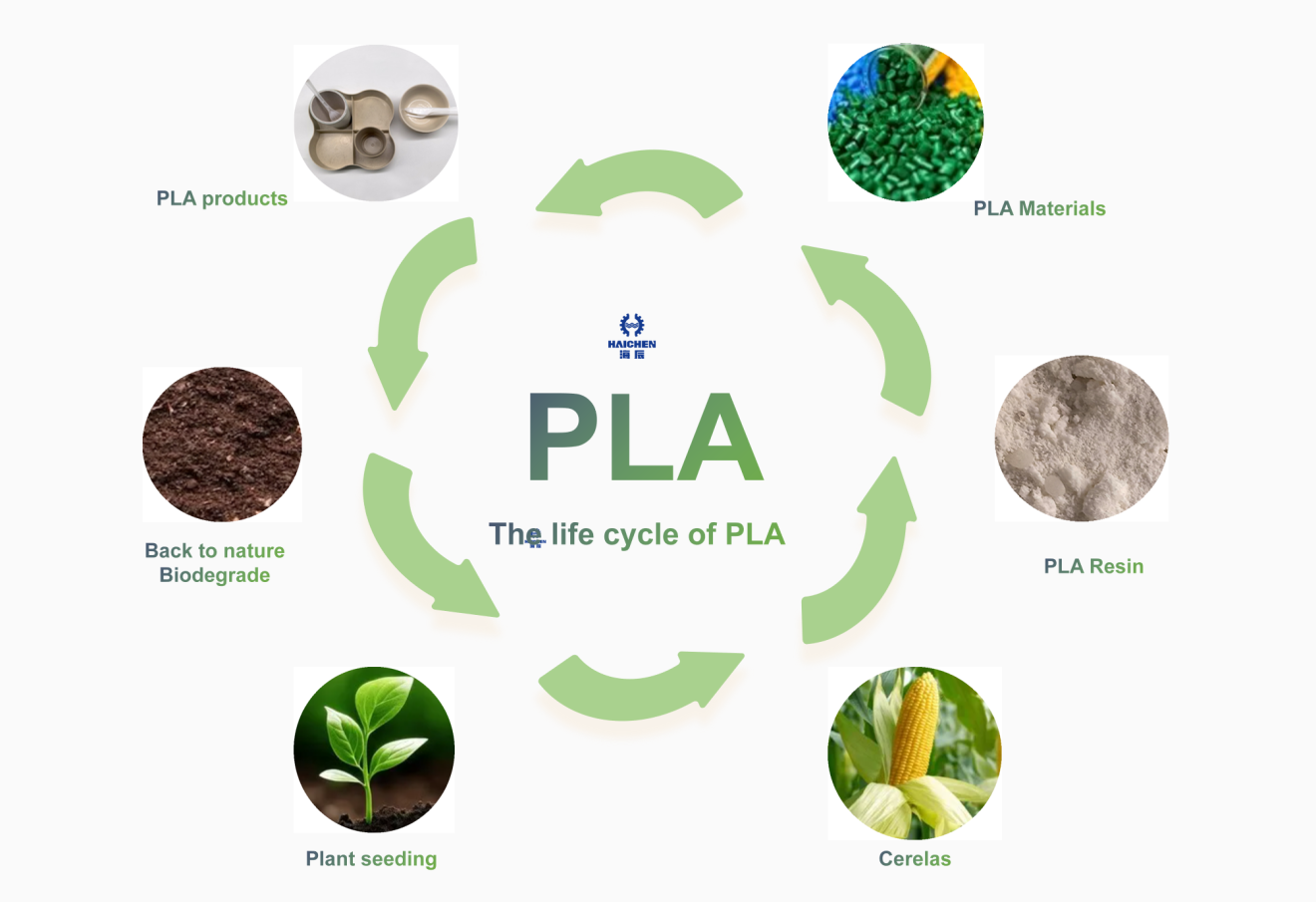
First, starch from plants such as corn, wheat, cassava, etc., is converted into lactic acid through a series of chemical reactions. Then, lactic acid is polymerized to form PLA.
How to produce PLA raw materials?
- Starch extraction: Firstly, extract starch from plants such as corn, wheat, cassava, etc.
- Saccharification process: Enzymatic hydrolysis of extracted starch to convert it into glucose.
- Fermentation: Further converting glucose into lactic acid.
- Polymerization: Polymerize lactic acid to form PLA.
First, the main raw material of PLA is lactic acid. Then, polymerization the PLA.
How long does it take for PLA to degrade?
Generally speaking, the degradation time of PLA in soil may take several months to a year; However, in specific industrial composting environments, the degradation rate may significantly accelerate and may be completed within a few weeks.
Environmental temperature is one of the main factors affecting the degradation rate of PLA.
The degradation rate of PLA material is significantly accelerated in environments with high temperatures (about 60 ° C to 70 ° C).
Advantages of PLA material injection molding
It is a new solution to use PLA injection molding to achieve a balance between plastic use and the environment.
As people pay more and more attention to the relationship between plastics and the environment, the application of PLA injection molding in the plastic industry will provide a new solution direction.
7 main advantages of PLA injection molding:
- Environmental friendliness
- Biocompatibility
- Processing performance
- Mechanical properties
- Multifunctionality
- Low cost
- Widely used
Environmental friendliness: PLA is a biodegradable material that can be completely decomposed into water and carbon dioxide through microbial action, without causing pollution to the environment. It is a sustainable material for injection molding.
Biocompatibility: PLA has good biocompatibility and can be used for medical implants and disposable medical devices such as bone nails. These implants can dissolve automatically in the human body, reducing postoperative residues. PLA molding is applied to medical devices.
Processing performance: The processing temperature of PLA molding is relatively low, generally between 170 and 230 ℃, which results in lower energy consumption during PLA injection molding and lower thermal load on processing equipment. In addition, PLA has good melt flowability and is easy to shape and process.Suitable for PLA molding.
Mechanical properties: PLA has high strength and modulus, and its mechanical properties are similar to polystyrene (PS), and it can even replace PS in some applications. PLA also has good transparency and glossiness, which gives PLA molding an advantage in packaging and transparent products.
Multifunctionality: PLA can be processed through various molding processes such as injection molding, extrusion, blow molding, etc., making it suitable for manufacturing a variety of products. For example, PLA can be used to make food containers, packaging materials, disposable items, etc.
Low cost: The production cost of PLA is relatively low, and its raw materials mainly come from renewable plant resources (such as corn starch), which makes PLA have a high cost-effectiveness in the field of biodegradable materials.It will lower the cost of PLA injection molding.
Widely used: Due to its excellent mechanical properties and environmental characteristics, PLA is widely used in various fields such as packaging, medical, textile, agriculture, etc.
PLA molding has significant advantages in injection molding, such as environmental friendliness, good biocompatibility, excellent processing performance, high mechanical properties, multifunctionality, low cost, and wide application, which make it occupy an important position in modern industry.
PLA injection molding utilizes sustainable biopolymer polylactic acid to increase the biodegradability of organisms. Compared to traditional plastics, it is more environmentally friendly and green. Providing a more environmentally friendly alternative for the traditional injection molding industry.
While increasing degradation ability, PLA injection molding has not lost the characteristics of traditional plastics. PLA injection molding also possesses variability and plasticity. Therefore, PLA injection molding has expanded the application range of traditional plastics.
PLA injection molding process

PLA injection molding offers numerous advantages over traditional plastics. Firstly, its biodegradability sets it apart. PLA is derived from renewable resources such as corn starch or sugarcane, making it a sustainable alternative to petroleum-based plastics. When disposed of properly in industrial composting facilities, PLA can break down within a few months, significantly reducing its impact on the environment.
Secondly, PLA injection molding provides excellent performance characteristics. It exhibits high stiffness, tensile strength, and impact resistance, making it suitable for a wide range of applications. Whether it’s durable household items or delicate medical devices, PLA can meet the required mechanical properties while maintaining its eco-friendly nature.
Furthermore, PLA injection molding enables manufacturers to achieve intricate designs and complex shapes. Its low melt viscosity allows for easy flow and fill of molds, ensuring the reproduction of fine details. This flexibility in design makes PLA an attractive choice for industries where aesthetics and functionality go hand in hand.
PLA injection molding steps
The injection molding process of PLA (polylactic acid) is similar to that of ordinary raw materials. The injection molding process involves multiple steps, including pretreatment, melting, injection, cooling, and demolding.
- PLA raw material heating:
The pre-treatment of PLA raw materials, due to the water absorption and easy esterification of PLA, requires a professional dryer to be connected to the injection molding machine feed port for drying for 2 to 3 hours. - Charging PLA:
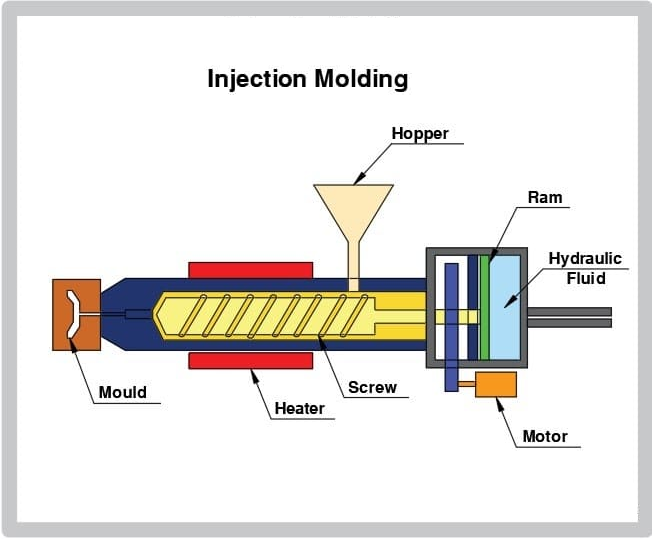
Pre-PLA molding (melting the material). The dried PLA material enters the material barrel through the feeding port, moves forward through the screw, and heats up during the movement to melt it. In this process, temperature control is crucial because PLA has a high melting point, but excessive temperature can lead to material degradation. - Injection:
The screw drives the molten PLA and high-pressure injects it into the mold. The injection process is similar to that of ordinary raw materials. - Pressure holding:
After the injection is completed, a pressure holding operation is required to ensure that the PLA in the mold is fully filled and maintains its shape. - Cooling:
Subsequently, cooling is carried out to rapidly cool and shape the PLA, ultimately obtaining the desired product shape. The waterway design of the mold is crucial, as the waterway has a good cooling effect and cools quickly. At the same time, a chiller is required to provide 10 degrees of cold water. - Mold opening and demolding:
After cooling is completed, open the mold and take out the formed part. Due to the excellent biodegradability of PLA, the molded parts can be completely biodegraded into water and carbon dioxide by bacteria in the soil after disposal. - Post-treatment:
In order to improve the stability and moisture resistance of PLA products, some post-treatment processes can be carried out, such as coating treatment or the use of moisture-proof agents.
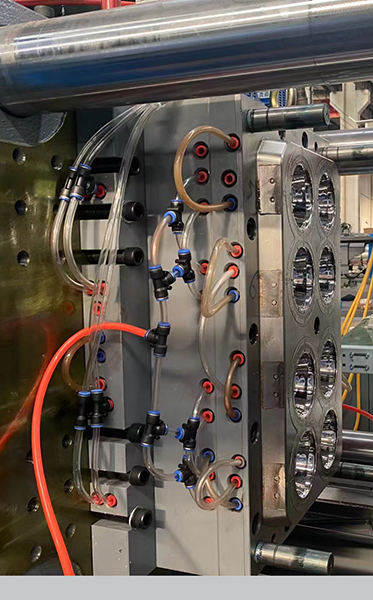
The injection molding process of PLA requires strict control of parameters such as drying, temperature, and pressure to ensure molding quality and material biodegradability. Through these steps, PLA materials can be effectively utilized for various complex injection molding applications.
Applications of PLA injection molding
The PLA injection molding process involves several stages, each crucial in ensuring the production of high-quality plastic parts. It begins with the preparation of PLA pellets, which are fed into the injection molding machine’s hopper. The pellets are then heated and melted, forming a molten PLA resin.
Once the resin reaches the desired temperature, it is injected into a mold cavity under high pressure. The molten PLA fills the mold, taking the shape of the cavity. After cooling and solidification, the mold is opened, and the finished part is ejected. This process can be repeated rapidly, allowing for efficient mass production.
To achieve optimal results, the injection molding parameters, such as temperature and pressure, need to be carefully controlled. This ensures proper flow of molten PLA, uniform filling of the mold, and the prevention of defects like warpage or sink marks. With the right settings and expertise, manufacturers can achieve consistent and high-quality PLA injection molded parts.
Environmental benefits of PLA injection molding
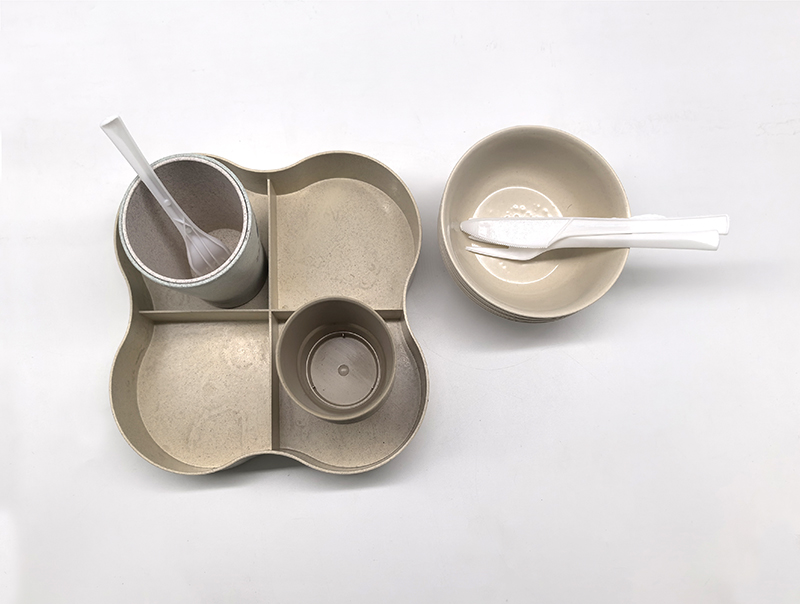
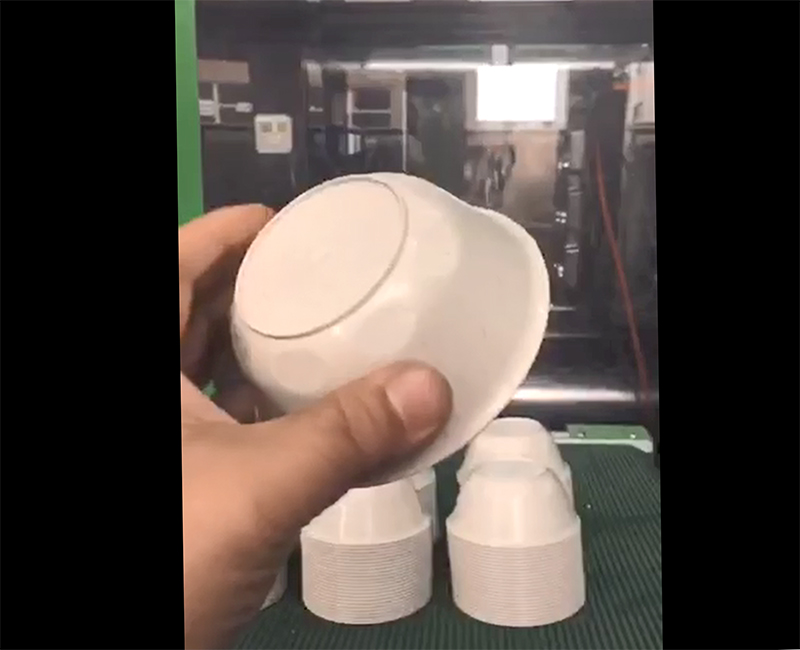
PLA injection molding has found applications in various industries, proving its versatility and adaptability. In the packaging sector, PLA has gained popularity as a sustainable alternative to traditional plastic packaging materials. It can be molded into thin films for food packaging or rigid containers for cosmetics, offering an eco-friendly solution without compromising functionality or aesthetics.
Moreover, PLA injection molded parts are making their way into the automotive industry. From interior components like dashboard panels to exterior parts like grilles, PLA offers lightweight alternatives with excellent mechanical properties. With its ability to be colored and textured, PLA can also mimic the appearance of traditional plastics, ensuring a seamless integration into existing designs.
The medical field is another area where PLA injection molding is making a difference. PLA’s biocompatibility and sterilizability make it suitable for medical devices and implants. Its ability to be precisely molded into complex shapes allows for the production of customized prosthetics or surgical instruments, enhancing patient care and comfort.
Challenges and limitations of PLA injection molding
One of the significant advantages of PLA injection molding is its positive environmental impact. As mentioned earlier, PLA is derived from renewable resources, reducing dependence on fossil fuels. Its biodegradability ensures that PLA does not contribute to the accumulation of plastic waste in landfills or oceans. Instead, it can be composted, returning valuable nutrients to the soil.
Furthermore, PLA production emits fewer greenhouse gases compared to traditional plastics. The manufacturing process of PLA generates lower carbon dioxide emissions, contributing to the global efforts to combat climate change. By choosing PLA injection molding, manufacturers can reduce their carbon footprint and contribute to a more sustainable future.
Future trends in PLA injection molding
While PLA injection molding offers numerous advantages, it is not without its challenges and limitations. Firstly, PLA has a lower heat resistance compared to some traditional plastics. This limits its applicability in high-temperature environments or applications that require resistance to heat and thermal stress. However, ongoing research and development are addressing this limitation, with PLA blends and additives being explored to enhance its thermal properties.
Secondly, PLA can be more expensive than traditional plastics, primarily due to the cost of raw materials and processing. However, as demand for PLA increases and production scales up, the cost is expected to decrease, making it a more viable option for manufacturers.
Another challenge is the recycling of PLA. While PLA is recyclable, it requires a separate recycling stream from traditional plastics. The infrastructure for PLA recycling is still developing, and widespread adoption is necessary to ensure efficient recycling and closed-loop systems.
PLA injection molding vs traditional plastics
The future of PLA injection molding looks promising, with ongoing advancements and innovations in the field. Researchers are continuously exploring ways to improve PLA’s properties, expand its range of applications, and address its limitations. This includes developing PLA blends with enhanced heat resistance, impact strength, and flame retardancy.
Additionally, the development of new processing techniques, such as multi-material or overmolding, allows for the combination of PLA with other materials, expanding its possibilities in product design and functionality. These trends indicate a bright future for PLA injection molding, with even greater potential for sustainable plastic manufacturing.
Companies leading the way in PLA injection molding
Comparing PLA injection molding to traditional plastics highlights the significant differences and advantages of PLA. Traditional plastics, derived from petroleum, are non-renewable and contribute to environmental pollution. They have a long degradation period, leading to the accumulation of plastic waste in landfills and oceans.
In contrast, PLA is derived from renewable resources and offers biodegradability, ensuring it does not persist in the environment for centuries. This makes PLA a more sustainable choice for manufacturers and consumers seeking to reduce their environmental impact.
Furthermore, PLA injection molding provides comparable performance to traditional plastics, with the added benefit of being lightweight and having lower carbon emissions during production. This makes PLA an attractive option for industries looking to meet sustainability goals without compromising on quality or functionality.
PLA injection molding is revolutionizing the plastic industry by providing a sustainable and versatile alternative to traditional plastics. Its biodegradability, exceptional performance, and ability to be molded into complex shapes make it an attractive choice for various applications. As awareness of environmental issues continues to grow, PLA injection molding offers a solution that reduces plastic waste and carbon emissions.
While challenges and limitations exist, ongoing research and development are addressing these issues, paving the way for a brighter future for PLA injection molding. With the involvement of leading companies and increasing demand for sustainable materials, PLA is set to shape the future of the plastic industry, ushering in a new era of responsible and environmentally friendly manufacturing.
[/vc_column_text][/vc_column][/vc_row]