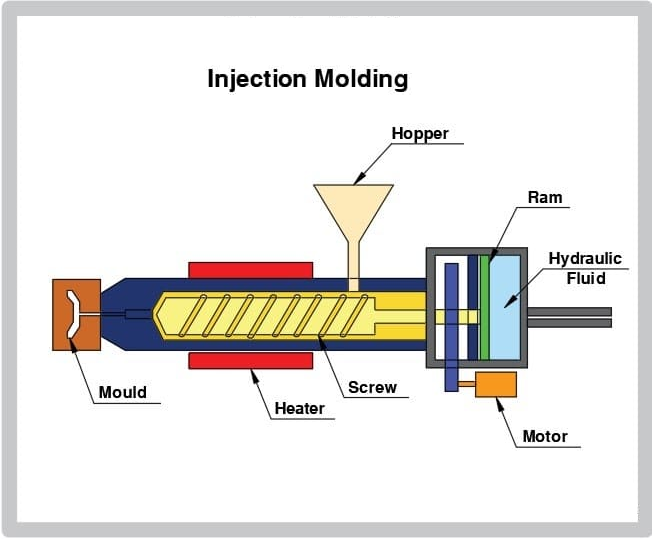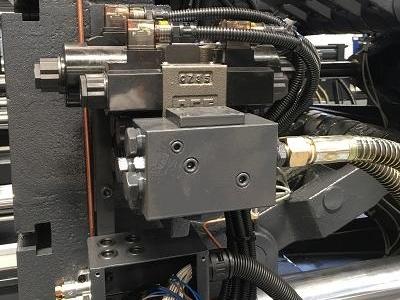
When it comes to modern furniture, especially affordable and versatile seating, plastic chairs often come to mind. Behind these lightweight, durable, and colourful chairs lies a sophisticated machine: the plastic chair manufacturing machine. This blog will delve into the complex world of these machines, detailing their characteristics, functions, and why they are crucial to manufacturers worldwide.
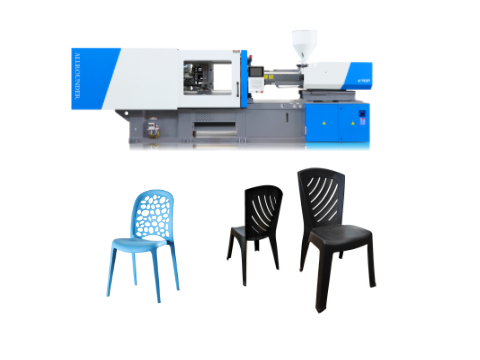
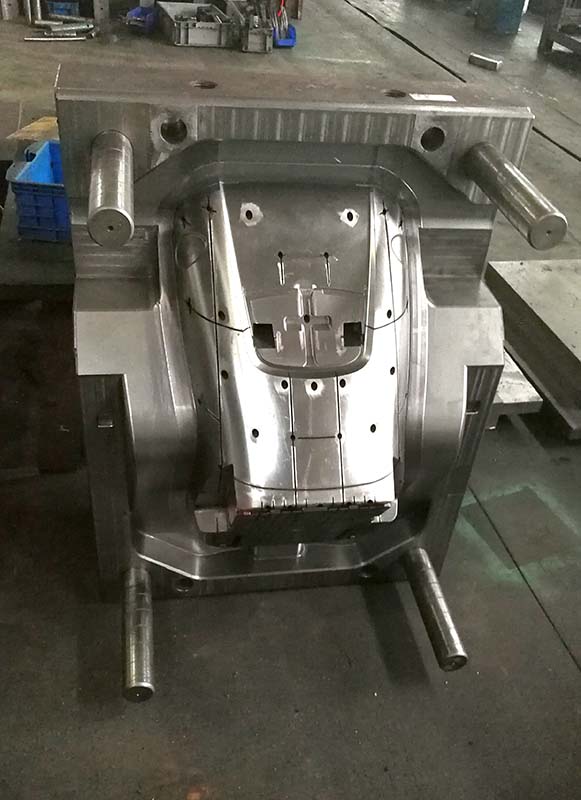
What we using is a plastic chair manufacturing injection molding machine is an industrial device specifically designed to produce plastic chairs through injection moulding. The machine injects molten plastic raw materials (usually in granule form) into a mould to produce the finished product.
Just as there are various plastic seat designs, it is conceivable that custom molds will also be produced. As for their counterfeiting, it is necessary to constantly explore and practice based on the actual seat design.
Let us explore the world of plastic seat injection molding for you below.
Comprehensive Analysis of Plastic Chair Injection Mold Costs
The cost of an injection mold for Plastic Chair in injection molding varies widely based on design complexity, materials, production volume, and geographic factors. Below is a detailed breakdown of key considerations, cost ranges, and optimization strategies, synthesized from industry reports and technical analyses.
- Cost Range for Plastic Chair Molds
- Key Cost Drivers
- Cost Optimization Strategies
- Plastic Chair in injection molding Case Studies
Cost Range for Plastic Chair Molds
Plastic chair molds typically fall into mid-to-high complexity due to their size, structural requirements (e.g., ergonomic curves, load-bearing components), and potential multi-cavity designs.
| Category | Price Range | Key Features | Sources |
|---|---|---|---|
| Basic Single-Cavity Molds | 1,000–5,000 USD | Small, simple designs (e.g., stool seats), low-volume production, aluminum or P20 steel. | |
| Mid-Range Molds | 10,000–30,000 USD | Standard chair designs (e.g., stackable chairs), 1-2 cavities, hot runner systems, 718H steel. | |
| High-End Molds | 30,000–100,000+ USD | Complex designs (e.g., recliners, multi-component chairs), multi-cavity (4+), hardened steel (H13), gas-assisted molding. |
Examples:
- A simple chair mold with a single cavity and basic geometry may cost 12,000–20,000 (average for hand-sized parts) .
- A mold for a “trendy” ergonomic chair with under-seat storage and reinforced legs could exceed $50,000 due to advanced cooling channels and multi-slide actions .
Key Cost Drivers
Design Complexity
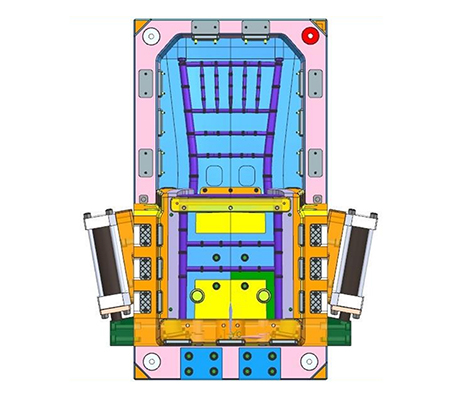
- Structural Features: Armrests, curved backs, or integrated hinges require additional slides, lifters, or collapsible cores, increasing mold complexity by 20–50% .
- Surface Finish: Textured or glossy surfaces (e.g., wood-grain patterns) add polishing costs (500–2,000) .
- Multi-Cavity Molds: A 4-cavity mold costs ~2.5× a single-cavity mold but reduces per-part costs for high-volume orders .
Material Selection
| Material | Cost Impact | Use Case |
|---|---|---|
| Aluminum | 1,000–5,000/mold | Prototyping, <10,000 cycles |
| P20 Steel | 5,000–15,000/mold | Medium-volume (50k–200k cycles) |
| 718H/H13 Steel | 20,000–100,000+/mold | High-volume (>500k cycles), precision |
Hardened steels (e.g., H13) add 30–50% to mold costs but extend lifespan to 1M+ cycles .
Production Volume
- Low Volume (<10k units): Use aluminum or soft steel molds (5k–15k) .
- High Volume (>100k units): Invest in hardened steel molds; per-part cost drops from 1.50/unit(10kunits)to0.30/unit (500k units) .
Geographic Factors
- China: Molds cost 30–50% less than in the U.S./EU due to lower labor and material costs.
- Local Suppliers: Reduce logistics costs but may lack advanced technical capabilities .
Cost Optimization Strategies
Design Simplification
- Avoid undercuts and thin walls (<1.5mm) to reduce mold complexity .
- Use standardized components (e.g., universal ejector pins) to save 1,000–3,000 in customization .
Material Efficiency
- Resin Choice: Polypropylene (PP) costs 0.80–1.20/lb vs. ABS (1.50–2.00/lb), saving 0.10–0.30/part .
- Recycled Materials: Reduce raw material costs by 15–20% without compromising structural integrity .
Supplier Collaboration
- Request volume discounts: Orders >5 molds often qualify for 10–15% discounts .
- Use modular molds: Interchangeable inserts allow one base mold to produce multiple chair designs, cutting tooling costs by 25–40% .
Prototyping & Testing
- 3D-printed molds: Validate designs for 100–500 before committing to steel tooling .
- Trial Runs: Budget 1,000–3,000 for mold adjustments post-testing .
Plastic Chair in injection molding Case Studies
Budget Stacking Chair
- Design: Single-cavity, PP material, minimal texture.
- Cost: 8,000(China)/15,000 (U.S.).
- Output: 200k chairs at $0.35/unit .
Premium Office Chair
- Design: 2-cavity, gas-assisted legs, H13 steel.
- Cost: 45,000(China)/75,000 (EU).
- Output: 500k chairs at $0.60/unit .
Future Trends
- Automation: AI-driven mold design reduces engineering costs by 20% .
- Sustainable Tooling: Bio-based steels and hybrid aluminum composites lower costs and carbon footprint .
A plastic chair injection mold typically costs 10,000–50,000, with high-volume, complex designs reaching $100,000+. Prioritize material selection (e.g., PP + P20 steel), simplify geometry, and leverage Chinese suppliers for cost efficiency. For projects >100k units, invest in multi-cavity hardened steel molds to achieve per-part costs below $0.50, ensuring long-term profitability.
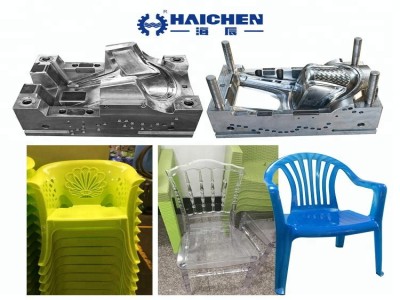
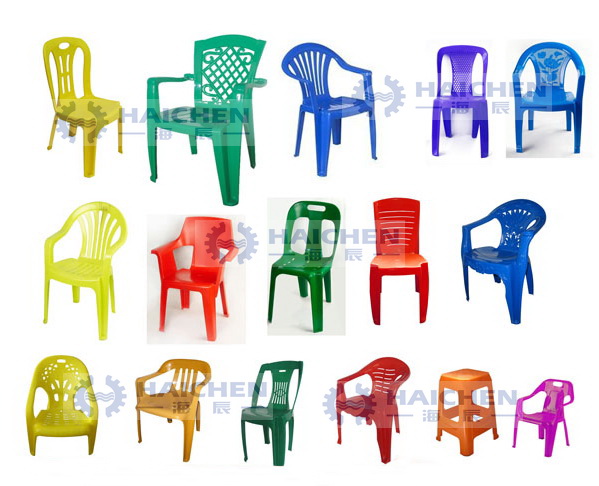
Haichen plastic chair mould and injection molding machine
Haichen offers a range of injection molding machines tailored for large-to-medium plastic chair production:
- Critical Mold Design Elements
- Material Compatibility & Process Support
- After-Sales Service & Production Assurance
- Industry Applications
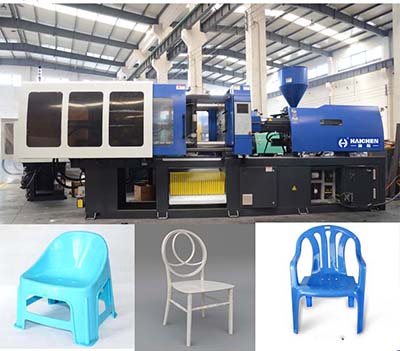
- K-Series Servo-Driven Machines:
- 410-ton model supports mold heights of 280–800 mm.
- Features servo energy-saving technology for cost-effective, high-volume chair production.
- E-Series Standard Machines:
- Tonnage range: 120–1000 tons.
- Equipped with hydraulic pumps and servo motors for precision and efficiency.
- Specifically supports PC (polycarbonate) material for high-strength chair molding.
- Three-Plate Mold Technology:
- Pin-point gate design enables automatic gate separation, eliminating manual trimming.
- Ideal for chairs requiring flawless surface finishes or complex geometries (e.g., lattice-patterned backs).
Critical Mold Design Elements
Haichen prioritizes the following in mold engineering:
- Cooling System Optimization:
- Uniform cooling channels minimize cycle times and reduce warping risks.
- Venting Design:
- Strategically placed vents prevent air traps and burn marks, ensuring defect-free parts.
- Lightweight Structural Design:
- Material distribution optimized for strength-to-weight ratio, reducing chair weight without compromising durability.
Material Compatibility & Process Support
- Material Range:
- Supports HDPE, PP, PC, and PLA (for eco-friendly applications).
- PC is recommended for high-stress chair components due to its impact resistance.
- PLA-Specific Solutions:
- Enhanced cooling channels and adjusted parameters (pressure, speed) mitigate warping and shrinkage.
After-Sales Service & Production Assurance
- Warranty Policies:
- Warranty period starts from machine shipment date.
- Free replacement parts and on-site technical support (travel costs may be shared).
- Fast Delivery:
- 100+ machines in stock for urgent orders.
- End-to-End Solutions:
- Technical consulting, mold design, and production debugging services.
Industry Applications
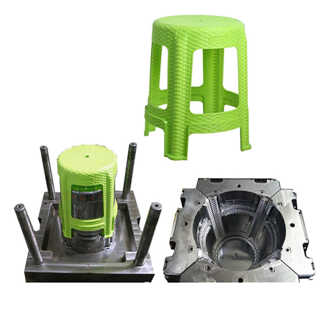
- Complex Chair Production:
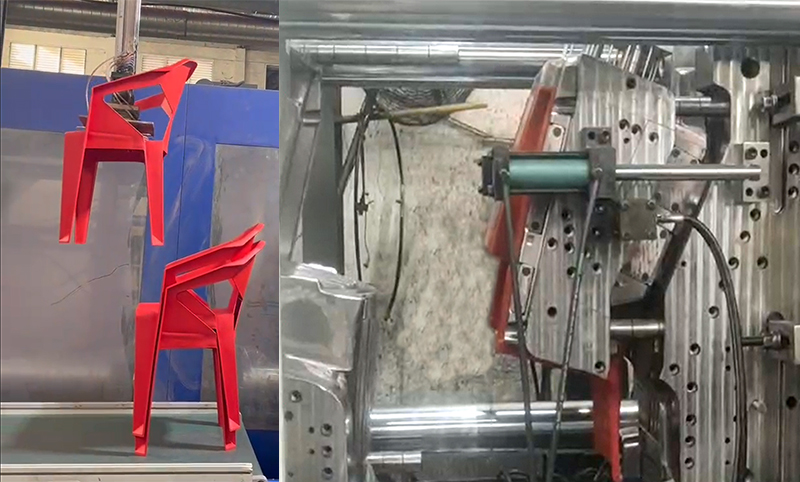
- Successfully molds chairs with intricate features (e.g., lattice or ribbed backs) via multi-stage mold opening and automated ejection.
- Two-Shot Molding:
- Enables dual-material/color designs, enhancing aesthetics while reducing material waste.
Haichen’s plastic chair molds excel in precision, energy efficiency, and material adaptability, supported by robust after-sales services. Key recommendations:

- Large chairs: K-Series 410-ton servo machines.
- Small/medium chairs or PC materials: E-Series standard machines.
Haichen’s solutions are ideal for high-quality, structurally complex chair production, balancing productivity with cost-effectiveness. For specific requirements, consult Haichen’s technical team for customized mold and machine configurations.