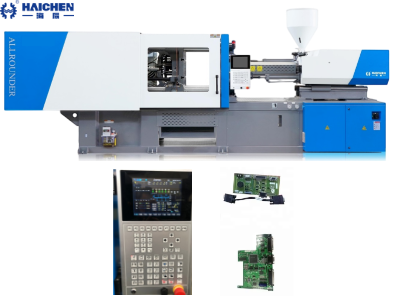
The plastic chair injection molding process starts with molding parts for the chair and selecting the right type of plastic for it. Next, it requires injecting the selected plastic, waiting for it to cool and solidify, and finally assembling the parts. The chairs produced would be functional and of high quality.
Replicating and mass producing any plastic product, including plastic chairs, are possible using modern technology such as injection molding.
The precision and flexibility of the injection molding process permits the production of both simple and intricate household and industrial products. The planning and execution of the process steps will affect the factors such as precision, quality, and the degree of geometry that the product will be marked with.
These are some factors to bear in mind in the injection molding of a plastic chair those with production experience provided.

Plastic chair injection molding process
- Design and Prototyping
- Injection Molding Process
- Post – Processing
Design and Prototyping
Concept Development
Each plastic chair starts with a conceptual idea. Designers and engineers collaborate to create a chair considering all functions like comfort and good look. This stage includes sketching, designing a 3D model, and at times, making a prototype to enhance the design.
Material Selection
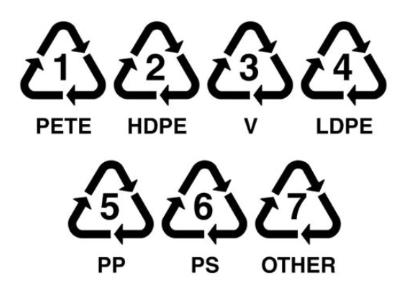
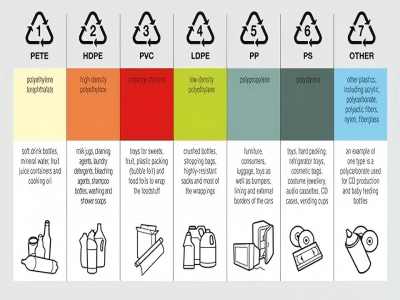
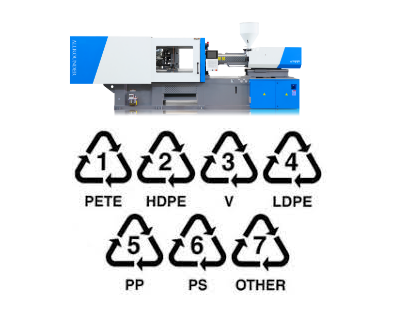
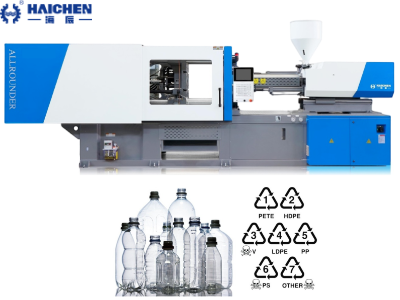
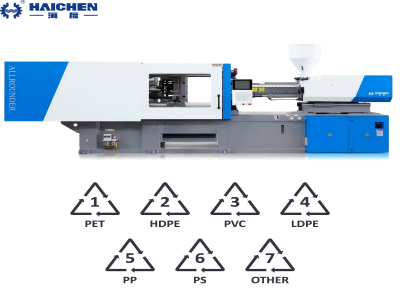
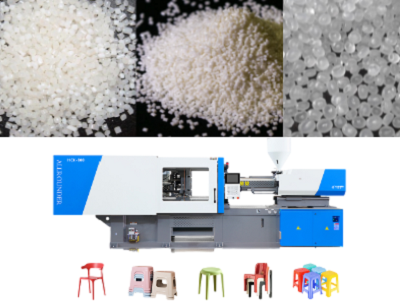
It is important to select the right plastic for the chair to guarantee structural integrity, safety, and a good look. Commonly used materials like, Polypropylene (PP) and polyethylene (PE) are preferred due to their strength, flexibility, and ability to be molded into complex shapes.
Injection Molding Process
Mold Preparation
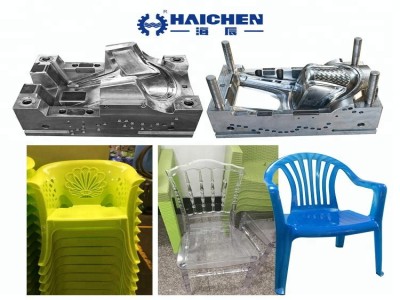
Prepare Molds Tool makers proceed to form the plastic forming molds after the product design is finished. Designers are responsible for the product aesthetics. The molds are crafted by precision Engineers to form all chair parts with the required accuracy.
Injection
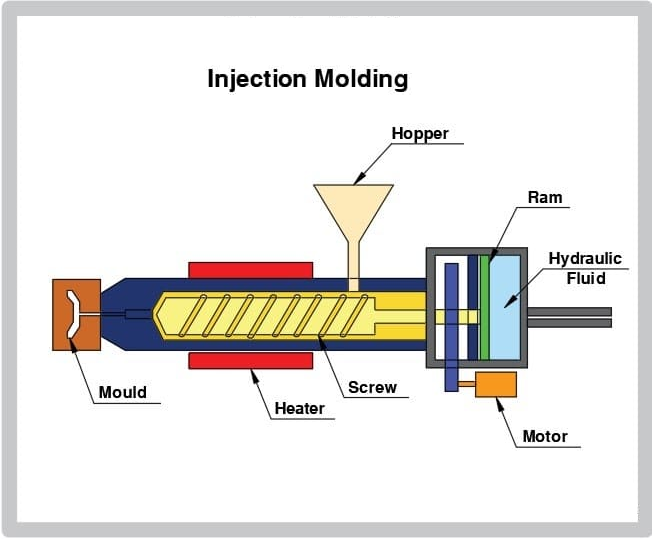
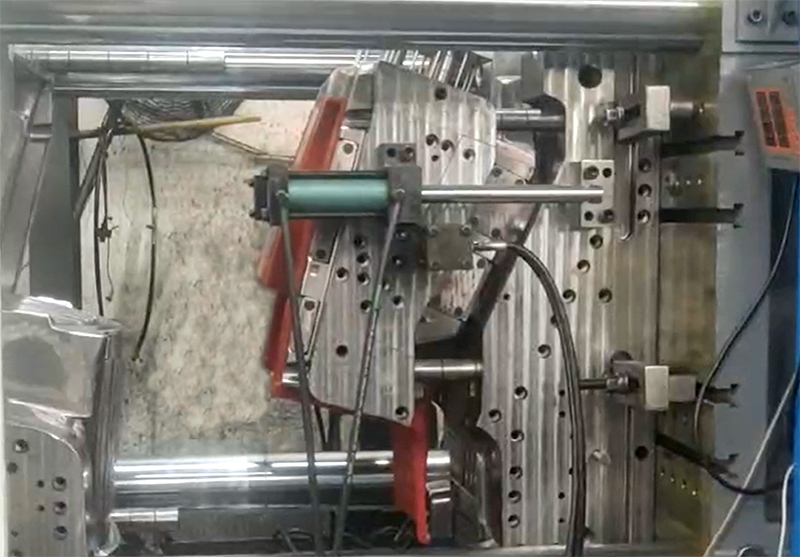
The injection stage is the key to the entire manufacturing process. The molds are prepared and precision machines are set to recipe HAICHEN’s specification. Each step is crucial, from high-pressure injection to the charging of the plastic, to the cooling phase where accuracy to designed conditions is critical for the confirmed chair shapes.
Cooling and Solidification
The plastic has to be accurately controll and separated from the molded chair to maintain the required accuracy in terms of contour, and volume to ensure high precision to contour accuracy.
Ejection
Once the plastic cools down and solidifies, the mold automatically ejects the chair parts. Engineers pay great attention to the demolding component to prevent any damage to the parts. With HAICHEN machines, every cycle completes reliably due to their effective ejection systems for part ejection.
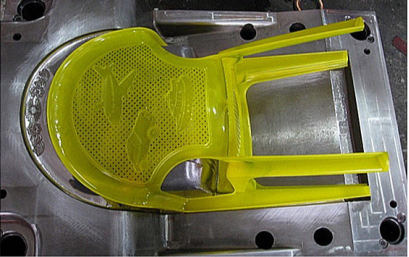
Post – Processing
Trimming and Finishing
Once ejection of the parts has been complete, the components of the chair require some trimming to remove excess materials and finishing for smoothing sharp corners, and rough edges. This step assures that optimally, every chair part is visually appealing and is operationally functional.
Assembly
The last step is the combination of chair parts, that is, the legs, arms, and any other remaining parts. Proper Assembly of parts guarantees the stability and readiness of the chair to be use.
Quality Control
Every single chair is check for quality to make sure its safety and performance parameters fully complies with the standards.
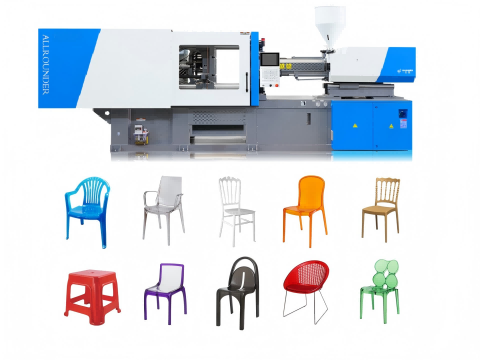
Technical Advantages and Case Studies of HAICHEN Injection Molding Machines
Equipment Selection and Compatibility
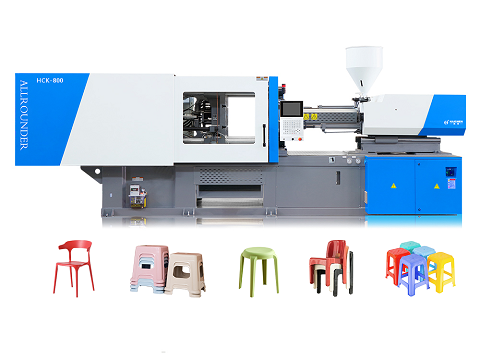
- K Series Injection Molding Machines (HCK800-HCK1000):
- Their clamping force of 800-1000 tons enables the molding of stools and chairs with armrests and others.
- Case Study: The 47cm wide and 99cm tall plastic armchair is in stable mass production on the HCK1000-ton machine.
- Servo Energy-Saving Series:
- Energy consumption is down by 15-70% with a 20% boost in production speed.
Intelligent Parameter Control
- Multi-stage holding pressure technology eliminates the sink marks on chair backs and reduces internal stress and deformation.
- Case Study: An automotive injection molding project with 3D-printed molds and accurate temperature controls reduced warpage from 0.25mm to 0.1mm.
Environmentally Friendly Material Processing
- Specialized screws for PLA bamboo fiber composites are resistant to acid and corrosion.
- Closed-loop water circulation reduces wastewater discharge and the workshop is ventilate at 20 times per hour.
Deep knowledge of the plastic chair injection molding process ensures high standards on quality and production efficiency. Striving for the expected results and quality requires attention to product design and prototyping, material selection, injection molding, and post processing.