When designing and building custom molds, several mold considerations are crucial, including material selection, mold complexity, etc.
Molds are important tools in industrial production and are widely used in the molding of plastics, metals, rubber and other materials. The design and manufacturing process of custom molds is complex and requires consideration of multiple factors to ensure the quality of the final product and production efficiency. This article will introduce the precautions for custom molds in detail from two aspects: design and manufacturing.
Plastic injection mold design considerations
Mold opening direction and parting line
When designing a mold, the mold opening direction and parting line must be determined first. The mold opening direction should minimize the core-pulling slider mechanism to avoid the impact of the parting line on the product appearance. After confirming the mold opening direction, the product’s reinforcement ribs, buckles, and other structures should be as consistent as possible with the mold opening direction to reduce the seam line and extend the mold life.
Mold considerations-Demolding slope
Proper de-moulding slope can prevent product hair pulling and top scratches. The de-moulding slope of the smooth surface should be ≥0.5 degrees, the surface of the fine leather grain should be greater than 1 degree, and the surface of the rough leather grain should be greater than 1.5 degrees. When designing a deep cavity structure product, the outer surface slope should be as large as possible The inner surface slope should be greater than the inner surface slope to ensure that the mold core is not offset during injection molding.
Product wall thickness
The wall thickness of the product should be uniform, usually between 0.5 and 4 mm. When the wall thickness exceeds 4 mm, it may cause problems such as long cooling time and surface shrinkage. Uneven wall thickness will cause pores and weld marks.
Mold considerations-Ribs
Reasonable application of ribs can increase product rigidity and reduce deformation. The thickness of the ribs should be ≤(0.5~0.7)T product wall thickness to avoid surface shrinkage. The single-sided slope of the ribs should be greater than 1.5 degrees to prevent top damage.
Fillet design
Reasonable fillet design can reduce stress concentration and prevent product and mold cracking. Different fillets may cause the movement of the parting line and should be selected based on actual conditions.
Hole design
The shape of the hole should be as simple as possible, generally circular. The axial direction of the hole should be consistent with the mold opening direction to avoid core pulling. When the aspect ratio of the hole is greater than 2, the demolding slope should be set.
Mold flow analysis
Before manufacturing the mold, it is very important to use a computer simulation program to analyze the mold filling process. This helps to identify potential problems before they become costly mistakes and modify the mold design to ensure a smooth process.
Cooling system design
The design of the cooling system must ensure that all parts of the mold are cooled evenly to prevent warping or other defects. The design should also consider the type of material used and the molding cycle of the product.
Mold manufacturing considerations
Material selection
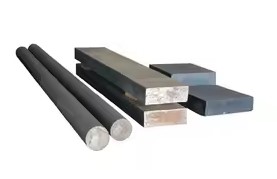
Choosing the right mold material is the key to ensuring mold quality and life. The mold material should have good wear resistance, toughness, and heat resistance. Commonly used mold materials include Cr12, Cr12MoV, S-136, etc.
Fine processing
The fine processing of the mold has an important impact on the quality of the final product. During the processing, attention should be paid to controlling the processing temperature and time to ensure the surface finish and dimensional accuracy of the mold. Use appropriate processing equipment and process parameters to ensure a stable processing process.
Heat treatment process
A reasonable heat treatment process can improve the hardness and wear resistance of the mold. The temperature and time should be strictly controlled during the heat treatment process to avoid deformation or cracking of the mold.
Mold considerations-Mold assembly
During the mold assembly process, attention should be paid to the matching accuracy between the components, and fasteners that meet the specifications should be used to ensure the stability of the mold assembly. It should not be put into production directly without sufficient testing.
Regular maintenance
The mold needs regular maintenance and care during use. Regular cleaning and lubrication of the mold, and timely repair of damaged and worn parts can extend the service life of the mold. Use appropriate cleaning methods to avoid damaging the mold surface.
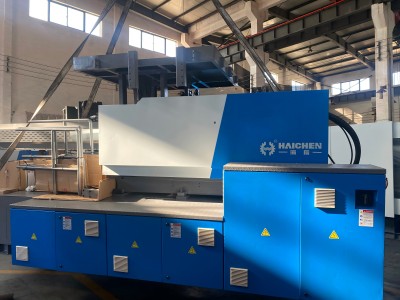
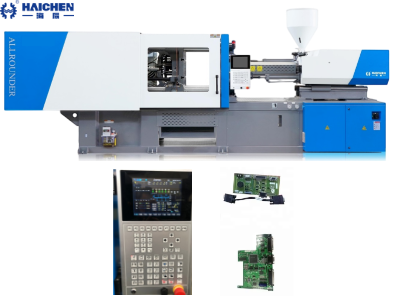
Haichen plastic injection molding machine
The design and manufacture of mold considerations is a complex and delicate process that requires comprehensive consideration of multiple factors. For instance, in the design stage, the mold opening direction and demolding slope must be carefully determined. And the product wall thickness should be optimized. However, in the manufacturing stage, material selection is critical, and fine processing and heat treatment processes need to be precisely controlled. So, by strictly controlling each link, from design to manufacturing, the quality and production efficiency of the mold can be ensured to meet customer needs.
By understanding and following these precautions, designers and manufacturers can better complete the customization of molds and produce high-quality products.
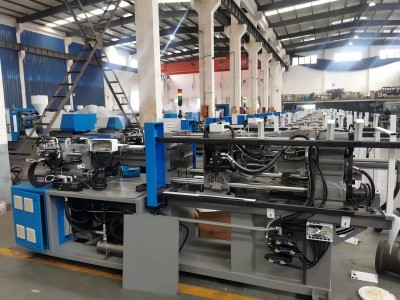
Our Haichen Machinery supplies injection molding machines, molds, and auxiliary equipment according to our customers’ requirements and offers customized and innovative solutions to meet their needs, while providing excellent customer service and support. Welcome to visit our website for more information: haichen-machine.com