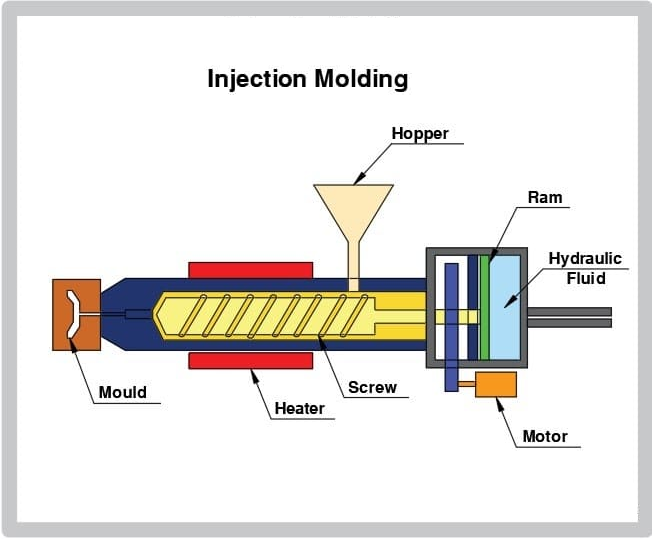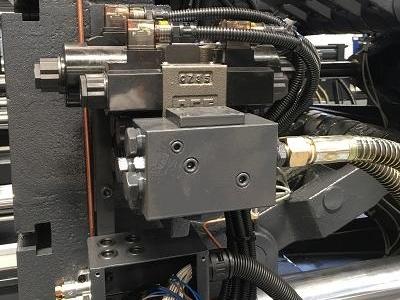
In actual industrial production, the type and size of injection moulding machines significantly affect their power consumption. Hydraulic machines that use hydraulic systems for mould clamping and injection typically consume more electricity than purely electric machines. The cycle time during the injection moulding process also directly affects power consumption. Longer cycle times result in increased energy consumption for each component produced. In addition, injection moulding machines consume a certain amount of energy and electricity during heating and cooling processes.
Therefore, when considering energy, it is essential to consider the injection moulding system as a whole. High efficiency and energy saving have become standard features of Haichen injection moulding machines. Our goal is to find the most efficient solution to meet your needs. With integrated temperature control solutions and intelligent PLC device communication, you can significantly reduce your electricity consumption and carbon dioxide emissions to protect the environment.
Energy saving transformation of injection molding machine includes servo drive, frequency conversion technology, high-efficiency heating (infrared/electromagnetic), all-electric type, accumulator, intelligent control system, etc.
Analysis about Energy-Saving Transformation of Injection Molding Machines
- Power Drive System Energy Saving
- Heating System Optimization
- Hydraulic System Upgrades
- Injection molding Smart Control & Process Optimization
- Economic Benefits & Case Studies
- Injection molding Future Directions
Power Drive System Energy Saving
- Servo Drive Technology
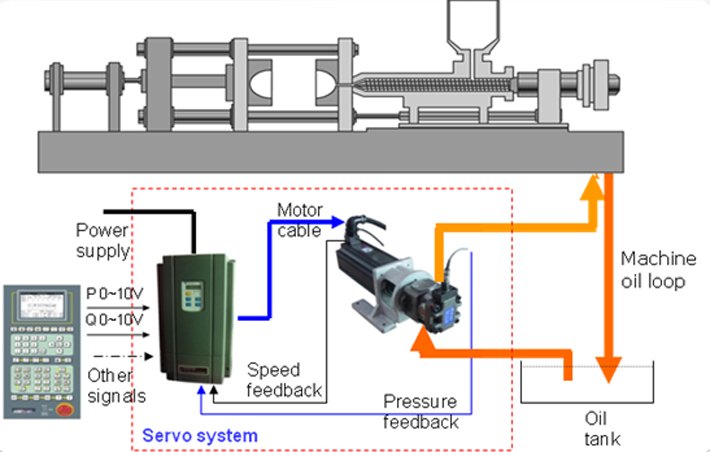
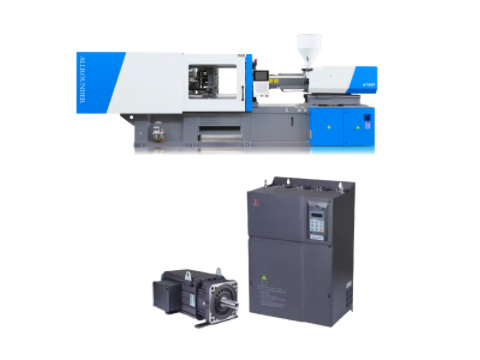
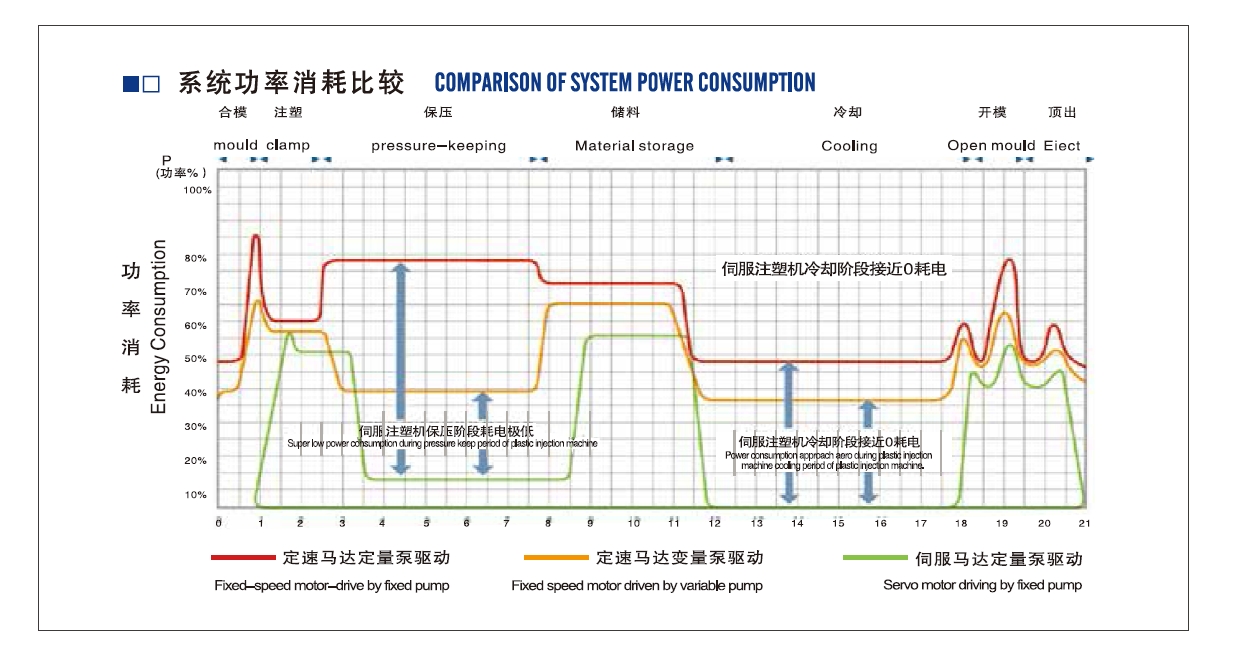
Servo systems dynamically adjust motor speed and torque to achieve pressure-flow dual closed-loop control in hydraulic systems, ensuring energy consumption matches load requirements. Compared to traditional fixed-displacement pump systems, average energy savings exceed 50%, with some cases achieving 80% savings. Examples:- A plastic products manufacturer retrofitted 50 servo-driven machines, saving 6.6 million kWh/year with a 6-year ROI.
- Servo systems in food container production reduced electricity use by 80% in one case study.
- Variable Frequency Drive (VFD)
VFDs adjust oil pump motor speed to match actual flow demand, minimizing overflow losses. Typical savings: 30–50%. Case studies show up to 41.3% electricity cost reduction after VFD installation. Benefits include soft-start protection and reduced oil temperature, though low-speed dynamic response may require optimization. - All-Electric Injection Molding Machines
Direct servo motor drives eliminate hydraulic oil losses, achieving 80% energy savings with high precision (positioning accuracy: 0.01 mm) and cleaner operation. High upfront costs currently limit widespread adoption.
Heating System Optimization
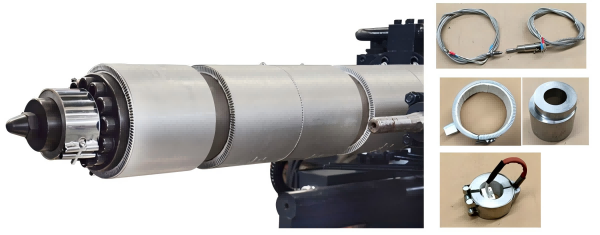
- Infrared/Electromagnetic Heating Technology
Infrared heating enables precise temperature control with 40% lower energy use compared to resistive heating. Electromagnetic heating further improves efficiency, enhancing product quality while reducing energy waste. - Dual-Efficiency Energy-Saving Heating Rings
Utilizing far-infrared radiation and reflection, these heating rings reduce surface temperature gradients and extend lifespan by 50%. Recognized as a key promoted technology in national energy-saving initiatives.
Hydraulic System Upgrades
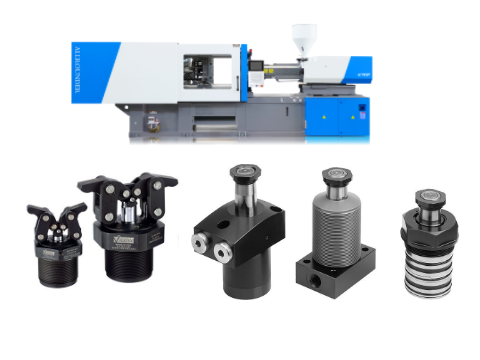
- Accumulator Technology
Stores energy during low-load phases and releases it during high-pressure cycles, reducing motor idle losses. Custom energy-saving modules demonstrate significant efficiency gains. - Two-Platen Clamping System
Replaces traditional three-platen designs, reducing material waste and improving clamping precision. Widely applied in modern four-cylinder direct-lock machines. - Hybrid Drive Systems
Combining hydraulic and servo systems, these solutions eliminate high-pressure overflow, achieving 60% energy savings in documented cases.
Injection molding Smart Control & Process Optimization
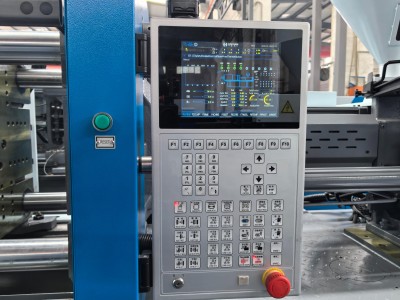
- Real-Time Parameter Monitoring
Intelligent systems adjust temperature, pressure, and cycle time via sensors. For example, optimized mold cooling can shorten cycle times and reduce energy use. - Process Parameter Optimization
Refining parameters like melt temperature (330°C), mold temperature (120°C), and clamping force (140T) alongside VFD retrofits has shown 12.2% additional energy savings in case studies. - Cloud Energy Management Systems (CEMS)
IoT-enabled platforms analyze energy data for dynamic optimization, saving 107,000 kWh/year and reducing CO₂ emissions by 55,800 kg in pilot projects.
Economic Benefits & Case Studies
- ROI: Servo retrofits typically pay back in 6 years; VFD upgrades in 4–6 months. For example, retrofitting 20 vertical machines saved 138,600/year∗∗,yielding∗∗1.1 million over 8 years.
- Policy Support: Servo technology is prioritized in national energy-saving catalogs, targeting 85% industry adoption within 5 years (annual coal savings: 350,000 tons).
Injection molding Future Directions
- Technology Integration: Development of hybrid systems (e.g., “servo + heating”) and energy recovery devices.
- Cost Reduction: Scaling all-electric machines and advancing next-generation VFD pump controls.
- Standardization: Establishing energy benchmarks (e.g., ISO 50001 certification) for systematic energy management.
Energy-saving retrofits for injection molding machines require tailored combinations of servo/VFD drives, smart controls, and process refinement. Potential 30–80% energy savings align with industrial decarbonization goals while boosting productivity and product quality. Case studies and policy frameworks confirm the viability of these solutions for sustainable manufacturing.
Servo energy-saving technology for injection molding machines
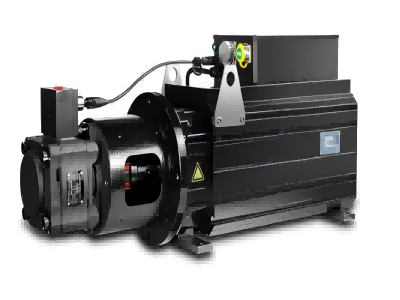
Servo energy-saving technology for injection molding machines is an advanced approach that optimizes energy consumption and enhances efficiency through a closed-loop control system. Its core lies in leveraging the high-precision dynamic response and intelligent regulation capabilities of servo motors. Below is a detailed analysis covering technical principles, system components, energy-saving effects, key advantages, and future trends:
- Injection molding Technical Principles and System Components
- Injection moldingEnergy-Saving Effects and Economic Benefits
- Core Advantages
- Current Applications and Trends
Injection molding Technical Principles and System Components
- Closed-Loop Control Mechanism
The servo system uses pressure sensors, encoders, and other devices to provide real-time feedback on flow and pressure signals. The controller (e.g., servo drive) dynamically adjusts the servo motor’s speed and torque to precisely match the hydraulic oil demand during each molding phase (clamping, injection, cooling, etc.), minimizing idle oil flow and energy waste. For example, during cooling, the servo motor can fully stop, achieving zero power consumption. - Key Components
- Servo Motors: Including permanent magnet synchronous motors (compact, fast response) and AC induction motors, which adjust output in real time based on load changes.
- Drive and Controller: Receive feedback signals and generate commands, enabling rapid response (0.05-second level).
- Hydraulic Pump and System: Gear pumps, piston pumps, etc., combined with servo control to reduce hydraulic oil heating and cooling demands.
- Sensors: Pressure sensors and rotary encoders ensure closed-loop control accuracy.
Injection moldingEnergy-Saving Effects and Economic Benefits
- Energy Savings Range
Compared to traditional fixed-displacement pump machines, servo technology reduces energy consumption by 20%–80%, depending on machine type and process stages:- Average savings of 50%–60% after retrofitting conventional fixed-pump machines.
- High-performance systems (e.g., Haitian MAII series) achieve 70%–80% savings in specific processes.
- Hybrid systems (combining hydraulic and electric) save 30%–50%.
- Comprehensive Benefits
- Lower Operating Costs: Reduced electricity bills and cooling water usage (due to stable oil temperatures).
- Higher Productivity: Faster response times (0.05 seconds vs. traditional 0.1 seconds) shorten cycle times, boosting output by 10%+.
- Extended Equipment Lifespan: Reduced hydraulic system wear lowers maintenance costs.
Core Advantages
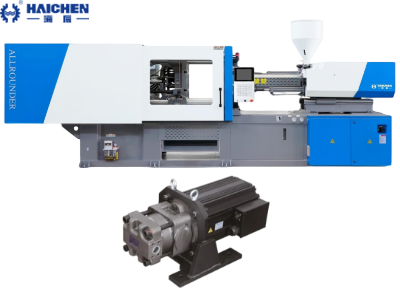
- High-Precision Control
Repeatability error in injection metering ≤ 0.3%, suitable for precision molding (e.g., automotive components). - Dynamic Response and Stability
Servo motor vector control ensures instantaneous adjustment of pressure/speed, reducing defect rates. - Eco-Friendliness and Low Noise
Operating noise is 10% lower than traditional machines, ideal for noise-sensitive environments. - Fault Tolerance
Some systems (e.g., GK-SIII) maintain basic operations during faults, avoiding production downtime.
Current Applications and Trends
- Market Penetration
Servo systems dominate the market, with 90%+ of new injection molding machines adopting this technology. Fixed-pump models are being phased out. - Retrofitting Demand
Retrofitting pre-2008 hydraulic machines achieves 40%–50% energy savings (more significant for 200+ ton models). - Future Development
- Larger-Scale and High-Performance Systems: High-power servo motors and large-flow pumps for heavy-duty applications.
- Smart Integration: IoT-enabled real-time energy monitoring and optimization.
- Dual Energy-Saving Technologies: Combining servo systems with heating systems (e.g., quartz superconductors) to further reduce total energy consumption.
Servo energy-saving technology, with its precise closed-loop control and high-efficiency components, significantly reduces energy consumption while improving production accuracy and speed. It delivers 30%–80% energy savings, alongside low-noise operation and extended equipment life, making it a cornerstone of the injection molding industry’s green transformation. As high-power components and intelligent management evolve, this technology will continue to drive the industry toward sustainable manufacturing.
Haichen high quality servo energy-saving injection molding machine
Haichen (Ningbo Haichen Technology)’s servo energy-saving injection molding machine is famous for its high efficiency, energy saving, precision control and high stability.
Let’s show you the details:
- Injection molding Energy Efficiency & Productivity
- Precision Control Technology
- Key Models & Specifications
- Structural Design Highlights
- Structural Design Highlights
- Service & Support
Injection molding Energy Efficiency & Productivity
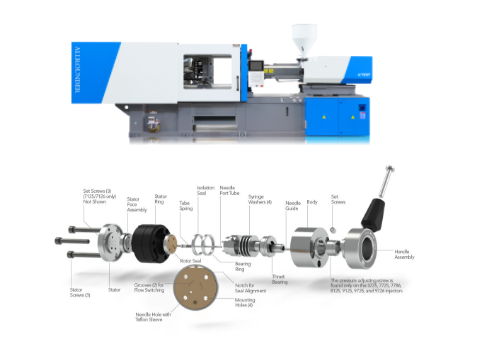
- 15%-70% Energy Savings: Replaces traditional hydraulic systems with servo motor drives, utilizing dual closed-loop control (pressure/flow) for on-demand power. Zero energy consumption during cooling phases.
- 10%-50% Faster Cycles: Rapid response (pressure/flow adjustments within 30ms) reduces production cycle time.
Precision Control Technology
- Closed-Loop Pressure & Flow Control: Real-time feedback via pressure sensors and encoders improves repeatability (+2% accuracy).
- Smart Hydraulic System: High-quality imported pumps and proportional valves stabilize oil temperature, reduce noise, and minimize energy loss.
Key Models & Specifications
- E Series (Mid/Small-Scale, Models: HCKXXX-E)
- HCK100-E: 100-ton clamping force, injection capacity 106-144g (PS), ideal for small standardized parts (e.g., plastic utensils, electronic components).
- HCK120-E: 120-ton clamping force, injection capacity 148-213g (PS), tie-bar spacing 410×410mm for larger molds.
- Extended Range: Covers 80-4000 tons (e.g., HCK230-E, HCK310-E).
- High-Speed Series (HCS Models)
- HCS360-HS: Injection rate up to 368g/sec, optimized for thin-walled containers, PET preforms, and high-volume production.
Structural Design Highlights
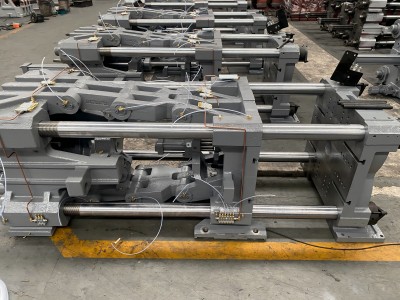
- Clamping Unit: Five-point double-toggle clamping mechanism with computer-optimized design for enhanced rigidity and stability.
- Injection Unit: Dual-cylinder, dual-guide structure with high-torque hydraulic motor and PID temperature control, ensuring uniform plasticization (±0.1% accuracy).
Injection molding Applications
- Typical Products: Plastic utensils (forks/spoons), electronic parts, thin-walled containers, bottle caps.
- Material Compatibility: PP, PE, ABS, PC, engineering plastics, and more.
Service & Support
- Technical Solutions: Automation integration (robot interfaces), mold optimization guidance.
- Warranty Policy: 6-18 months warranty on screws/barrels (varies by material type), free spare parts replacement, and on-site engineer support.
By the end
Haichen’s (E Series) and HCK servo-driven machines deliver energy efficiency, precision, and reliability across small-to-large-scale production (100-4000 tons). Customizable solutions and robust structural designs make them ideal for diverse industrial needs.