Calculate injection molding machine tonnage uses this formula (Mold Projected Area × Injection Pressure) / Safety Factor.
Injection moulding machine tonnage calculation is a formula that comprehensively considers the mold projection area, injection pressure and safety factor. By accurately calculating the tonnage, it can ensure that the mold remains stable during the production process and avoid product defects or mold damage caused by insufficient clamping force.
Here, in this blog we will analyse each one factor and their calclulation method. Please follow below details:
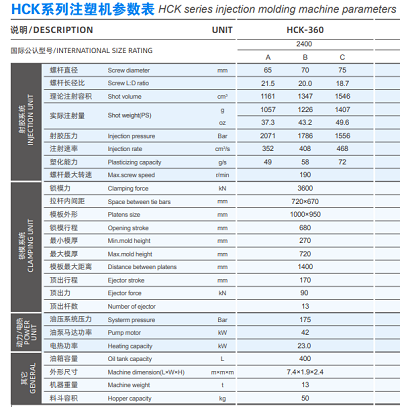
Determine the mold projected area of injection molding machine tonnage calculation
First, you need to calculate the mold projected area, which is the total projected area of the mold on the parting line. This area usually measures in square inches or square centimeters.
Calculation of projected area
- Rectangular mold: Projected area = length × width
For example, a 5-inch × 5-inch mold has a projected area of 25 square inches. - Circular mold: Projected area = π × radius²
For example, a circular mold with a diameter of 10 cm has a projected area of 78.5 square centimeters. - Complex shapes: The mold needs to be decomposed into simple geometric shapes (such as rectangles and circles), and the projected areas of each part need to be calculated and added together.
Handling of special cases
- Deep cavity parts or complex structures:
The projection of the side wall on the parting surface needs to be calculated additionally, and the clamping force safety factor may be increased (usually 10-15%). - Thin-walled parts:
Due to the higher filling pressure, a larger tonnage factor (such as 5-8 tons/square inch) needs to be selected.
Key considerations
- The runner system must be included: Ignoring the runner area will result in insufficient clamping force, causing flash or expansion.
- Material influence:
High viscosity materials (such as PC) require a higher tonnage factor (4-8 tons/square inch), while common materials such as PP are about 2-5 tons/square inch. - Safety factor:
Final tonnage = projected area × tonnage factor × safety factor (usually 1.1-1.15).
Example: 36 in² × 4 (tonnage factor) × 1.1 (safety factor) = 158.4 tons → 160-ton injection molding machine is required. - Verification:
After preliminary calculation, check against the tonnage factor table of the material supplier.
Calculation process
- Measure the maximum contour size of the part on the parting surface;
- Calculate the projected area of a single piece (regular shapes use formulas, and special-shaped parts are decomposed into geometric combinations);
- Multiply by the number of cavities and add the flow channel area;
- Select the tonnage coefficient based on the material (2-8 tons/square inch);
- Add the safety factor (≥10%) to obtain the minimum clamping tonnage
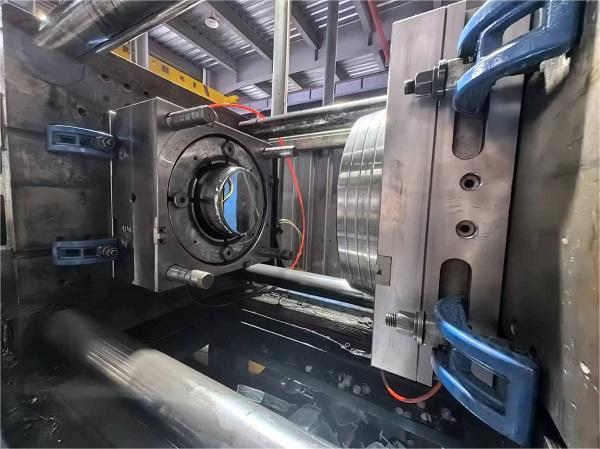
Injection moulding machine tonnage calculation: Determine the injection pressure
Injection pressure refers to the force required to inject molten plastic into the mold cavity, usually in pounds per square inch (psi) or megapascals (MPa).
Core calculation formula
The calculation formula for injection pressure (unit: psi or bar) is Injection pressure =clamping force(ton)x2000/ Projected area (in²)
This formula is clearly mentioned in multiple evidences, where:
- Clamping force: The tonnage capacity of the injection molding machine (unit: tons), which indicates the maximum pressure that the mold can withstand when closed.
- Projected area: The maximum single-sided area of the part and runner on the parting surface (unit: square inches)
- 2000: Unit conversion factor (1 ton = 2000 pounds)Example calculation:
If the mold projected area is 100 in² and the clamping force is 350 tons:
Injection pressure = (350 × 2000) / 100 = 7000 psi
Direct impact of materials on injection pressure
Different materials require different injection pressure ranges:
- General plastics (such as LDPE, HDPE): 3000–5000 psi
- Engineering plastics (such as PVC, PC, PET): 8000–10,000 psi
- Empirical reference value: Most materials require a clamping force of 2–5 tons/in², corresponding to an injection pressure of 4000–10,000 psi
Other influencing factors
- Safety factor: The actual injection pressure needs to be multiplied by the safety factor (usually 1.1–1.5) to avoid flash or mold deformation.
- Mold complexity: Complex structures or deep cavity parts require higher pressure.
- Equipment limitations: The maximum injection pressure of the injection molding machine is usually 20,000 psi (140 MPa), but the runner system may lose 50% of the pressure.
Summary calculate steps
- Determine the projected area: measure the maximum single-side area of the part (including the flow channel).
- Select the tonnage factor: check the table according to the material type.
- Calculate the clamping force: clamping force = projected area × tonnage factor × safety factor (recommended 1.1–1.5).
- Derive the injection pressure:
Direct formula: injection pressure = (clamping force × 2000) / projected area
Or refer to the material pressure range. - Equipment verification: ensure that the maximum injection pressure of the injection molding machine ≥ the calculated value
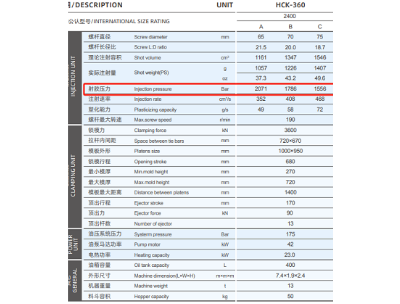
Calculate injection molding machine tonnage: select the safety factor
Definition and function of safety factor
It is a multiplier uses to compensate for uncertain factors in the injection molding process. (such as fluctuations in material fluidity, changes in mold temperature, etc.). Ensuring that the clamping force is sufficient to prevent defects such as flash and short shots. Its core functions are:
- Covering process fluctuations: Slight changes in material viscosity and injection speed may increase the actual required clamping force.
- Avoid mold deformation: Insufficient clamping force may cause slight separation of the mold and produce flash.
- Ensure part quality: Too low clamping force will cause defects such as shrinkage marks and warping
Safety factor range and selection basis
The safety factor uses to account for uncertainties and changes in the process. To ensure that the calculated tonnage is sufficient to cope with various situations in the production process. The safety factor is usually between 1 and 4.
- Conventional range: 1.1–4.0
1.1–1.5 (10%–50%):
Applicable to low-complexity parts and stable material viscosity (such as PE, PP):
It is recommended to increase the clamping force by 10% (i.e. safety factor 1.1).
Recommended 10%–15% (i.e. safety factor 1.1–1.15). - 2.0–4.0:
Applicable to the following high-risk scenarios:
Thin-walled parts (thin-walled parts require higher tonnage).
High-viscosity materials (such as PC, glass fiber-containing materials) or complex geometric structures.
Multi-cavity molds (multiple cavities require overlapping projected areas).
Key selection principles
- Material properties:
High-viscosity materials (such as PC) require a higher safety factor (≥2.0).
Low-viscosity materials (such as LDPE) can be reduced to 1.1. - Part design:
Thin-walled parts (wall thickness <1mm) are recommended to have a safety factor of ≥3.0.
Complex structures (such as deep ribs, micropores) require an additional 20%–50% margin. - Mold and process:
Multi-cavity mold: Total projected area = single cavity area × number of cavities.
High-speed injection process: Safety factor needs to be increased by 10%–20%.
Injection molding machine tonnage calculation
Use the following formula to calculate the required tonnage:
Tonnage = (Mold Projected Area × Injection Pressure) / Safety Factor
For example, if a simple rectangular part has a projected area of 20 square inches, an injection pressure of 20,000 psi, and a safety factor of 3 is assumed, the tonnage calculation is as follows:
Tonnage = (20 square inches × 20,000 psi) / 3 ≈ 133,333.33 pounds, which is approximately 67 tons [[1]].
The calculation formula of injection moulding machine tonnage is an important concept in the injection molding industry. It uses to determine whether the injection molding machine can meet the clamping force requirements of the mold.
So through the above steps, the required injection molding machine tonnage can be calculated more accurately. Therefore, you can select suitable injection molding machine for production.
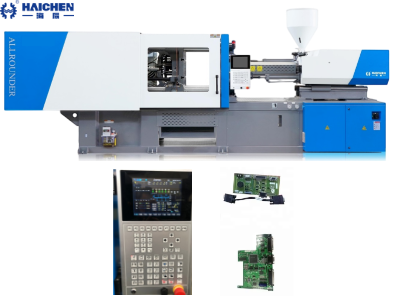
Haichen calculate injection molding machine tonnage
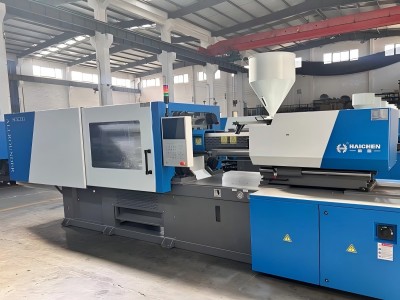
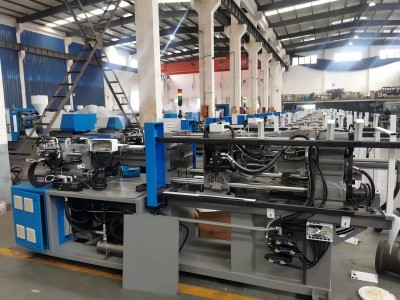
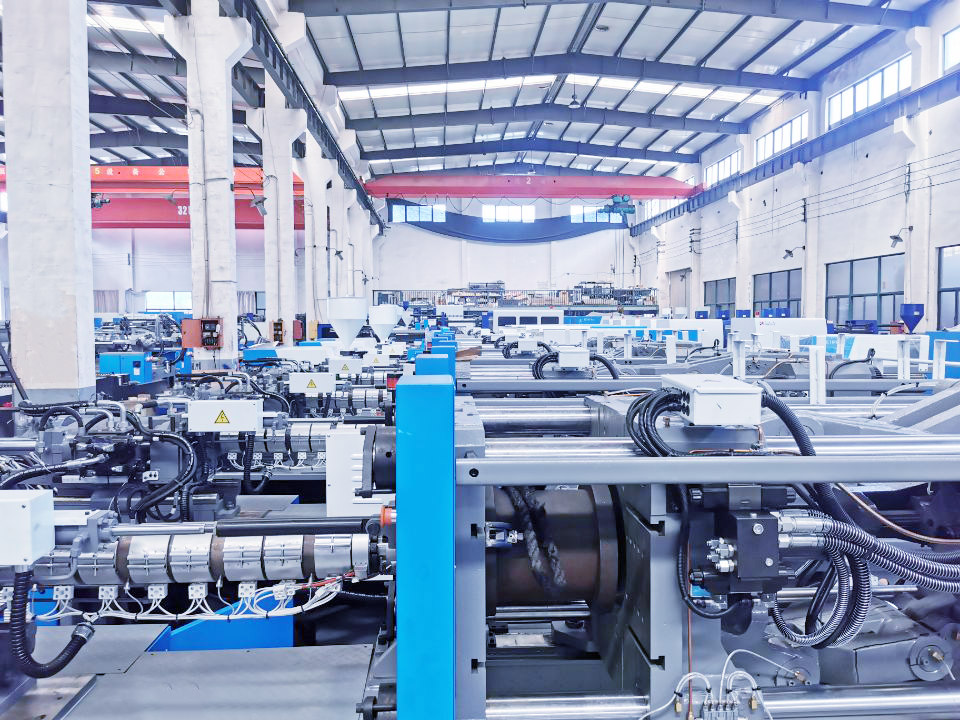
Haichen is one injection molding machine manufacturer in Ningbo, China.
Our servo energy saving injection molding machines quality are under CE safety standars certificate.
With more than 10years professional production experience, we can calculate the required tonnage of the injection molding machine. Then ensuare the mold can work normally during the production process and avoid mold damage or product quality problems caused by insufficient tonnage.