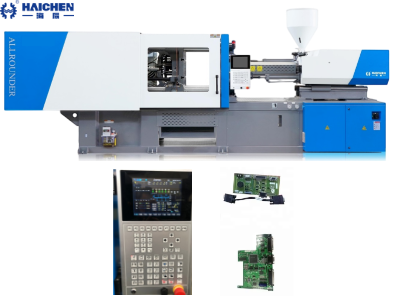
To choose an injection molding machine for plastic spoon production, you need to understand the material and type of plastic injection molding machine that matches the material you are using.Choosing the right injection molding machine for plastic spoon production requires a number of factors to considere to ensure productivity and product quality.
The key steps in the injection molding production of plastic spoons include material selection and pretreatment, injection molding machine operation, mold design and multi-cavity application, process parameter optimization, and sustainability measures.
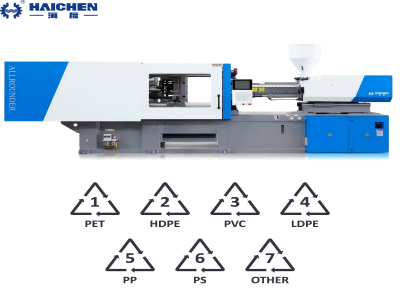
The production principle of plastic spoons is based on thermoplastic injection molding technology, using polypropylene (PP), polyethylene (PE) or biodegradable materials such as PLA.
Key Steps to Choose Plastic Spoon Injection Molding Machine
We give seven suggestions after years of practical experience:
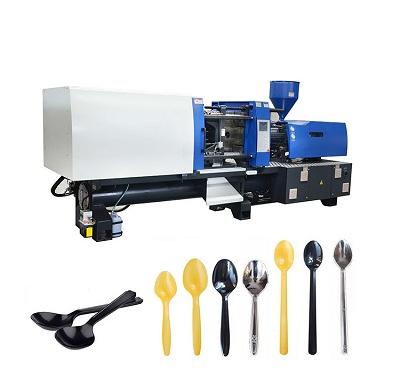
- Define production requirements and capacity
- Evaluate product size and weight
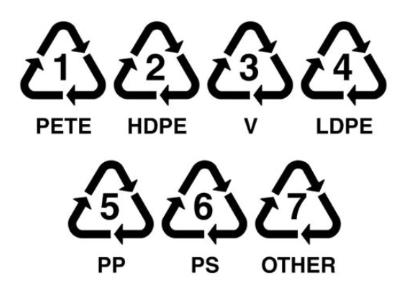
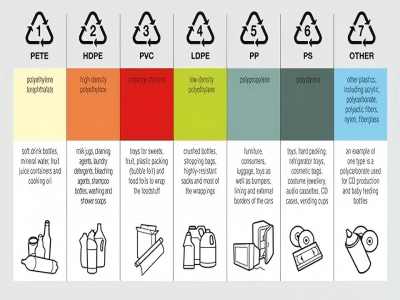
- Understand the type and properties of the plastic material
- Technical and functional requirements
- Cost and budget
- Mould requirements
- Operation mode and automation degree
- Environmental protection and safety standards
Clear production demand and capacity:
Firstly, you need to define the production demand for plastic spoons, including the daily or hourly production volume and speed.
This will help to determine the range of capacity of the required injection moulding machine.
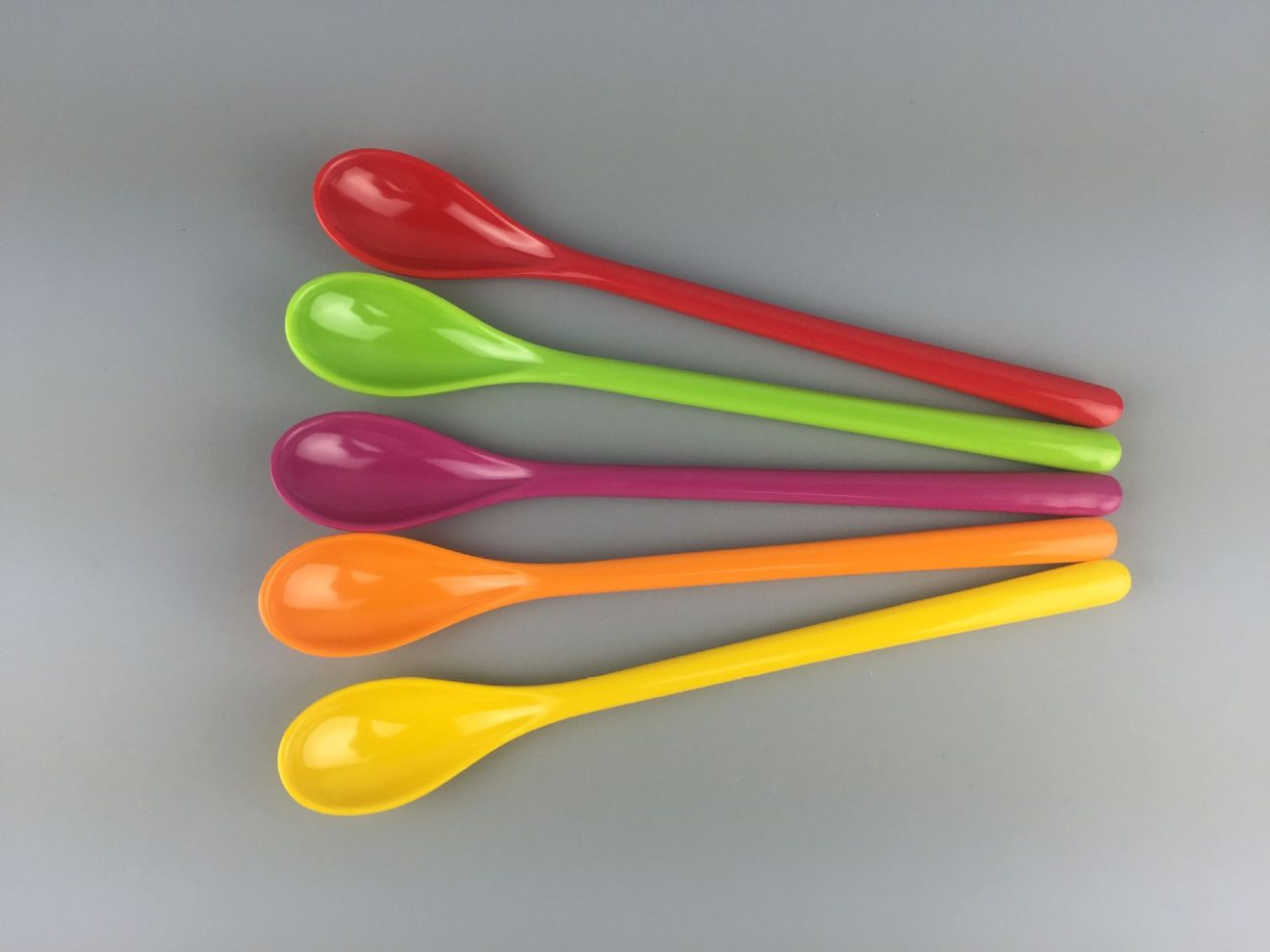
Evaluate product size and weight:
Ensure that the selected injection molding machine can accommodate the size and weight requirements of the plastic spoon.
Plastic spoons are usually small, so you need to choose an injection moulding machine that can handle the appropriate weight and size.
Understand plastic material types and properties:
Common materials used for plastic spoons include polypropylene (PP) and polyethylene (PE).
Understand the density, viscosity and thermal stability of these materials in order to select matching processing parameters and controls.
Technical and functional requirements:
Select injection molding machines with features such as automated control systems, temperature control and quick mould change according to specific needs.
These features can improve production efficiency and product quality.
Cost and budget:
Balance price and performance to choose a cost-effective injection molding machine model that meets your production needs.
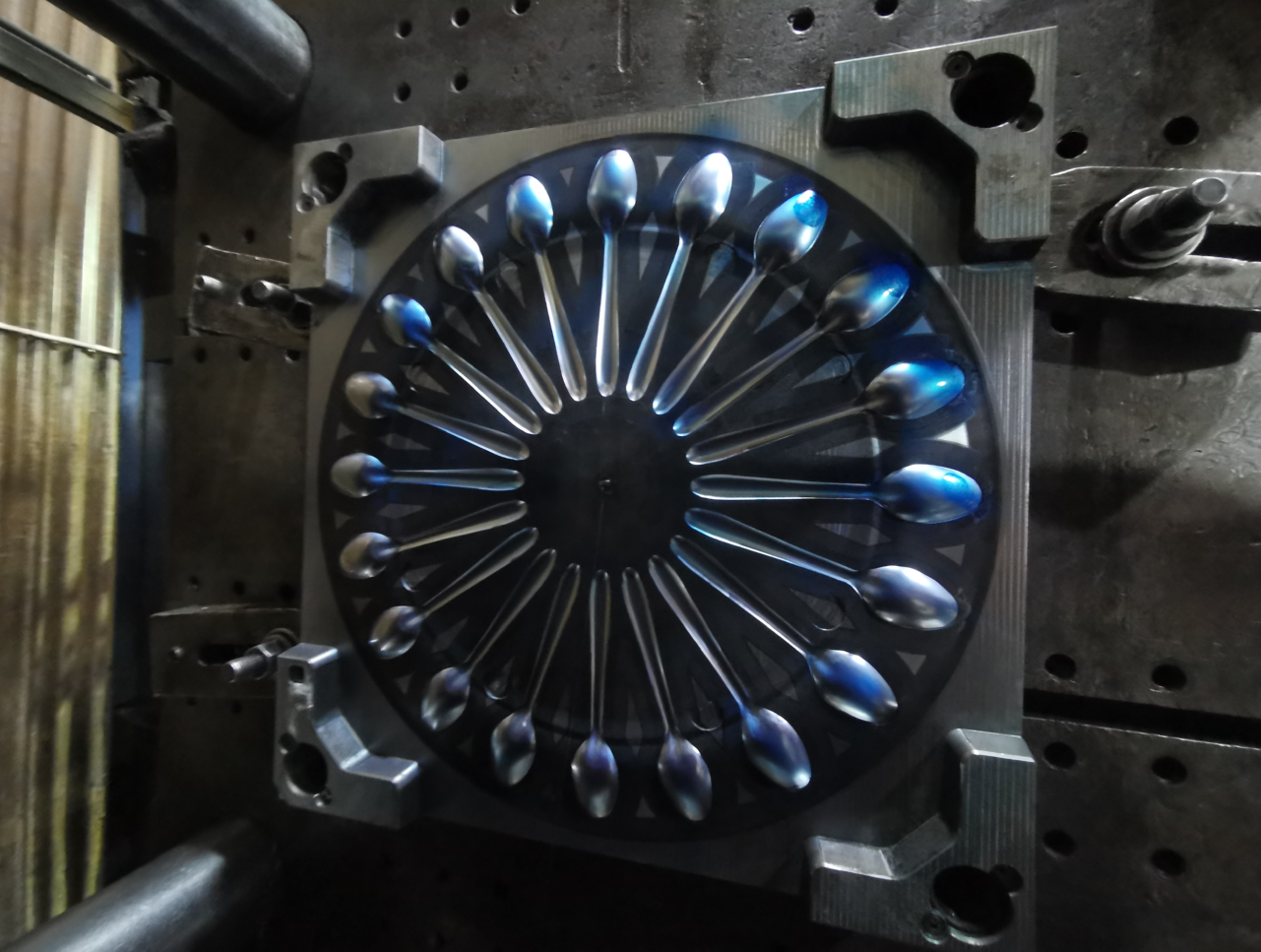
Mould requirements:
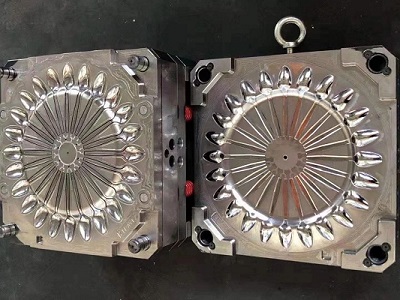
Ensure that the injection molding machine’s parameters such as mould size, clamping force and shot size can meet the requirements of the mould design.
The mould size should be in accordance with the recommended minimum mould size of the injection molding machine.
The clamping force should be sufficient to prevent the mould from being held open under high pressure.
Operation mode and degree of automation:
Select manual, semi-automatic or fully automatic injection molding machine according to the production scale.
Modern injection moulding machines should improve production efficiency.
Environmental protection and safety standards:
Modern injection molding machines should meet environmental and safety standards.
Reduce noise pollution and have the necessary safety protection systems to safeguard the safety of operators.
Through the above steps, you can buy the injection molding machine which is suitable for plastic spoon production and improve the production efficiency and product quality.
How to calculate the capacity of plastic spoon injection molding machine?
To calculate the capacity of a plastic spoon injection molding machine, we need to consider several factors.
We need to know the type of injection molding machine, the production cycle time, the number of production per hour, the number of plastic spoons produced each time, etc.
We can analyse the following aspects:
Energy consumption and time prediction model for the injection molding process
Number of plastic spoons produced per cycle
Calculation of the capacity of the injection molding machine
Influencing factors in actual production
Advanced planning and scheduling system
Energy consumption and time prediction model for the injection molding process:
the production cycle time of the injection moulding machine can be calculated more accurately by establishing the energy consumption and time prediction model for these stages.
For example, the influence of speed on the energy consumption and action time of opening and closing moulds, ejector inlet and outlet stages of action is investigated by the control variable method.
The effect of holding pressure on holding pressure energy consumption.
Injection speed effect injection temperature and mould cavity size on injection energy consumption and injection time.
The effect of plasticising speed, plasticising temperature and back pressure on plasticising energy consumption and plasticising time.
Production cycle time of an injection molding machine: Suppose we have calculated the time of a production cycle as T minutes by using the above model. Then, the number of production cycles per hour is 60/T cycles.
Number of plastic spoons produced per cycle:
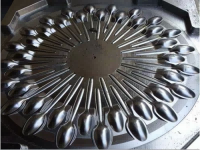
This depends on the design of the injection mould.
It is assumed that N plastic spoons producing each time.
Calculation of the capacity of the injection moulding machine:
Based on the above information, the capacity of the injection moulding machine can be calculated as N* (60/T) plastic spoons per hour.
If you need to calculate the daily or annual production capacity, simply multiply the production per hour by the number of working hours per day (assuming H hours/day) or per year (assuming H*365 hours/year).
Influence factors in actual production:
In actual production, in addition to the above theoretical calculations, you also need to consider the influence of other factors.
Maintenance time of the machine, the operation proficiency of the staff, the stability of the quality of raw materials, etc..
These factors may cause the actual production capacity to differ from the theoretical calculation.
Advanced Planning and Scheduling System (APS):
Setting up an APS system can help to predict and manage production resources more accurately, thus improving the actual capacity utilisation.
Calculating the capacity of plastic spoon injection moulding machine achieve by combining the theoretical model and the actual production situation, through multi-faceted analysis and optimization.
What are the technical and functional requirements of plastic spoon injection molding machine?
The technical and functional requirements of plastic spoon injection molding machine can be analysed from several aspects, including mechanical structure, control system, process parameters, intelligent development and so on.
- Mechanical structure and function
- Temperature and pressure control
- Intelligent and automated
- Energy saving and environmental protection
- Optimisation of process parameters
Mechanical structure and function:
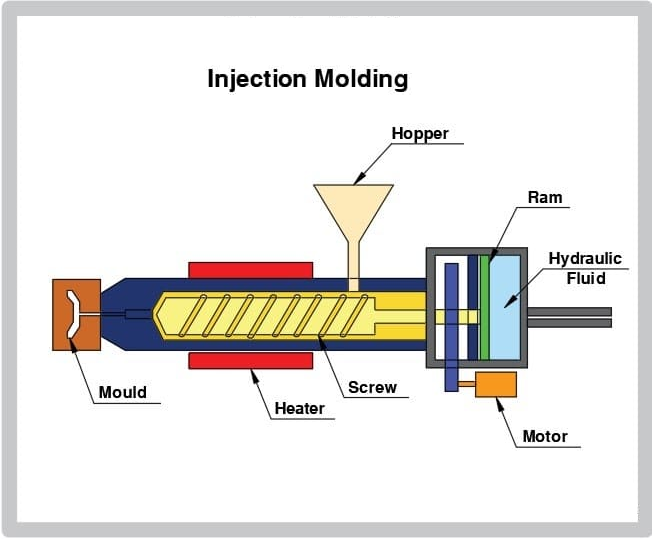
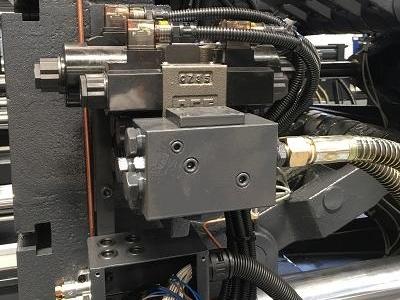
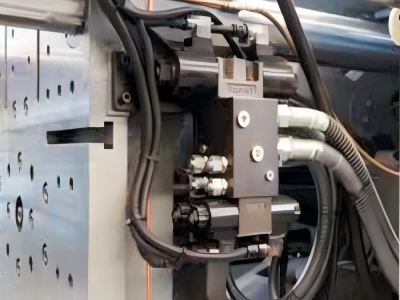
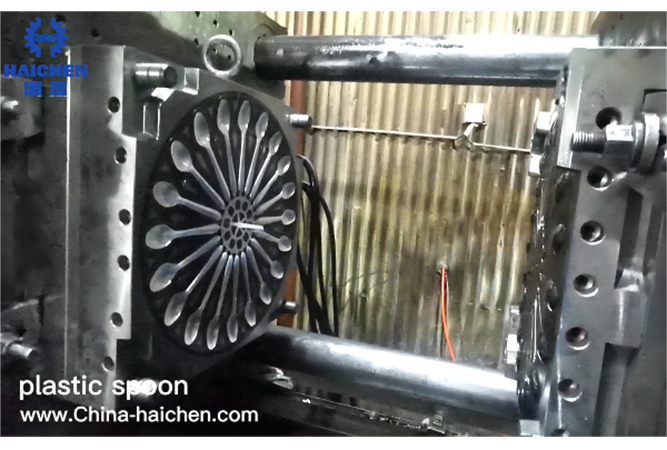
An injection molding machine usually consists of a hydraulic cylinder, a hopper, an injection unit, a mould and an operator door.
The hydraulic cylinder provides power to push the molten plastic into the injection device; the hopper is use fro store the material to be processing.
A screw in the injection unit pushes the plastic into the mould and injects it under high pressure into the mould to form the product.
Some injection moulding machines are also equiping with a screw loading device for automatic addition of plastic granules to improve production efficiency.
Newer injection molding machine designs incorporate linear shaft designs and tightly mounted heaters to ensure even heat distribution and improved moulding efficiency.
Temperature and pressure control:
Temperature and pressure control are key factors in the injection molding process.
Modern injection molding machines often have sophisticated temperature control features, capable of measuring and controlling the temperature of up to eight injection cylinders to ensure that the plastic is melted at the right temperature.
Mould positioning accuracy is also very important and can go through advance signal processing and intelligent learning control.
Intelligent and automated:
With the arrival of Industry 4.0, intelligent control technology for injection molding machines has developed rapidly.
Intelligent control technology includes the application of hardware, software and cloud technology, which can reduce human resources and improve product quality.
The application of PLC technology allows the electrical system of the injection molding machine to be modified to achieve precise control of temperature, mould opening and closing distance and shot volume.
The control system of the injection molding machine can also be set and displayed through a computer user interface, recording and archiving the operating parameters for easy management and optimisation of the production process.
Energy saving and environmental protection:
Energy-saving technical modification of injection molding machines is also an important direction in the development of modern injection moulding equipment.
For example, energy-saving modifications based on servo technology can reduce the generation of ineffective heat energy and improve energy efficiency.
Recycling and reuse of waste materials in the injection molding process is also one of the important measures for environmental protection.
Which helps to reduce production costs and reduce environmental pollution.
Optimisation of process parameters:
The reasonable configuration of injection molding process parameters directly affects the quality of plastic products.
Through the flow simulation technology and machine learning algorithms, the mould structure design and process parameter configuration can be optimized to improve the mechanical properties of the product.
Plastic spoon injection molding machine needs to be equipped with high-precision temperature and pressure control, intelligent control system, high-efficiency energy-saving technology and reasonable process parameter configuration to ensure the production of high-quality products and improve the production efficiency.
Cost is an important reason for choosing plastic spoon injection molding machine
Cost is an important reason for choosing plastic spoon injection molding machine, which is important for the economy of the whole production line.
In the production process of plastic products, the choice and use of injection moulding machine directly affects the production cost.
Here are a few key points:
The impact of design on cost
Application of energy-saving technology
Equipment investment and maintenance costs
Type and performance of injection molding machine
Energy-saving modifications and operation optimisation
Impact of design on cost:
70% to 80% of the production cost of an injection moulded part depends on the design of its structure.
This means that when selecting an injection molding machine, the optimisation of the mould design needs to taking into account in order to reduce production costs.
Application of energy-saving technology:
The energy consumption of injection molding machines is one of the important factors affecting the production cost.
The application of energy-saving technologies can significantly reduce electricity expenses, thus reducing overall production costs.
Equipment investment and maintenance costs:
Although high-precision injection molding equipment and moulds can improve production efficiency, their upfront investment costs are high.
Therefore, when selecting an injection moulding machine, you need to weigh the performance, durability and maintenance costs of the equipment.
Type and performance of injection molding machine:
Different types of injection molding machines (e.g. general-purpose and special-purpose) differ in performance and cost.
General-purpose injection molding machines are suitable for the production of a wide range of plastic products.
But may not be able to meet the precision requirements of high-end products.
Whereas special-purpose injection moulding machines are more expensive, but offer higher product quality and profit margins.
Energy-saving modification and operation optimisation:
Through the design modification of the injection molding machine and the optimisation of the operation parameters.
The energy consumption can be further reducing, thus lowering the production cost.
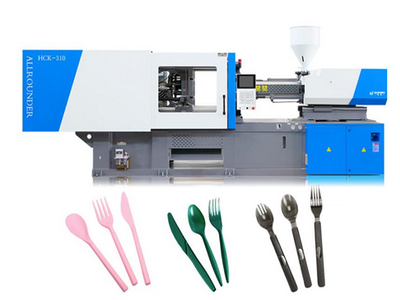
When choosing a plastic spoon injection molding machine, you need to consider a number of factors such as design, energy consumption, equipment investment and maintenance, as well as operation optimisation, in order to ensure that product quality is guaranteed while achieving effective cost control.
Haichen offers a wide range of plastic spoon production injection molding machine with different models and configurations to solve your various production needs.