Importance of Melt and Mold Temperature in Injection Molding, there is a close synergy.
Melt temperature dominates material fluidity and degradation control, while mold temperature determines product curing quality and production efficiency. Together, they affect the mechanical properties, dimensional stability and appearance of the final product. The optimization strategy needs to be based on material properties (such as amorphous/semi-crystalline polymer differences), product geometry and production goals, and coordinated regulation is achieved through precision temperature control equipment (such as industrial chillers) and real-time monitoring. Ignoring any parameter may lead to increased defect rates, increased costs and reduced production capacity.
The importance of melt temperature and mold temperature in injection molding reflect in many aspects. It directly affect the quality, production efficiency and cost-effectiveness of the final product. The following details their importance from different perspectives:
Importance of Melt and Mold Temperature in Injection Molding:Importance of melt temperature
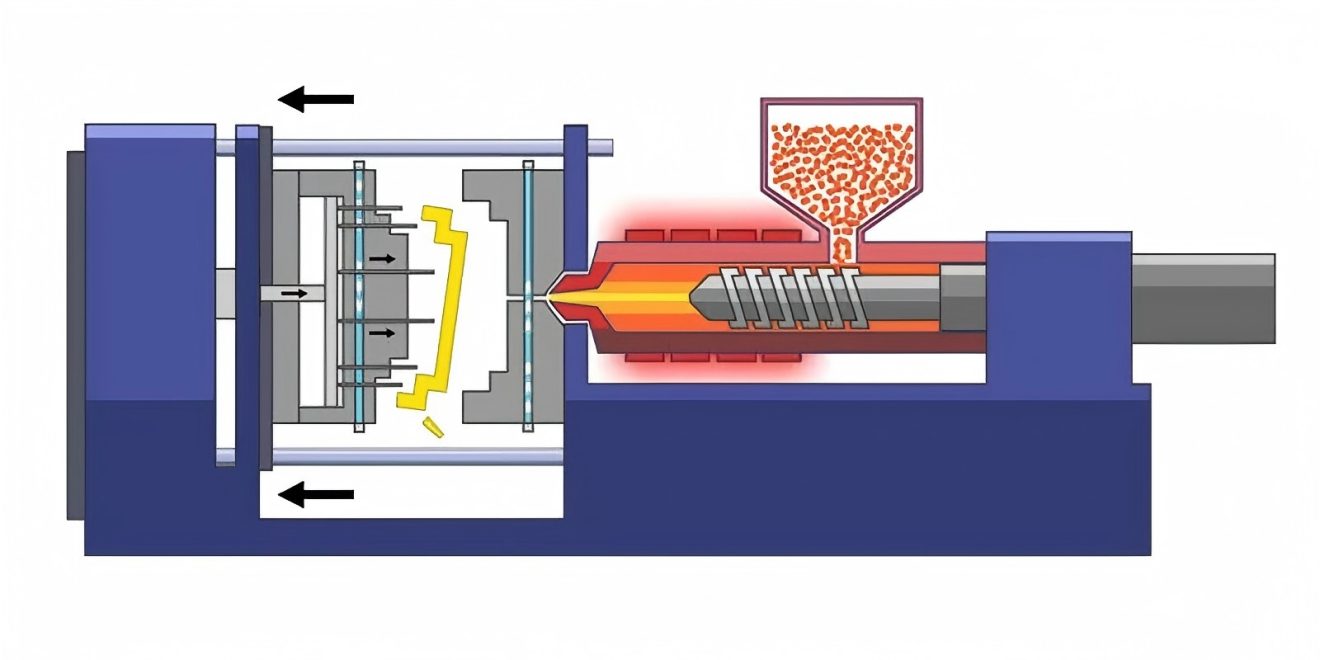
Melt temperature refers to the temperature of the plastic melt before it enters the mold. This parameter directly affects the fluidity, filling capacity and molding quality of the melt.
Flowability and filling quality
The melt temperature directly affects the viscosity and flowability of the plastic. Too low a temperature will result in too high a melt viscosity, resulting in defects such as incomplete filling, obvious weld lines or surface ripples; too high a temperature may cause material degradation (such as coking or bubbles). Different materials require precise control of the temperature range (e.g. 160–280°C for polyethylene PE), and the actual melt temperature is affected by the barrel heating rate, screw speed and material residence time, and may deviate from the set value by ±30°C.
Material properties and degradation risks
Excessive melt temperature will destroy the polymer molecular chain, reduce the mechanical properties of the product (such as fatigue resistance, creep resistance), and even produce volatile gases to cause bubbles or surface burns. A safe range needs to be set between the melting point and thermal decomposition temperature of the material.
Process stability
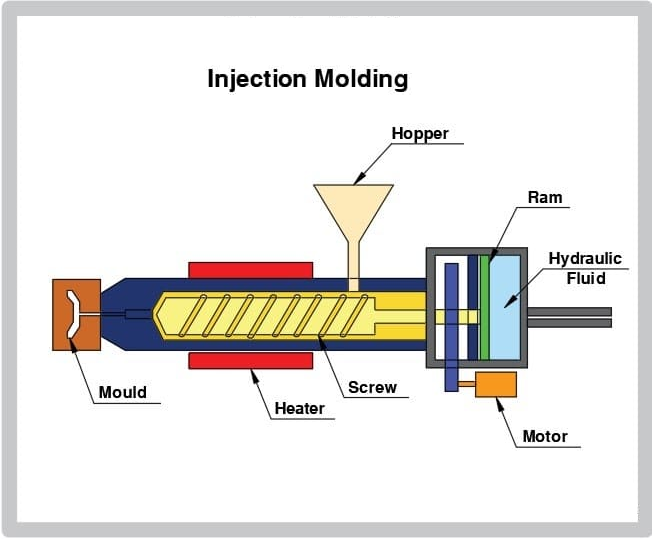
Fluctuations in melt temperature will change the shrinkage and crystallization behavior of the material, causing dimensional deviations and internal stresses. Melt uniformity needs to be ensured by barrel zone temperature control (gradually increasing temperature from the feed port to the nozzle)
- Flowability and filling capacity: Higher melt temperature can improve the flowability of plastic melt, thereby improving mold filling effect. For example, in thin-wall injection molding, increasing the melt temperature from 200°C to 400°C through external gas-assisted heating (Ex-GMTC) significantly increases the melt flow length from 37.85 mm to 41.56 mm, while improving filling capacity. Similarly, internal gas-assisted heating (In-GMTC) also enhances filling capacity by increasing the melt temperature.
- Crystallinity and mechanical properties: For crystalline plastics (such as PP/MWCNTs), the melt temperature affects its crystalline structure. For example, when the melt temperature increases from 70°C to 100°C, the crystallinity of the material increases, thereby improving the electrical resistance and mechanical properties of the product.
- Defect control: Too low melt temperature may lead to increased melt viscosity, insufficient flow, and defects such as flow marks or bubbles; while too high melt temperature may cause material degradation or premature solidification.
Importance of Melt and Mold Temperature in Injection Molding:Importance of mold temperature
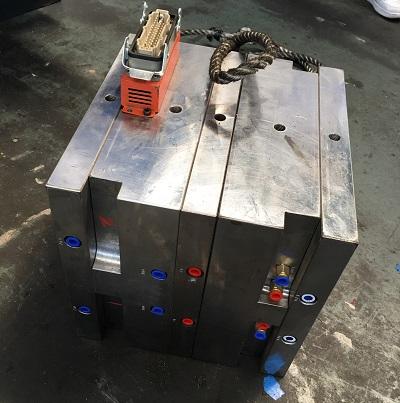
Mold temperature refers to the temperature on the mold surface or in the cavity. It has an important influence on the cooling rate, surface quality, dimensional accuracy and warpage of the product.
Cooling rate and warpage
Mold temperature directly affects the cooling rate of the product. Higher mold temperature can slow down the cooling rate, thereby reducing warpage. For example, in one study, the warpage of the product can be significantly reduced by optimizing the mold temperature.
Surface quality and pore distribution
Mold temperature also affects the surface quality and internal structure of the product. For example, in microcellular foam injection molding, increasing the mold temperature can make the bubbles denser and improve the bending strength and impact performance of the product.
- Uneven mold temperature can lead to shrinkage differences, causing internal stress, warping or dimensional deviation. Uniform mold temperature can improve surface gloss and reduce defects (such as sink marks).
- High temperature molds can promote orderly molecular arrangement and improve product toughness (such as nylon materials require precise control of mold temperature ±3°C)
Stability in the cooling stage after filling
During the mold cooling stage, the control of mold temperature can ensure that the plastic is fully solidified and avoid stress concentration and deformation caused by uneven cooling.
Synergy between melt temperature and mold temperature
There is a close synergy between melt temperature and mold temperature. For example:In thin-wall injection molding, the filling capacity and cooling time can be optimized by adjusting the melt temperature and mold temperature. Studies have shown that the best filling effect and dimensional accuracy can be obtained when the melt temperature is 210°C and the mold temperature is 60°C.
Balance melt and mold temperature
Avoid improving fluidity by only increasing melt temperature (prone to degradation) or only reducing mold temperature to shorten cycle (increase internal stress). Comprehensive adjustment is required based on material properties (such as amorphous/semi-crystalline).
Precision temperature control technology
- Use mold temperature controller or industrial chiller (when lower than ambient temperature) to ensure mold temperature fluctuation ≤±3°C.
- Melt temperature needs to be monitored in real time (such as thermocouple) rather than relying on barrel set value.
Optimize process parameters
- Set temperature curve based on material supplier data: barrel temperature decreases from nozzle to feed port, and the end temperature is 40–50°C lower than the melting point.
- Cooling water temperature should be 10–20°C lower than cavity surface temperature, and fluid heat transfer efficiency should be verified by Reynolds number.
In high-gloss injection molding, the control of mold temperature is divided into four stages: mold heating, high temperature holding, mold cooling, and low temperature holding. This staged temperature control helps to improve the surface quality and gloss of the product.
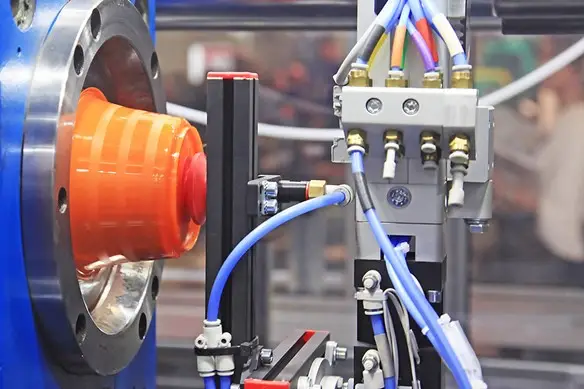
Above all, melt temperature and mold temperature are two core parameters in injection molding, which together determine the quality, performance and production efficiency of the product. By rationally controlling these two parameters and combining modern technical means (such as gas-assisted heating, hot runner technology and numerical simulation), the stability of the injection molding process and product quality can be significantly improved.
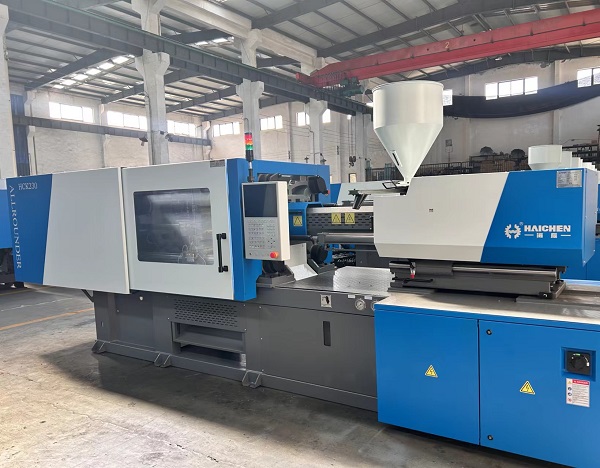
Haichen injection molding machine
We are Haichen, one injection molding machines manufacturer over more than 10 years.
Our Haichen injection molding machine parts are used with famous international and Chinese domestic brands.
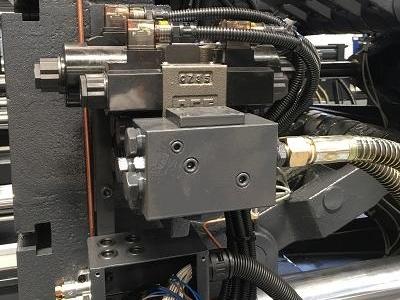
Like injection parts of injection moulding machine parts, we have stainless steel, two-metal screw and high mexing screw for selection. In clamping part of injection moulding machine parts, we use electronic position ruler with USA brand Bonny as standard. And Germany brand Novotechnik for option. In hydraulic part of injection moulding machine parts, we use Chinese famous brand Herg. And in electrical control parts of injection moulding machine parts, we use brand Schneider electric.
These can ensure our machine improves production efficiency and injection precision. Morover, all our servo energy saving injection molding machines quality under CE safety standards certificated.