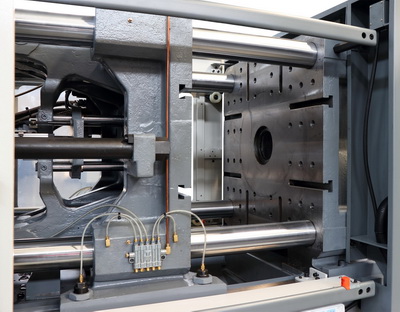
Importance of mold platen includes provide rigidity and structural support, precise alignment of mold halves, cool and hard the plastic, etc.
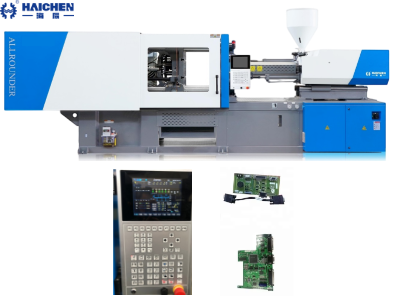
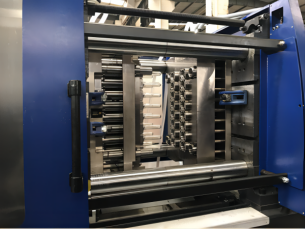
The injection molding machine has several key components; one of them is a pressure plate. It is utilized to fasten the two parts of the mold (movable and fixed). The pressure plate also helps in keeping the mold closed during the injection phase and applies pressure to hold it shut. This action prevents the leakage of the molten plastic while maintaining the quality of the molding. If the pressure plate does insufficient work for whatever reason, the lack of even cooling in the system will undermine the stability of the cooling process. And it will lead to issues in the product’s quality. For this reason, while designing the injection molding system, the behavior of the pressure plate in respect to the pressure. Maintenance schedules and the mold’s requirements for a radius, weight, compliance. Moreover, the thermal stability has to be in precise alignment with the system’s specifications.
The rigid support and structural stability of the mold platen are the core guarantee of injection molding quality. It is directly related to product precision, mold life and production cost control. Insufficient platen rigidity fundamentally affects precision giving rise to a series of secondary issues including mold and equipment damage and flash.
The significance of mold platen during the process of injection molding revolves around a few key things and encompasses multiple elements. The next sections will explain.
Provide rigidity and structural support
The pressure plate is usually made of high-strength metal (such as steel or aluminum). Thus to ensure sufficient rigidity to support the weight of the mold and withstand the high pressure during the injection process. This rigidity is critical to prevent mold deformation and ensure product quality.
Providing rigid support to resist high-pressure deformation
The platen must possess high platen stiffness to withstand the high pressures (typically tens to hundreds of MPa) experienced during the injection and clamping stages. If the platen is insufficiently rigid, the mold can deform under stress, causing molten plastic to overflow from the parting surface, resulting in flash. This is particularly common in the sprue area due to concentrated pressure.
Highly rigid platen designs (such as wide steel structures) evenly distribute clamping force, prevent localized deformation, ensure mold closure accuracy, and minimize burrs and uneven wall thickness.
Serving as the structural foundation of the mold
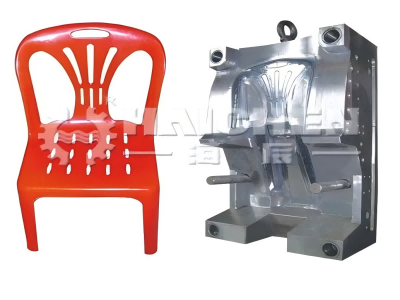
The pressure plate is the heavy metal base of the injection molding machine, directly securing the fixed and movable molds. Its structural stability directly impacts mold alignment accuracy. Inadequate support can lead to guide pin wear and core shift, shortening mold life.
The support plate in the mold base must work in conjunction with the pressure plate. Made of high-strength steel (such as tool steel), it resists clamping forces and thermal stresses, preventing excessive deformation of mold components.
Maintaining temperature stability and reducing thermal deformation
Platens must maintain dimensional stability in high-temperature environments (such as hot runner systems).
Mold plate insulation reduces thermal conductivity and prevents platen deformation due to temperature gradients, thereby maintaining uniform clamping force and a balanced mold temperature field.
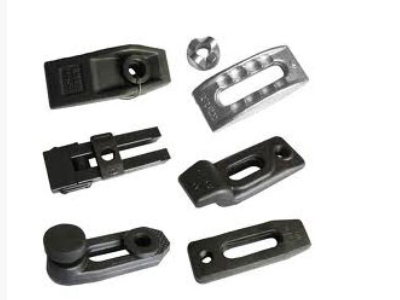
Precise alignment of mold halves
When the mold is closed, the pressure plate ensures that the two halves of the mold (fixed and movable) are precisely aligned. This is crucial for the parallelism of the mold and the dimensional accuracy of the final product.
Serving as a reference platform for mold installation
The mold platen is a core component of the injection molding machine’s clamping unit. The movable and fixed mold halves are secured to the machine’s stationary and movable plates, respectively. The platens provide physical support and a basic positioning surface for mold installation.
Ensuring initial alignment between the mold and the machine
- The mold is typically equipped with a locating ring. This ring precisely mates with a corresponding hole in the stationary platen, ensuring initial concentric positioning of the mold on the machine and ensuring accurate nozzle alignment with the sprue bushing for a seal.
- If a locating ring is also required on the movable mold side, it should be designed with a clearance fit to avoid alignment interference.
Cooling and hardening the plastic
During the injection molding process, the mold need to cool to allow the plastic to harden into the desired shape. The pressure plate not only fixes the mold, but also allows the mold cavity to undergo a cooling cycle, ensuring that the plastic can cool evenly and solidify.
Providing Stable Mold Support and Uniform Pressure
The pressure plate, as the heavy metal base of the injection molding machine, has the core function of firmly holding the mold and ensuring even pressure distribution. During the cooling phase, the mold must remain closed to withstand the expansion force of the molten plastic. The uniform clamping force provided by the pressure plate effectively prevents mold deformation and ensures that the plastic cools and sets under constant pressure.
Uneven pressure distribution (e.g., insufficient pressure plate rigidity) can lead to differential cooling rates, causing product warpage, sink marks, or dimensional deviations.
Maintaining the effectiveness of the cooling system
The cooling channels (water or oil) within the mold are the primary pathways for heat dissipation, and the stability of the platen directly ensures close contact between the cooling system and the mold.
If the platen deforms or vibrates, the fit between the cooling channels and the mold will decrease, reducing heat transfer efficiency and leading to localized overheating or uneven cooling.
Impacting Cooling Efficiency and Production Cycles
The high thermal stability of the press plate (typically made of steel or aluminum) is crucial for maintaining cooling efficiency during long-term production, as it allows it to withstand repeated thermal cycles without deformation.
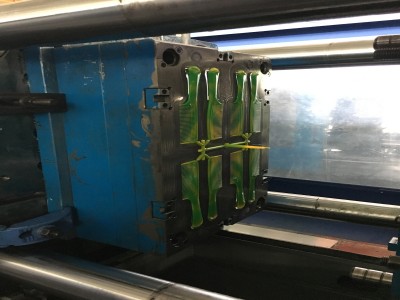
Supporting the opening and closing of the mold
The pressure plate connectes to a hydraulic or mechanical system to drive the opening and closing of the mold. This design allows the mold to open smoothly after completely injection. And the finished product can removed from the mold.
Parallelism Requirements
- The parallelism of the pressure plate directly impacts mold closing accuracy. If the pressure plate is not parallel, the mold parting surface will tilt, increasing wear and even damaging the mold.
- High-precision pressure plate designs (such as bushingless tie rod technology) maintain linearity and parallelism, preventing problems such as ejector pin jamming.
Positioning System
The pressure plate is equipped with a locating ring and guide pins to ensure precise alignment between the mold and the injection molding machine nozzle. It also guides the two mold halves into precise alignment during closing, preventing dimensional deviation or flash caused by misalignment.
Deformation resistance
The press plate must possess high rigidity to withstand the high pressures of injection molding (especially in the gate area). Insufficient rigidity can cause deformation under high pressure, leading to flash and compromising product integrity.
Frame stability
The rigidity of the injection molding machine frame works in conjunction with the press plate to maintain linearity during mold closing. For heavy molds, a rigid frame reduces deflection of the movable press plate and prevents mold misalignment.
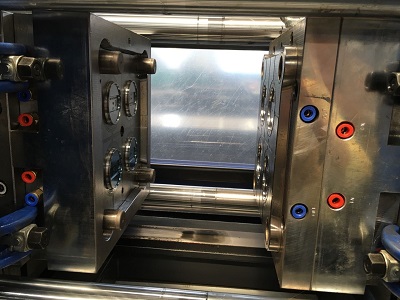
Affecting product quality
If the pressure plate is improperly designed or the material is poorly selected, it may cause the mold to flash during the injection process, affecting product quality. Therefore, choosing the right metal material and designing a reasonable pressure plate structure are important factors to ensure product quality.
Mold Life and Maintenance Costs
Mold costs account for a significant proportion of total production costs. If the press platen misaligns due to material fatigue or deformation, this can accelerate mold wear (e.g., guide pin damage), reducing product consistency and increasing scrap rates.
Collaborative Optimization of Process Parameters
Injection molding parameters (pressure, temperature, and time) must be scientifically set based on PVT curves. Insufficient rigidity of the pressure plate, the pressure transmission medium, can weaken the clamping force, forcing higher injection pressure to compensate, potentially leading to abnormal molecular chain orientation or residual stress.
Improve production efficiency
The efficient platen design can reduce the cooling time of the mold and optimize the production cycle. In addition, the platen can also improve the overall production efficiency by reducing mold wear and extending its service life.
Shorten mold change time and improve equipment utilization
The pressure plate, as the mounting base for the mold, has a direct impact on mold changeover efficiency. An optimized pressure plate structure allows for faster mold adjustments, significantly reducing downtime and thus improving equipment utilization.
Ensure stable clamping force and reduce defective product rates
The clamping plate must evenly distribute clamping force to prevent mold deformation.
It is emphasized that if the clamping plate design flaws result in uneven stress (such as with traditional equidistant threads), this can cause mold deflection or flash, increasing defective product rates and downtime for debugging.
Optimizing cooling efficiency and shortening molding cycles
The platen serves as the carrier of the cooling system, and its flatness affects cooling uniformity.

The mold platen plays an indispensable role in injection molding. It not only ensures the stability and sealing of the mold, but also directly affects the quality of the product, production efficiency and the service life of the mold. Therefore, when designing and selecting injection molding equipment, we must fully consider the performance and applicability of the platen.