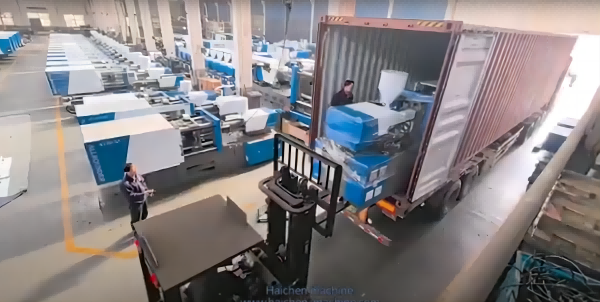
After finished production, there need load the injection molding machine into the container for shipment. It usually includes 3 steps, from calculating injection molding mahcine dimension, to decide if need seperate machine or not. Then finishing loading the container.
The process of shipping containers with injection molding machines is a complex system engineering. It involving multiple links from production to handling, from packing to transportation. This process need to consider many aspects like machine container fix method, safety standard.
There are basic steps to load the injection molding machine into the container
- Step1: Dimension of injection molding machine
- Step2: Determine whether separate machine or not
- Step3: Finish loading
- Different mode of machine transport
Dimension of injection molding machine
It is necessary to make detailed dimensions of the injection molding machine and formulate a corresponding handling plan.
The size and weight specifications of injection molding machines vary depending on the model and purpose.
Machine dimension
There are significant differences in size and weight among different models of injection molding machines, depending on their design and purpose
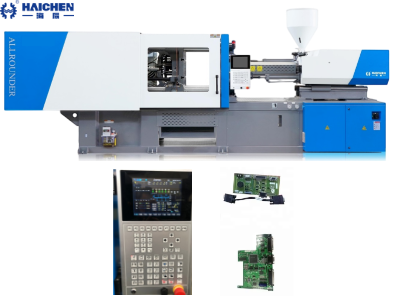
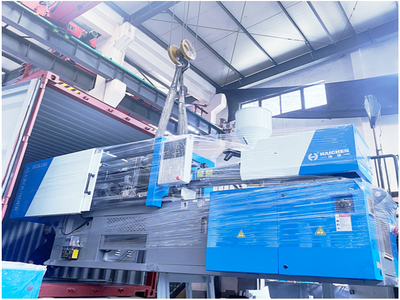
Like Haichen 360ton machine model, dimension 7.4×1.9×2.4m, weight 13ton.
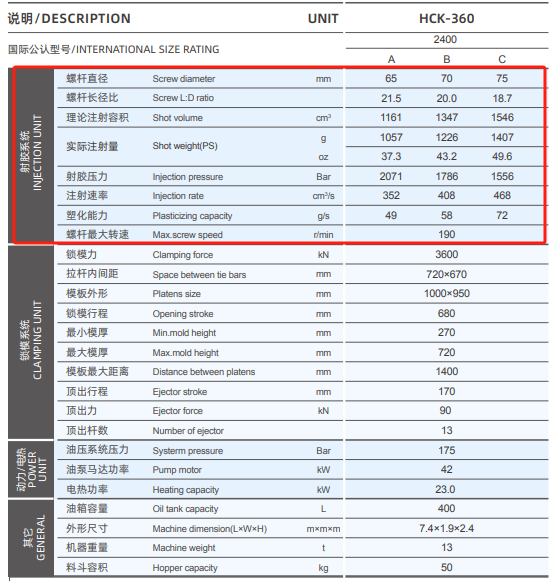
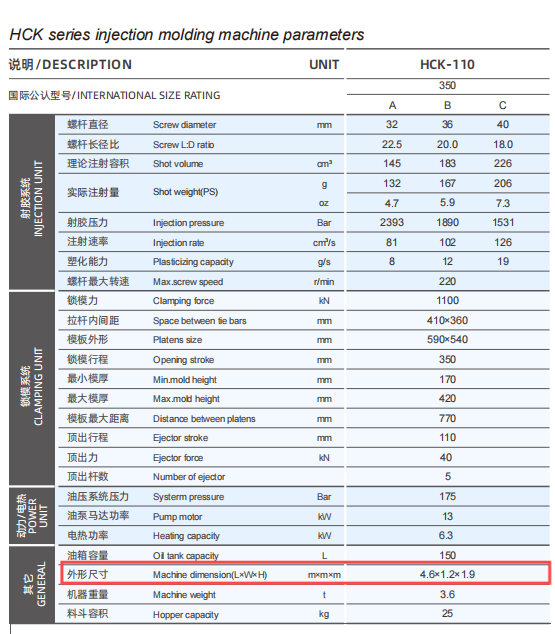
The injection molding machine is usually disassembled into several parts for easy transportation and installation. Different brand injection molding machines have different sizes. Take our Haichen machinery for example. Model HCK110-HCK600 can packed in 1 container, and HCK700 to HCK1850 will be packed in more than 1 container.
Choose the appropriate container
Select the appropriate container based on the weight, size, and shape of the heavy machinery, and ensure that its structure can withstand the expected load.
Reasonably plan the layout of goods
Based on the shape, size, and weight of the goods, plan in advance the placement of the goods in the container to avoid space waste. Heavy goods should be placed at the bottom, while light goods should be placed on top to ensure even weight distribution.
Use appropriate packaging materials
use cushioning materials (such as foam and bubble film) and customized wooden boxes or containers to protect the goods from damage during transportation.
Standard container sizes and loading capacity
The dimensions and load capacity of a standard container are as follows:
20 foot container container
Internal dimensions: approximately 5.89 meters (length) x 2.35 meters (width) x 2.39 meters (height).
Capacity: Approximately 33.2 cubic meters
Maximum load capacity: 25000 kilograms (55126.9 pounds)
40 foot container container
Internal dimensions: approximately 12.03 meters (length) x 2.35 meters (width) x 2.39 meters (height).
Capacity: Approximately 67.7 cubic meters
Maximum load capacity: 27600 kilograms (61200 pounds)
40 foot high cube container
Internal dimensions: approximately 12.03 meters (length) x 2.35 meters (width) x 2.69 meters (height).
Capacity: Approximately 76.3 cubic meters
Maximum load capacity: 28000 kilograms
45 foot container
Internal dimensions: approximately 13.58 meters (length) x 2.34 meters (width) x 2.71 meters (height).
Capacity: Approximately 86 cubic meters.
Maximum load capacity: 29000 kilograms
40 foot open top container
Internal dimensions: approximately 12.01 meters (length) x 2.33 meters (width) x 2.15 meters (height).
Capacity: Approximately 65 cubic meters.
Maximum load capacity: 30400 kilograms.
Determine whether separate machine or not
The dimensions of the injection molding machine determine the size of the container.
Injection molding machines are usually large and heavy, so the size and load-bearing capacity of the container need to be considered.
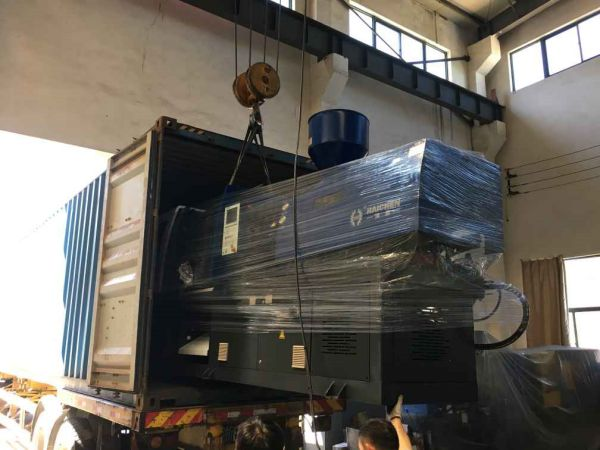
Use a 20GP, or 40GP, or 40HQ container depending on the size and weight of the injection molding machine.
The common structures and dimensions
Injection molding machine structure:
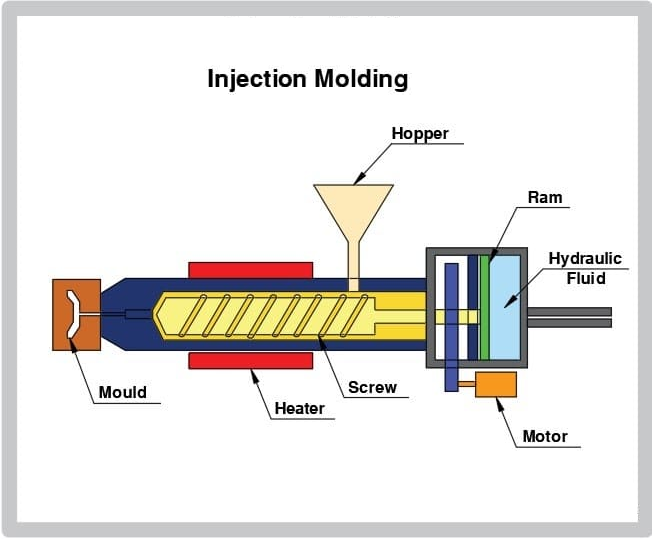
The injection molding machine is mainly composed of four parts: injection mechanism, mold locking mechanism, hydraulic transmission system, and electrical control system. The injection mechanism includes a hopper, a barrel, a heater, a screw (plunger and shuttle for plunger injection molding machines), a nozzle, and an injection cylinder. The locking mechanism includes a fixed template, a moving template, a pull rod, an oil cylinder, and an ejection device, etc.
For example, Haichen injection molding machine model-HCK800 needs 2*40HQ for loading.
The dimension of the Haichen injection molding machine model-HCK800 is 11.2*2.35*3.5(m), and the gross weight is 39T, as we separated the loader, the height of the machine can be within 2.5m, it can be packed in 2*40HQ.
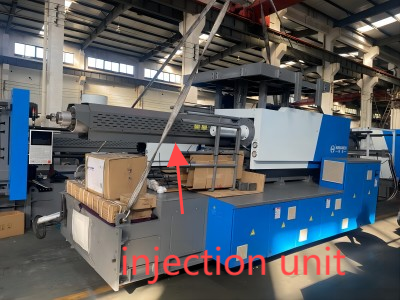
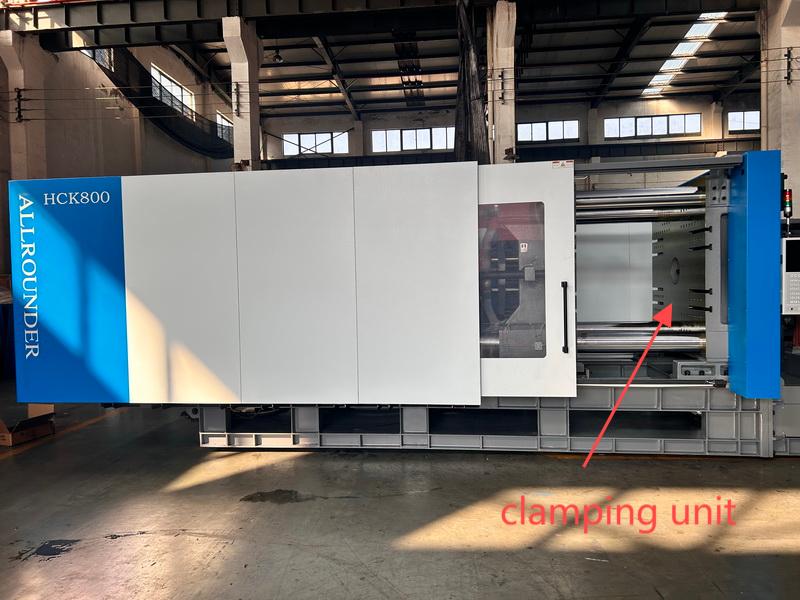
Considering too long for HCK800, it would be hard to lift, so we separated 2 parts, one part was the injection unit, and another part was the clamping unit.
Container weight limit regulations
Each container body will be clearly marked with the maximum weight (MAX WEIGHT) and tare weight (TARE WEIGHT), and the difference between the two is the maximum loading weight. Exceeding this weight limit may result in damage to the container, and all losses shall be borne by the shipper.
The old dry cargo box has a weight limit of 21.5 tons for a 20 ‘GP container and 26 tons for a 40’ GP container. However, with the increase in transportation demand, specialized 40HQ (with a weight limit of 25.5 tons) and reinforced boxes (with a weight limit of 27.5 to 28 tons) have emerged for transporting light foam goods
Another small machine such as Haichen HCK110, can be packed in 4 sets for 1*40HQ, as the dimensions are suitable.
Finish loading
Fixed method
When packing heavy machinery, it should be ensured that it is evenly distributed on the sleepers of the packaging base and fixed with bolts. The minimum spacing between bolts is 7d (where d is the bolt diameter), but at least 100mm. For movable parts, they should be fixed first, and then fixed to the packaging base.
- If the goods cannot be fixed together with the packaging base, intermediate cushioning, cushioning, support, barrier materials, etc. can be used to prevent the goods from sliding inside the box.
- When using steel wire rope or steel strip to bind goods, the steel strip specification and diameter should be selected through calculation.
- When using fiber bundling straps with connecting buckles to bundle goods, they should be selected according to the product instructions.
- The contact area between the goods and reinforcement materials should be protected with cushioning materials, and the selection of fixed parts should take into account the impact of the goods.
Safety standards
The installation of heavy machinery requires comprehensive consideration of safety, stability, and operational convenience, following strict procedures and specifications.
- The load distribution should be uniform, avoiding the concentrated placement of heavy objects to prevent damage to shelves or goods.
- Regularly inspect bolts, nuts, and connecting components to ensure their firmness and reliability.
- Earthquake or impact protection measures should be considered for installation to enhance the stability of the structure.
- Operation training is an important part of ensuring correct operation and preventing safety accidents
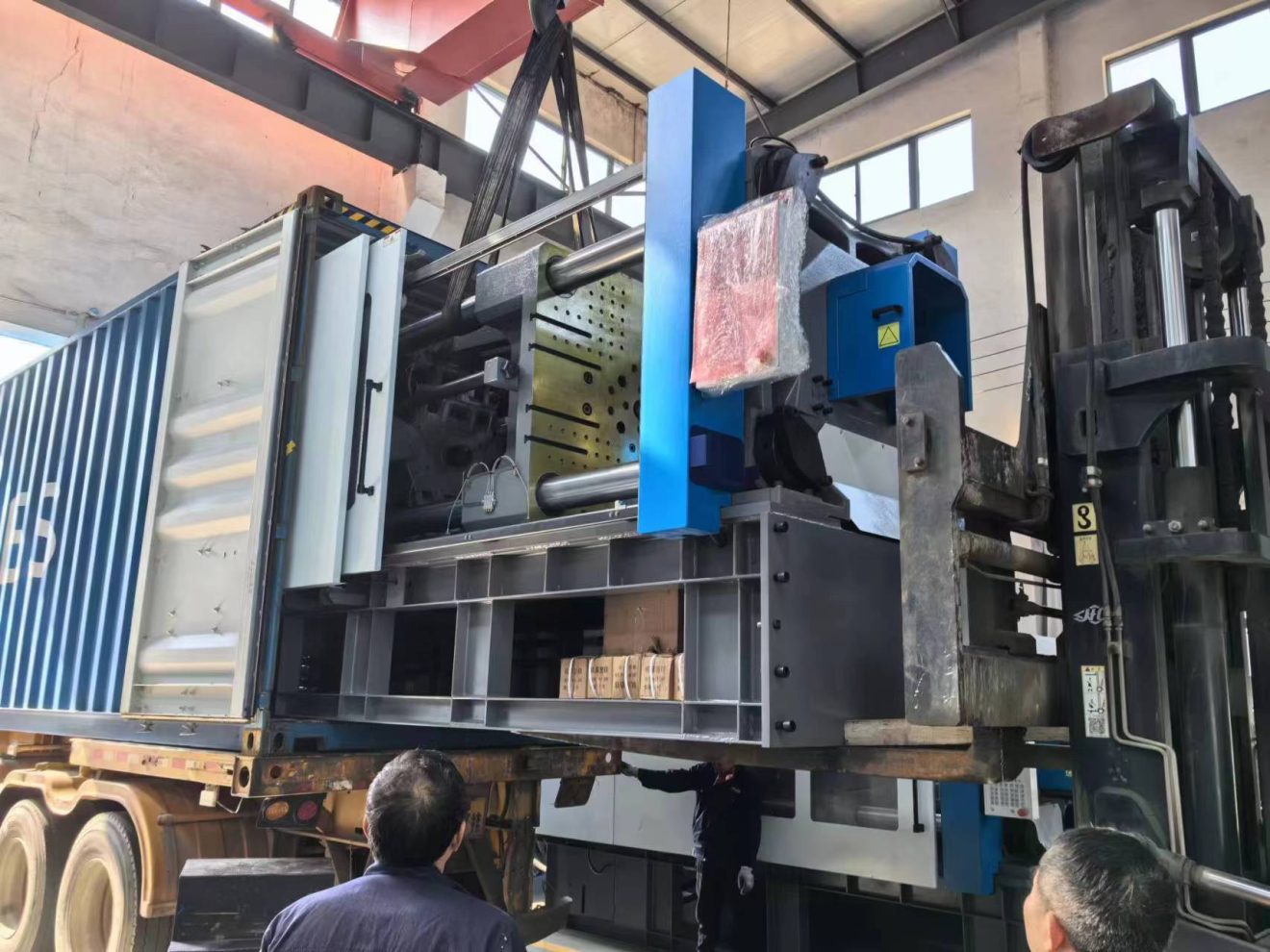
For example, like Haichen HCK800ton injection molding machine. It need load into 40HQ container
Selection of fixed methods
- Direct fixation: transferring force directly from the cargo to the CTU through blocking, binding, tying, or locking devices.
- Friction fixation: Increasing the apparent weight of goods by pre tightening or top binding, thereby increasing friction and tilt stability.
- Compression fixation: The use of bundling, tying, or wrapping as auxiliary fixation measures should always be combined with direct fixation or friction fixation measures.
Different mode of machine transport
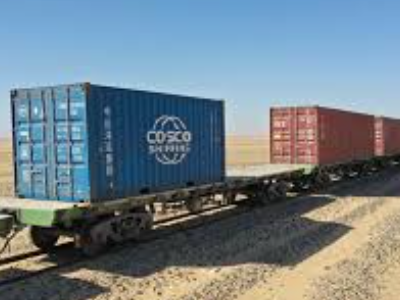
Injection molding machines can be exported to different countries and regions by rail or sea freight. For example, companies specializing in railway container transportation can transport injection molding machines to Russian-speaking markets by rail. In addition, some companies provide services to transport injection molding machines from Ningbo Sea Port to construction sites by container.
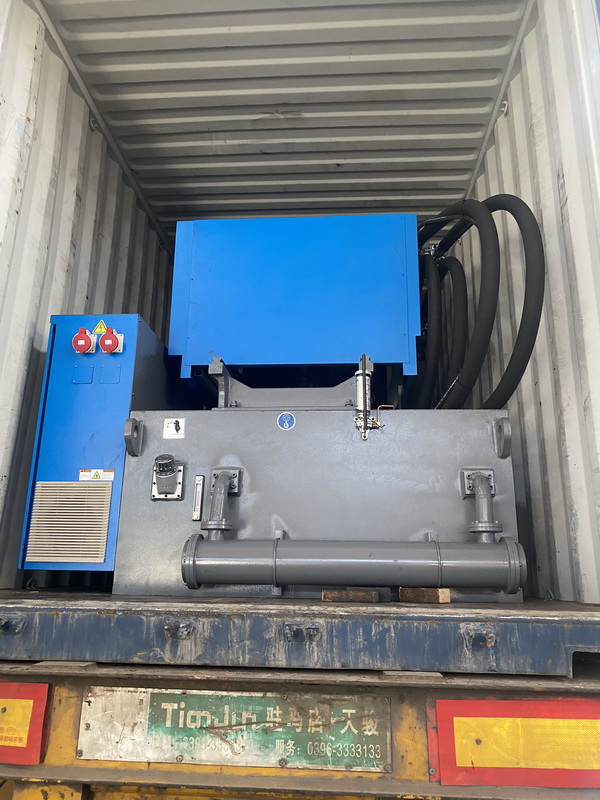
In some cases, two injection molding machines or four injection molding machines can be placed in one container, which can save freight. For some large or sophisticated injection molding machines, professional handling and lifting services may be required to ensure that they arrive safely at their destination.
In short, loading an injection molding machine into a container is a complex process that requires comprehensive consideration of multiple factors such as the size, weight, packaging requirements, and transportation methods of the equipment to ensure that the equipment can reach its final destination safely and efficiently.