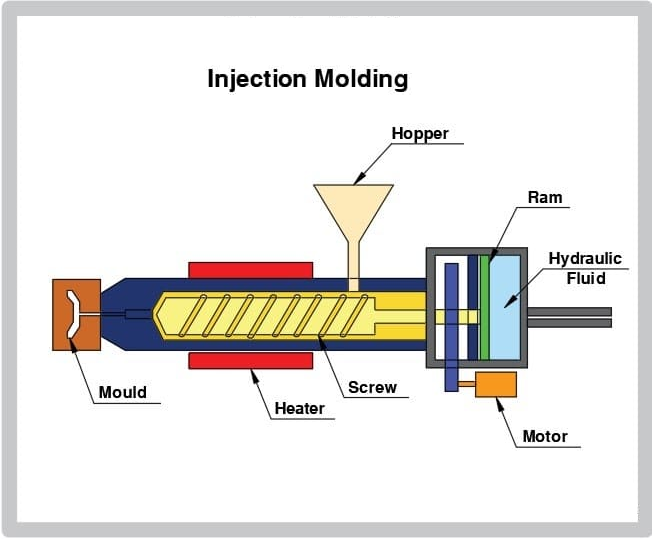
Are you looking for information about the injection molding machine plastic injection weight? Then, you first need to understand the technical characteristics of the injection molding industry and the operating principles of injection molding machines.
Simply put, injection weight is an important indicator of the production capacity of an injection molding machine. when you confirming it you need to combination with the individual weights and total output of the various target products you want to produce.
Understanding shot volume and how to calculate it is essential to achieve optimal part quality and process efficiency. In the following, we will discuss the definition of shot volume, its importance, calculation methods, and a step-by-step method for calculating shot volume in hot runner and cold runner systems based on Haichen’s many years of project cases.
Calculate the required injection volume based on the mold design and the characteristics of the plastic material. The plastic injection weight can be calculated by the following formula:
𝑉=𝑚𝜌V=ρm
Where V is the shot volume (cm³), m is the required plastic mass (g), and ρ is the density of the plastic material (g/cm³).
Detailed steps to calculate and confirm the injection weight
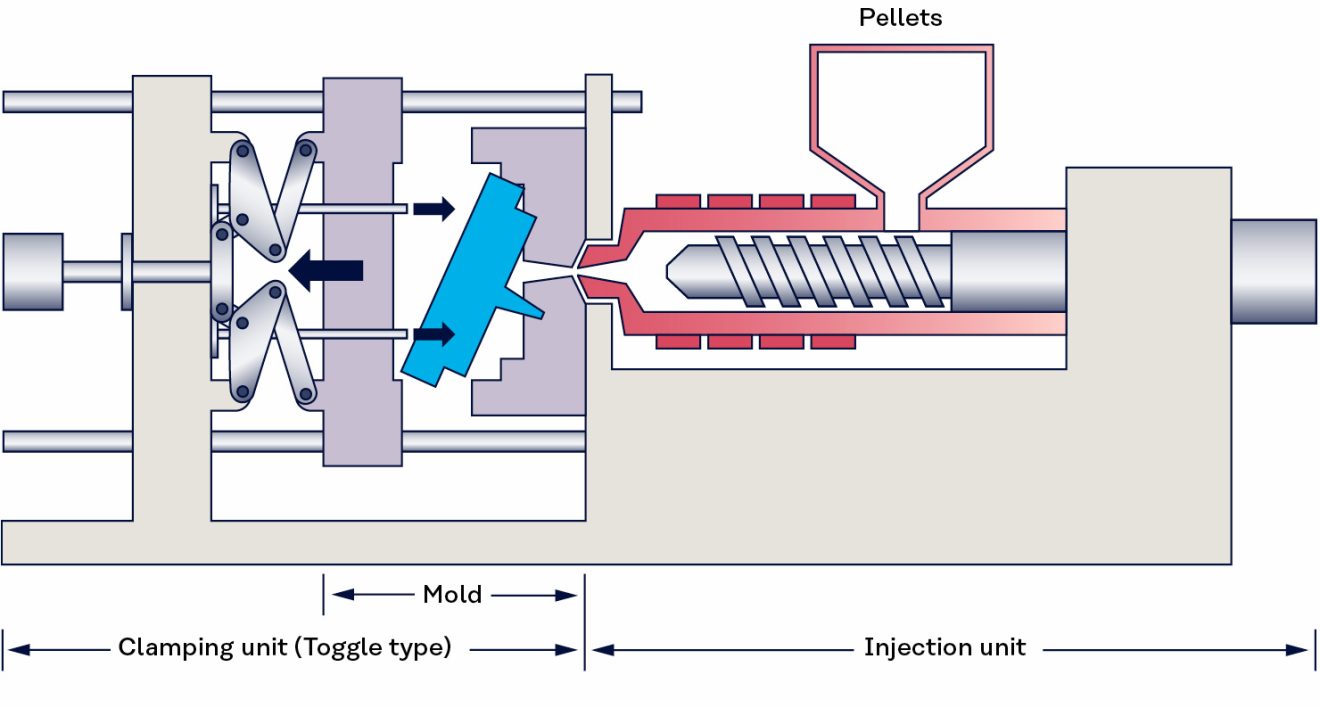
To calculate the plastic injection weight of the injection molding machine, you can refer to the following steps and methods:
- Determine the plastic density
- Measure the volume
- Calculate the weight
- Consider tolerances
- Use software to assist calculations
- Refer to technical parameters
- Consider the injection volume
- Maximum shot weight calculation
Determine the plastic density:
First, you need to know the density of the plastic material you going to use. Density is a key factor in calculating the theoretical weight.
Common injection molding material density is like this:
Polypropylene (PP): 0.89-0.93 g/cm³
Polyethylene (PE):
Low pressure (high density): 0.91-0.93 g/cm³
High pressure (low density): 0.91-0.94 g/cm³
Polystyrene (PS): 1.04-1.06 g/cm³
Polyacrylonitrile-butadiene-styrene copolymer (ABS): 1.04 g/cm³
Polyamide (PA66): 1.47-1.69 g/cm³
Polycarbonate (PC): 1.15-1.20 g/cm³
Measure the volume:
Calculate the weight of the injection machine by measuring its volume. This requires understanding the three-dimensional dimensions of the product. Conventionally, the volume of a single product is obtained through precise industrial measurement methods such as visual estimation, 3D scanning modeling, etc.
Calculate the weight:
This is easy to understand, that is, the actual weight of each product。
Multiply the mold volume by the material density to get the weight of the injection machine.
The formula is Weight = Volume × Density.
Consider tolerances:
In any industrial production, tolerances are inevitable.There may be certain tolerances in product size and weight.
Therefore, when calculating the weight, the impact of these tolerances on the final result should be considered.
Use software to assist calculations:
Specialized software can be used to calculate the number and size of injection mold cavities, taking into account the shrinkage of plastic materials.
The software can calculate the amount of pressed pieces of the injection molding machine, the weight of each sample, the injection speed per unit of time, and the total amount of pressed pieces per unit of time based on the input parameters.
Refer to technical parameters:
You can refer to the technical parameters of Haichen Plastic Machinery, such as template size, tie rod spacing, ejection stroke, etc., to determine the specific parameters of the injection machine.
Consider the injection volume:
The injection volume can be determined by Pro/E modeling technology, and the injection volume is determined by calculating the mass characteristics of plastic parts.
Maximum shot weight calculation:
This is an ideal theoretical value.
In a real production environment, the maximum weight of plastic particles melted in the screw each time is often not all used for product molding.
The reason is very simple. The product in the cavity cannot exist in the air. There must be a subsequent feeding pressure from the injection unit to complete the product.
Then after all the cooling, these extra parts are what we commonly call the material tail (cold runner).Obviously, the weight of this part cannot be used as the product weight, but it is indeed part of the injection weight of the machine.
Generally speaking, the loss of this part is roughly between 10-20%.
Calcualte the maximum shot weight of the injection molding machine the following formula:
Maximum shot weight = injection pressure × injection capacity × compound ratio.
Through the above steps and methods, the weight of the plastic glasses injection machine can be calculated more accurately.
Next, let’s combine a previous plastic glasses case from our company to demonstrate the practical application of injection weight.
Calculation and application of injection weight in plastic glasses production project
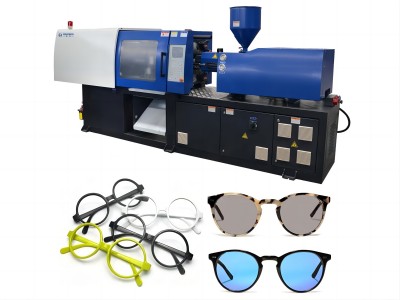
Choosing an injection molding machine model suitable for plastic eyeglasses production requires comprehensive consideration of multiple factors.
Including product weight, projected area, mold size, and whether it is a thin-walled product. The following are detailed steps and precautions:
- Calculate product weight
- Select the appropriate injection volume
- Check the clamping force
- Mold size matching
- Consider the size of the mold installation part
- Adjustment of injection speed and pressure
- Refer to the technical parameters of the injection molding machine
- Consider production space and automated process
Calculate product weight:
First, we calculate the weight of the product, including the weight of the product itself and the weight of the gate system.
This step is to determine the required injection volume.Get the weight number was 230g(PP material).
Select the appropriate injection volume:
According to the weight of the product, select an injection molding machine model with a nominal injection volume close to or slightly larger than the actual demand.We use PP for client
For example, if the product is polystyrene (PS), you need to select a suitable injection volume based on its weight.
Check the clamping force:
The projected area of the product determines the required clamping force.
Therefore, when selecting an injection molding machine, you must ensure that the clamping force of the selected model can meet the maximum clamping force requirements of the mold.
We carefully reviewed the entire pressure-bearing surface area
Mold size matching:
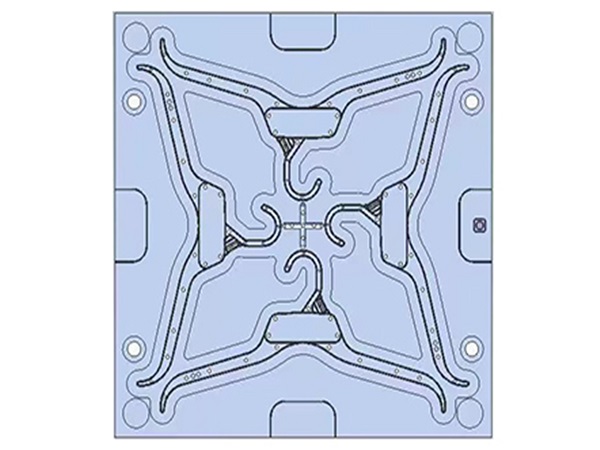
The size of the mold (such as the inner distance of the guide pins and the mold thickness) must match the inner distance of the guide pins and the mold thickness of the injection molding machine.
If the two do not match, you need to adjust the mold accordingly or select a suitable injection molding machine.
Because we designed two molds for the customer at the same time to perfectly match the tie rod spacing of our machines.
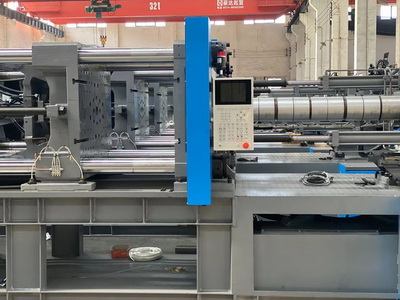
Consider the size of the mold installation part:
The overall size and mold opening distance after the mold design should be compatible with the installation size and mold opening stroke of the injection molding machine.
Otherwise, the mold cannot fit in to work.
Adjustment of injection speed and pressure:
As you have know different types of plastics and products, the injection speed and pressure need to be adjusted.
For example, for crystalline plastics with high viscosity and narrow molding temperature range, products with thin walls, and long processes, a higher injection speed should be used.
Refer to the technical parameters of the injection molding machine:
When selecting an injection molding machine, refer to the technical parameters provided by the manufacturer.
Including injection pressure, clamping force, template stroke, etc., to ensure that the selected model can meet production needs.
Consider production space and automated process:
In addition to technical parameters, it is also necessary to consider the size and production space of the injection molding machine.
As well as whether an automated process is needed to improve production efficiency.
Through the above steps, it can be ensured that the selected injection molding machine model can meet the various requirements of plastic glasses production.
Thereby ensuring product quality and production efficiency.
More is coming
We will continue to update and share our cases in different plastic product fields.
You are welcome to subscribe or inquire.
Injection weight and application of Haichen plastic injection molding machine
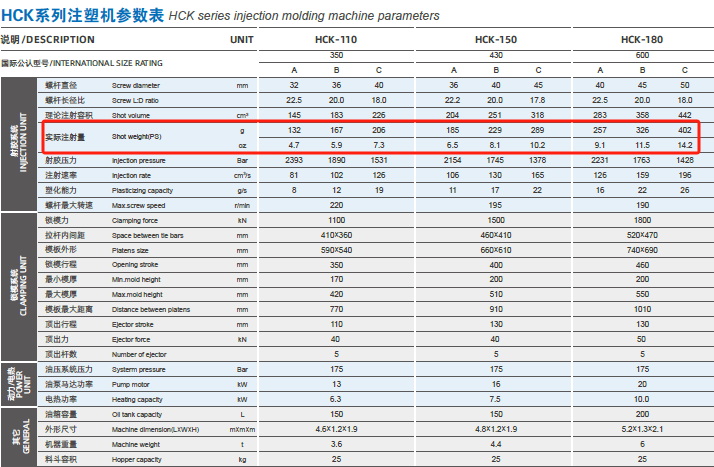
The injection weight and application of Haichen plastic glasses injection molding machine can be analyzed from multiple angles.
First, there is a positive relationship between the tonnage and gram weight (injection volume) of the injection molding machine.
That is, the larger the tonnage, the larger the injection volume.
In the actual selection of plastic glasses applications, we need to combine the gram weight of the product monomer with the output and calculate the mold cavity.
From these two data, we can get the injection weight in each actual production cycle.
Then refer to the catalog parameter table of Haichen injection molding machine and select an injection molding machine with an injection weight greater than the theoretical number by about 20%.
As I have shown, the injection weight of Haichen plastic glasses injection molding machine needs to be determined according to its tonnage.
But the specific value is not clearly given in the search results provided.
If the tonnage of Haichen plastic glasses injection molding machine is known.
You can refer to the above tonnage and gram weight comparison table to estimate its injection volume.
We have a mature case of a two-cavity glasses frame equipped with Haichen HCK110 injection molding machine.
If you are interested in learning more of as I have shown, please write to inquire.