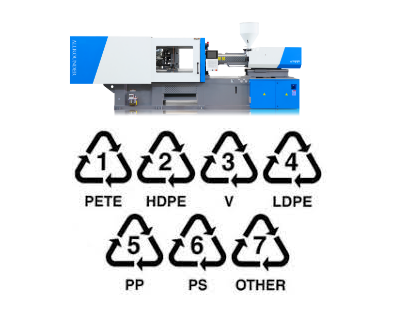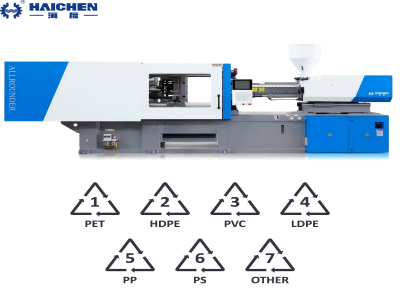
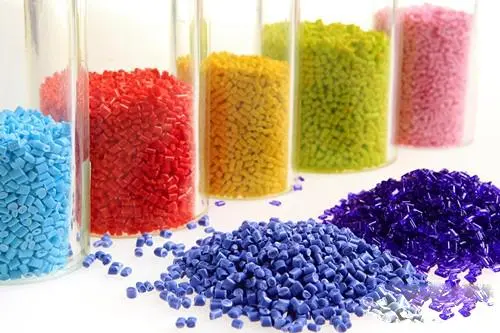
Plastic raw materials for plastic spoon:
- Categorized by use
- Classification by chemical structure
- Classified by thermal properties
- Classification by source
- Classification by recycling performance
The selection of raw materials for plastic spoons needs to balance performance, cost and environmental protection regulations.
PP remains the best solution at present, but PLA and edible materials will dominate the future market.
Enterprises need to promote material innovation and circular economy models simultaneously to cope with the global trend of plastic reduction.
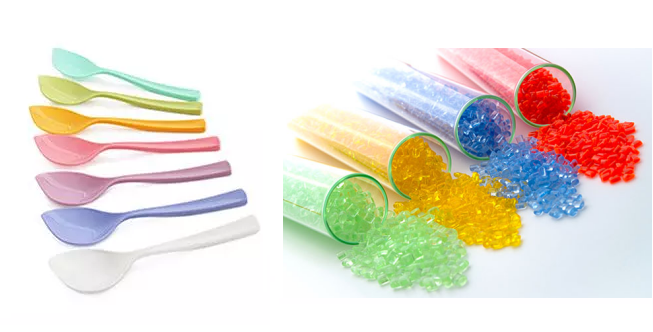
Plastic raw materials classification by use
General plastics:
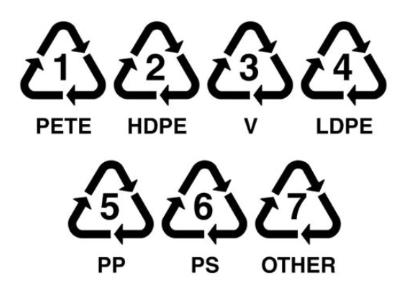
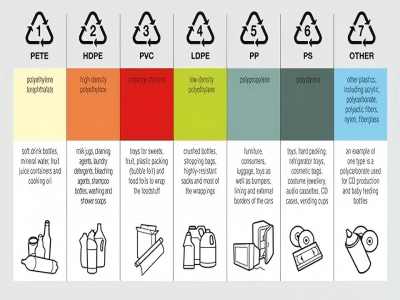
Such as polyethylene (PE), polypropylene (PP), polyvinyl chloride (PVC), polystyrene (PS), etc.
These materials are widely used in packaging, construction, agriculture and other fields.
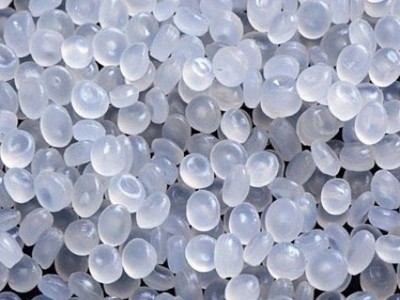
Engineering plastics:
Such as polycarbonate (PC), nylon (PA), polyoxymethylene (POM), etc.
These materials have good mechanical properties and high and low temperature resistance.
And are suitable for aviation, automotive, electronics and other fields.
Specialty plastics:
Such as polytetrafluoroethylene (PTFE), fluoroplastics, etc.
These materials are usually used in high-end fields such as aerospace, medical, and chemical industries.
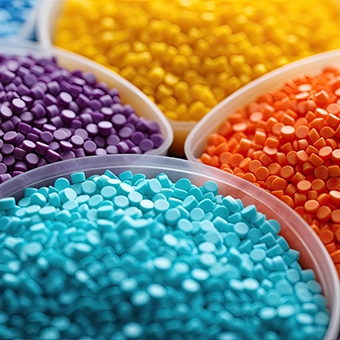
Plastic raw materials classification by chemical structure
Polyolefins
Including PE, PP, etc., these materials are made from oil and natural gas as raw materials through cracking and polymerization reactions.
Styrene
Such as PS, SBS, etc., this kind of material is also commonly used in the manufacture of various plastic products.
Polyesters
Such as PET, PA, etc., these materials have good mechanical properties and heat resistance.
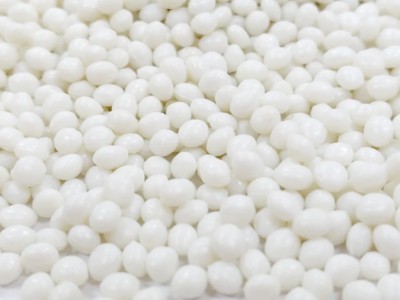
Plastic raw materials classified by thermal properties
Thermoplastics:
Such as PE, PP, ABS, etc., this kind of material becomes soft after heating and can be processed into different shapes many times.
Thermosets:
Such as phenolic resins, epoxy resins, etc., these materials undergo a chemical reaction when heated, making them hard and non-reprocessable.
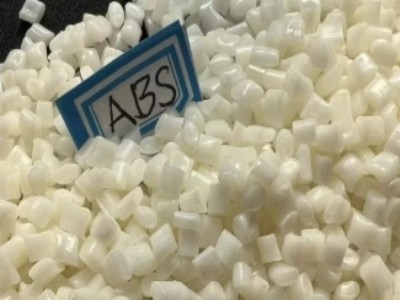
Plastic raw materials classification by source
Natural plastics
Such as cellulose plastics, derived from natural products such as wood, starch, etc.
Synthetic plastics
Mainly derived from oil and natural gas, they are made by chemical processing.
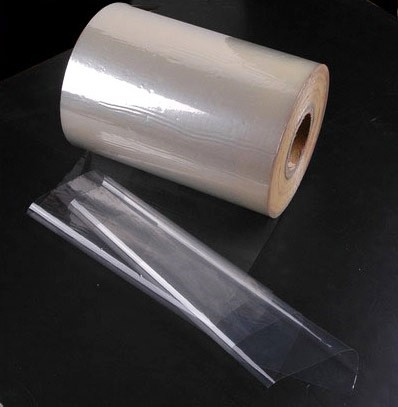
Plastic raw materials classification by recycling performance
Recyclable plastics
Such as PE and PP, can be recycled and reused by physical or chemical methods.
Difficult-to-recycle plastics
Such as some styrene and polyvinyl chloride, which are difficult to recycle, and new recycling technologies need to be developed.
There are many types of plastic raw materials, each with its own unique chemical structure and physical properties, suitable for different industrial applications.
The rational use and recycling of plastic raw materials is of great significance for environmental protection and sustainable development.
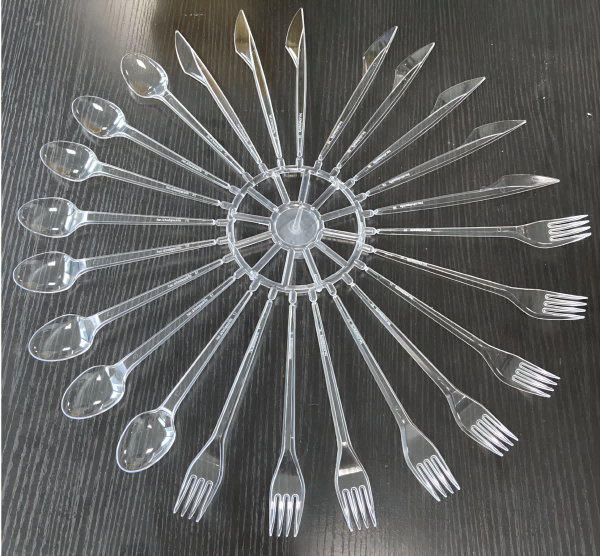
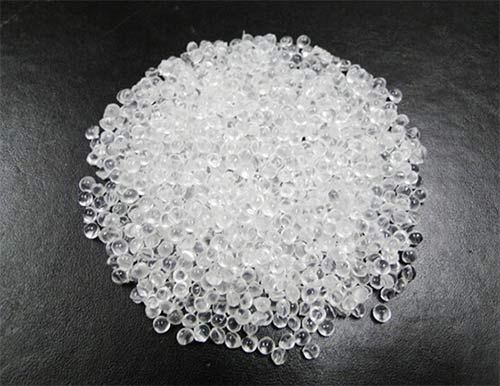
Raw material for plastic spoons
Polypropylene (PP)
This is one of the common materials used to make plastic spoons.
Polypropylene has good heat resistance and chemical stability, and is commonly used in the manufacture of food-grade plastic spoons.
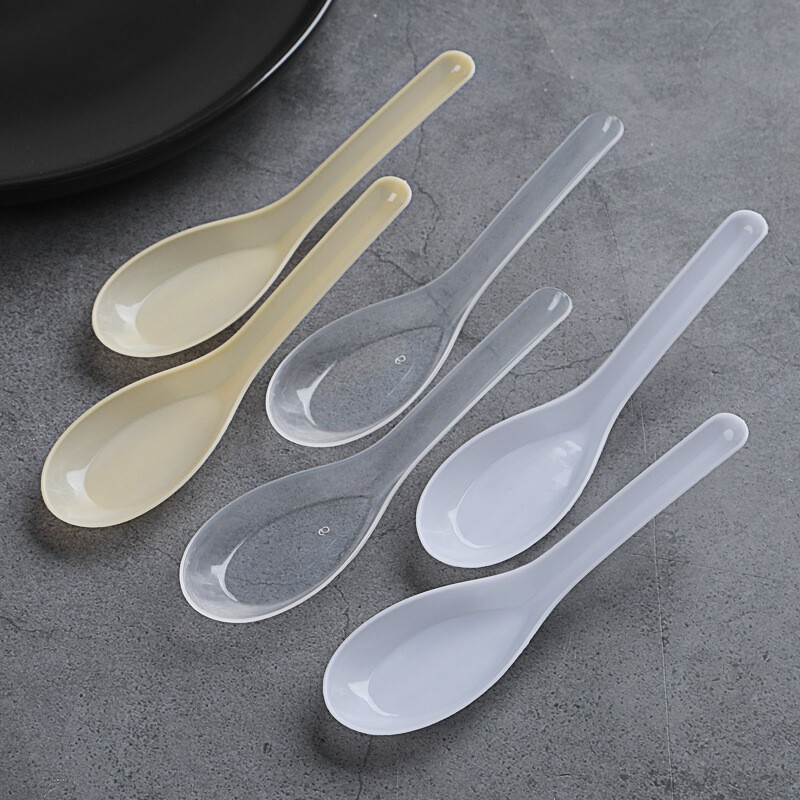
Transparent polypropylene is often used to make translucent white plastic rice spoons.
Polystyrene (PS)
This material is also widely used in the production of single-use plastic spoons.
Polystyrene spoons generally have high strength and hardness, making them suitable for single use.
Polyethylene (PE)
Polyethylene is a lightweight and inexpensive plastic material that is commonly used to make single-use plastic cutlery, including spoons.
However, it is important to note that polyethylene may release harmful substances at high temperatures, so caution should be exercised when using it.
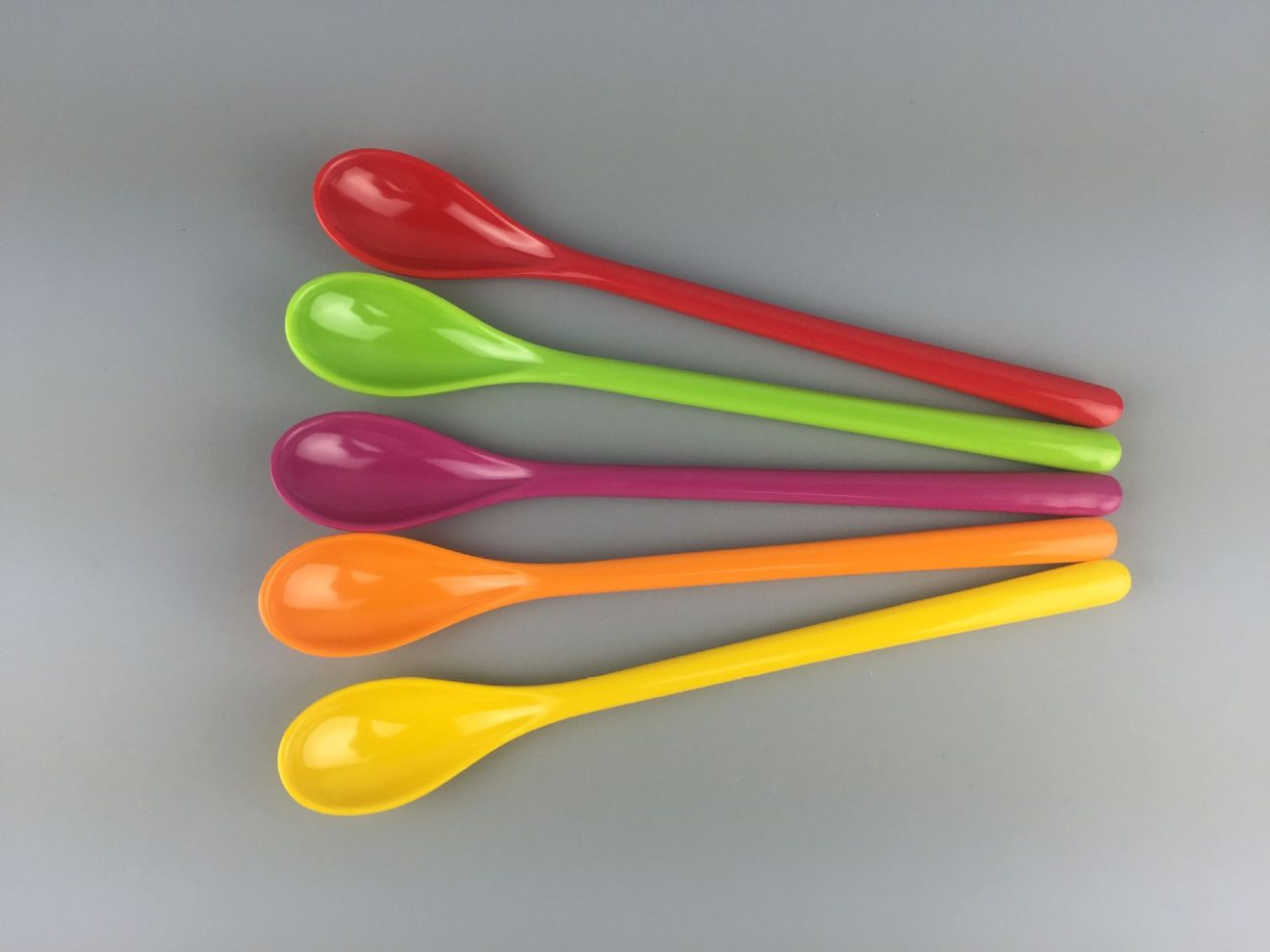
Plastic
Plastic is the most common material when it comes to disposable tableware.
Disposable cutlery is usually made of polypropylene or polystyrene.
Compared with other types of disposable tableware, its advantages lie in its hardware characteristics, as well as its high availability in the market.
Plastic is a difficult material to recycle, for single-use items and anything else.
Some types of plastic are not recycled by local councils, such as polystyrene.
Plastic can take up to 1,000 years to break down, and when that happens, it leaves contaminants in soil and water.
Another disadvantage is the use of chemicals in the production process.
So there is the potential for food contamination, especially when plastics are used with hot food and beverages.
Advantages of plastic spoons
- Health and safety
- Good heat resistance
- Lightweight and affordable
- Versatility and versatility
- Recyclable and sustainable
Health and safety
Polypropylene is a food-grade material, non-toxic and harmless, suitable for tableware that comes into contact with food, including plastic spoons.
This makes PP material ideal for making disposable tableware, especially for occasions such as homes, parties, restaurants, and takeaways.
Good heat resistance
Some plastics have good heat resistance and can withstand high temperatures without deformation.
Durability: Plastics have superior mechanical properties, including impact resistance and durability.
This makes the plastic spoon made of PP less prone to chipping, maintaining its integrity even if it is hit or dropped during use.
Lightweight and affordable
Plastic spoons are lightweight, making them easy to carry and use.
At the same time, the cost of plastic is relatively low, making PP plastic spoons an affordable option.
Versatility and versatility
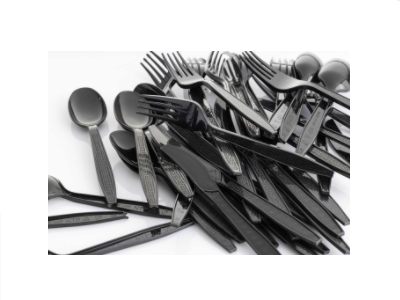
PP material can be processed into plastic spoons of various shapes and sizes to meet the needs of different uses.
For example, PP plastic spoons can be designed in different sizes and shapes to suit different catering needs.
Recyclable and sustainable
Although PP material itself is not biodegradable, its recyclability helps reduce environmental pollution.
By recycling PP materials, we can reduce resource waste and promote sustainable development.
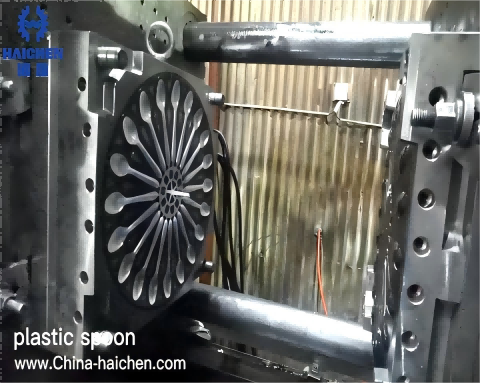
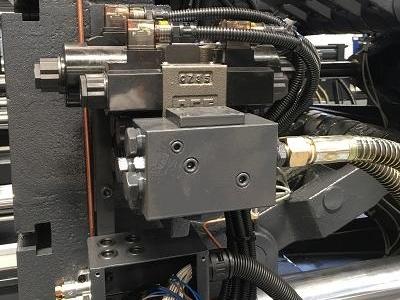
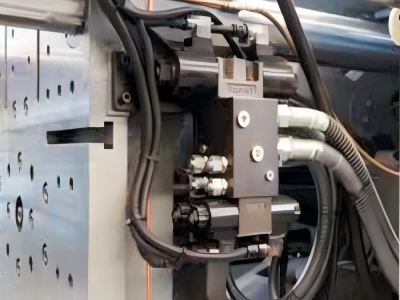
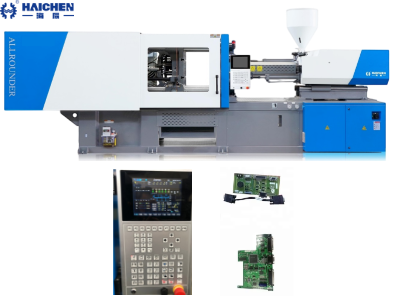
Haichen‘s plastic spoon machine
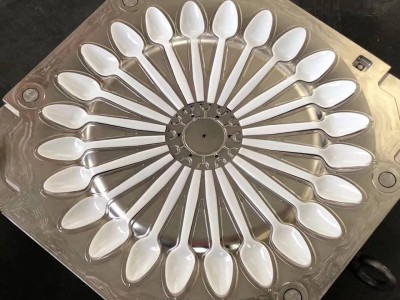
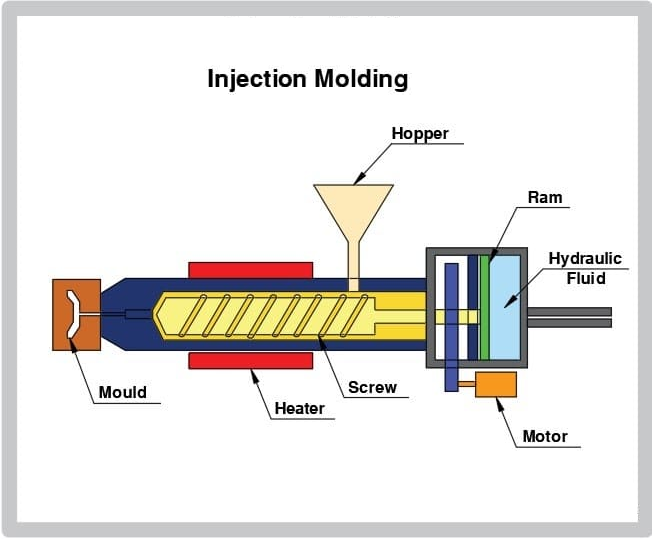
The production of plastic spoons involves many types of injection molding machines.
The choice of which depends on the specific product needs, the scale of production, and environmental requirements.
Different types of injection molding machines have their own characteristics in terms of performance, tightness, environmental protection, etc.
And need to be selected and configured according to actual production needs.
Haichen can help customers to choose different injection molding machines according to the type of spoon.