Solving fixed flow marks requires increasing mold temperature, injection speed, and pressure, extending holding pressure time.
In the injection molding process, flow marks are a common surface defect that looks like wavy, striped or spiral irregular patterns on the surface of plastic products. These flow marks not only affect the appearance of the product, but may also have a certain impact on the functionality of the product in some cases.
In terms of the overall injection molding product design, we can make some small improvements by combining the product mold and injection machine performance debugging methods, which can help you reduce the flow mark defects that may occur during the entire injection molding process.
This article will introduce in detail the preventive measures taken to prevent flow mark defects.
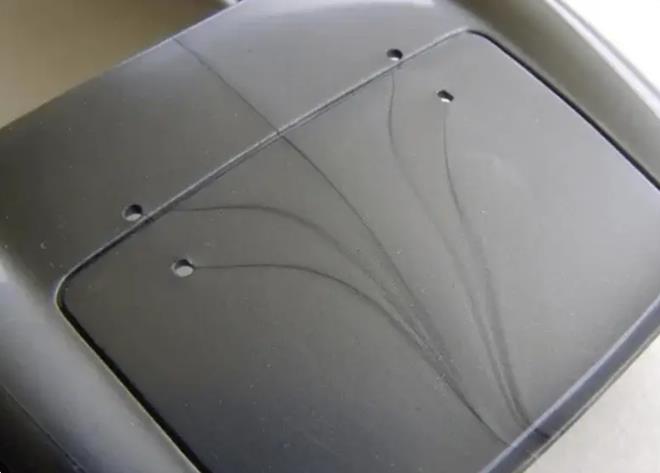
Conventional way to remove flow marks
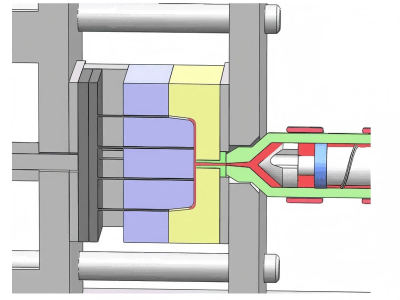
The main methods to solve the problem of producing flow marks in injection molding are:
- Increase the mold temperature.
- Increase the injection speed and pressure
- Extend the holding pressure time.
Flow Marks are a common defect in the injection molding process. They usually appear as uneven streaks or wavy marks on the product surface.
Various factors cause flow marks, including melt temperature, mould temperature, injection speed, injection pressure, and runner and gate design.
Increase the mold temperature:
A low mould temperature can cause the plastic to cool too quickly, resulting in flow marks.
Increasing the mould temperature slows down the cooling of the plastic and results in a more uniform melt flow, thus reducing flow marks.
Increase the injection speed and pressure:
Because of low injection speed and pressure will lead to insufficient filling of the melt, thus forming flow marks.
Increasing the injection speed and pressure can improve the flow of the melt and reduce the appearance of flow marks.
Extend the holding time:
Extending the holding time can ensure that the melt is filled in the mould cavity and reduce the flow marks caused by incomplete filling.
Solving fixed flow marks by Increasing Mould Temperature
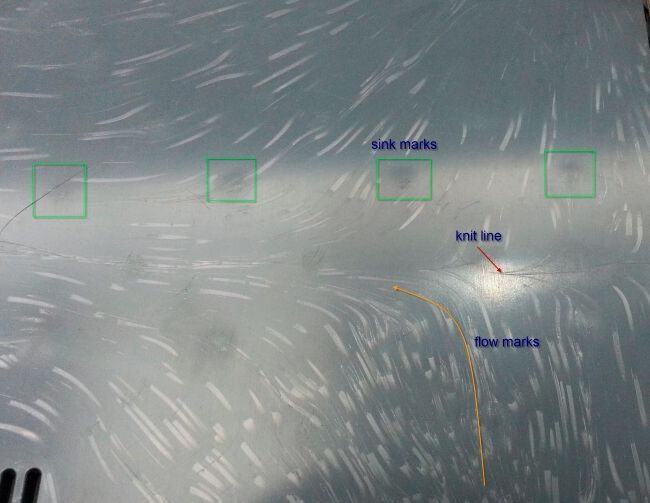
Increasing the mould temperature is one effective way to remove fow mark injection molding.
However flow marks are surface defects caused by an uneven flow of melt in the mould or an inconsistent cooling rate during the injection molding process.
The use of electromagnetic induction heating technology combined with water cooling can achieve rapid control of the mould surface temperature.
When the mould surface temperature is increased from 100°C to 160°C, flow marks formed by air bubbles are completely removed and the surface roughness is significantly reduced.
Increasing the mould temperature not only improves the fusion marks but also controls the mechanical properties and vesicle structure of the products by changing the mould temperature, further reducing the surface roughness of the products.
For specific materials, the use of cavity local heating technology can effectively improve or reduce the fusion marks and flow marks.
Fow mark injection molding
Flow marks in injection molding are wavy or linear defects on the surface of the product, usually appearing as stripes or patterns with different colors from the surrounding materials.
Its causes and solutions are as follows:
- Causes of flow marks
- Solutions
Causes of flow marks
Injection speed is too slow
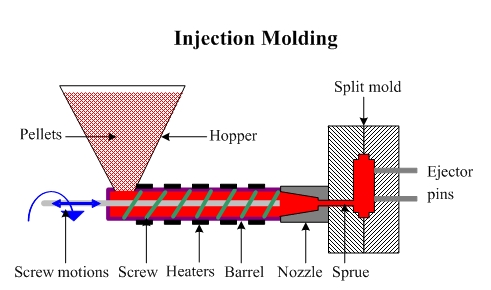
When the molten resin fills the mold at a slower speed, the surface layer will cool prematurely, resulting in uneven flow front and flow marks.
If the product wall thickness is large and the gate is small, the filling speed is further limited, and the flow mark problem is more likely to be aggravated.
Mold temperature is too low
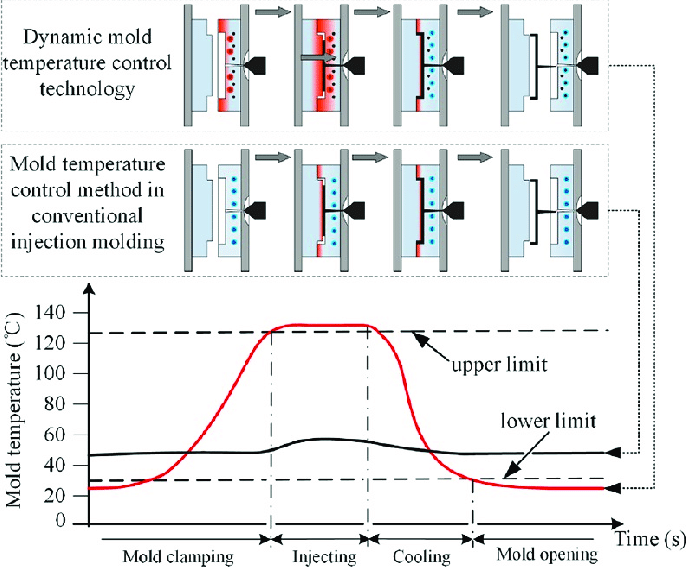
Low-temperature molds will accelerate the solidification of the melt surface and hinder the melt from forming a stable “jet flow”, thus producing flow marks.
In addition, uneven mold temperature may lead to local differences in solidification speed.
Material flow characteristics
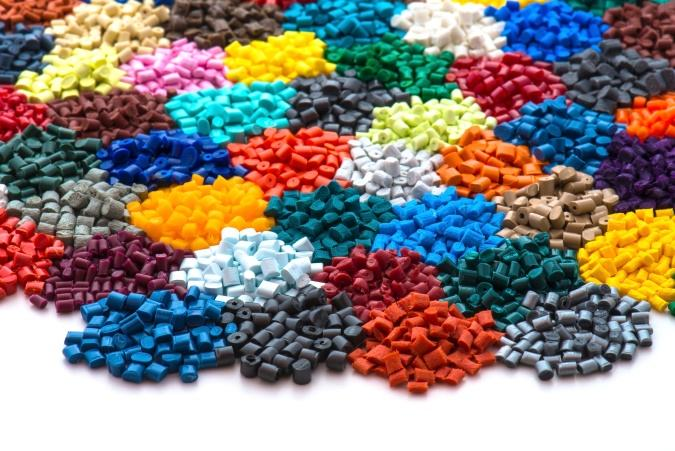
The rheological properties of the resin (such as shear thinning) may cause flow instability.
For example, strain-softening materials are more prone to flow marks in iniection molding at high Weissenberg numbers.
Mold design defects
Irrational flow channel structure or poor exhaust will hinder the flow of the melt and aggravate the stratification phenomenon at the flow front.
If the gate position is improperly designed, it may lead to insufficient pressure at the melt confluence.
Solutions
Adjust process parameters
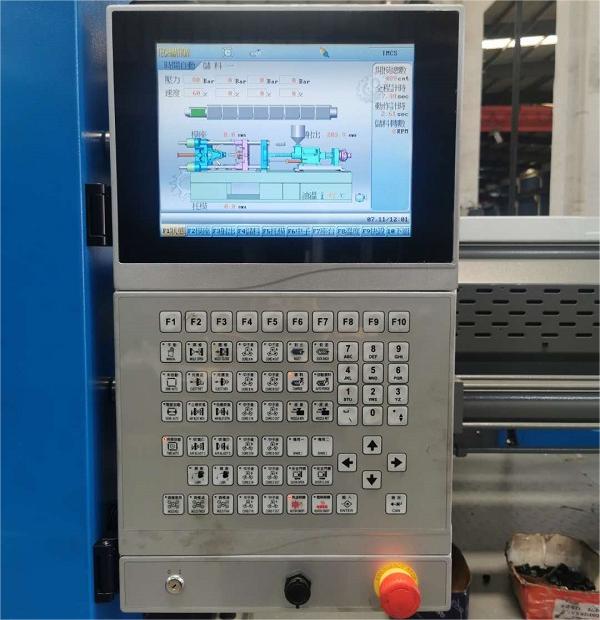
Increase injection speed:
Increasing the filling speed can reduce melt cooling stratification and is the most direct way to eliminate flow marks in iniection moulding.
But be careful to avoid turbulence caused by excessive speed and burning.
Increase mold temperature:
Delay surface solidification time and promote stable flow of the melt.
It is recommended to accurately control the temperature through the mold temperature controller.
Optimize injection pressure:
Appropriately increase the holding pressure to improve the bonding strength at the melt confluence.
Improve mold design
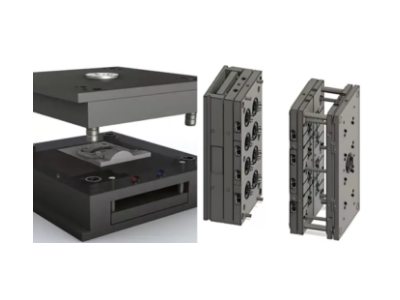
Optimize gate and runner:
Enlarge the gate size, shorten the runner length, or use a wing gate (Tab Gate) to improve the melt flow path.
Enhance the exhaust system:
Add exhaust grooves or ejectors in areas prone to flow marks to avoid gas retention and flow interference.
Surface texture treatment:
Roughening the surface of the product can cover up slight flow marks.
Material selection and pretreatment
Choose resins with low shrinkage and high fluidity (such as modified polypropylene) to reduce flow resistance.
Ensure that the raw materials are dry to avoid hydrolysis reactions that affect melt stability.
Environmental control
Maintain stable humidity and temperature in the production environment to avoid external factors interfering with the thermodynamic state of the mold.
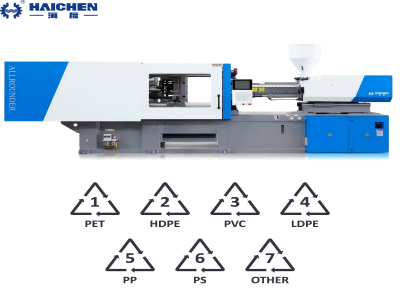
Advantages of Haichen injection molding machine for preventing flow marks

Haichen injection molding machine has a significant advantage in preventing Flow marks with three obvious features:
- Low-pressure injection molding technology
- Complete injection molding technology system
- Out-of-mould cooling technology and multi-cavity mould technology
Low-pressure injection technology:
Haichen injection molding machine adopts self-developed low-pressure injection technology, injecting hot-melt plastic into the mould through low injection pressure (0.15-4MPa) and curing it quickly to obtain products.
This technology can effectively reduce the formation of Flow marks caused by high shear stress.
Complete injection molding technology system:
the company has established a complete injection molding technology system setting of molding parameters, control of mould temperature, taking out of moulded parts, etc.
The integrated application of these technology links helps to control the molding process. The comprehensive application of these technical links helps to control product quality and reduce the generation of Flow mark.
Out-of-mould cooling technology and multi-cavity technology:
Haichen injection molding machine also adopts out-of-mould cooling technology and multi-cavity technology,thus reducing the appearance of Flow mark.
Haichen injection molding machine effectively prevents the generation of Flow mark and improves the quality and production efficiency of the products through the low-pressure injection molding technology, complete injection molding technology system, as well as advanced out-of-mould cooling technology and multi-cavity mould technology.