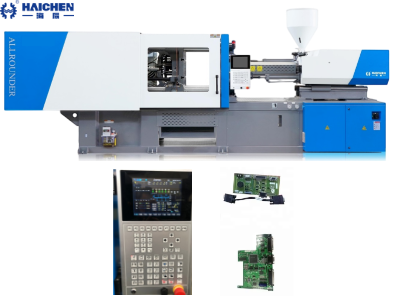
Troubleshooting guide for hydraulic clamping cylinder in injection molding:
- The oil cylinder does not operate or the thrust is insufficient
- Slow movement speed or crawling
- Leakage
- Abnormal vibration or shock
- Piston rod discoloration or seizure
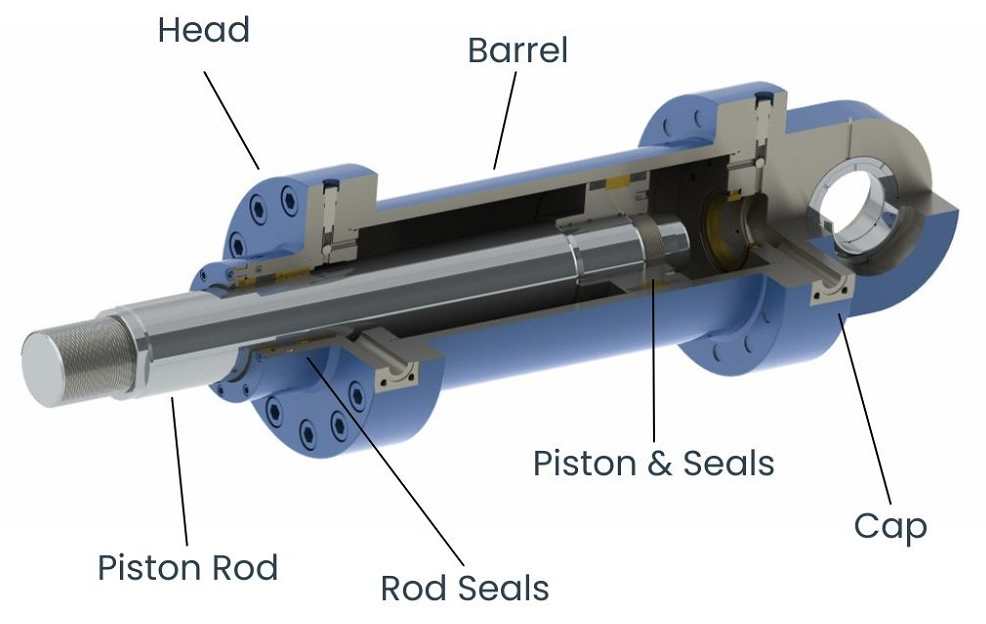
Hydraulic clamping cylinder ,the basic structure and working principle.
Whereas,the hydraulic clamping cylinder is the core component of the mold clamping device of the injection molding machine.
For example,and its functions include the opening and closing of the mold.
The application of the clamping force and the ejection of the product.
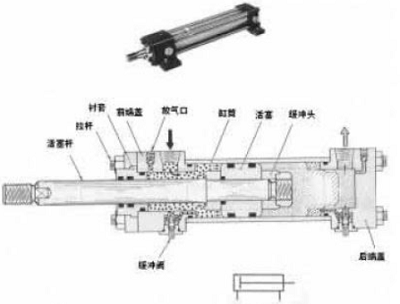
Hydraulic clamping cylinder
Haichen hydraulic clamping products provide powered workholding solutions where greater clamping forces combined with fast, repeatable and reliable actuation are needed.
Such as those faced in the modern machine shops.
We offer a variety of hydraulic and workhold clamping components, power sources and accessories that are ideal for retrofitting or updating simple mechanical systems or more complex clamping and locating applications.
Most components are available as singe-acting to allow the use of our air-oil boosters.
These economical power sources offer an affordable way to get the power of a hydraulic system with the use of your shop air supply.
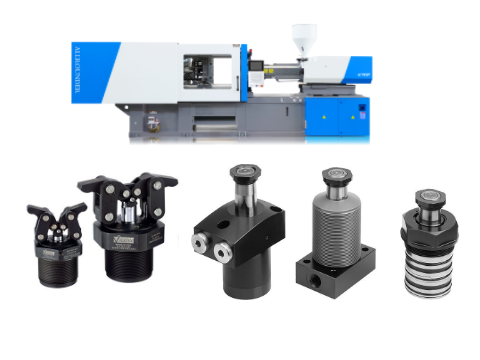
Hydraulic system
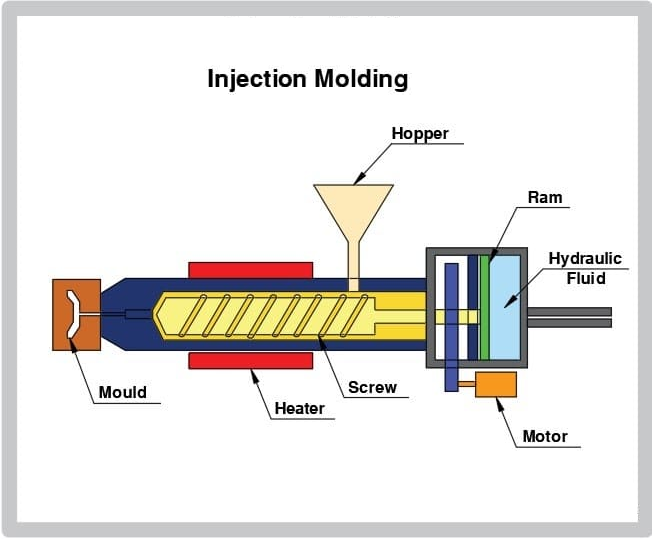
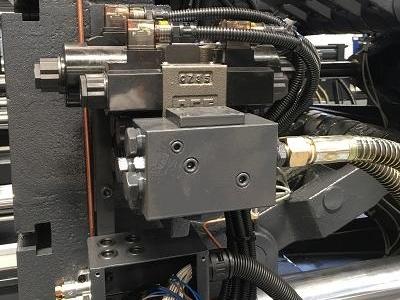
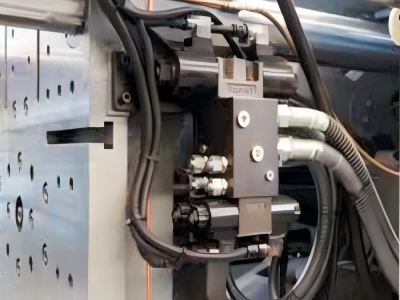
The system consists of a hydraulic pump, a control valve, and a hydraulic cylinder.
And hydraulic oil pressure drives the clamping action.
Linkage mechanism
Converts the linear movement of the hydraulic cylinder into the precise opening and closing action of the mold.
Working principle
The hydraulic pump pressurizes the oil and transports it to the control valve.
Which regulates the oil flow to the inlet/outlet of the hydraulic cylinder.
Meanwhile,pushes the piston rod to drive the movement of the movable platen.
And completes the mold closure and clamping.
During the clamping process, the system needs to maintain a constant high pressure to ensure that the mold is tightly closed.
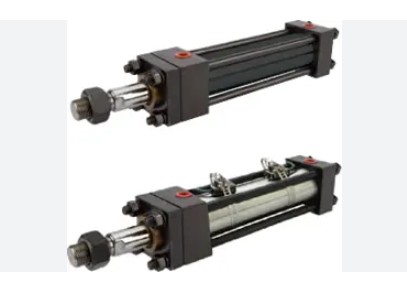
The oil cylinder does not operate or the thrust is insufficient
Cause: The oil circuit is blocked such as blocked filter screen, spool jamming.
Internal leakage aging of seals, excessive gap between piston and cylinder barrel.
The hydraulic pump has insufficient oil supply or the pressure valve has failed.
Solution: First, clean or replace the filter to unclog the oil path.
Second, replace the seals or repair the piston/barrel wear.
Finally, check the output pressure of the hydraulic pump and adjust the relief valve setting.
Troubleshooting mold creep problems
Mold creep refers to the inability of the mold of the plastic injection molding machine to demold or accidentally slip during the mold opening and closing process.
Resulting in serious misalignment, resulting in part defects, increased wear of mold components, and other problems.
To solve the mold creep problem, first thoroughly evaluate the mechanical and automation components of the clamping system and carefully inspect the clamping components and guides.
Generally speaking, loose mounting components or insufficient system tension will exacerbate such issues.
In many cases, the creeping problem can be solved by simply tightening the screws and recalibrating the clamping device.
In addition, the hydraulic system should be diagnostically tested to verify that it provides continuous and stable pressure.
Inconsistent hydraulic pressure can also lead to incomplete unlocking or unexpected slipping during operation.
Therefore, it is necessary to replace or repair defective hydraulic seals and ensure that the control valve is operating normally.
Slow movement speed or crawling
Cause: Air mixed into the hydraulic system.
Oil contamination leads to increased frictional resistance.
The piston rod is bent or the guide sleeve is different shafts.
Solution: First, open the exhaust valve to drain the air and check the tightness of the pipeline.
Second, change the hydraulic oil and clean the tank.
Finally, the piston rod straightness is corrected (error ≤0.04mm) or the guide sleeve is replaced.
Leakage (external leakage/internal leakage)
Leakage manifestations: oil leakage on the surface of the piston rod and failure of the end cap seal.
Causes: Worn seals, piston rod scratches.
Repair: Replace the wiper ring or oil seal, repair the chrome plating on the piston rod surface.
Internal leakage performance: decreased clamping force, pressure fluctuation.
Causes: Piston seal failure, wear of the inner wall of the cylinder barrel.
Repair: Replacement of piston seal assembly, boring of cylinder barrel bore.
Abnormal vibration or shock
Cause: Failure of the buffer device (excessive clearance or failure of the check valve).
The oil temperature is too high, causing the seal to deform.
Solution: Then,adjust the buffer gap to 0.5-1mm and replace the buffer valve.
In general,control the oil temperature at 40-60°C and add a cooling device.
Piston rod discoloration or seizure
Cause: Oxidative impurities in the oil.
Improper assembly leads to local friction overheating.
Solution: Replace the oxidation resistance hydraulic oil (e.g. ISO VG46).
Recalibrate the coaxiality of the piston rod with the cylinder barrel.
Daily maintenance and preventive measures
Regular maintenance: Change the hydraulic oil every 500 hours, clean the oil tank and filter screen (accuracy ≤ 10μm).
Check the elasticity of the seals every 3 months and replace the aging parts (e.g., O-ring hardness drops by >15%).
Key protection
The piston rod is equipped with a dust cover to avoid dust scratches.
In order to lubricate threaded connections (lithium grease is recommended).
Environmental control
The operating temperature is controlled at 25-50°C to avoid seal failure caused by high temperature.
In other words,perform full-stroke no-load action when stopping to prevent local corrosion.