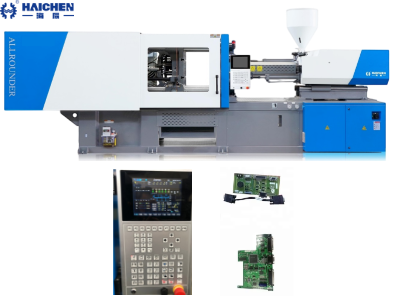
Common causes of injection molding machine tie bar breakage include overload breakage, fatigue damage, combined strain, instantaneous impact stress and temperature strain.
Fatigue damage and overload stretching caused by long-term high-intensity production, especially the inconsistent lengths of the four tie bars, can also cause tie rod breakage.
To this end, our preventive measures for injection molding machine tie rods should involve optimized design (such as unloading groove parameters, thread structure), improved processing technology (such as rolling strengthening), material quality control, finite element analysis application, and microcrack stability research.
Five simple and common causes of the break of the tie-bar
Fracture of the injection molding machine tie bar may be caused by a variety of reasons, mainly including the following:
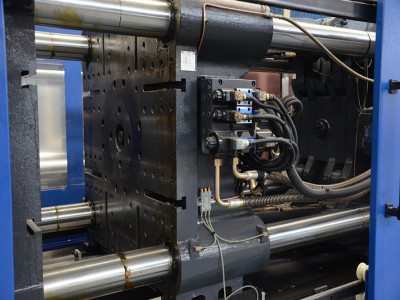
- Fatigue injection molding machine tie bar damage
- Overload fracture
- Temperature injection molding machine tie bar stress
- Compound stress
- Transient impact stress
Fatigue injection molding machine tie bar damage
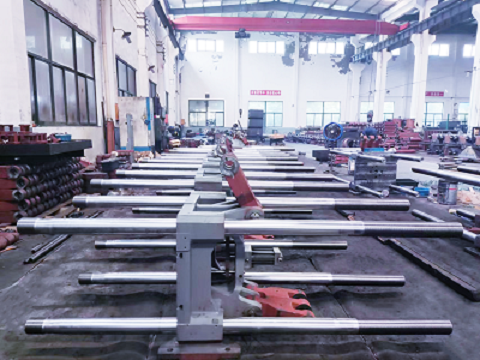
The working process of the injection molding machine is the process of alternating stress.
And any factors leading to stress concentration may lead to fatigue damage.
For example, at the step where the shaft diameter varies greatly, the lack of rounded corners or receding grooves in the transition part, and so on.
Overload injection molding machine tie bar fracture
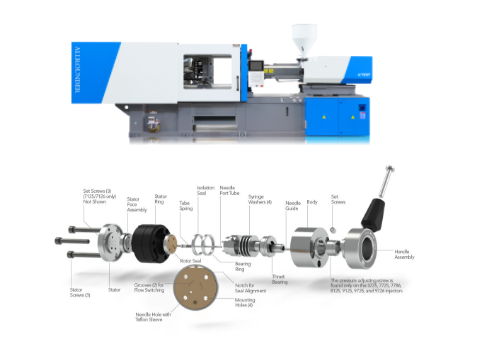
Since the elbow lever injector relies on the deformation of the four tie bars to obtain the clamping force.
If the length of the four tie bars is different, the deformation will also be different, resulting in part of the tie-bar to withstand a greater clamping force and fracture.
Temperature injection molding machine tie bar stress

If the length of the four tie bars is different, for example, one is long while the other three are short.
Then the longer tie-bar in the rapid change in temperature generated by the thermal stress will be subject to the other three tie-bar constraints and fracture.
Compound stress
If the mould plate surface is not flat, the length error of the connecting bar (hinge), the height error of the support and the length error of the tie-bar is too large.
It will lead to bending and tensile stresses when the tie-bar is under force, thus easy to fracture.
Transient impact stress
During mould opening, the transient impact of the injection machine can cause the machine to vibrate and damage the tie bars and other components.
A combination of these factors may lead to tie-bar breakage in injection molding machines.
How to avoid fatigue damage caused by injection tie bar breakage
In order to avoid fatigue damage leading to the fracture of the tie bars of injection moulding machines, six measures are recommended:
- Optimised injection molding machine tie bar design
- Ensure machining accuracy
- Reasonable use and maintenance of equipment
- Avoid overload pull-off
- Temperature control
- Transient impact stress management
Optimise injection molding machine tie bar design
Avoid drastic changes in shaft diameter in design, and use large rounded transitions to reduce stress concentration.
In addition, select materials with good performance and improve surface finish to reduce the risk of fatigue damage.
Ensure machining accuracy
Ensure the accuracy of the length of the connecting bar, the height of the bearing seat and the crosshead, in order to avoid uneven force and fracture of the tie-bar caused by too large an error.
Reasonable use and maintenance of equipment
After assembling or disassembling the mould adjusting nut, the length and spacing of the four tie bars should be corrected to avoid the risk of fracture caused by uneven distribution of clamping force.
Avoid overload breakage
Ensure that the four tie bars are of the same length, and avoid the shorter tie bars to bear more clamping force than they should bear.
Temperature control
When used in high temperature and humid environment, protective measures are required to prevent the occurrence of corrosion fatigue fracture.
Transient impact stress management
Avoid machine vibration and parts damage caused by transient impact stress during mould opening, which can be reduced by improving the mechanical structure.
The above measures can effectively reduce the risk of fracture of injection molding machine tie bars due to fatigue damage, prolong the service life of the equipment and improve production efficiency.
Overload fracture causes tie bar to fracture
There are five main reasons why the tie-bar of injection molding machine breaks:
- Overload stress
- Material quality problems
- Designdefects
- Processing technology
- problemsStress concentration
Overload stress
In practice, the stress on the tie-bar is sometimes as high as 5 to 6 times the rated stress, and this excessive stress can lead to fatigue damage of the tie bar.
Especially in the case of partial load, the stress distribution of the threaded end of the tie-bar is not uniform, the maximum equivalent stress exceeds the yield limit of the material, and it is easy to cause fracture due to the expansion of small cracks.
Material quality problems
The material of the tie-bar is unqualified, containing a large number of non-metallic inclusions, resulting in a significant decrease in the bearing strength, so that plastic fracture occurs in the case of overload.
In addition, the presence of oxides and other impurities in carbon steel and not mixed with trace alloying elements will also affect the strength and toughness of the tie bar, resulting in premature fracture.
Design injection molding machine tie-bar defects
The unreasonable design of the tie bar, such as unloading groove location, template deformation coordination problems, etc., will have an adverse effect on the force of the tie bar, increasing the risk of fracture.
Like us the fixed template in the flare of the local stress is too large a problem, is the main factor causing its cracking.
Processing technology problems
The radius of curvature of the blind hole transition arc at the end of the tie-bar is small, and the machining roughness is large, which is easy to cause gravitational concentration.
This leads to the formation of fatigue crack sources and the continuous expansion under the action of tensile load, which ultimately leads to low-week fatigue fracture.
Stress concentration
The stress concentration phenomenon at the thread of the tie-baris more obvious, and it is easy to form cracks in this part.
Especially at the thread arc, the stress concentration will lead to the emergence and expansion of cracks.
The causes of tie-bar fracture of injection molding machine mainly include overload stress, material quality problems, design defects, processing technology problems and stress concentration and other factors.
These factors interact with each other and together lead to the fracture breakage of injection moulding machine tie bars.
How to control transient impact stress to avoid tie-bar fracture
In order to avoid the injection molding machine tie bars in the process of use due to transient impact stress and fracture, we take five main ways:
- Optimise the design and material selection of tie bars
- Improve injection molding machine tie bar thread design
- Use elastic nuts and optimise nut design.
- Overall injection molding machine tie bar stress analysis and optimisation.
- Using advanced control technology
Optimise the design and material selection of tie bars
According to finite element analysis, optimise the geometry and size of tie bars, especially the design of unloading grooves, in order to reduce the stress concentration and improve the bearing capacity. For example, the stress distribution can be optimised by adjusting the diameter and length of the unloading groove. In addition, the fatigue life and load carrying capacity of tie bars can be improved by selecting suitable materials, such as elastic or elasto-plastic materials.
Improvement tie bar thread design
For the problem of stress concentration at the threads of tie bars, specific thread design, such as changing the tooth angle of threads and root fillet treatment, can be used to reduce stress concentration and improve fatigue strength.
Use elastic nut and optimise nut design
By changing the cross-section area of the nut and designing the direction of the offloading groove, the stress concentration phenomenon at the mating point of the nut and the tie-bar can be effectively reduced, so as to reduce the risk of fatigue fracture.
Conduct injection molding machine tie bar overall stress analysis and optimisation
Study the overall stress distribution between the tie-bar and the formwork through the overall finite element analysis method.
Optimise the basic thickness of the formwork and the position of the unloading groove.
So as to ensure the topological optimisation of the formwork structure and reduce the adverse effect of additional bending moment on the tie bar.
Adopt advanced control technology
In the operation of the injection molding machine, adopt hybrid control technology (e.g. mixing of position control and force control) in order to smoothly switch the control system and reduce the transient impact stress caused by improper operation.
Haichen’s injection molding machine design effectively controls transient impact stresses and avoids breakage of the injection moulding machine tie bars through the combined application of the above measures, thus improving the reliability and service life of the equipment.