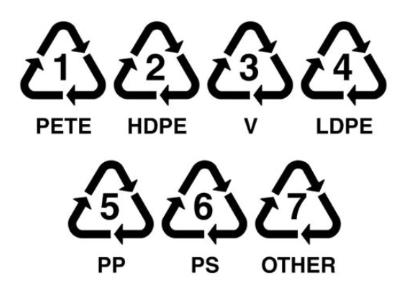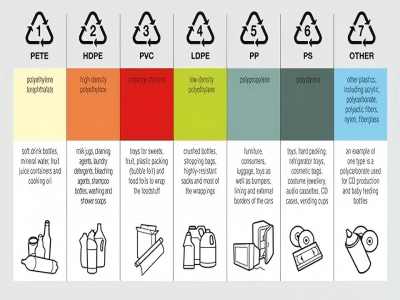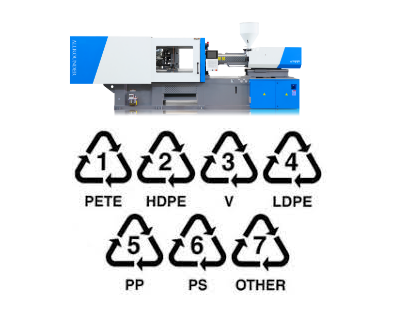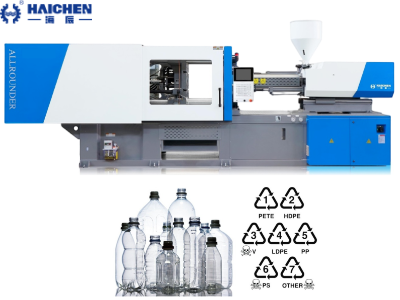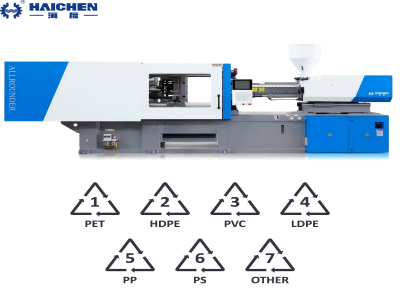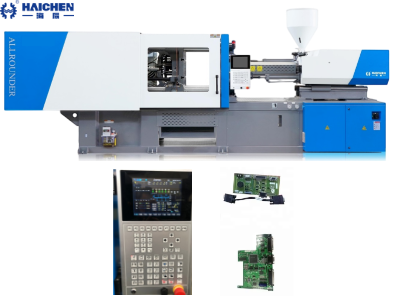
The main machines are used to make plastic cups are injection molding machines, thermoforming machines, blow molding machines, extrusion molding machines, etc.
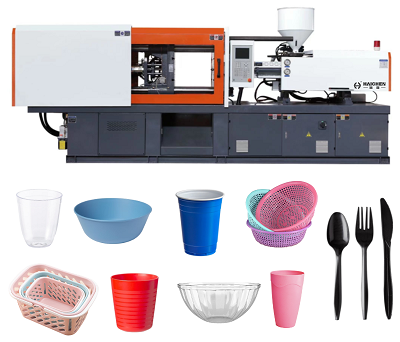
Injection molding machines: Injection molding machines melt plastic particles and inject them into molds to form plastic cups.
Thermoforming machines: This type of machine makes plastic cups by heating and forming sheets.
Blow molding machines: Blow molding machines form cups by blowing molten plastic into molds.
Extrusion molding machines: This type of machine makes plastic cups through extrusion processes.
These machines can do combination to meet the production needs of different types of plastic cups according to different production processes and material requirements.
Injection Molding Machine used for Plastic Cup
The operation process of the material cup injection molding machine is a complex cycle process, which mainly includes the following steps:
- Raw material preparation
- Plasticization stage
- Injection stage
- Pressure holding cooling and shaping
- Mold opening and demolding
- Inspection and packaging
Raw material preparation
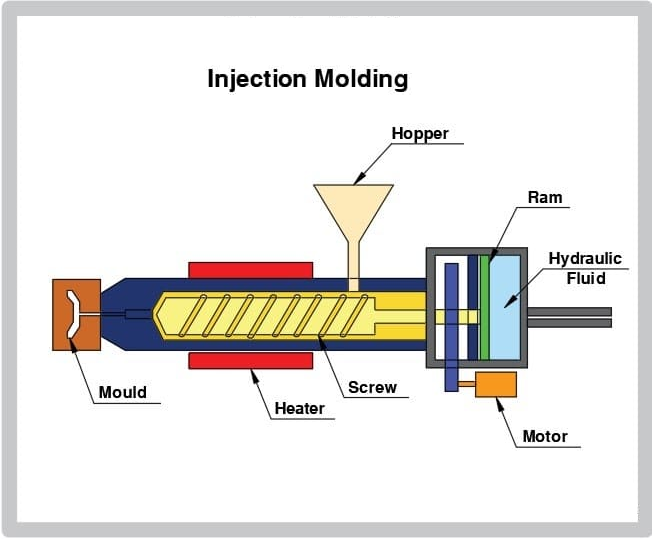
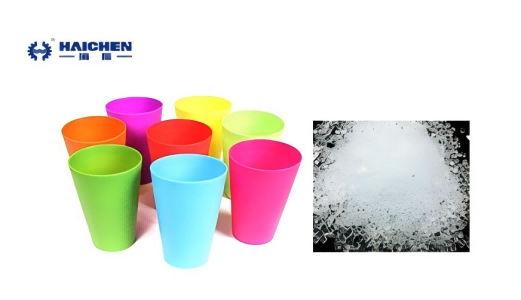
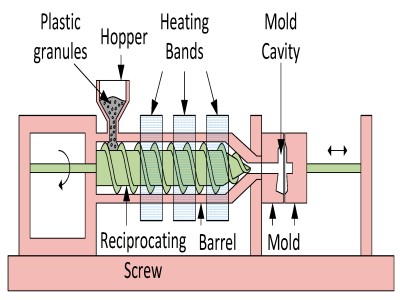
First, put plastic particles (such as polypropylene PP, ABS, etc.) into the hopper of the injection molding machine in a certain proportion.
Plasticization stage
The plastic particles are gradually melting into a molten state through the rotation of the screw and the heating of the outer wall of the barrel.
The heating temperature is generally between 170~260℃.
Injection stage
When the plastic reaches the appropriate molten state, the injection device of the injection molding machine starts working. We can adjust the injection speed and pressure as we need.
Pressure holding cooling and shaping
After the plastic is injecting into the mold, the injection seat stops moving forward and maintains a certain pressure to prevent the molten plastic from shrinking or deforming.
Mold opening and demolding
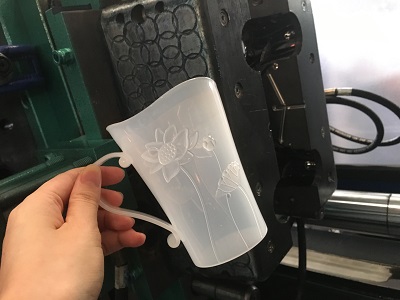
After cooling, the mold opens, the movable mold part will fall out from the fixed mold part.
And the finish plastic cup is falling out of the mold.
Inspection and packaging
The removed plastic cups will undergo quality inspection, qualified products will be packaged and stored, and unqualified products will be picked out and recycled.
From plastic raw materials preparation to final product packaging.
Each step is precisely controlled by the injection molding machine’s control system to ensure efficient production and consistent product quality.
What is the process of plastic injection molding cups?
The process of plastic injection molding for cups involves transforming thermoplastic materials into cup-shaped products through a highly automated, precise manufacturing method. Here’s a step-by-step breakdown:
- Material Selection
- Mold Design
- Injection Molding Process
- Post-Processing
- Key Considerations for Cup Production
- Applications
- Example Cycle for a PP Cup
- Challenges & Solutions
Material Selection
- Common Plastics:
- Polypropylene (PP): Lightweight, durable, and food-safe (common for reusable cups).
- Polystyrene (PS): Rigid and cost-effective (used for disposable cups).
- PET (Polyethylene Terephthalate): Transparent and recyclable (common for water bottles or clear cups).
- PLA (Polylactic Acid): Biodegradable option for eco-friendly disposable cups.
- Additives: Colorants, UV stabilizers, or antimicrobial agents may be added.
Mold Design
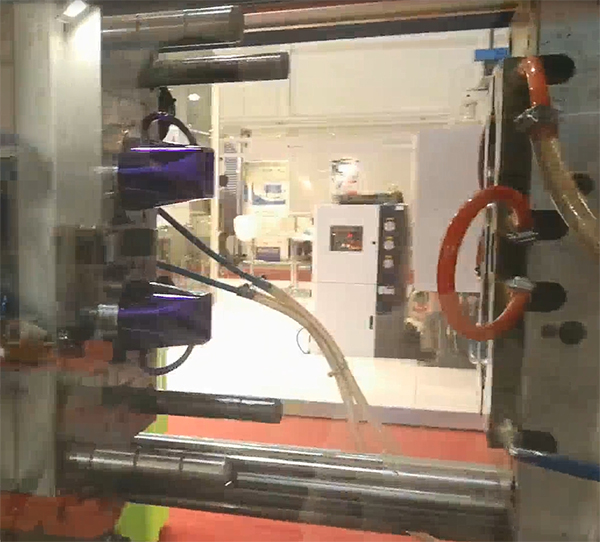
- Core and Cavity: The mold consists of two halves:
- Cavity: Forms the cup’s outer shape.
- Core: Creates the hollow interior.
- Cooling Channels: Ensure uniform cooling to prevent warping.
- Ejection System: Pins or sleeves to push the finished cup out without damage.
- Vents: Allow air to escape during injection.
Injection Molding Process
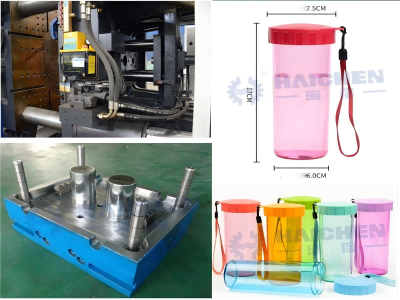
Material Preparation
- Dry Plastic pellets are (if hygroscopic, like PET or PLA) to remove moisture.
- Pellets are fed into the machine’s hopper.
Melting
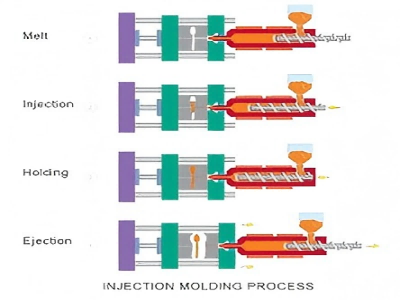
- A reciprocating screw rotates inside the barrel, heating the plastic to its melting point (e.g., 160–280°C depending on the material).
- The molten plastic is homogenized and pushed to the front of the barrel.
Clamping
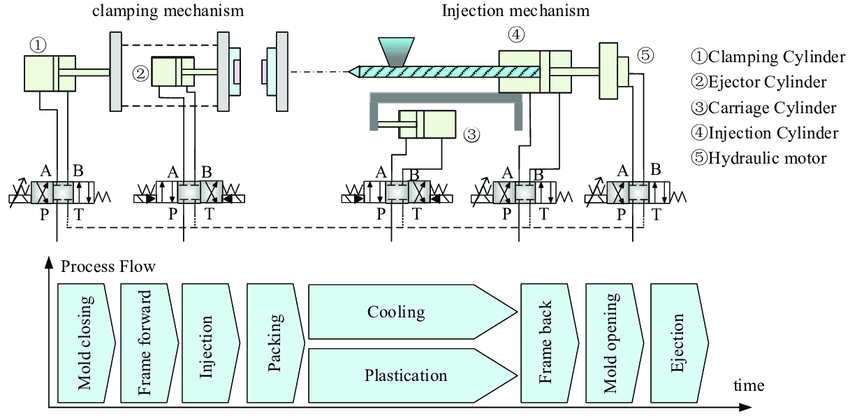
- The mold halves are clamped together under high pressure (e.g., 50–300 tons) to withstand injection forces.
Injection
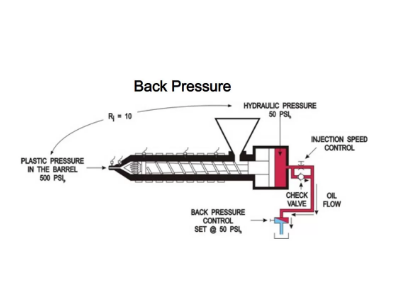
- Molten plastic is injected into the mold cavity through a nozzle and runner system.
- Key Parameters:
- Injection Pressure: 500–1,500 bar to fill thin walls quickly.
- Injection Speed: High speed ensures complete filling before cooling starts.
Cooling
- Coolant circulates through the mold’s channels to solidify the plastic.
- Cooling time depends on cup thickness (e.g., 10–30 seconds for thin-walled cups).
Ejection
- The mold opens, and ejector pins push the cup out.
- Robots or conveyors often handle part removal for automation.
Mold Reset
- The mold closes, and the screw retracts to prepare for the next cycle.
Post-Processing
- Trimming: Excess material (sprue, runners) is removed.
- Surface Finishing: Textures, logos, or coatings (e.g., silicone for grip) may be added.
- Quality Checks: Inspect for defects like sink marks, flash, or air bubbles.
Key Considerations for Cup Production
- Uniform Wall Thickness: Prevents warping and ensures structural integrity.
- Material Flow: Thin walls require high injection speeds to avoid premature cooling.
- Mold Temperature:
- Cooler molds (20–60°C) for faster cycles.
- Warmer molds (60–100°C) for glossier finishes.
- Sustainability:
- Use recycled plastics or biodegradable resins (e.g., PLA).
- Minimize waste with hot runner systems (eliminates cold runners).
Applications
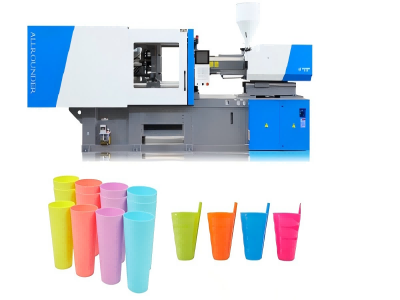
- Disposable Cups: PS for coffee cups, PLA for compostable options.
- Reusable Cups: PP or Tritan® for durability and dishwasher safety.
- Specialty Cups: PET for transparent drinkware, TPE for collapsible designs.
Example Cycle for a PP Cup
| Stage | Time (Seconds) | Description |
|---|---|---|
| Clamping | 2 | Mold closes under high pressure. |
| Injection | 3 | Molten PP fills the cavity. |
| Cooling | 15 | Cup solidifies. |
| Ejection | 2 | Cup is ejected. |
| Total Cycle | 22 | Produces 1 cup every ~22 seconds. |
Challenges & Solutions
| Issue | Cause | Solution |
|---|---|---|
| Warping | Uneven cooling. | Optimize cooling channels. |
| Short Shots | Insufficient injection pressure/speed. | Increase pressure or melt temperature. |
| Flash | Excess material leakage. | Improve clamping force or mold alignment. |
Plastic injection molding is ideal for mass-producing cups with high precision, consistency, and design flexibility. By optimizing material selection, mold design, and process parameters, manufacturers can produce cups ranging from disposable to high-end reusable designs. Advances in biodegradable resins and energy-efficient machines are also driving sustainability in the industry.
Haichen’s injection molding machine is used for plastic cup
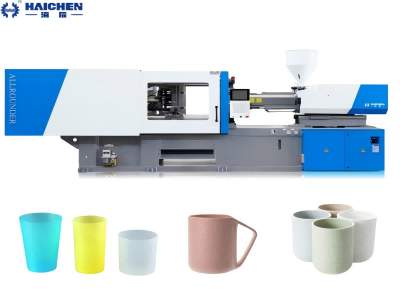
Haichen has rich experience in injection molding machines for plastic cup production.
First of all, from the perspective of mold design and injection molding process.
Haichen has rich experience in injection mold design for plastic cup sleeves, plastic cup holders, and water cups.
Haichen’s rich experience in plastic cup production injection molding machines, as well as efforts in technological innovation and improvement.
These fully demonstrate Haichen’s professional ability and experience in the field of plastic cup production injection molding machines.
If you have any questions or needs, we are ready to serving you.