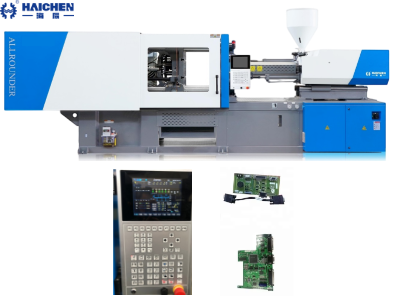
ABS injection molding processing methods involve precise control over injection speed, pressure, and cooling time to produce high-quality parts with good surface finish and mechanical properties.
ABS (Acrylonitrile Butadiene Styrene) is a well-known thermoplastic polymer that possesses characteristics such as strength, toughness, and ease of processing.
Due to its mechanical properties and ability to withstand impacts and chemicals, ABS is used in automobiles, electronics, and consumer goods.
In this article, we will discuss various processes involved in injection molding of ABS and their effects on the final product.
Understanding these methods enables manufacturers to streamline their processes to achieve better production efficiency while maintaining optimum product quality, consistency, and low-cost productivity.
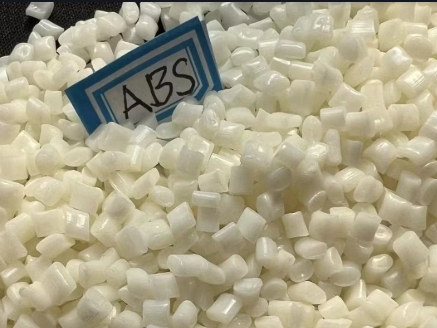
Common ABS Injection Molding Processing Methods
- Conventional Injection Molding
- Two-Shot Injection Molding
- Insert Injection Molding
- Overmolding
- Multi-Material Injection Molding
Conventional Injection Molding
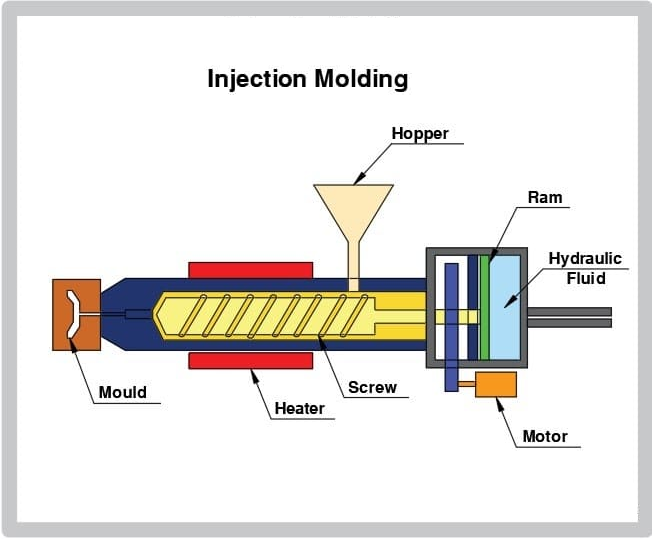
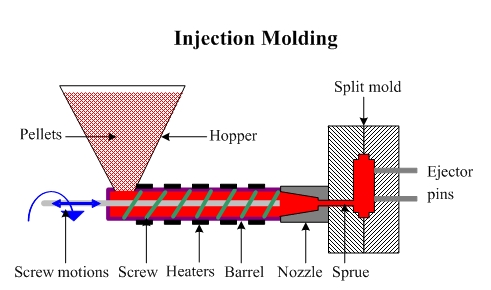
Standard injection molding is the primary method use to make ABS parts. Like most plastics, ABS is available in the form of pellets, which can be loade into the injection molding machine. There, they are heated to the point of becoming viscous. The now liquid plastic is inject into a cavity mold where, under cooling, it solidifies to the desired shape. This method is efficient to produce many different items, even those with intricate geometrical designs.
Two-Shot Injection Molding
In two-shot injection molding, which is also known as two color injection molding, two distinct injection cycles are performe to manufacture one component. This is used to create parts which are mono-block geometrically but are made of different colors or materials in a single production run. For instance, it fuses a rigid part with a soft-touch coat. The base part is made with the first shot, while the additional component or color is applie in the second shot. This method is prefer in the automotive and consumer electronics sectors.
Insert Injection Molding
In the case of insert injection molding, an ABS piece is made with an integrated component. We achieve this by placing a shape insert into the mold before the ABS is shot in. During fabrication, parts like metal screws or some electronic components can be embed into the plastic part. The mold keeps the insert in place for accurate positioning while we inject molten ABS. This angles for a solid bond between the insert and the plastic component.
Overmolding
Overmolding is the process of adding a layer of ABS onto a part that is usually made from a different material. Because this method enhances a part’s functionality as well as its aesthetics. Such ABS overmolding is popular in making grips and handles.
Multi-Material Injection Molding
This process is refer to as multi material injection molding because it permits the use of different materials in one production cycle. It is use to make components that have a rigid core and a soft, flexible outer layer. Materials can be injected sequentially or simultaneously, based on the design.
Advantages of ABS Injection Molding
- High Precision and Consistency
- Versatility
- Cost-Effectiveness
High Precision and Consistency
The production of parts is uniform and precise through ABS injection molding. And then it is capable of achieving exact tolerances which guarantees accuracy in each part produced.
Versatility
ABS is applicable in different industries and sectors because it can be processe in multiple ways. The material is capable of simple and intricate part design and is thus versatile.
Cost-Effectiveness
The cost advantages of ABS injection molding become apparent when molds are create and is optimal for achieving scale due to speed and efficiency of part production.
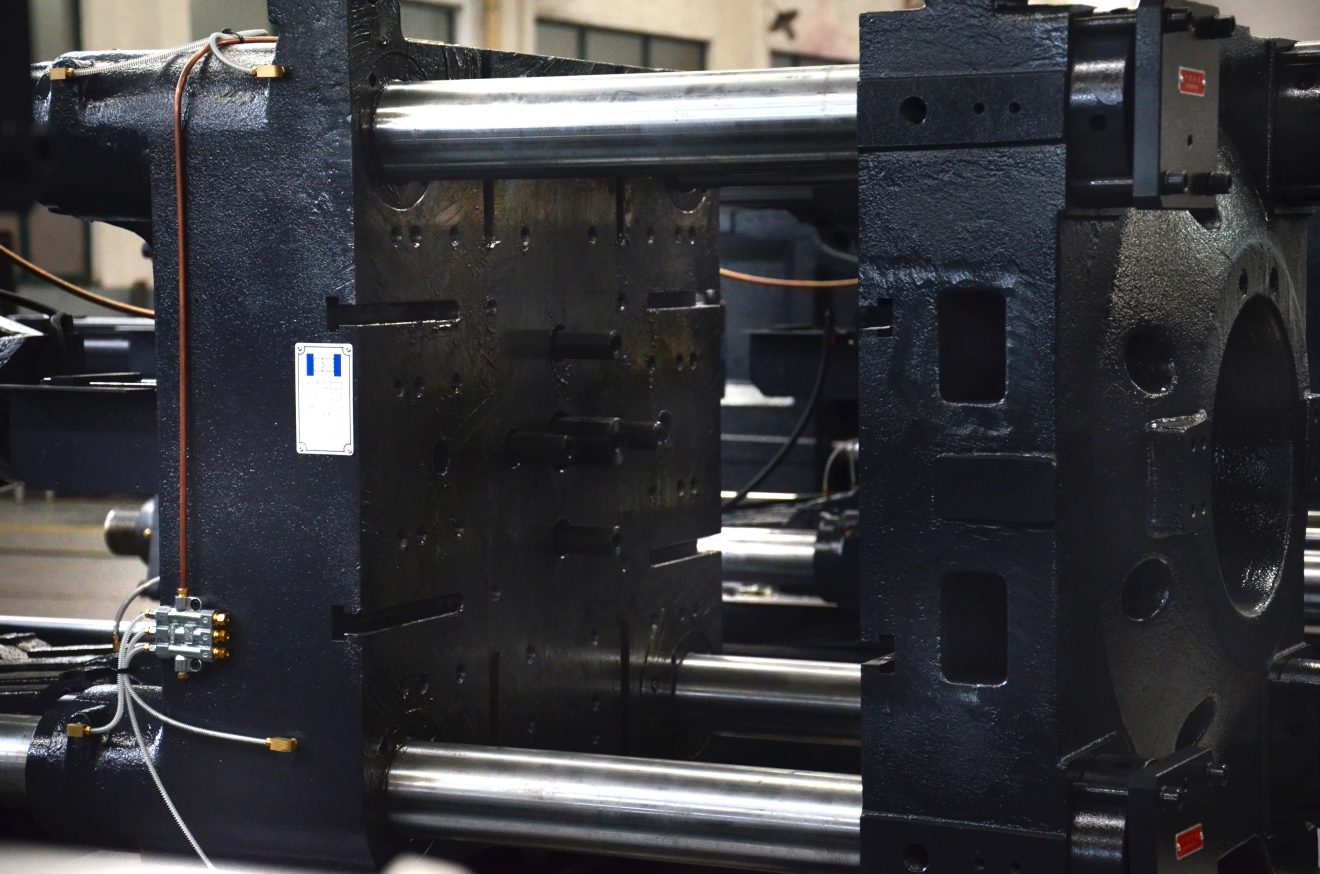
Key Process Points for Special Applications
Injection Molding of Thin-Walled Products (Wall Thickness <1mm)
- Equipment Requirements: Injection Molding of Thin-Walled Parts. Equipment: Needs to have a dedicated high-speed injection molding machine, injection speed ≥ 300 mm/s, pressure ≥ 138 MPa.
- Mold Design:
- Core: For high viscosity products, use multi-point hot runners or add gate sizes (gate thickness ≥ product wall thickness).
- Ejector Core: Expand the number and area of ejector pins to prevent overshoot deformation.
- Material Considerations: use high flow ABS with melt index ≥ 30 g/10 min.
Electroplating-grade ABS Treatment
- ABS treatments for electroplating Increase the injection temperature to 240-260 and mold temperature to 80-120 to reduce internal stress that causes delamination of plating.
- Do not use release agents to prevent surface contamination that affects adhesion.
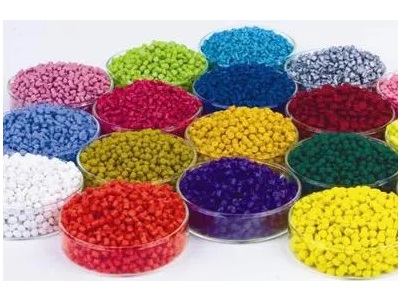
Injection Molding Comparison of ABS and Other Materials
| Material | Heat Resistance | Impact Strength | Surface | Treatment | Cost Applications |
| ABS | Medium (≤70°C) | Excellent | Can be plated/painted | Low | Appliance housings, toys |
| PC | High (130°C) | Very high | Transparent finish | High | Safety helmets, optical lenses |
| PP | Medium (100°C) | Good | Difficult to dye | Lowest | Packaging containers, daily necessities |
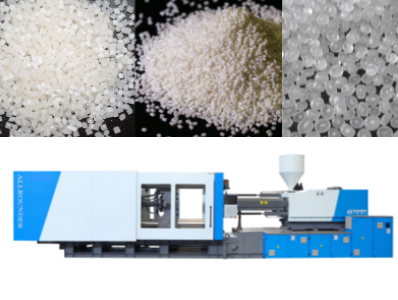
HAICHEN:Injection Molding Machine Manufacturer
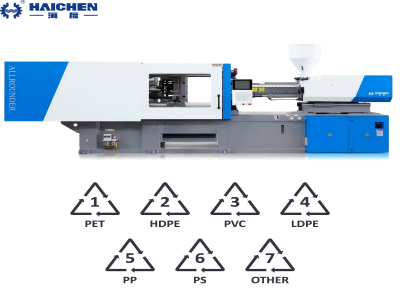
Injection molding machines are some of the most critical pieces of equipment for any modern manufacturer. HAICHEN is known for its wide range of injection molding machines. HAICHEN offers models for various materials, including ABS.
Thorough and even servicing of the customers is done, so they are able to gain more value from the spending they put into the machines. This includes technical support, spare, and even setting up training for proper systems and operations.

Thai manufacturers are focuse on the cost of production and are therefore looking for high precision, reliable and cost efficient, machines.
This is one of the most reliable and versatile methods for molding plastics into desired structures. And then the more optimized the methods are the better the results, all of which are tailore to the demands of the respective industry.