Automotive injection molding applications advantages include: high precision and consistency, cost-effectiveness and so on.
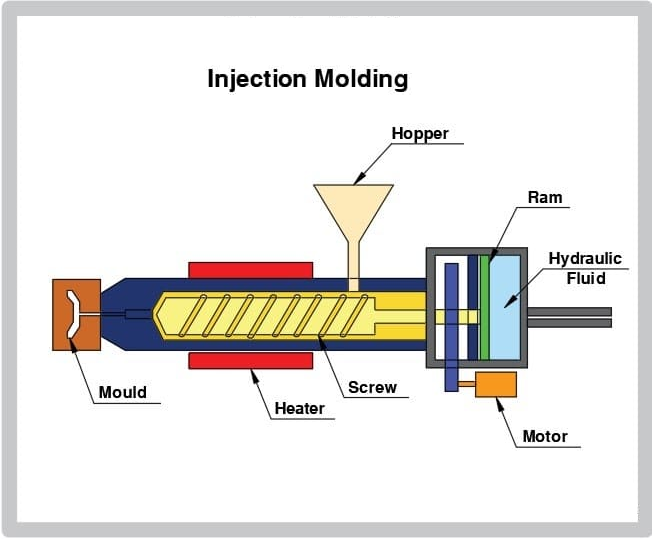
The basic principle of injection molding technology is to heat plastic raw materials to a molten state, inject them into the mold cavity under high pressure, cool and solidify them, and then demold them to obtain the desired shape of the product. The core process includes steps such as heating and melting, filling the mold, cooling and solidification, and mold opening and component extraction
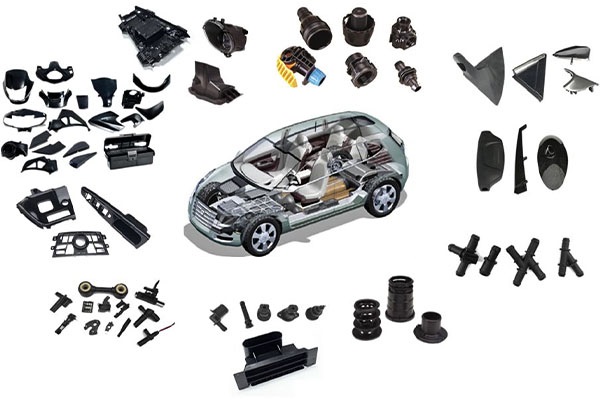
Typical application scenarios of injection molding in automotive manufacturing include:
The lower components of the engine compartment, such as the cylinder head and oil pan, are typically made of strong polymer materials such as ABS, nylon, and PET.
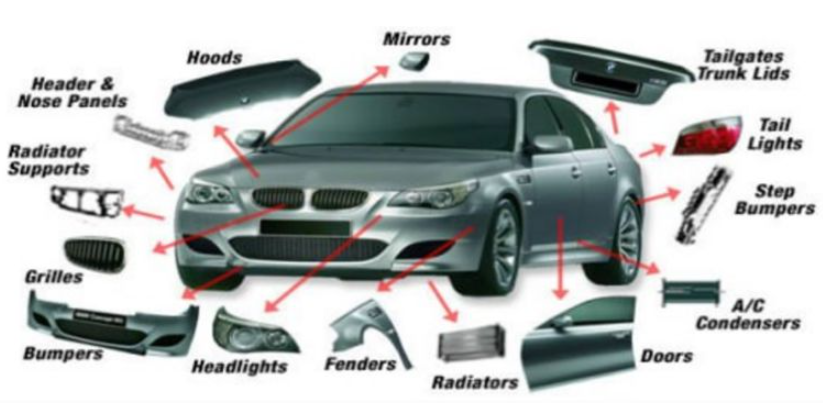
External components such as bumpers, grilles, door panels, threshold strips, lampshades, etc. Splash protection covers are a good example of the durability of injection molded parts.
Interior components: such as instrument panels, interior surfaces, dashboard panels, door handles, storage compartments, air conditioning vents, etc.
The advantages of injection molding for automotive applications as follow:
- High Precision and Consistency
- Cost-effectiveness
- Design Flexibility
- Rapid Production
- Material Diversity
- High repeatability
- Excellent surface quality
High Precision and Consistency
Injection molding is able to produce parts with high precision and tight tolerances, which is essential for automotive manufacturing. By precisely controlling the parameters during the injection molding process, it is possible to ensure that the size, shape and surface quality of each part are consistent. Thus meeting the stringent requirements of the automotive industry.
The process parameters for achieving high precision
in injection molding technology mainly include the following aspects:
- Injection pressure: Injection pressure is a key parameter to ensure that molten plastic fully fills the mold. Excessive height may cause damage to the mold or deformation of the product, while insufficient height may result in incomplete filling. Reasonable injection pressure settings can improve the density and dimensional stability of products.
- Injection speed: The injection speed determines the speed at which the molten plastic fills the mold. Too fast may lead to bubble formation, while too slow may affect production efficiency. Reasonable injection speed can ensure uniform material filling of the mold and reduce surface defects.
- Temperature control: including melt temperature, mold temperature, and screw temperature. Excessive melt temperature can lead to material degradation, while insufficient melt temperature may result in insufficient fluidity. Controlling the mold temperature within ± 1 ℃ can maintain stable surface temperature of the mold cavity, improve the dimensional accuracy and surface quality of the product.
- Holding time and pressure: The length of holding time affects the solidification of plastics and the dimensional stability of products. The setting of the holding pressure can ensure that the product maintains its shape during the cooling process and reduce shrinkage deformation.
- Cooling time: Insufficient cooling time may cause product deformation, while excessive cooling time may reduce production efficiency. Reasonable cooling time setting can ensure uniform shrinkage of the product during the cooling process and improve dimensional accuracy.
- Locking force: The magnitude of the locking force directly affects the closing effect and molding quality of the mold. A higher clamping force can ensure stable closure of the mold under high pressure, preventing product deformation.
- Mold temperature: The uniformity and stability of mold temperature are crucial for the dimensional accuracy and surface quality of the product. The control of mold temperature can reduce shrinkage and internal stress, improve the strength and heat resistance of products.
Product consistency control measures:
In injection molding technology, these means include but are not limited to the following:
- Raw material quality inspection: Strictly inspect the quality of the raw materials used to ensure that they meet the prescribed standards, in order to avoid product defects caused by material problems. In addition, it is necessary to test the chemical composition and physical properties of the raw materials.
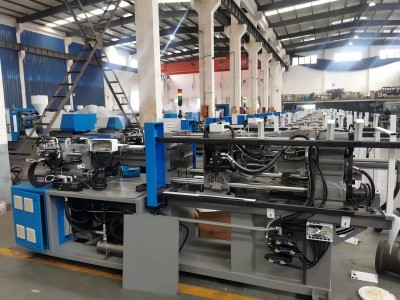
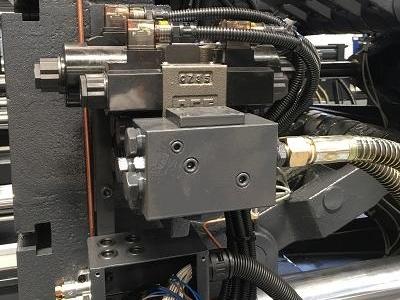
- Injection molding machine equipment monitoring: By monitoring the operating status of the injection molding machine, such as temperature, pressure, injection speed, and other parameters, the stability and consistency of the injection molding process are ensured. At the same time, regularly inspect and maintain injection molding equipment to ensure its normal operation.
- Mold quality control: Strictly control the quality of molds, including their accuracy, durability, and service life. This includes regular maintenance and upkeep of the mold, developing a detailed maintenance plan, and recording the usage and maintenance history of the mold. In addition, the design and manufacturing of molds also need to meet the requirements of product size and shape accuracy.
- Process parameter control: Reasonably set injection parameters such as injection pressure, injection speed, holding time, etc., and adjust them according to product requirements. Meanwhile, by monitoring key process parameters such as temperature, pressure, and cycle time, the quality of product molding is ensured. Use tools such as Statistical Process Control (SPC) for real-time analysis and timely correction to promote continuous improvement.
Cost-effectiveness
Although the initial cost of an injection mold is higher, injection molding is a cost-effective option in the long run. Once the mold is made, the production cost per part is significantly reduced, especially for large-scale production. Injection molding also reduces material waste, further reducing costs.
Price advantage of raw materials
The unit price of commonly used plastics such as PP and ABS for automotive injection molded parts is much lower than that of metal materials.
Secondary cost savings brought by lightweighting
Plastic components can reduce the weight of the entire vehicle by 10% -15%, and each 10% reduction can reduce fuel consumption by 6% -8%.
Ultra short production cycle
The injection molding cycle of a single piece is only 15 – 120 seconds, and the “the first mock examination with multiple cavities” can be achieved (for example, bumper mold 1 out of 4). Under a daily production scale of 100000 pieces, the efficiency of stamping process is improved by 3-5 times.
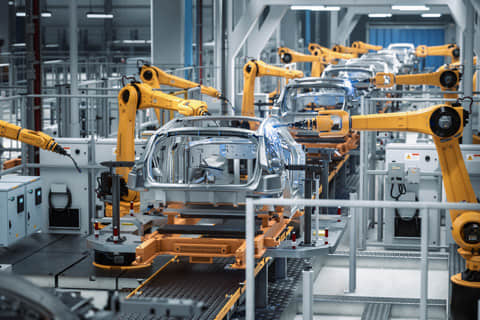
Automated integration reduces manual dependence
The fully automatic injection molding line only requires 1-2 people to monitor, reducing labor costs by 74% compared to traditional sheet metal welding lines.
Design Flexibility
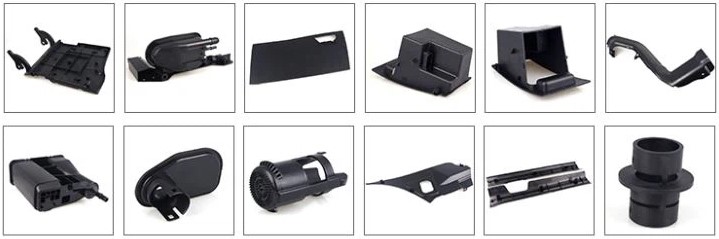
Injection molding allows for the production of complex geometries and designs that are difficult to achieve with traditional manufacturing methods. This flexibility enables automakers to design vehicle components that are lighter, more durable and more visually appealing.
The flexibilityin material selection
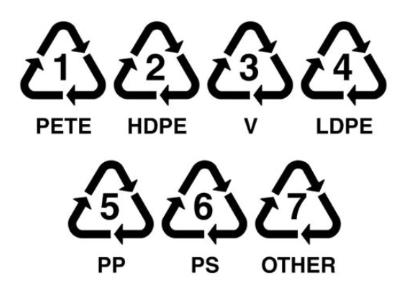
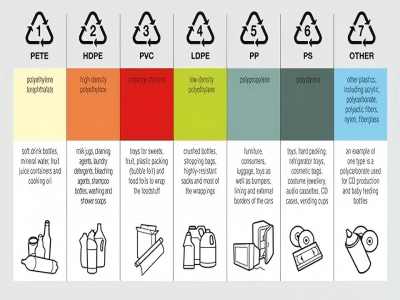
It can use a variety of thermoplastic, thermosetting plastics, and elastomers to meet different design and performance requirements. For example, materials such as polypropylene (PP), acrylonitrile butadiene styrene (ABS), polyamide (nylon), high-density polyethylene (HDPE), polycarbonate (PC), etc. are widely used in injection molding. Each material has its unique performance characteristics, such as strength, flexibility, heat resistance, impact resistance, etc.
Flexibility in mold design
The variability of injection molding technology in mold design is mainly reflected in multiple aspects such as mold structure, cooling system, gate design, material selection, and optimization of process parameters. These design factors directly affect the performance of the product, including dimensional accuracy, surface quality, mechanical properties, and production efficiency.
Rapid Production
Injection molding is an efficient production method that is able to produce a large number of parts in a short period of time. This makes it well suited to the rapid production and delivery needs of the automotive industry.
Highly automated cycle
The injection molding process includes six stages: mold closing, injection, pressure holding, cooling, mold opening, and demolding, all of which are automatically controlled by the injection molding machine. The single cycle time is usually 15-120 seconds, and each link is seamlessly connected, significantly reducing manual intervention time.
Optimization of Cooling Efficiency and Material Characteristics
The heat capacity of plastic is much lower than that of metal, and it cools and solidifies faster. For example, the micro foam injection molding cycle for car door panels is only 35 seconds.
Water assisted injection molding (WIT) utilizes the ultra-high heat capacity of water to accelerate internal cooling and further shorten the cycle time.
Mold Design and Parallel Production
Multi cavity mold design allows for single injection molding of multiple parts (such as producing 4 containers with a 4-cavity mold).
Rapid mold changing technology (such as hot runner systems) reduces downtime and improves equipment utilization.
Material Diversity
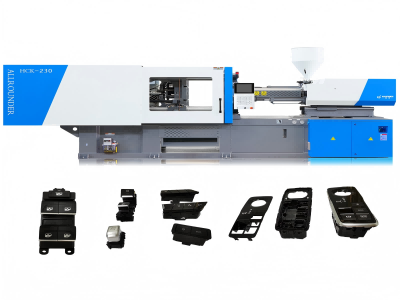
Injection molding supports a wide range of material options, including different plastics, metals, and composites. This diversity allows manufacturers to select the most suitable material for specific needs, thereby optimizing the performance and cost of the part.
Multi component precision mold design and manufacturing technology
This technology allows the combination of liquid silicone/plastic materials with other materials to form an unbreakable part or product. This increases the freedom of product design and solves the problem of using different materials on the same product.
Multi material embedding injection molding technology
This technology can process various materials, such as magnets, nylon mesh, textile fabrics, plastic sheets, metal parts, plastic parts with large temperature differences in thermal deformation, hoses, etc.
Dual color injection molding technology
By combining two materials with different properties, this technology solves the problem of designing different materials on the same product. In order to reduce internal stress at the interface and improve the integrity of molded plastic parts, the thermodynamic properties of the two materials should be as consistent as possible and able to effectively cross bond with each other.
High repeatability
Injection molding is a highly repeatable process that can produce thousands of identical parts, which is very important for large-scale production in the automotive industry.
Repeatability in the design phase
Automobile manufacturers and their suppliers should develop design strategies in the early stages of new vehicle development to improve the reusability and recyclability of components. The new model should achieve at least 85% of the mass that can be reused or recycled, and 95% of the mass that can be reused or restored, which is consistent with the standards specified in Directive 2005/64/EC.
Repeatability in the manufacturing process
In the manufacturing process, the processing and testing of components require high precision and high repeatability.
The requirements for repeatability in automotive components cover multiple aspects such as design, manufacturing, materials, remanufacturing, and quality control, aiming to ensure high consistency, recyclability, and sustainability of the components.
Excellent surface quality
Parts produced by injection molding generally have good surface quality and can reach high quality standards without the need for additional post-processing. This not only saves time and money, but also improves the overall aesthetics of the part.
During the injection molding process, multiple functions can be integrated into one part, such as directly embedding hooks, fasteners or electronic components. This integrated design further simplifies the production process and reduces the number of parts.
Injection molding has significant advantages in automotive applications, including high precision, cost-effectiveness, design flexibility, fast production and excellent surface quality. These advantages make it the preferred process for automotive manufacturers in producing high-quality, high-performance parts.
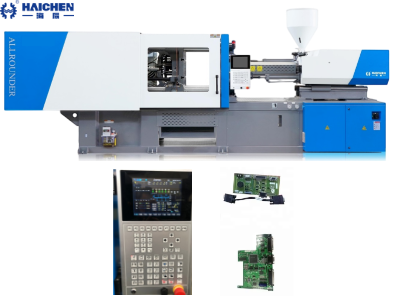
Haichen injection molding machine
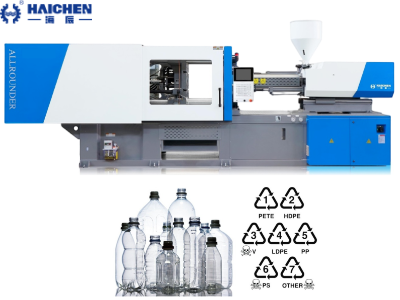
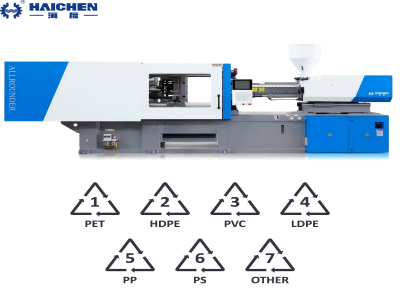
Haichen is one Chinese injection molding machine manufacturer. Our servo energy saving injection molding machines quality under CE safety standards certificated.
Haichen have rich experience of producing plastic products, with successfully cases for your reference. We can supply complete plastic production line as per customer’s specific demand.
Consider the above you can choose a suitable plastic injection molding machine and mold to ensure product’s quality and production efficiency.