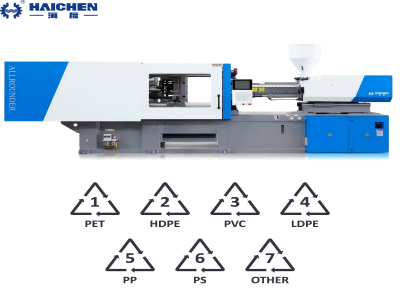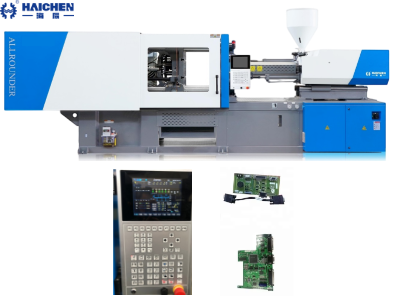
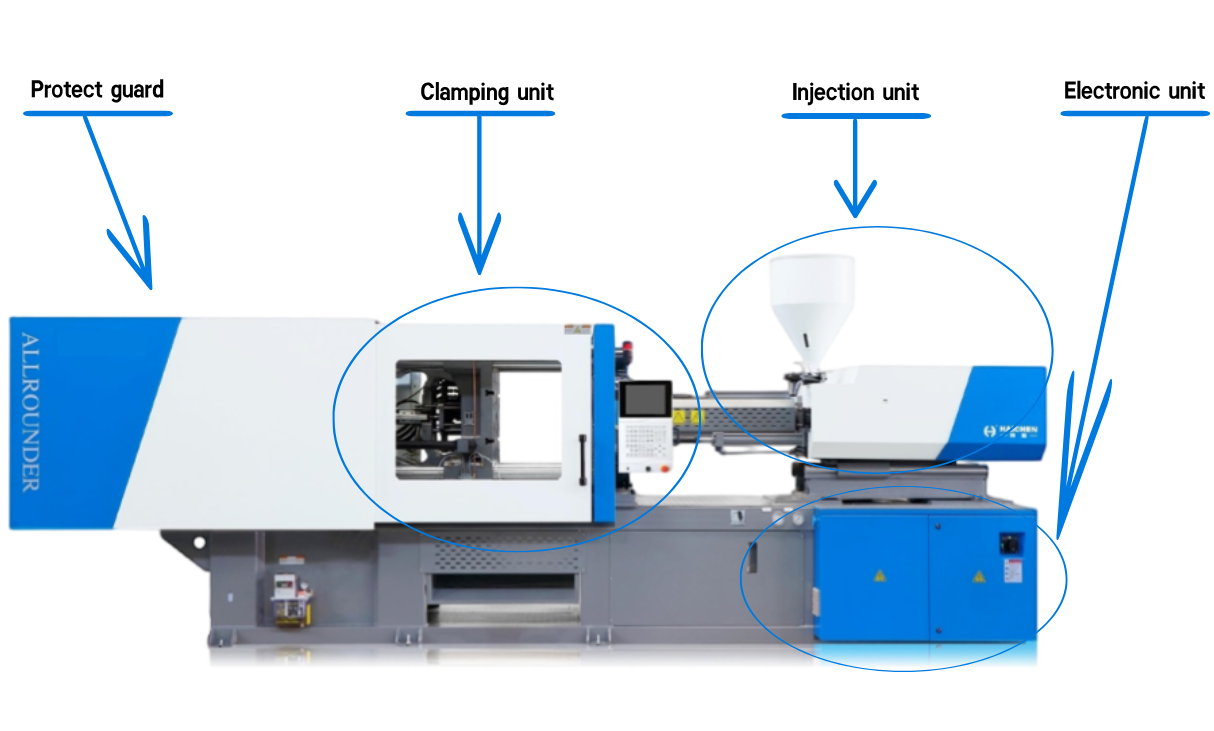
Plastic injection molding machine can be devided these parts: injection unit, mold unit, clamping unit, hydraulic system, control system, and etc.
The anatomy of a plastic injection molding machine can be broken down into several key components, each playing a crucial role in the overall process of transforming plastic material into finished parts. Plastic injection molding machine (also known as injection molding machine or injection molding machine) is an industrial equipment used to manufacture plastic products. Its main function is to inject molten plastic into the mold through the injection molding process, and then form a product of the desired shape and size after cooling and solidification.
Main Parts of Injection Molding Machine
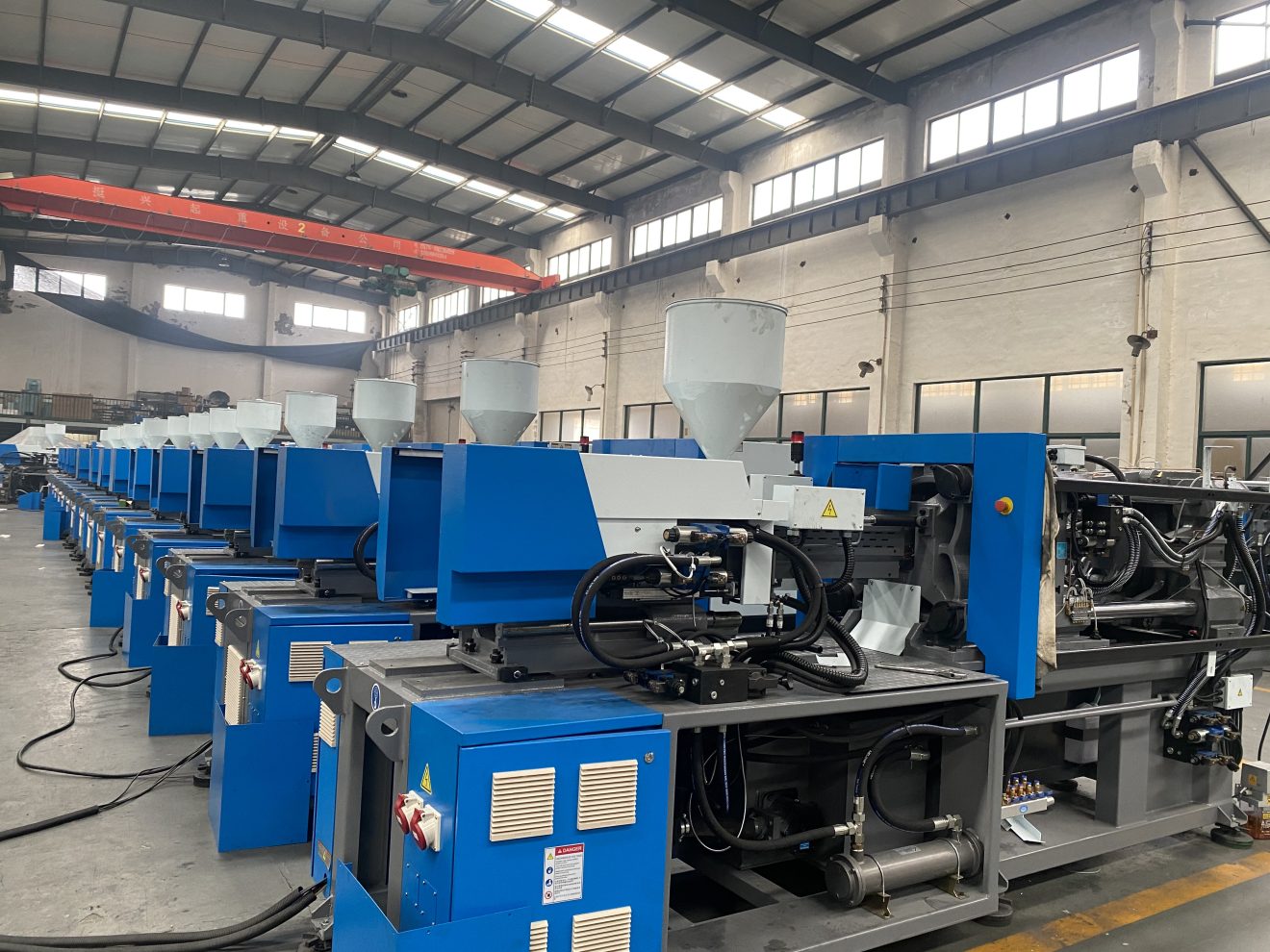
Most of injection molding machine have 3 main parts: Machine`s Frame, Injection Unit & Clamping Unit. The machine’s controlling system connect these injection molding machine parts together to an injection machine.
Plastic injection molding machine components
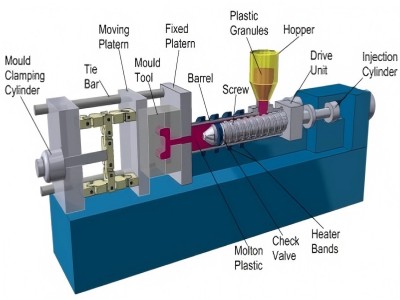
A plastic injection molding machine is a complex piece of equipment used to manufacture plastic parts by injecting molten plastic into a mold.
Below is an overview of the anatomy of a plastic injection molding machine:
Injection Unit of plastic injection molding machine
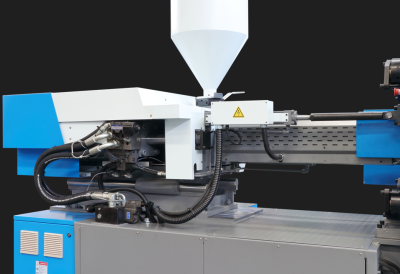
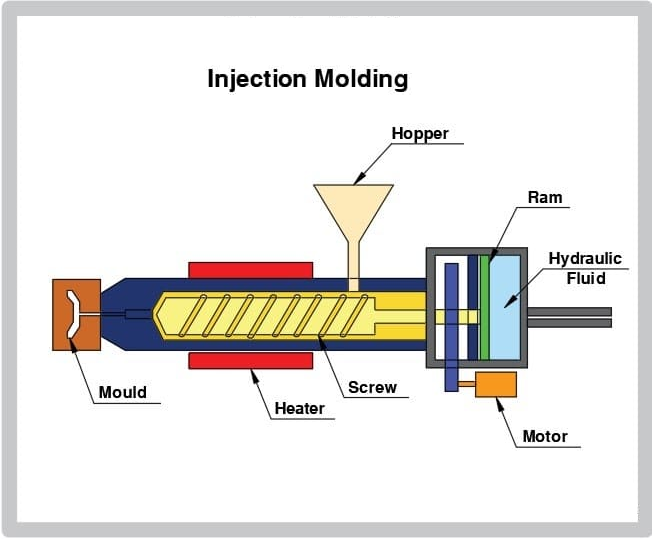
The injection unit is responsible for melting and injecting the plastic material into the mold. It typically includes the following components:
Barrel and Screw: The barrel is heated to melt the plastic material, while the screw rotates to mix and convey the material forward.
Hopper: This is where the raw plastic pellets are fed into the machine.
Nozzle: The nozzle is at the end of the barrel and injects the molten plastic into the mold cavity.
Heater Bands: These are wrapped around the barrel to provide the necessary heat for melting the plastic.
Cooling System: Often integrated into the barrel to control temperature and prevent overheating.
Clamping Unit
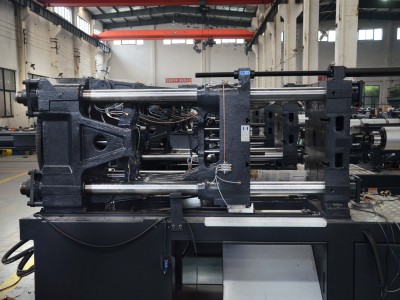
The clamping unit holds the mold together with sufficient force to withstand the injection pressure. It includes:
Clamping Plates: These are the large plates that hold the mold in place.
Tie Bars: These bars provide structural support and ensure the mold remains aligned.
Hydraulic or Electric Clamping System: This system applies the necessary force to keep the mold closed during injection.
Hydraulic System
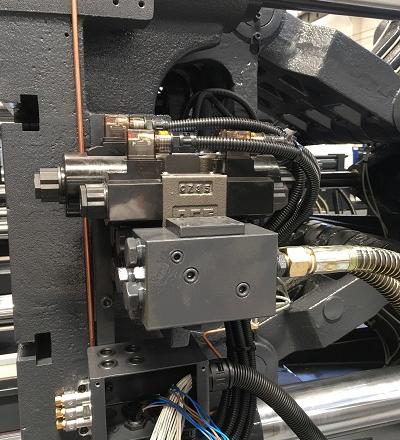
The hydraulic system provides the power needed for various operations in the injection molding machine:
Hydraulic Pump: This generates the hydraulic pressure.
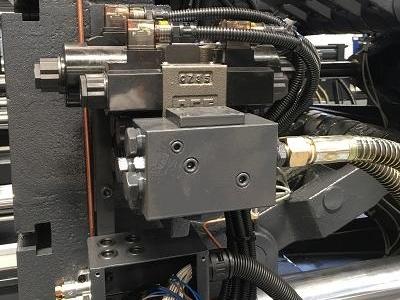
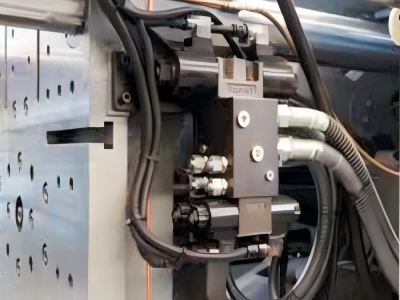
Valves and Cylinders: These control the flow and pressure of the hydraulic fluid.
Accumulators: These store hydraulic energy for quick release during injection.
Control System
The control system manages and monitors the entire injection molding process:
Control Panel: This is where operators set parameters such as injection speed, temperature, and pressure.
Sensors and Probes: These monitor various parameters like temperature, pressure, and position.
PLC (Programmable Logic Controller): This controls the machine’s operations based on pre-programmed settings.
Auxiliary Systems
These systems support the main operations of the machine and include:
Cooling System
Uses water or oil to cool the mold and maintain optimal temperatures.
Material Dryer
Removes moisture from plastic pellets to prevent defects in the final product.
Robot or Automation System
Removes finished parts from the mold and places them on a conveyor or storage area.
Mold Unit of plastic injection molding machine
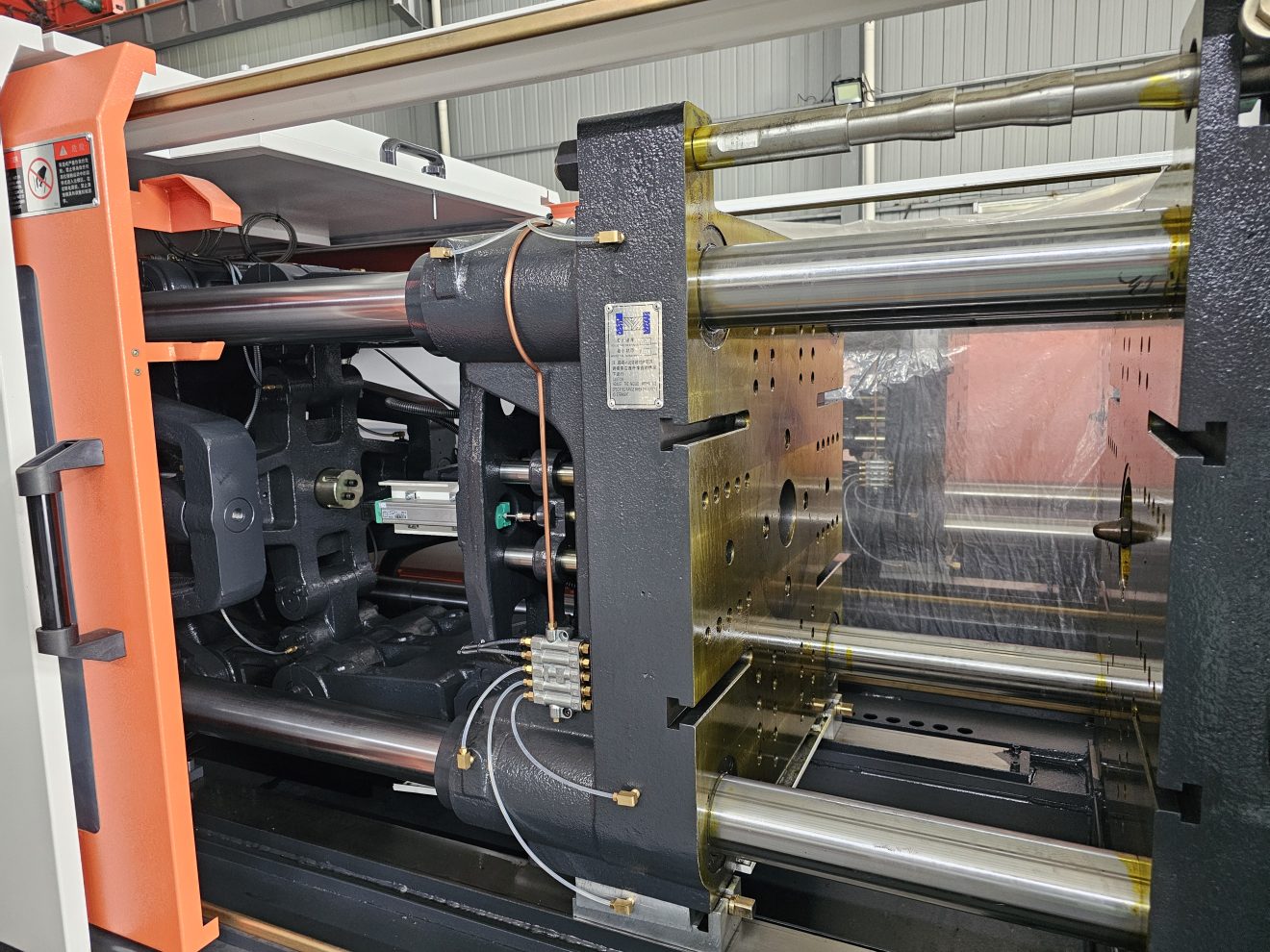
The injection mold components are where the plastic material is shaped into the final part. It consists of:
Mold Clamps: These secure the mold halves together during the injection process.
Mold Plates: The mold is typically made of two main plates (A-side and B-side) that come together to form the cavity.
Cavity and Core: The cavity is the space where the plastic is injected, while the core is the part that forms the internal features of the molded part.
Ejector System: This includes ejector pins or plates that push the finished part out of the mold after cooling.
What is injection molding ?
1. Clamping
2. Injection
3. Dwelling
4. Cooling
5. Mold opening
6. Removal of products
Haichen injection molding machine supplier
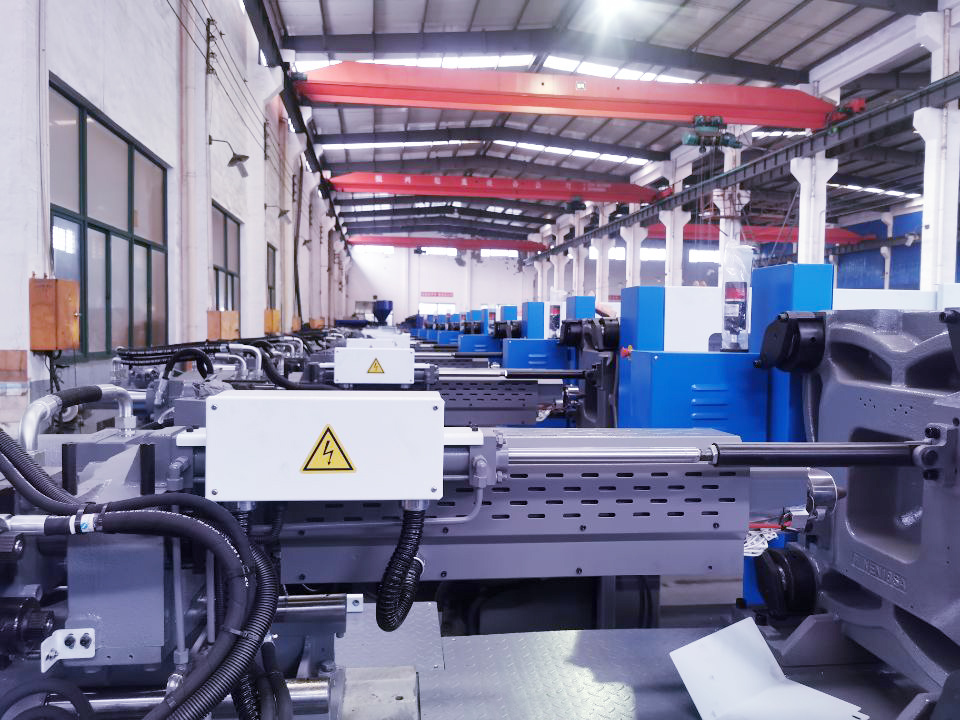
Haichen is a well-known supplier and manufacturer of injection molding machine.Based in China, Haichen has built a strong reputation for providing high-quality, reliable, and cost-effective machinery for a wide range of industrial applications. If there is any demand, welcome to consult us.