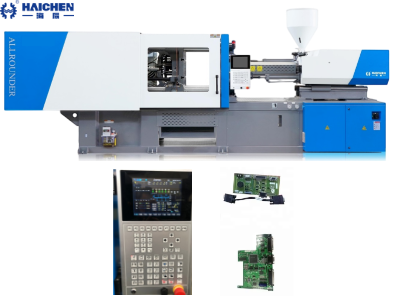
Applications for injection molding car parts includes the following aspects:
- Typical application scenarios
- Technical principles
- Injection molding car parts material selection
- Production process and key parameters
- Injection molding car parts advantages and challenges
The optimization of process parameters in automotive injection molding is a systematic project.
Which requires comprehensive consideration of multiple aspects such as materials, molds, equipment, and process parameters.
And relies on scientific optimization methods and advanced technical means to achieve high-quality and high-efficiency production.
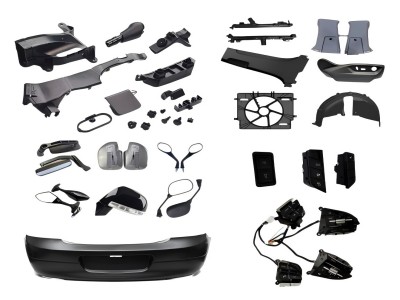
Typical application scenarios in injection molding car parts
Instrument panels
Door panels, center consoles,lightweight (30%~50% lighter than metal) and surface texture are integrated with ABS, PP and other materials.
Seat components
Injection molding of elastomers (e.g. silicone) for improved comfort and shock absorption.
Exterior parts
Bumpers, grilles, body panel,Modified PP or PC/ABS alloys, which combine impact resistance and styling freedom.
Lamp assembly
PMMA or PC material meets the requirements of light transmittance and weather resistance.
Functional parts
Engine periphery,nylon (PA) is used in the intake manifold to withstand high temperatures and reduce noise.
Electrical components
POM makes gears and bearings, with low friction coefficient and strong wear resistance.
Micro Sensors & Actuators
Micro-injection molding technology enables high-precision components such as fuel injection nozzles.
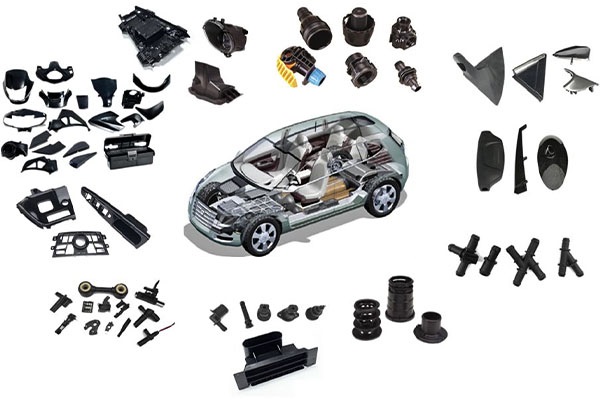
Injection molding car parts material selection
Commonly used materials
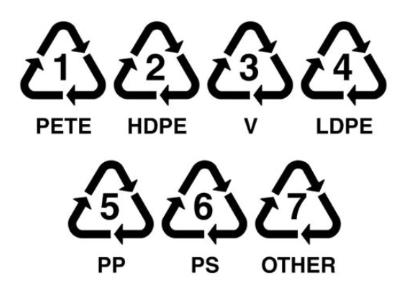
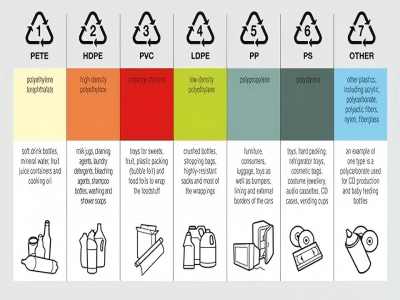
ABS: High impact resistance for interior parts and housings (e.g. instrument panels).
PC: Excellent light transmittance, used in lamp lenses and electronic device housings.
PP: Low cost, chemically resistant, widely used in bumpers and storage boxes.
PA (Nylon): High temperature resistance, high rigidity, used in under-the-hood parts.
POM: Outstanding wear resistance, used in gears and bearings.
Performance requirements
Lightweight
The density should be lower than that of metal (such as the density of steel is 7.8g/cm³, and the density of plastic is 0.9~1.5g/cm³).
Weather resistance
It needs to be resistant to ultraviolet rays, temperature changes and chemical corrosion (e.g. wiper fluid).
Mechanical strength
Impact resistance (e.g. bumper needs to pass 5km/h crash test).
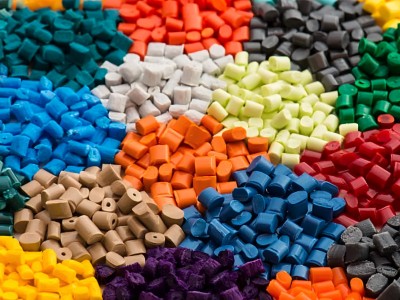
Injection molding car parts technical principles
Basic principle
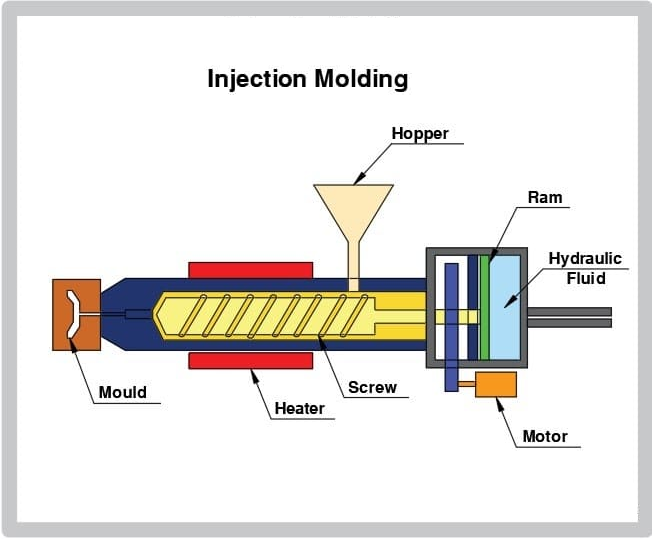
Injection molding is based on the extrusibility and moldability of plastics.
Through high temperature (200~240 °C) to melt plastic particles into a viscous flow state.
Under high pressure (70 Bar) into the mold cavity, after holding pressure 25-35 seconds cooling, then demoulding.
Core step
Heating and melting: The plastic pellets are heated in a hopper to a molten state.
High-pressure injection: The melt fills the mold cavity at high speed through a nozzle.
Pressure holding and cooling: maintain pressure compensation shrinkage, cooling and shaping.
Demolding and post-processing: removal of gates, deburring, etc.
Process characteristics
High efficiency: short production cycle, high degree of automation, suitable for mass production.
High precision: The mold design ensures dimensional consistency (tolerance ± 0.02mm).
Adaptability to complex structures: Fabricate parts with textured, curved surfaces and integrated functions.
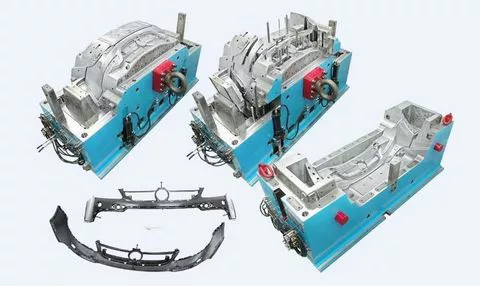
Injection molding car parts production process and key parameters
Process flow Pretreatment
Raw material drying (such as modified PP needs moisture ≤0.2%).
Injection Stage
Filling
High speed (high shear rate) and low speed (low flow resistance) modes.
Pressure holding
Compacting the melt to prevent sink marks (pressure 70~100 Bar).
Cooling
It accounts for 70%~80% of the cycle, and the optimization of the cooling system can shorten the time.
Demoulding
Ejector rod or stripper to avoid deformation. Post-processing: deburring, spraying or plating.
Key Parameters
Injection temperature: adjusted according to the material (such as ABS: 200~240°C).
Clamping force: must be greater than cavity pressure (formula: P clamping≥ P-cavity ×F/100).
Holding time and pressure: directly affect shrinkage and surface quality.
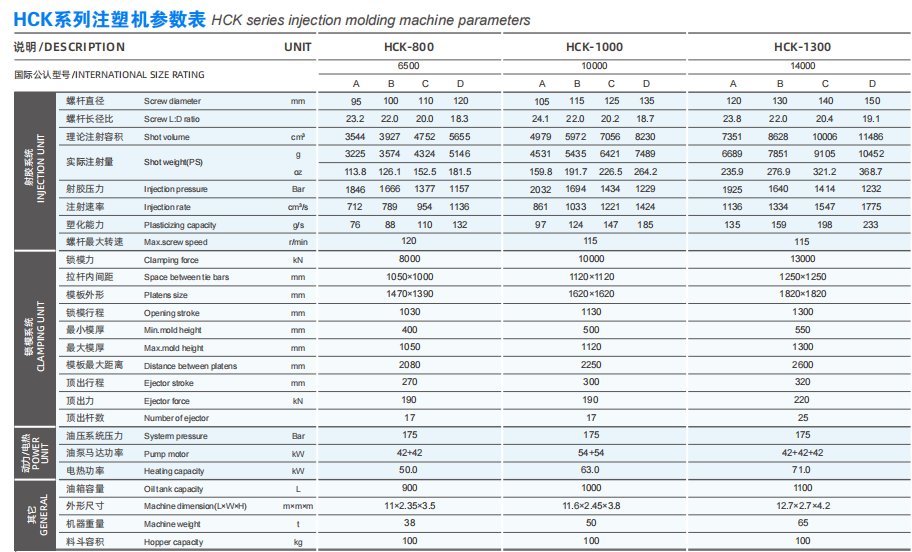
Injection molding car parts advantages and challenges
Core Advantages
Lightweight
10% weight reduction can improve fuel efficiency by 6%~8% and reduce carbon emissions.
Cost-effective
Low cost per part (diluted tooling cost) for high-volume production.
Design freedom
One-piece molding reduces assembly steps (e.g. integrated storage compartments for door panels).
Corrosion resistance
Plastics do not need anti-rust treatment, and the service life is extended by 30%.
Main Challenges
High mold cost
The development cost of complex molds can reach hundreds of thousands of yuan, which is suitable for large-scale production.
Material limitations
Special screw design (corrosion-resistant alloy) is required for glass-containing materials.
Process complexity
Improper parameter adjustment can easily lead to warpage or weld marks.
The future trends of injection molding in the automotive industry
Driven by technological innovation, the demand for sustainable development, and the continuous evolution of automotive design.
Injection molding technology in the automotive industry is set to witness significant growth in the future.
Sustainable materials and processes
The promotion of environmentally friendly manufacturing is driving the use of bio-based, recycled and recyclable plastics in injection molding.
Automakers are increasingly using materials such as recycled thermoplastics and biopolymers to produce parts like interiors.
And exterior panels, in line with the goals of a circular economy.
In addition, energy-saving molding processes such as electric injection molding machines are reducing the carbon footprint of production.
3D printing integration
The combination of 3D printing and injection molding can quickly create complex parts and enhance design capabilities.
This integration significantly accelerates the prototyping process, enabling manufacturers to produce complex designs more efficiently.
Relying on injection-molded plastic components to enhance safety, increase fuel efficiency, use alternative fuels and electricity.
And reduce environmental impact is continuing to evolve in dynamic new directions.