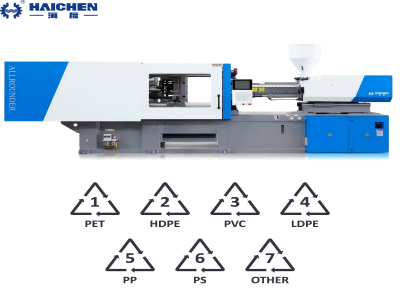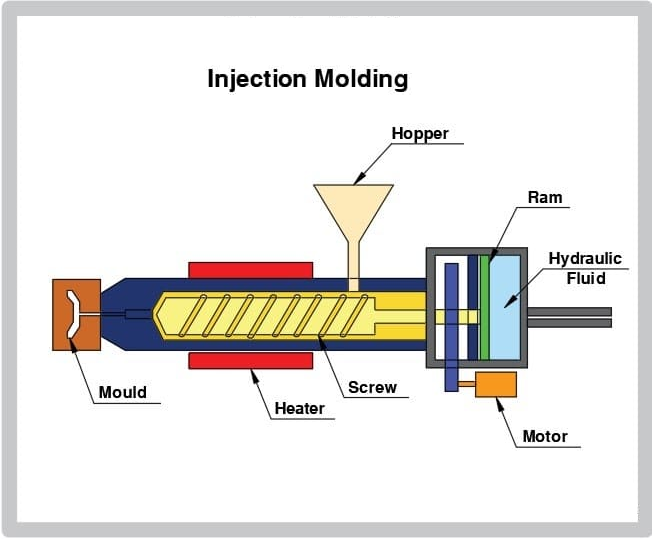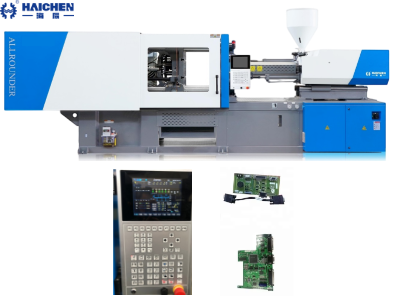
It is very important to know the clamping force of the die casting machine before choosing and die casting machine. The clamping force is the same as the locking force in the die casting machine.
We have always been asked what the clamping force of a die casting machine. How to calculate it? How to detect the clamping force of the die casting machine? Here we will explain it as follows.
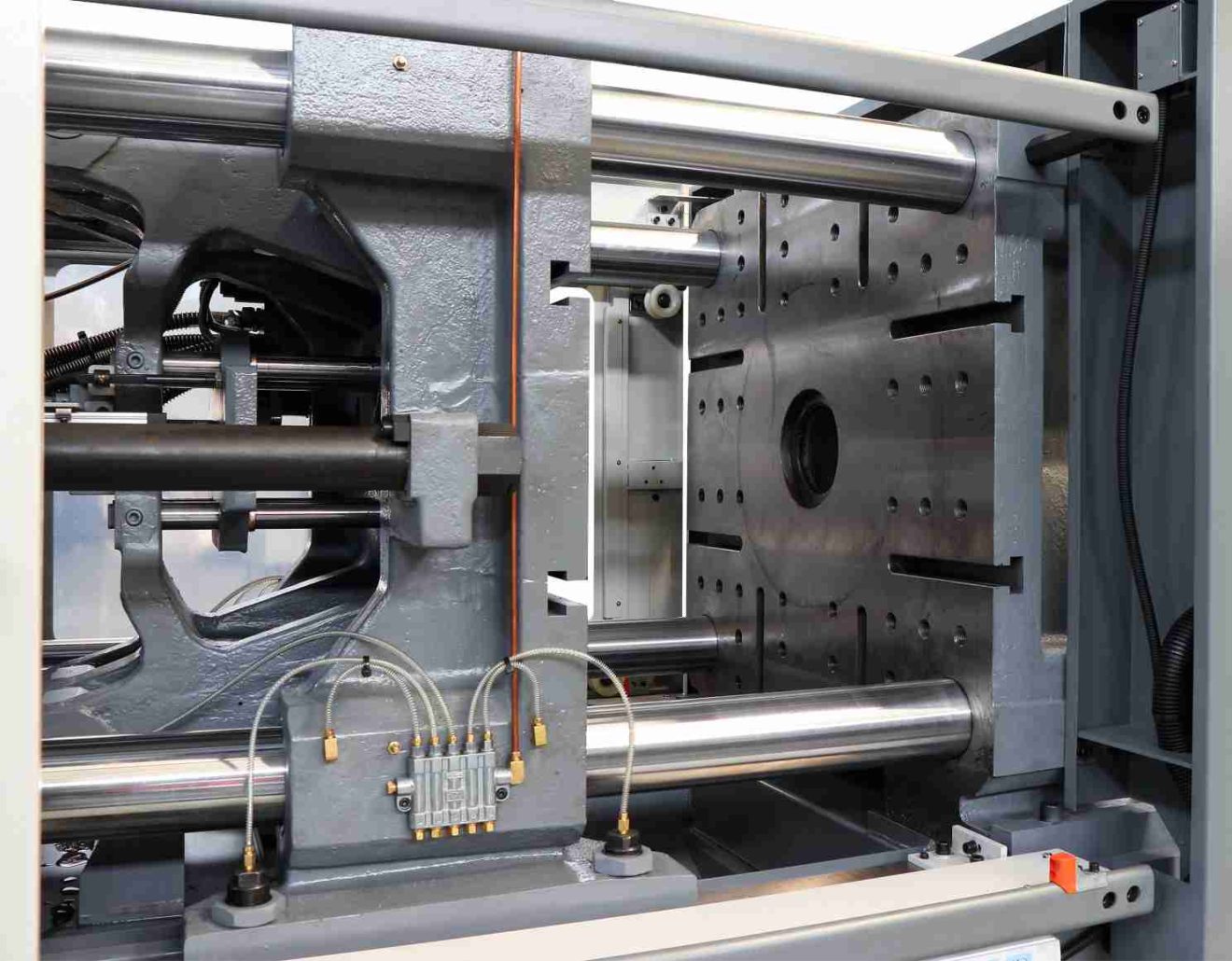
1. What is the clamping force in the die casting machine?
Quick answer: Clamping force = mold bulging force
When the metal is pushed by a strong injection pressure and enters the gating system of the mold, there will be a loss or attenuation along the way. The remaining part is the metal pressure inside the cavity, that is, the cavity pressure.
The product of the cavity pressure and projected area is the mold bulging force (cavity pressure x projected area =bulging force).
During injection, to ensure that the mold is not pushed open by the bulging force, it is necessary to apply sufficient locking force to the mold, that is, the clamping force in the die casting machine.
We will also call the clamping force the locking force.
Locking force, usually measured in KN. Also, we will use Ton.
Ton is a unit of weight, and KN is a unit of force. However, it can be converted to kilogram-force. 1kgf (kilogram force)=9.8N (Newton), 1 ton=1000 kilograms, 1 kilonewton=1000 Newton, so 1 metric ton force=9.8 kilonewtons.
For the convenience of application, we often understand it as 1 t=10 KN
So when you see a 300-ton die casting machine, it means this die casting machine’s clamping force is about 3000KN.
2. How to calculate the die casting machine clamping force?
How much clamping force do I need? It is the question of when we choose the die casting machines. But after you understand what is the clamping force, this question will be easier.
The calculation method of clamping force depends on the specific die casting machine model and specifications, as well as factors such as the structure and size of the mold.
Generally speaking, the calculation formula for locking force is:
- Clamping force = projected area of the mold × Injection pressure.
- The projected area of the mold refers to the projected area of the mold perpendicular to the injection direction.
- The injection pressure refers to the pressure exerted on the plastic during the injection process.
The specific calculation method may vary depending on different die casting machine models and specifications. Therefore, it is recommended that you consult professional sales or technical personnel before purchasing an injection molding machine to ensure that you can choose an injection molding machine that suits your needs.
3. What factors can affect the clamping force?
The locking force is mainly determined by the projected area and the cavity pressure.
Research has shown that the magnitude and distribution of mold cavity pressure are related to many factors, such as injection pressure, holding pressure, and resin temperature.
Injection speed, product wall thickness and shape, metal solution flow distance, and holding time, etc.
If the process conditions are constant and a certain metal alloy is processed, the cavity pressure can be expressed as a function only related to the geometric shape and size of the cavity. In engineering practice, mold CAD and computer modeling are usually used to report the injection process, measure the change in mold cavity pressure, and then calculate the locking force by calculating the average pressure of the mold cavity.
4. How to detect the locking force?
Testing conditions
- The temperature of the tested pull rod and test block (mold) is at room temperature.
- The hydraulic system pressure is the rated working pressure.
Test method
a). Measure the maximum strain of the tension rod using a strain gauge, and then calculate the actual tensile force borne by the tension rod.
b). A clamping force tester with comparable accuracy can also be used for testing.
The technical points of method “a” are as follows:
- Install the test block or mold at the center position of the fixed template.
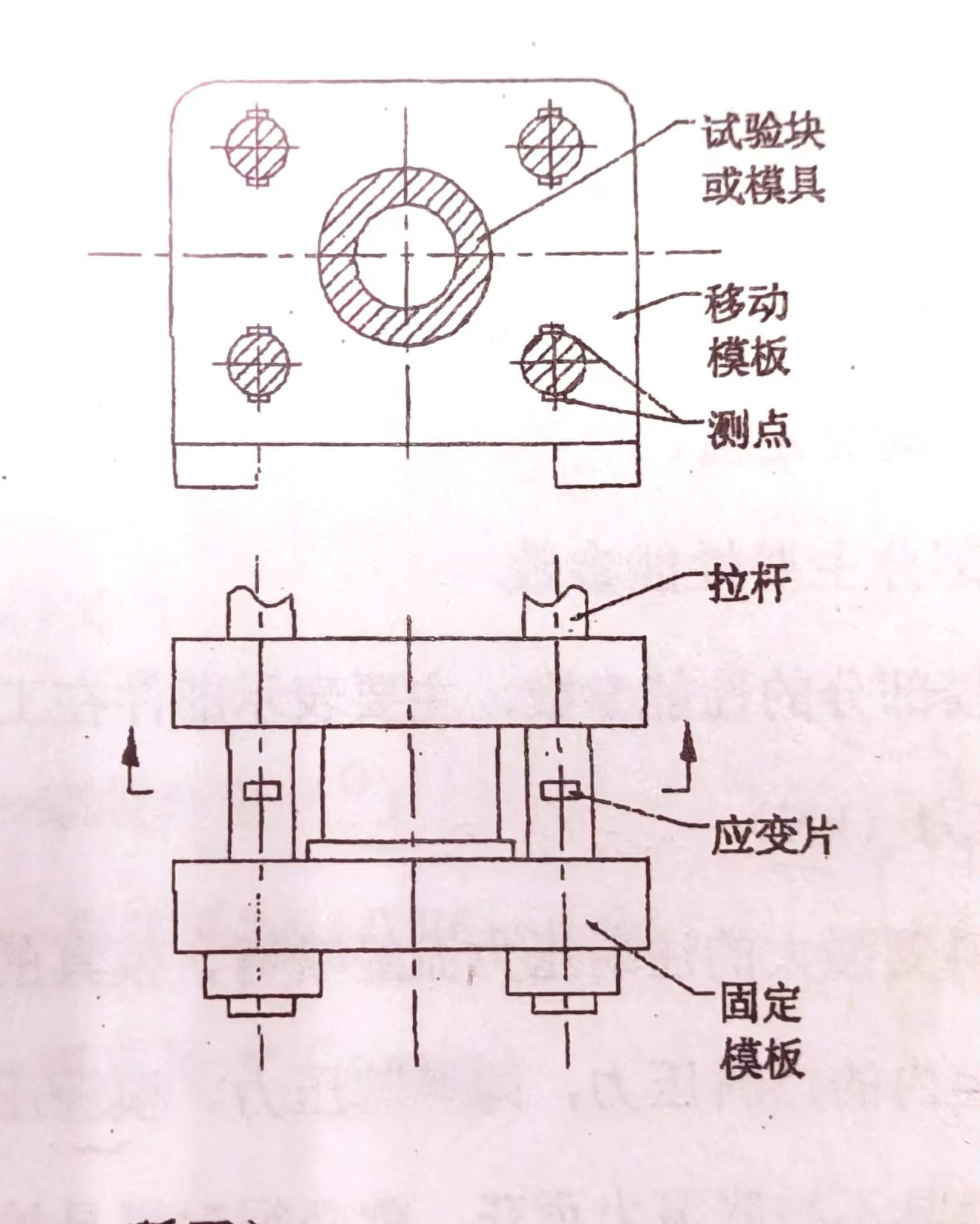
- Attach two sensitive strain gauges to each pull rod.
- Measure the strain of four pull rods in the locked state.
- Determine the clamping force F after calculation (KN)
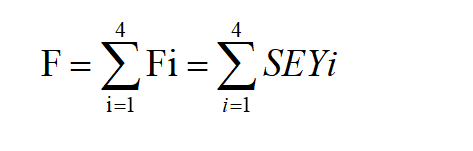
- Fi = axial tensile force on each rod, KN
- S = positive cross-sectional area at the testing point of the rod, MM2
- E = elastic modulus of pull rod material, GPA
- Yi = strain of the i-th pull rod
5. What are the different types of clamping forces in a die casting machine?
There are lots of different types of clamping forces of die casting machine.
Haichen die casting machine have 15 tons to 1600 ton of die casting machines.
It means the clamping force is from 150kn to 16000kn.
6. How to know the clamping force by machine ranges?
Die-casting machines are rated in lots of different ways. But Haichen’s die casting machine ranked by tonnage.
So when you know the tonnage, you can calculate the clamping force.
For example: Haichen HPDC machines HCDC-200, it meas 200 tonnage, with a clamping force of about 2000Kn.
It means the mold bulging force is less than 2000Kn, you can choose an HCDC-200 die-casting machine.
Haichen 200 machine and Haichen DCM working shop:
Clamping force is an important condition for ensuring product quality. It directly affects the structural dimensions and weight of the machine, and the current maximum clamping force of the die-casting machine is 120000 kN. Studying the reduction of mold filling pressure, also known as mold locking force, is a very practical task. HUSKY has introduced low-pressure forming technology, which reduces the locking force of the same product by about 66%, greatly simplifying the structure of the machine. Japan has also launched underinjection molding technology, which not only reduces locking force but also greatly improves product accuracy.
The clamping force, like the injection volume, to a certain extent reflects the ability of the machine to process products, and is often used as the main parameter to represent the size of the machine specifications.