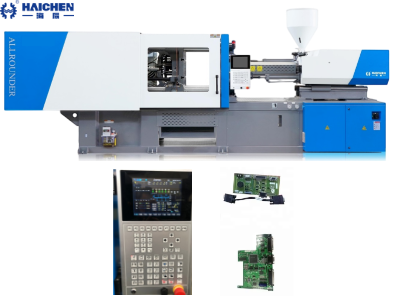
4 steps to connect the robot with the injection molding machine:
- Put the stand/base on the injection molding machine
- Connect the wires to the machine
- Check the signals between the robot and the machine
- Last check- Attention
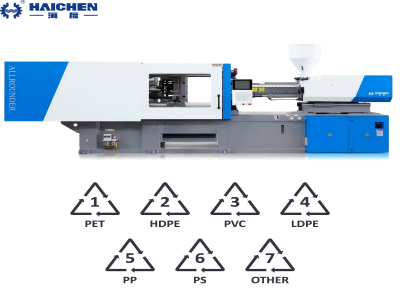
Connect robot to injection molding machine, just need 4 setps, we will intruduce it in detail. Robots are convenient for picking up products, so it is used widely for plastic injection molding machines. Many clients are focused on How to connect robots to plastic injection molding machines. After the injection molding machine robots are installed on the injection molding machine, then we need to connect the robot to the injection machine.
The injection molding machine robots movement reduces the cycle time for injection molding machines. The robot for injection moulding machine conveys thermoplastic material into the hopper of the injection molding machine.
The injection molding machine robots, sprue pickers, conveyors, and pallet changers are the best solutions for increasing the efficiency and profitability of plastic injection molding machine operations.
Robotic technology plays an important role in plastic injection molding processing.
Before connecting injection molding machine robots, please check plastic injection molding machine can work normally, including open mold, closed mold, machine’s safety door, and so on.
Put the stand/base on the injection molding machine
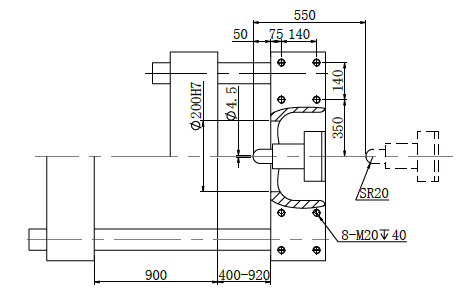
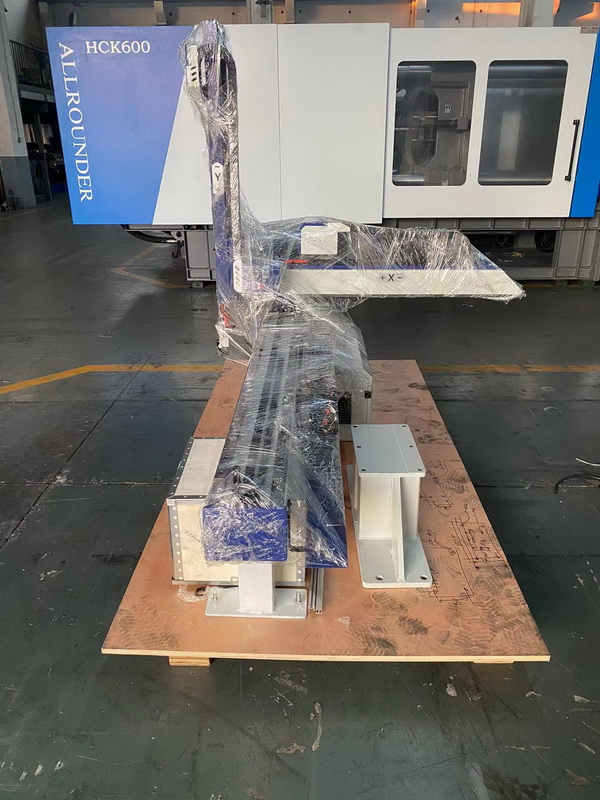
Use a magnetic drill to drill positioning holes on the fixed template on the injection molding machine, and use a screw tap to complete the tapping operation. Then move the robot base to the fixed hole position, ensuring that the direction and hole position are aligned, and use a torque wrench to tighten the hexagonal socket screw.
Haichen injection molding machines have pre-drilled positioning on the template for easy installation by users. If you need drawings for locating holes, you can directly contact Haichen Sales
1)Clean the holes: Use a tap to clean the holes on the mounting base. The purpose is to clean off the paint in the holes.
2) The robot for injection moulding machine wants to be installed in a plastic injection molding machine which needs to stand for it
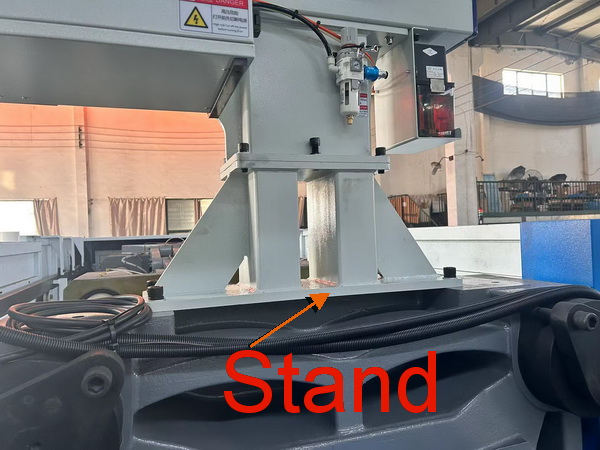
3)Stand install on the fixed platen of the plastic injection molding machine, and the positioning hole should be matched.
Normally you can get the platen dimension drawing from the supplier.
Connect the wires to the machine
How to connect the wires of injection molding machine robots?
Just need 3 steps to connect the robot wires:
- Step 1: power off the injection molding machine and robot
- Step 2: connection the Euromap
- Step 3: Connect 4 robot wires to injection molding machine
Step 1: power off the injection molding machine and robot
Turn off the power of the injection machine. And do not connect the power of the robot also.
Step 2: connection the Euromap
Before the injection molding machine leaves Haichen factory, we will install the Euromap 12 or Euromap 24 on the machine.
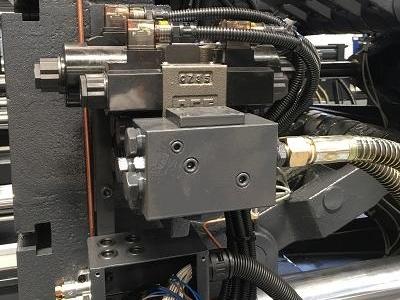
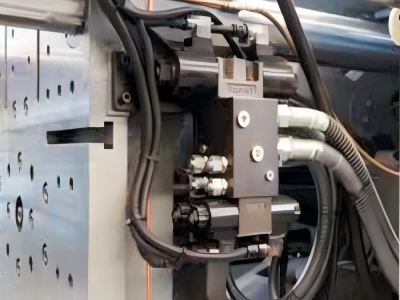
The user just needs to connect two parts together as in the pictures.
Now we have installed Euromap 12, so it is easy to connect the wires.
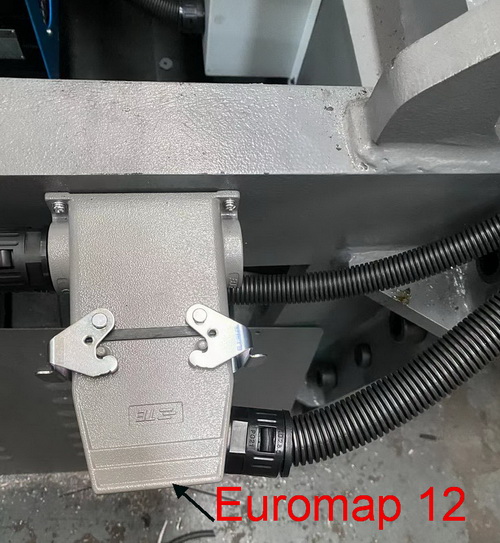
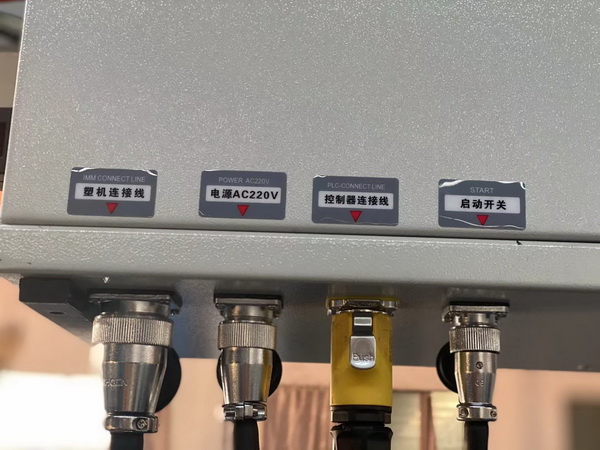
Step 3: Connect 4 robot wires to injection molding machine
3) Classify the wires and tie them together accordingly: injection machine connecting wires, power wires, and operator connection wires.
Check the signals after connect robot to injection molding machine
- Plug in the air pipes(standard air pressure 5-7KG). Check if the power cable is connected. Check if there is a short circuit.
- Open the power of the injection machine. Firstly, Robot Aviation plugs in “not use robot arm”. Manually open mold, close mold, thimble out, and check if these three signals are working. Then, Robot Aviation plugs in “ use robot arm”. Manually move the robot arms to the middle of the Z axes, and turn on the robot power.
- When the robot moves back to its original position, open the “robot function” signal on the injection machine (some injection machines, do not need to open this function manually). Open and close the safety door one time. Close and lock the mold to check if the thimble works normally.
- When injection molding machine robots are powered on and using: open and close the safety door one time, check the screen of the robot operator if the “safety door” signal is working. When you open the safety door, the “safety door” signal light should be off. When you close the safety door, the “safety door” signal light should be on.
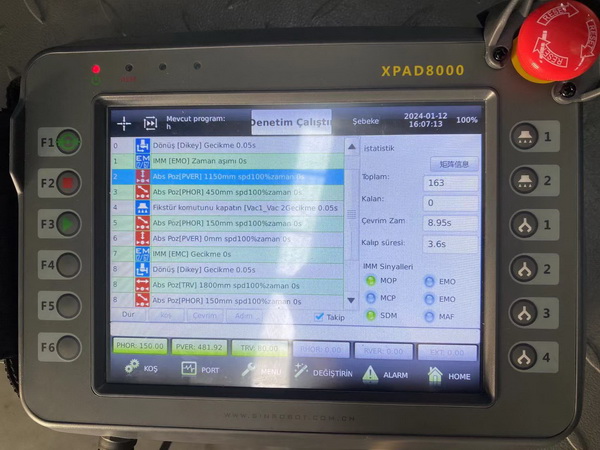
If you open and close the safety door one time, the signal will disappear. When the mold is finished, use the robot for injection moulding machine operator to move the robot arms down into the mold. Press “injection mold lock” and see if it’s able to lock the mold. The answer should be “unable to lock the mold” but can thimble out. Use the robot operator to move the robot arms up.
Last check- Attention
- The robot for injection moulding machine is limited to use in plastic injection molding machines.
- Machine work pressure must be kept between 0.6MPa ± 0.1MPa range.
The machine can not be used in air, which includes oil containing phosphate, organic solvents, sulfurous gas, chlorine, and acids, as well as deterioration compressor oil. - Different specifications for the injection molding machine need differentstrokes, so before selecting, must know the injection molding machine specifications.
Choosing single-stage or telescopic robot based on the height of the ceiling. - The distance between the up position of the safe depends on whetherneed install the rotation seat because when the height is too high, it will hit the safe gate.
The hole dimensions of the robot for injection moulding machine installation face are the dimensions of the robot installation, if the size makes a mistake, the robot cannot be installed. - Different shapes of products need different jigs. Please provide products in order to choose a different shape of the jigs.
Safety instructions for robot arms
The robot arm of the injection molding machine needs to pay special attention to safety precautions during operation to prevent accidents from occurring.
The following are detailed safety instructions for robotic arms:
Secure installation: Ensure that the robotic arm is securely installed on the injection molding machine to avoid accidents caused by looseness.
Prohibited from entering the operating range: Operators are not allowed to enter the operating range of the robotic arm to avoid being injured by the robotic arm.
Power management: Please turn off the power before maintenance and ensure that the robotic arm is in a stopped state. The injection molding machine also powered off.
Avoid contact with moving parts: When the machine is working, do not touch the moving parts of the injection molding machine, and do not place debris in the moving parts of the machine.
Exception handling: In case of abnormal operation of the robotic arm during production, if there is any abnormal noise or sliding that does not comply, stop immediately and notify the relevant person in charge in a timely manner.
Keep clean and lubricated: The guide rails and bearings on all shafts should be kept clean and well-lubricated. If the robotic arm operates in a dusty environment, the guide rails need to be cleaned regularly.
Collision prevention: The signal connected to the injection molding machine manipulator has an anti-collision program to prevent unnecessary injury caused by the manipulator being clamped inside during the mold locking process.
Safe zone setting: Set a safe zone for the robotic arm to ensure that operators do not enter hazardous areas.
Troubleshooting: If there is a malfunction or abnormality in the robotic arm, stop the machine in time to troubleshoot and avoid affecting the production process.
By strictly adhering to the above safety instructions, safety accidents during the operation of injection molding machine manipulators can be effectively reduced, ensuring the safety of operators and the normal operation of equipment.
Advantage of using robots for injection molding machines
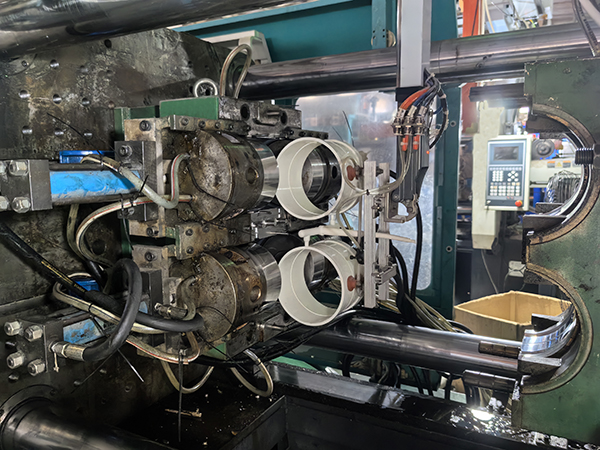
The use of robotic arms for injection molding machines has the following significant advantages:
Improve production efficiency: Robotic arms can mimic human arms, complete multiple tasks such as automatic part picking, mold embedding, and mold embedding, and have higher efficiency compared to manual labor in their work. Through automation and precise operation, robotic arms can quickly complete a large number of tasks, greatly improving production speed and accuracy.
Save labor costs: Robotic arms replace manual parts picking, directly saving one labor force, and one employee can simultaneously view multiple injection molding machines. In addition, the robotic arm can work continuously, saving labor wages and employee management costs for enterprises.
Improving working conditions and safety production: Robotic arms reduce heavy physical labor and improve working conditions.
It can also avoid the risk of employee burns caused by overheating of the product, as well as avoid the need to manually enter the mold to retrieve the product, thereby avoiding safety hazards.
Ensure product quality: The robotic arm can stabilize and improve the quality of die-casting parts, preventing damage caused by human error.
It can also prevent damage to processed products and molds, automatically shutting down in case of abnormal situations without causing damage to the molds.
Reduce production costs and scrap rates: Due to the ability of robotic arms to significantly increase productivity and reduce production costs, while stabilizing and improving product quality, losses caused by human operational errors can be avoided.
High safety: The use of robotic arms avoids the danger of hand injury caused by mold closing due to injection molding machine failure or incorrect operation, as well as work-related accidents caused by worker negligence or fatigue.
The use of robot for injection moulding machine not only improves production efficiency and product quality, but also reduces production costs and scrap rates, and improves labor conditions and safety production levels.
Robot for injection moulding machine is used widely for plastic injection molding, and it is very convenient for factories. It will save the labor force and reduce production costs.
Haichen injection molding machine robots
Haichen Machine’s Core Business
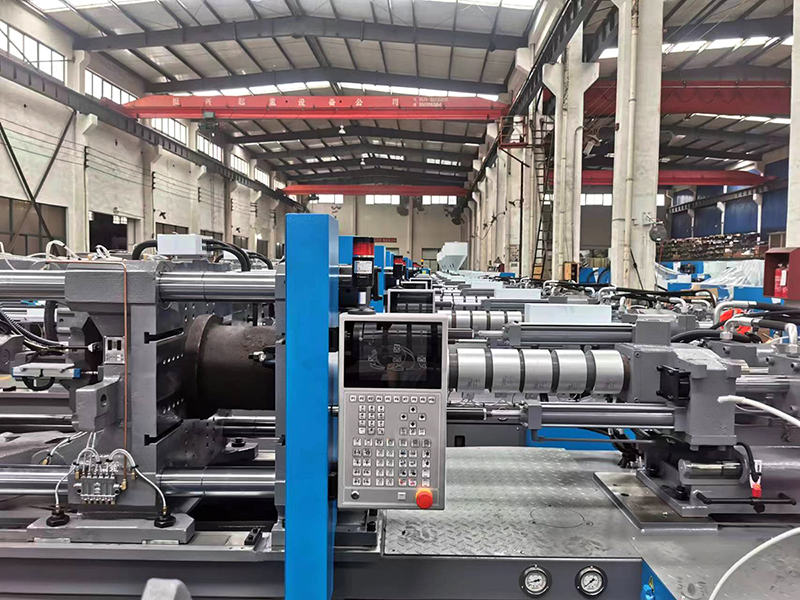
Haichen Machine, headquartered in Ningbo, specializes in manufacturing high-precision plastic injection molding machines, offering models ranging from 30 to 3000 tons. Their machines emphasize automation, energy efficiency, and intelligent control systems (e.g., servo systems, PLCs, and visual production monitoring).
While our newer models support “multi-functional and automated” workflows, there is no explicit mention of in-house developed robots in their public documentation.
Industry Applications of Injection Molding Robots
Robotic systems (e.g., robotic arms) are widely used in injection molding for tasks like part removal, mold positioning, and material handling.
However, Haichen’s able to apply different kinds robots for your production line
Possible Robot Integration Methods
If Haichen’s machines require automation, two approaches are likely:
- Third-Party Robot Partnerships: Industry standards suggest collaborations with specialized robotics companies (e.g., Topstar). Haichen may recommend clients purchase external robotic arms to pair with their machines.
- Built-In Automation Features: Their “automation” focus likely refers to machine-level automation (e.g., auto mold clamping, material feeding), not advanced robotic systems like articulated arms.
Conclusion
Haichen Machine excels in high-precision injection molding machine design but does not appear to offer proprietary robotic solutions. For full automation, clients may need to:
- Consider competitors like Haitian Group for integrated robot-machine systems.
Let me know if you need further details! 😊
Application of Robotics in Injection Molding Machines
The integration of robotics in injection molding significantly enhances production efficiency, precision, and flexibility. Key applications include:
1. Mold Handling and Part Removal
- Robots use robotic arms to automate mold insertion, part ejection, and finished product removal. For example, six-axis robots can precisely load inserts (e.g., metal threads, blades) into molds and extract parts post-molding, minimizing human error and enabling 24/7 production. Integrated robots are embedded within molding machines to optimize space and shorten cycle times.
2. Complex Demolding and Post-Processing
- For geometrically intricate or delicate parts, robots employ vacuum grippers or pneumatic clamps to ensure stable handling, preventing damage. They also perform post-molding tasks like degating (cutting gates), sprue removal, labeling, laser marking, and sorting scrap into recyclers.
3. Multi-Station Coordination and Overmolding
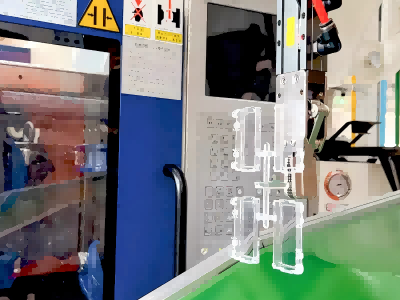
- Robots transfer semi-finished parts between multiple machines for overmolding. For instance, parts removed from one machine can be placed into another for secondary molding to create multi-material components. Systems like Haichen use modular injection molding units mounted on six-axis robots for mobile overmolding of substrates (e.g., metals, textiles).
4. Automated Conveyance and Packaging
- Robots transport finished products via conveyors or pallet systems to quality control or packaging stations. Some systems automate stacking and boxing , reducing manual intervention and boosting throughput for multi-material processes.
5. Quality Control and Cleanroom Production
- End-of-arm tooling (EOAT) integrates vision systems to inspect parts in real time, reducing defects. In cleanrooms, enclosed robots prevent contamination, making them ideal for medical devices or precision electronics.
6. Material Handling and Energy Efficiency
- Robots manage raw material loading, drying systems, and humidity/temperature control. Energy-saving solutions like PIKO robots with infrared heating and mold-temperature control optimize cycle times and reduce energy consumption.
7. Flexibility and Customization
- Different robot types (Cartesian, SCARA, Delta) adapt to diverse layouts and tasks. Companies like Haichen offer modular robotic systems tailored to client needs, integrating peripherals for customized workflows.
8. Sustainability and Recycling
- Robots enable precise material usage, minimizing waste. Systems recycle sprues and scrap, supporting circular economy models.
Robotics streamlines core injection molding processes (mold handling, part removal) while extending to post-processing, quality assurance, and sustainable practices. Innovations like modular systems (Robin) and smart controls (APCplus) are driving the industry toward higher automation, flexibility, and resource efficiency.
Robot terminology of injection molding machine
Injection molding machine manipulators are commonly referred to as “industrial robots” or “automated manipulators” in robot terminology.
The robot for injection molding machine manipulators includes the following types:
Cartesian beam robot:
This type of robot is used for injection molding machines and has a selection of three-axis, five-axis, and six-axis servo robots as well as collaborative robots.
SINGLE-AXIS TRAVERSE ROBOT:
This robot adopts a double section up and down stroke design and is equipped with a single-axis AC servo closed-loop control pneumatic mechanism, which is suitable for various application scenarios.
LARGE-SIZED THRE-AXIS ROBOT (OX HEAD TYPE):
This type of robotic arm has a large load-bearing capacity and precision gear transmission mechanism, suitable for high-load production needs.
SMALL-SIZED FIVE-AXIS Transverse Robot Arm:
Equipped with open programming and conveyor start signal functions, suitable for applications with low noise, ultra-high speed, high precision, and low vibration.
End effector:
This is a device installed at the mechanical interface of a robot’s end joint, such as a gripper, wrench, etc., used to complete specific tasks.
Adaptive Robot:
A robot that can automatically adjust its operating mode according to changes in the environment.
Anthropomorphic Robot:
A robot that imitates human actions or behaviors.
Articulated Robot:
A robot composed of multiple joints that can perform complex movements.
These robotic arms are specially equipped for injection molding production automation, capable of mimicking some functions of the human upper limb and operating through an automatic control system.
They are mainly composed of an execution system, a drive system, and a control system, where the execution system and the drive system drive the mechanical components through pneumatic or hydraulic power to achieve the function of picking up objects.
The main components of the injection molding machine manipulator include the manipulator holder, walking mechanism, and robotic arm.
Mechanical arms can be divided into three types: three-axis servo walking single-arm single-section robotic arms and five-axis injection molding machine robotic arms.
The former has the characteristics of high precision, high speed, and high load capacity, while the latter has higher flexibility and degrees of freedom.
In addition, injection molding machine manipulators can be classified according to different application scenarios, such as in-mold labeling systems and injection molding backend automation solutions.
These robotic arms are not only used for removing products from the mold, but also for removing products from the mold, embedding products inside the mold (such as labeling, embedding metal, secondary molding, etc.), and automatic packaging after removal.
In summary, the term “injection molding machine manipulator” in the field of robotics can be summarized as “industrial robot” or “automated manipulator”, whose main function is to improve the efficiency and safety of injection molding production through automatic control and precise operation.
Because of Euromap 12, it is easy to connect the robot to a plastic injection molding machine, which avoids connecting wires difficultly.
If clients want to know more details about How to connect a robot to a plastic injection molding machine, please contact our Haichen freely. we will offer more information for you.