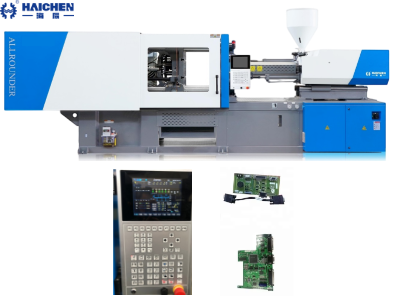
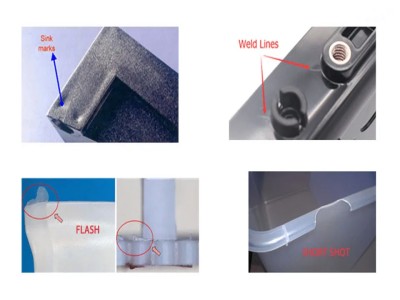
Defects of injection molding surfaces include shrink marks, warpage, flash, silver streaks, ,short shots, and discoloration, which not only affect the product’s appearance but may also affect its mechanical properties and service life.
Injection molding is a mainstream process for producing plastic parts. It is efficient and can produce complex shapes, but there are always various problems in actual operation.
Among them, defects on the surface of plastic parts are of particular concern – these defects not only affect the appearance of the product, but may also reduce durability and functional performance.
These problems may be caused by uneven material temperature, too fast injection speed, poor mold venting or insufficient cooling time.
This article will take you to systematically understand the types of these surface defects, their causes and common solutions commonly used in the workshop.
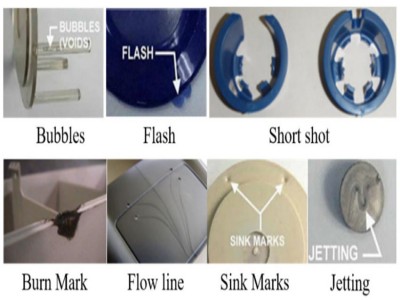
Shrinkage marks (commonly known as shrinkage or pits)
Problem description
When the plastic part is not sufficiently pressurized during the injection molding process, or the cooling is uneven, local depressions may appear on the surface. This defect is particularly common at the root of the rib and the boss position. Production line masters usually call it “shrinkage” or “pits”.
Core causes
- Not enough pressure replenishment: The injection molding machine has insufficient pressure or too short a time during the pressure holding stage, and the plastic shrinks but cannot be fully compensated.
- Asynchronous cooling of thick and thin positions: The thick wall position (such as the rib) cools slowly, and the solidified surface will be pulled when the inside shrinks.
- Unsmooth feeding: The gate is too narrow or the runner is too shallow, and the molten plastic cannot replenish the shrinkage space in time.
Actual impact
- Reduced strength: There are often cavities inside the depression, which reduces the load-bearing capacity of the part by 15%-30%, making it more likely to break prematurely.
- Unqualified appearance: Depressions with a depth of more than 0.1mm are very conspicuous under light, and consumer electronic products will be directly scrapped.
Practical solutions
▶ Process adjustment
The holding pressure should be at least 60% of the injection pressure, and the holding time should last until the gate is completely solidified
The mold temperature difference is controlled within ±5°C to avoid local overheating
▶ Material upgrade
Use low shrinkage materials such as PPO alloy
Add 0.5%-1% lubricant to improve fluidity
▶ Design optimization
The ratio of adjacent wall thickness does not exceed 1.5:1 (for example, the thickness of the rib is ≤ 2/3 of the main wall thickness)
Do texture processing in the shrinkage-prone area to cover the depression with texture
Warpage
In the production process of plastic products. Warpage refers to the problem of shape deformation caused by uneven internal shrinkage of parts. The following are common influencing factors and their actual impact:
Core influencing factors
- Uneven cooling caused by thickness difference:
The cooling speed of thin-walled areas is faster than that of thick-walled areas, resulting in the accumulation of residual stress inside the parts. - Difference in molecular arrangement direction:
During high-speed injection molding, the plastic molecular chains are oriented along the flow direction. Resulting in significant differences in shrinkage rates in different directions. - Difference in material crystallization characteristics:
Semi-crystalline materials (such as polypropylene) have a 50% higher risk of warpage than non-crystalline resins, which is directly related to the crystallization process when the material cools.
Actual industrial impact
- Automotive field: When the body shell warps more than 0.5mm, the increase in the sealing gap increases the risk of leakage by 40%.
- Medical equipment: Warpage of the device shell exceeding 0.4mm will shorten the service life by an average of 15%.
Effective improvement plan
- Precise control of mold temperature:
Use conformal cooling channel technology to control the temperature difference of the mold surface within ±3°C. - Example of process parameter optimization:
For ABS material, the melt temperature is reduced from 230°C to 210°C, and the injection time is extended to 5 seconds, which can reduce warpage by 20%. - Digital prediction compensation:
The deformation trend is simulated by Moldflow software, and geometric dimension pre-compensation is performed in the CAD design stage.
Flash (Burrs)
Definition
Flash refers to excess material leaking from mold parting lines.
Often due to:
- Clamping Force Deficit: Injection pressure > machine tonnage (e.g., 100-ton press for >120 cm² part area).
- Viscosity Breakdown: High melt temperatures (e.g., >280°C for PA66) reduce viscosity, enabling leakage.
- Worn Tooling: Gaps >0.01 mm at slides/ejector pins permit flash formation.
Economic & Functional Consequences
- Costly Waste: Flash increases scrap rate by 3–5%, costing $36,000/year per 1M parts.
- Tool Damage: Flash debris accelerates mold wear, shortening tool life by 30%.
Solutions
- Machine Calibration: Ensure clamping force exceeds peak injection pressure by 10–15%.
- Tool Maintenance: Polish parting surfaces to Ra ≤0.2 µm; install wedge locks for sliding cores.
- Material Drying: Reduce moisture to <0.02% (e.g., 4-hour drying at 80°C for PA) to prevent gas-induced leakage.
Silver Streaks
Definition
Silver streaks are surface defects that appear as shiny or dark lines across the molded part. They are caused by trapped gas or uneven flow in the plastic.
Impact on Durability
- Fatigue Initiation: Streaks reduce impact strength by 25% and accelerate crack propagation in PMMA.
- Electrical Failure: In PCBs, silver streaks near conductors increase short-circuit risks.
Solutions
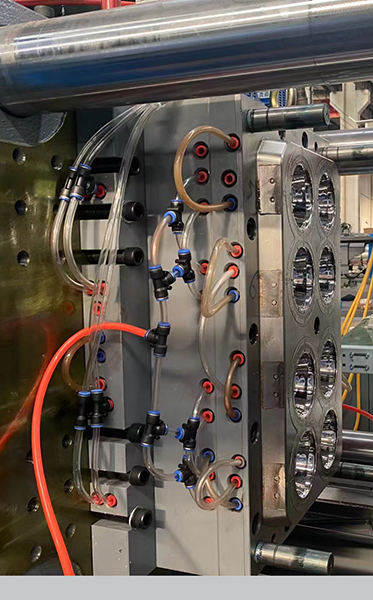
- Material Handling: Pre-dry hygroscopic resins (e.g., 4h at 120°C for PC).
- Process Moderation: Decrease screw speed (by 20%) and backpressure (≤5 MPa).
- Venting Enhancement: Add vents (0.02 mm deep × 5 mm wide) at flow path ends.
Short shots
Short shot refers to the phenomenon that the molten plastic fails to completely fill the mold cavity during the injection molding process. Resulting in local defects in the finished product.
Common reasons include:
- Improper process parameters: Insufficient injection pressure, low melt temperature or mold temperature will significantly reduce the fluidity of the plastic.
- Mold design defects: Blockage of the exhaust channel or too small gate size hinders the smooth filling of the molten material.
- Material problem: Uneven plasticization of the raw material or insufficient fluidity, especially when the wall thickness of the product is too thin.
Solution
- Check the injection molding machine parameters immediately: Increase the injection pressure appropriately (recommended increase of 10%-15%). And extend the injection time to ensure that the cavity is completely filled.
- Maintain the mold: Clean the exhaust groove residue. Expand the exhaust channel or increase the number of exhaust ports if necessary.
- Change the material: Selecting a high-fluidity resin (such as Toolox44) can significantly improve the filling effect of thin-walled areas.
Surface discoloration
Abnormal color on the surface of plastic products is mainly caused by three reasons:
- Raw material contamination: impurities or inferior recycled materials are mixed in, and chemical reactions occur at high temperatures.
- Thermal degradation: the barrel temperature exceeds the material tolerance limit (such as PVC>190℃), causing oxidative decomposition of the resin.
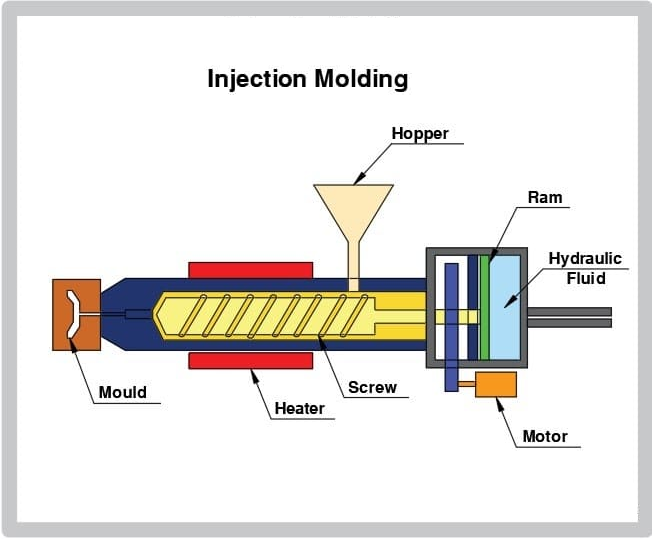
- Process out of control: nozzle temperature fluctuations or excessive screw speed cause local overheating and carbonization.
Preventive measures
- Strict material management: Use sealed containers to store to avoid environmental dust pollution.
- Optimize temperature control: Increase the barrel partition temperature control accuracy to ±2℃ to prevent degradation of heat-sensitive materials (such as resins containing phenolic additives).
- Regular mold maintenance: Thoroughly clean the mold after every 5,000 molds to remove residual decomposition products.
Understanding and resolving common molding defects is critical to producing high-quality injection molded parts. Surface defects, such as weld marks, dents, or warpage, do more than just affect the aesthetics of the part. They often indicate that the internal structure of the part may not be strong enough, which can affect the product’s service life and reliability.
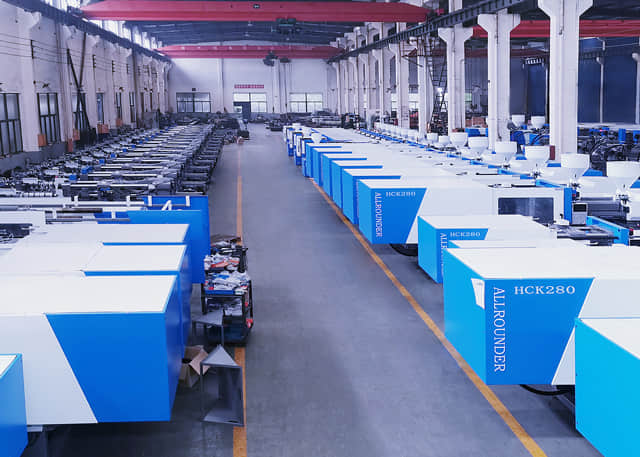
To address these issues, Haichen provides a complete set of solutions covering all aspects from equipment design to production process guidance. Through these solutions, Haichen helps manufacturers control the defect rate of their products to an extremely low level (<0.1%). Hereby ensuring that these parts can work stably and reliably under various mechanical loads and environmental conditions.