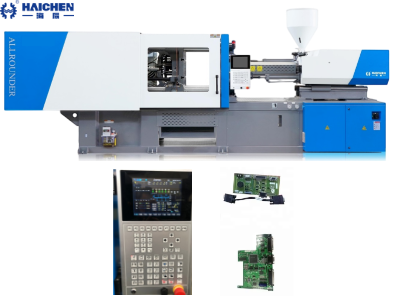
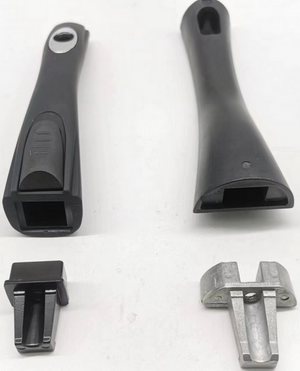
Die-Casting Frying Pan, aluminium removal, bakelite handle, is an important part of the pan. Before the production, we need to choose and right die casting machine.
Use the classical die casting machine tonnage calculation formula:
Tonnage (in tons) = (Projected Area of Casting + Projected Area of Runner) × Pressure Factor.
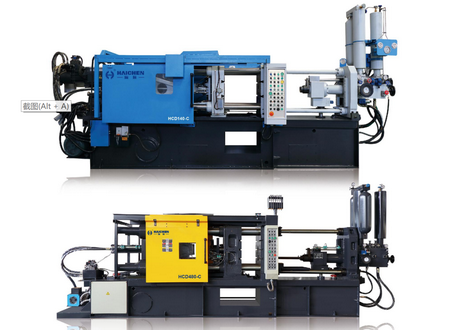
The above formula is for die casting tonnage calculation. It is difficult for people to choose the die casting machine tonnage, so here we’d like to share the die casting tonnage calculation formulas. I hope it will be helpful for you to know the die casting tonnage calculation. After learning it, you can choose the suitable die casting machine yourself.
Pressure die casting is a metal casting process that involves injecting molten metal under high pressure into a reusable mold cavity, known as a die. The die is usually made of two parts: the fixed half (also called the cover or cope) and the moving half (also called the ejector or drag).
The molten metal is forced into the die cavity through a runner system and solidifies rapidly to take the shape of the mold. Once the metal has cooled and solidified, the two halves of the die are opened, and the casting is ejected, leaving the die ready for the next cycle.
Here we will take an example: calculate die casting machine tonnage of die-cast frying pan aluminum removal bakelite handle. The tonnage of the die casting machine plays a crucial role in determining the success of the casting process. Understanding how to calculate die Cast Frying Pan aluminium removal bakelite handle is essential for achieving optimal results and avoiding potential pitfalls.
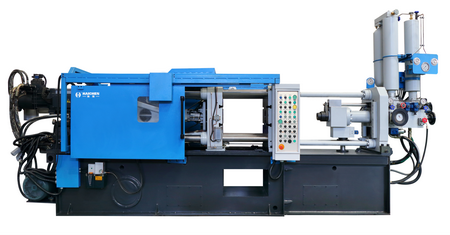
The classical tonnage calculation formula is a simple and widely used method to estimate the required tonnage for pressure die casting. This formula considers the projected area of the part being cast and the projected area of the runner system.
The formula is as follows:
Tonnage (in tons) = (Projected Area of Casting + Projected Area of Runner) ×Pressure Factor
The casting calculation formula above is quite simple. Now, we will explain in detail how to use the formula of die casting tonnage calculation.
To calculate the projected area of the casting, use the formula:
Projected Area of Casting = (Part Surface Area) × (Number of Cavities)
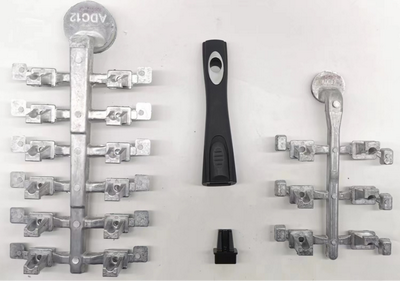
First of all, we have to know what the projected area of casting is. It is not just the area of one casting part surface but needs to include all of the products inside the casting mold, as many casting molds have more than one cavity. The casting area calculation formula, as above, shows that we need to know all of the parts’ surfaces. In this case, the die cast frying pan aluminum removal bakelite handle has 4 cavities,8 cavities,14 cavities, and 20 cavities. So, we must multiply the one handle bracket area with different cavity numbers.
To calculate the projected area of the runner, use the formula:
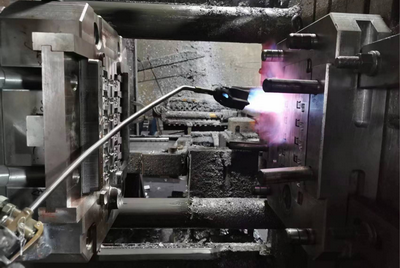
Projected Area of Runner = (Runner Cross-Sectional Area) × (Total Runner Length)
The runner cross-sectional area is typically the same throughout the runner system, and the total runner length is the sum of the lengths of all runners leading from the injection point to the cavities.
- It’s important to note that the classical tonnage calculation formula provides a basic estimation of the required tonnage. It doesn’t consider other factors that may influence the actual clamping force needed, such as part complexity, material properties, and safety considerations. When do you want to know how to calculate die casting machine tonnage of die Cast Frying Pan aluminium removal bakelite handle? Please do not hesitate to contact us. We can help you select the most suitable machine tonnage with our professional knowledge.
The Pressure Factor for die-casting tonnage calculator
A safety factor typically between 2 and 3. But it needs to be changed as the pressure factor depends on lots of things:
- The material: Aluminium or Zinc is with different factors.
- The wall thickness of the component: A thin wall will need faster injection pressure. In this case, the tonnage of machine clamping will be higher than the thick wall.
- The mold design: A longer runner distance requires higher injection pressure. So, the factor of pressure will be higher.
It’s important to note that the clamping force required can vary depending on the specific characteristics of the casting, such as its thickness, shape, and the type of alloy being used. It’s always best to consult with a qualified engineer or die casting specialist to determine the most appropriate clamping force for your specific application.
Now, It is clear that we can use the casting calculation formula to calculate the die casting tonnage and choose the die casting machine tonnage easily.