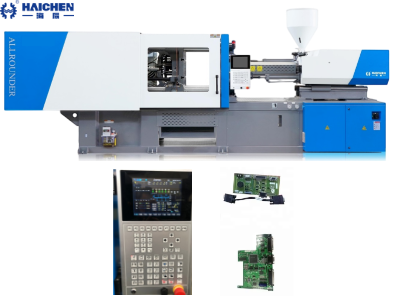
The length-to-diameter (L/D) ratio of the screw in the injection molding process is a critical parameter that significantly influences the performance and quality of the molded products.
The screw length-to-diameter ratio (L/D) is a critical parameter in injection molding, directly influencing material plastication, mixing quality, melt homogeneity, and process stability.
Here are the key effects of the screw L/D ratio:
- Plasticization
- Temperature Distribution
- Mixing and Dispersion
- Production Efficiency
- Material and Process Adaptability
- Mechanical and Operational Considerations
- Negative Effects of Excessively High L/D Ratios
The length-to-diameter ratio of the screw is one of the key parameters in the injection molding process.
And its selection needs to take into account factors such as material properties, melting efficiency, energy consumption and final product quality.
Reasonable design and adjustment can significantly improve the quality and productivity of injection molded products.
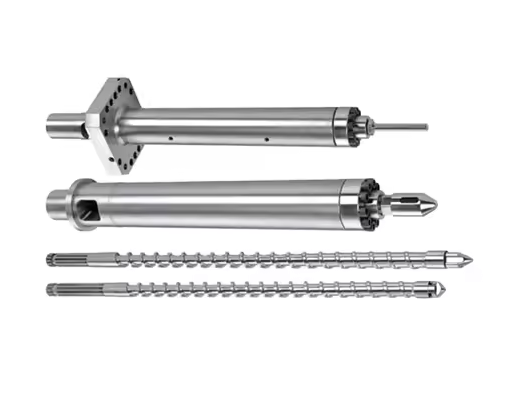
Effect of Screw L/D ratio in injection mouding process
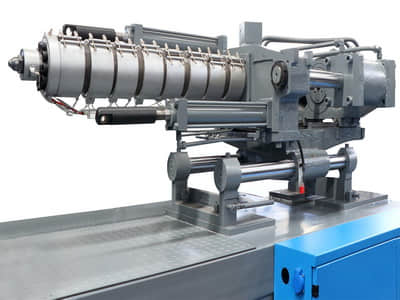
In the injection molding process, the length-to-diameter (L/D) ratio of the screw has a significant impact on product quality and productivity.
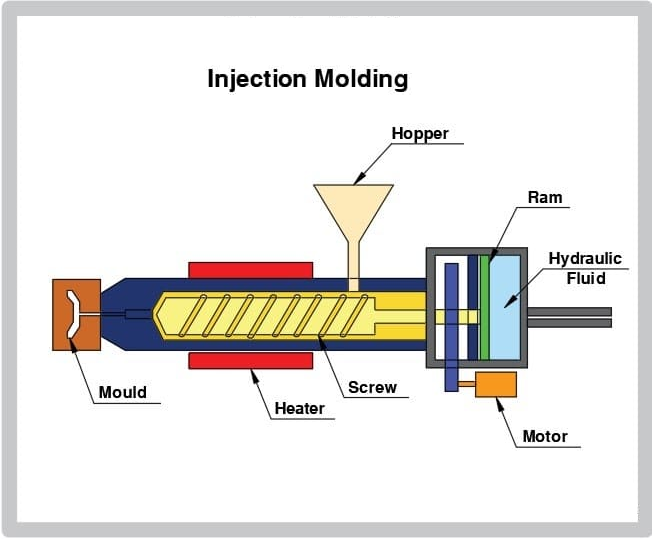
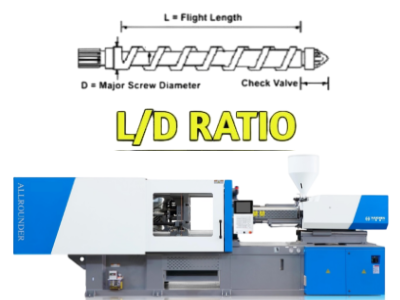
The L/D ratio is the ratio of the effective length of the screw to its diameter.
And is often used to describe the geometry of the screw.
Plasticization of screw L/D ratio Effect
- Improved Plasticization: A higher L/D ratio provides more time and space for the plastic material to be heated and mixed, leading to a more uniform melt and better material consistency. This is particularly beneficial for materials that are difficult to melt or require precise mixing. Such as engineering plastics with high melting points.
- Reduced Shear Stress: For thermally sensitive materials, a higher L/D ratio can help reduce shear stress and prevent degradation. However, for thermally stable materials like HDPE, LDPE, PP, and PS, higher shear rates due to increased L/D ratios are acceptable.
Temperature Distribution
- Uniform Temperature: Screws with a higher L/D ratio tend to achieve more uniform temperature distribution, reducing axial temperature differences. This is because the material passes through more threaded sections, allowing for more consistent heating.
Mixing and Dispersion
- Enhanced Mixing: A larger L/D ratio improves the mixing effect, ensuring that additives and colorants are evenly distributed throughout the melt. This is crucial for achieving consistent product quality and reducing defects.
Production Efficiency of Screw L/D ratio
- Increased Output: In some cases, a higher L/D ratio can improve production efficiency by reducing leakage and pressure flow. However, this benefit is limited by the material’s thermal stability and the machine’s design.
- Cycle Time: While a higher L/D ratio can improve melt quality, it may also increase the cycle time due to the longer residence time of the material in the screw.
Material and Process Adaptability
- Material-Specific Requirements: Different plastics have varying requirements for L/D ratios. For example, PET materials typically require an L/D ratio above 24:1. While general-purpose materials like PP and PS can be processed with an L/D ratio of 18:1 to 22:1.
- Product Complexity: Products with intricate designs, thin walls, or high precision requirements often benefit from a higher L/D ratio to ensure better filling of the mold and reduced defects such as short shots or warping.
Mechanical and Operational Considerations
- Manufacturing and Assembly: A higher L/D ratio can increase the manufacturing and assembly difficulty of the screw, potentially leading to higher costs.
- Energy Consumption: Longer screws may require more energy to maintain the desired temperature and plasticization effect.
Negative Effects of Excessively High L/D Ratios
- Increased Energy Use: Excessively high L/D ratios can lead to higher energy consumption due to the longer residence time of the material in the screw.
- Material Degradation: For materials that are prone to thermal degradation, an excessively high L/D ratio can cause problems such as polymer decomposition, color shift, and loss of additive effectiveness.
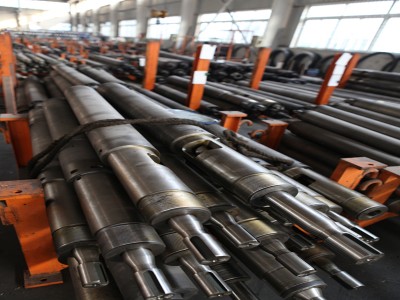
What is the LD ratio of injection molding screws?
What is the significance of a larger L/D ratio?
The L/D ratio (length to diameter) is significant in a variety of areas, and its specific impact varies depending on the area of application.
The following details the significance of a larger L/D ratio from a variety of perspectives:
- Screw combinations and plastics processing
- Reliability of bolted joints
- Mechanical design and load carrying capacity
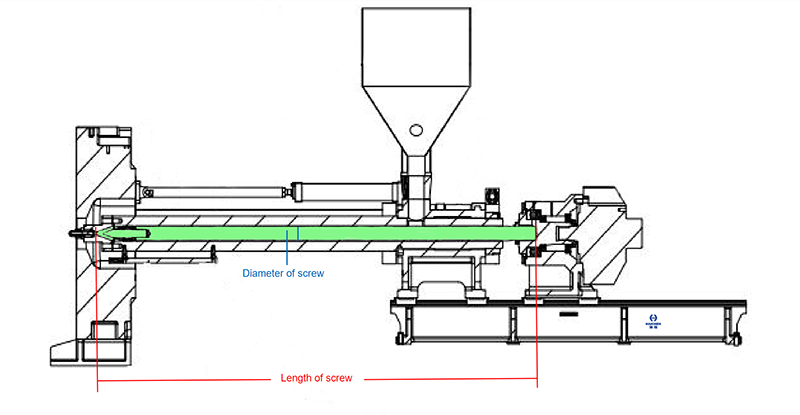
Screw combinations and plastics processing
In the production of high impact polystyrene (HIPS), larger L/D ratios (e.g., increasing from 36 to 44) can significantly improve the melt index due to the fact that longer screws are better able to preheat and soften the material, which improves molecular chain movement while reducing energy consumption.
Reliability of bolted joints
In bolted connections under dynamic loading, a larger L/D ratio reduces preload slack, prevents self-loosening, and reduces the risk of fatigue failure.
Mechanical design and load carrying capacity
In mechanical design, a larger L/D ratio increases load carrying capacity because longer components provide a larger contact area.
However, this can also lead to increased frictional power losses and therefore needs to be optimized for specific application scenarios.
Is Plastic Injection Molding Machine’s L/D Ratio the Bigger the Better?
The L/D ratio has an important effect on the injection molding process and the quality of the final product, but it is not as large as it should be.
Larger L/D ratios, while contributing to improved melt quality, also result in higher energy consumption and greater torque requirements.
In addition, excessive L/D ratios are generally not recommended for design purposes, as they can lead to unnecessary complexity and increased costs.
Injection molding machine screw supplier: Haichen Machinery
Haichen Machinery is a well-known Chinese manufacturer specializing in injection molding machine screws and barrels.
They provide high-quality, wear-resistant screw and barrel assemblies for various plastic injection molding applications.
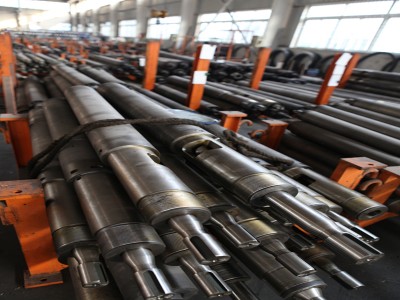
Key Features of Haichen Machinery Screws:
Material: High-quality alloy steel (e.g., 38CrMoAlA, powder metallurgy, bimetallic)
Surface Treatment: Nitriding, hard chrome plating, or dual-alloy welding for extended lifespan
Precision Machining: High-precision CNC grinding ensures smooth operation and consistent plasticizing
Wear & Corrosion Resistance: Ideal for processing filled, reinforced, or corrosive plastics (e.g., fiberglass, flame retardants)
Customization: Available in different diameters (D), L/D ratios, and designs (general-purpose, high-speed, barrier screws, etc.)
The optimal L/D ratio for an injection molding screw depends on the specific material being processed, the complexity of the product, and the production requirements.
While a higher L/D ratio generally improves plasticization and mixing. It must be balanced against potential drawbacks such as increased cycle time and energy consumption.