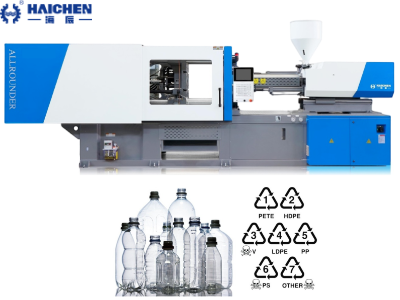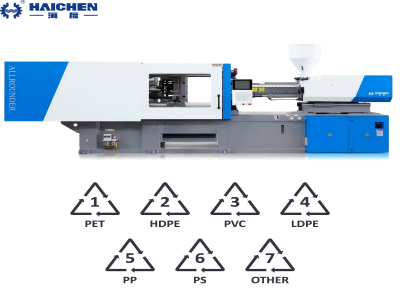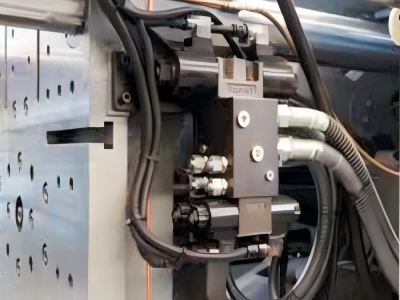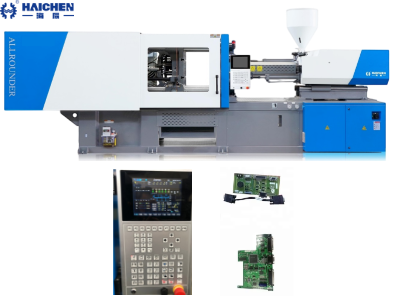
Haichen injection molding machine,the injection molding production process of plastic chairs is a multi-link collaborative systematic project.
When choosing a plastic chair injection molding machine, it is necessary to comprehensively consider the product size (weight), budget and production capacity requirements.
For medium and small-sized chairs, HaichenHCK700 is preferred.
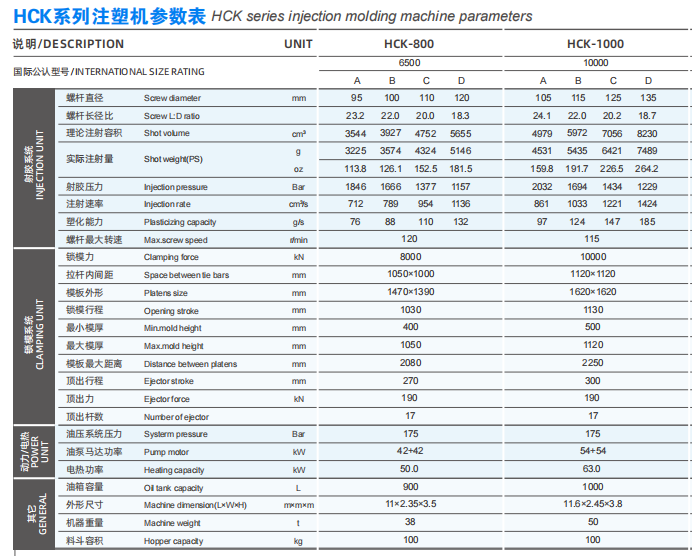
For large industrial chairs, models with a capacity of over 1,000 tons such as HCK1000 is needed.
Be sure to verify the supplier’s qualifications,Haichen offers remote monitoring and prompt after-sales service.
Involving multiple fields such as materials science, mold design, precision processing and process control.
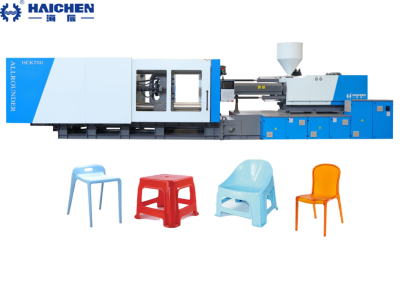
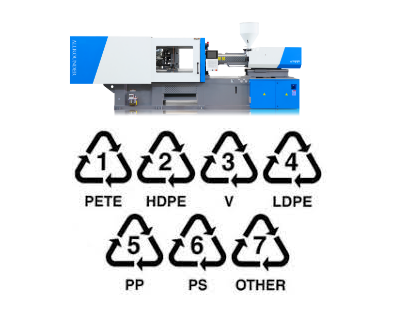
Haichen 700-ton injection molding machine for plastic chair
The 700-ton injection molding machine is a medium to large-sized hydraulic or servo-driven molding equipment.
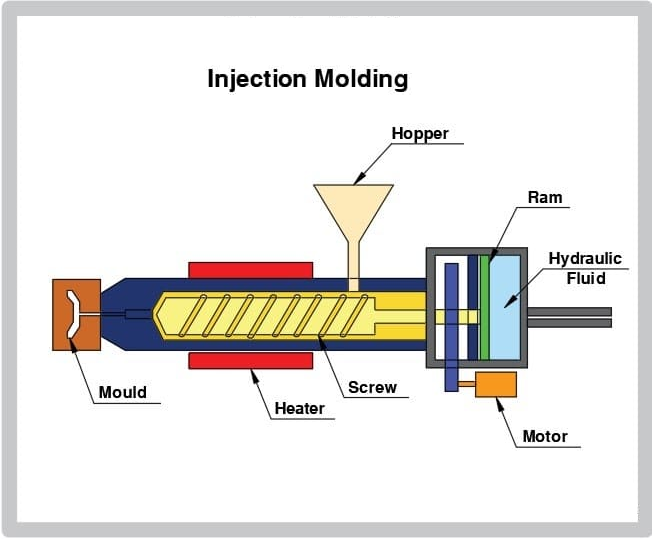
Its core function is to inject molten plastic into the mold cavity through high pressure.
And after cooling and solidification, form plastic products with complex geometric shapes.
The clamping force of this level of injection molding machine is 700 tons (i.e., 7,000 kilonewtons).
And it is suitable for manufacturing large-sized or structurally complex components.
Such as automotive parts, home appliance casings, industrial containers, etc.
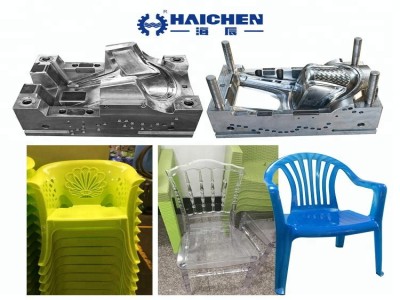
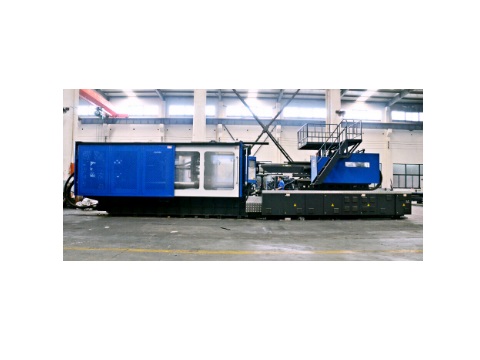
Haichen 1000 ton injection molding machine for plastic chair
A 1000-ton injection molding machine is a large-scale injection molding equipment.
Its core indicator is the clamping force (1000 tons /9800kN).
Which injects molten plastic into the mold for molding through high pressure.
This type of equipment is specifically designed for the production of large, thick-walled or structurally complex plastic products.
And is applicable to multiple fields such as automobiles, home appliances and medical care.
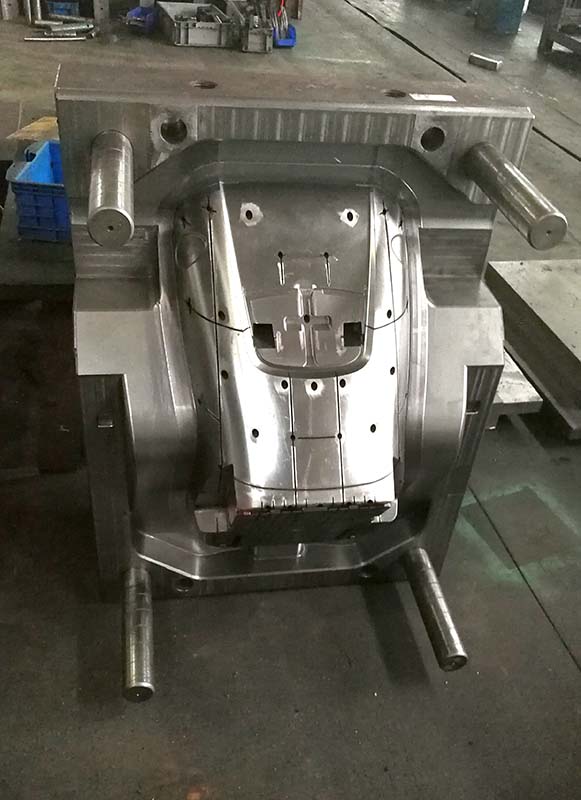
Material selection for plastic chairs
- PP
- PE
- PC
- ABS
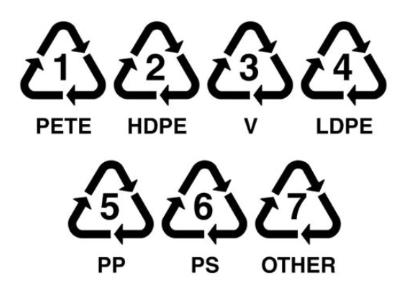
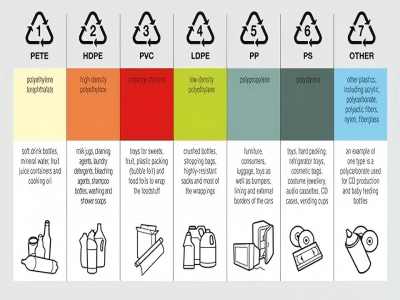
The main materials of plastic chairs include polypropylene (PP), polyethylene (PE), polycarbonate (PC) and polyvinyl chloride .
Different materials have different process requirements and compatibility for injection molding machines.
Polypropylene (PP)
The most commonly used material, accounting for approximately 80%.
Its high strength, corrosion resistance and wear resistance make it suitable for both indoor and outdoor use.
However, the melting temperature requirement for the injection molding machine is 160 to 200℃.
When injection molding, it is necessary to ensure that the mold has good exhaust to avoid shrinkage defects.
Polyethylene (PE)
It is relatively inexpensive and suitable for lightweight designs, but its strength is slightly lower than that of PP.
The injection molding temperature range is 160 to 200℃.
Polycarbonate (PC)
High strength and impact resistance, suitable for outdoor high-risk environments.
The melting temperature should be controlled at 220 to 250℃.
ABS
It is used for high-strength components, with a melting temperature of 200 to 240℃.
And requires a precise temperature control system.
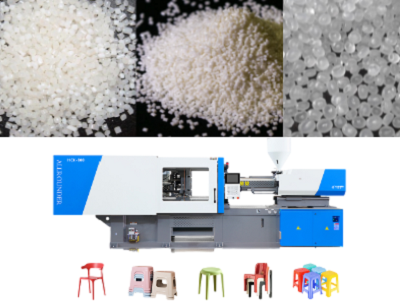
Selection of Haichen injection molding machine types
- Hydraulic type
- All-electric type
- Electro-hydraulic hybrid type
Hydraulic type
It has a large clamping force (up to 4800kN), suitable for large molds.
But it has high energy consumption and relatively low precision.
All-electric type
High precision (±0.01mm), energy-saving, suitable for small and medium-sized high-speed precision production, but expensive.
Electro-hydraulic hybrid type
Balancing cost and performance, it features high clamping force and control accuracy, making it suitable for the production of medium-sized plastic chairs.
Key configuration requirements for chair injection molding machines
- Temperature control system
- Mold adaptability
- Hydraulic and control system
Temperature control system
The barrel is heated in sections (240-270℃ at the rear and 250-280℃ at the front).
And the nozzle temperature is slightly lower than the maximum temperature of the barrel.
The mold cooling should be uniform. A water circulation system should be adopted.
And the temperature difference should be controlled within ±2℃.
Mold adaptability
The clamping force should be ≥ the projected area of the product × the cavity pressure.
The cavity pressure for PP is usually 30 to 50MPa.
The thickness of the mold needs to match the mold thickness range of the injection molding machine.
For example, the SZ-4800A model supports 280-790mm.
The ejection system needs to provide sufficient stroke (≥195mm) and ejection force (≥113.4kN).
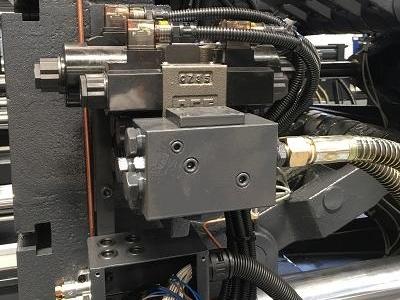
Hydraulic and control system
The hydraulic oil temperature should be stabilized at 45 to 55℃, and the flow repetition accuracy should be ≤1%.
Dedicated computer control system, supporting multi-segment injection and pressure-holding curve programming.