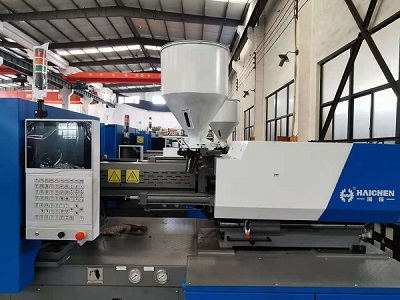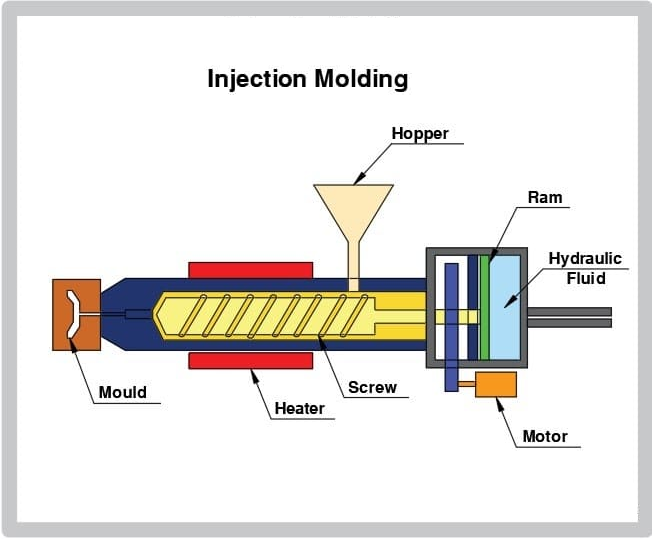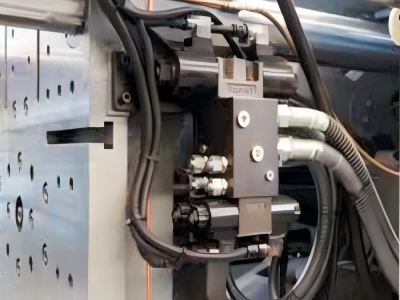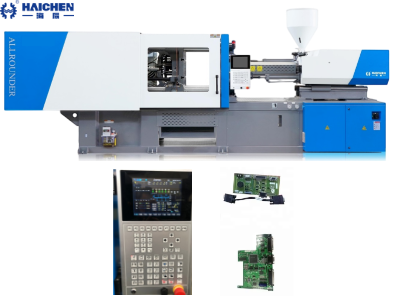
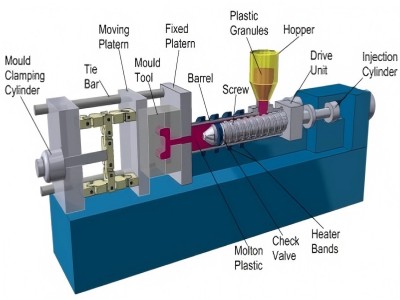
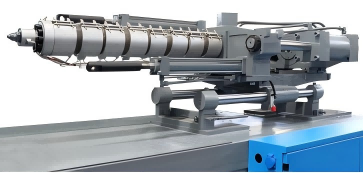
Injection unit includes hopper, screw, barrel, nozzle and other components.
The core function of the injection unit is to melt and inject plastic into the mold.
It works by generating heat through the rotation and shearing action of the screw, which melts the plastic.
In addition, there are differences in the design of different types of injection units, such as plunger type vs. screw type.
Mentioning that the plunger type is less used, while the screw type is more common.
Injection unit in the injection molding machine is its core functional module.
Which is responsible for melting and plasticizing the plastic raw material and accurately injecting it into the mold cavity.
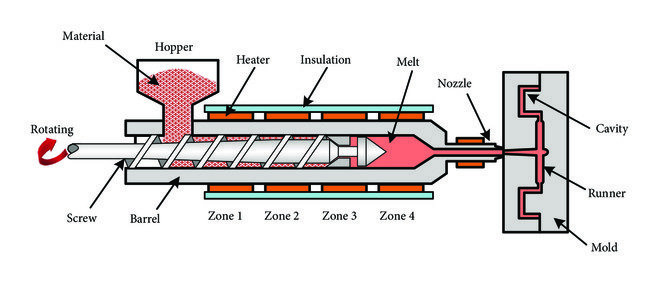
Structural composition of the injection unit
- Feeding machine
- Barrel
- Reciprocating Screw
- Nozzle
- Drive system
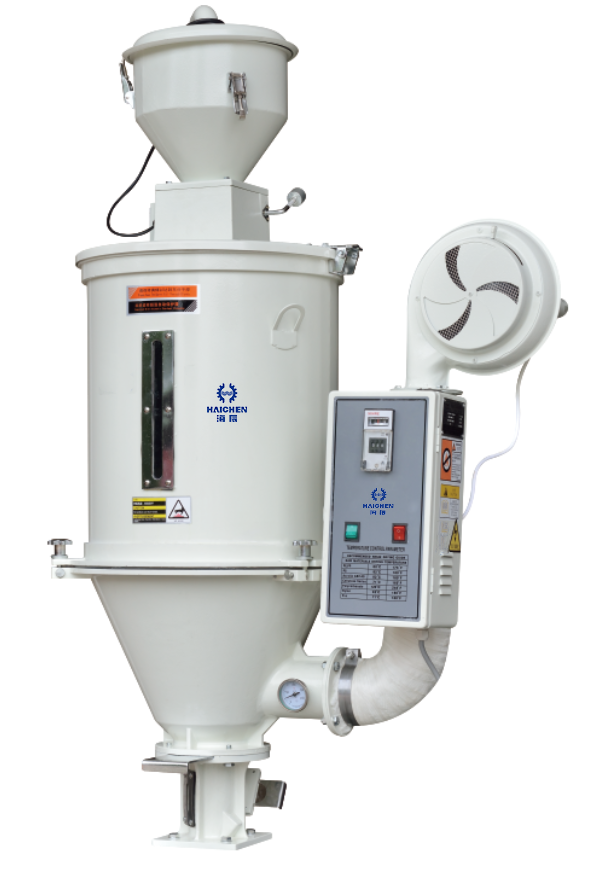
Feeding machine
Function: Storage and conveying of plastic pellets to heated barrels.
It is usually a conical structure that uses gravity to achieve a continuous supply of raw materials.
Technical details: Some models are equipped with a drying device to prevent moisture absorption of raw materials and affect the molding quality.
Barrel
Function: Solid plastic is melted into a homogeneous liquid state by means of a heating device (electric heating ring) and a screw/plunger action.
Design features: Tungsten carbide plated inner wall for wear resistance, segmented temperature control (typically 5-6 zones) to ensure precise plasticization.
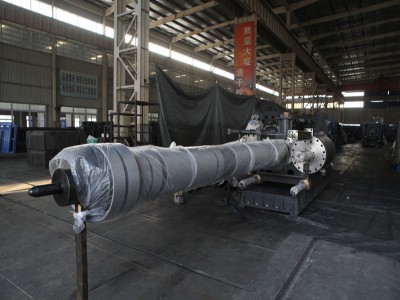
Reciprocating Screw
Plasticizing
First, the plastic is melted by rotational shearing and friction.
Dosing
Second, store the melt when retreating and inject when advancing.
Mixing
The melt homogeneity is then optimized, especially for the addition of masterbatches or reinforcements.
Structural parameters
The aspect ratio (L/D) is generally 18-25, the compression ratio is 2-3, and the depth of the screw groove is gradually designed.
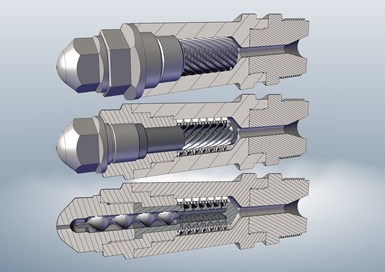
Nozzle
Function
Connect the barrel and the mold to control the flow direction of the melt.
It is divided into straight-through type (general-purpose) and lockable type (to prevent salivation).
Material selection
High temperature resistance (e.g. tungsten steel) is required to withstand melt washout and high pressure.
Drive system
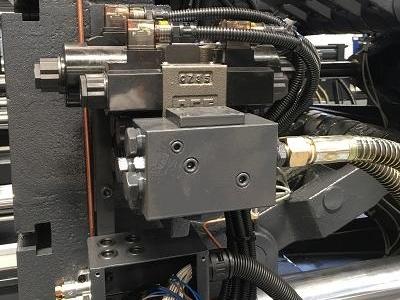
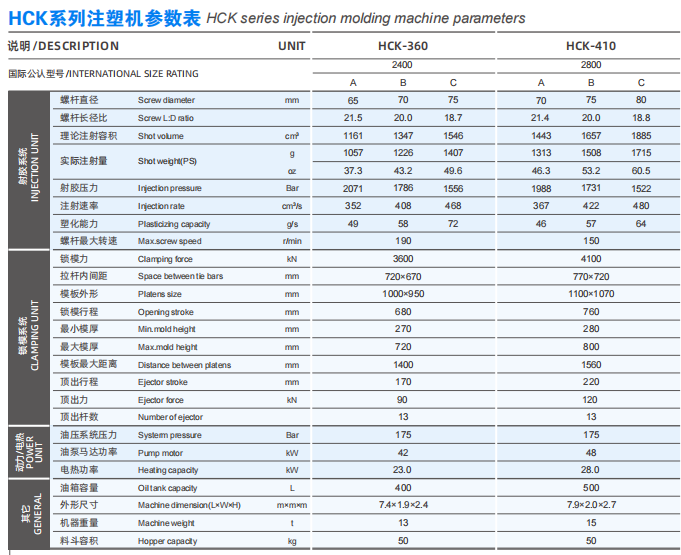
Hydraulic cylinder: push the screw/plunger to complete the injection action, the pressure can reach 100-200MPa.
Servo motor (all-electric model): improved response speed and energy saving.
Detailed explanation of the working principle
- Plasticizing stage
- Injection stage
- Holding & Cooling Holding Phase
Plasticizing stage
The screw rotates backwards, and the plastic particles go through three stages of solid conveying, melt compression and homogenization in the barrel.
Temperature gradient control: the temperature of the front section of the barrel is higher than that of the rear section to prevent overheating and decomposition (e.g., PVC needs to be < 200°C).
Injection stage
The screw/plunger advances at high speed (up to 300-1000mm/s) under hydraulic or electric drive to inject the melt into the mold cavity.
The injection pressure needs to overcome the melt flow resistance (related to the viscosity of the material and the complexity of the runner), and the typical value is 100-150MPa.
Holding & Cooling Holding Phase
Continuous application of pressure (about 60-80% of the injection pressure) compensates for melt shrinkage.
Screw reset: The melt motor drives the screw to rotate and prepares the material for the next cycle.
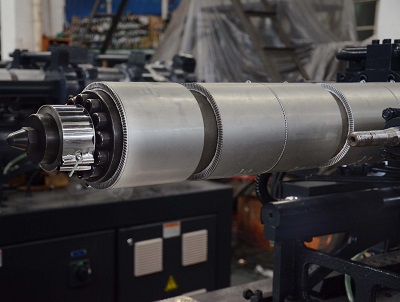
Key parameters that affect the performance of the injection unit
- Temperature control
- Back pressure and plasticizing time
Temperature control
The barrel is zoned for temperature control (e.g. 3-5 sections), and specific temperature curves are set for different materials (e.g. 300-320°C for PC, 200-280°C for PP).
Screw parameters L/D ratio: usually 18:1 to 25:1, high L/D ratio improves plasticizing efficiency, but increases energy consumption.
Compression ratio: 2:1 to 3:1, adaptable to the melting characteristics of different materials (e.g. PVC needs a low compression ratio to reduce degradation).
Injection pressure and speed Insufficient pressure can lead to a short shot, while too high a pressure may damage the mold.
Too fast causes turbulence, resulting in porosity or weld lines.
Back pressure and plasticizing time
The back pressure (5-20 MPa) affects the melt density and mixing effect.
And high back pressure prolongs the plasticization time but improves the quality.
Common injection units
- Plunger Type
- Reciprocating Screw
- Pre-plasticizing Screw type
- Electric drive type
Plunger Type
In the early design, the melt was directly pushed by the plunger.
The advantages are simple structure and low cost, but the plasticizing effect is poor and it is only suitable for low-precision products.
Reciprocating Screw (Reciprocating screw)
The mainstream design features a screw that combines both rotational plasticizing and axial injection functions.
Advantages include efficient mixing, precise temperature control, and suitability for complex materials such as filled plastics.
Pre-plasticizing Screw type
Plasticizing is carried out by an independent screw and then injected by a plunger.
It is suitable for high-viscosity materials or large-sized products, but the equipment complexity is relatively high.
Electric drive type
Replacing the hydraulic system with servo motors offers higher precision and energy efficiency, but the maintenance cost is relatively high.
Maintenance and Failure Prevention
First of all, clean the residue of the barrel and screw to avoid carbonization of the material.
Check the screw wear replace if the screw clearance is more than 0.2 mm.
At the same time, the operator tests the nozzle tightness to prevent spillage or cold material clogging.
Then, the team regularly calibrates the temperature and pressure sensors to ensure parameter accuracy.
Industry 4.0 technologies, such as real-time monitoring systems, can predict failures and optimize processes.