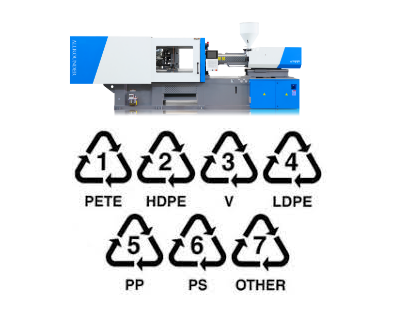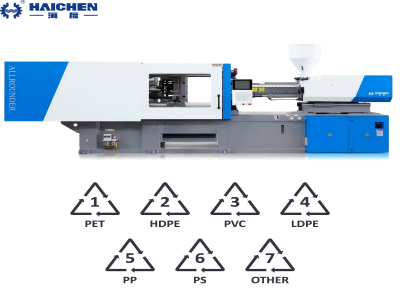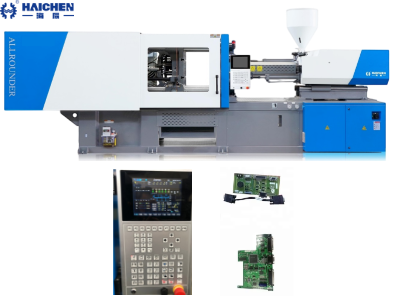
The smallest injection molding is about 10 kilograms, this miniature tabletop machine can be placed on a tabletop to work, making it ideal for home use.
We use a small machine to produce small plastic parts, typically for applications that demand high precision and small batch production. The design and features of these machines allow them to meet diverse production needs. Especially in the manufacture of micro parts, connectors, seals, toys, and electronic components. Common small injection molding machine is about 30T to 90T.
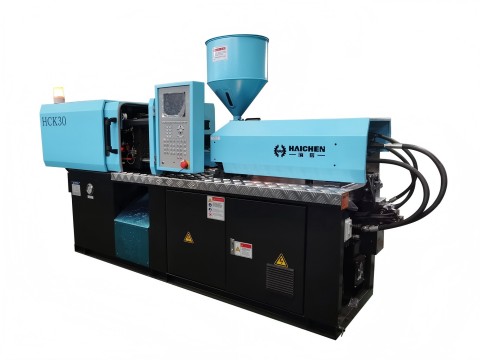
The features of the smallest injection molding machine
- Clamping force and injection volume
- High precision and high speed response
- Versatile applications
- Energy saving and sustainability
- Flexibility and scalability
Clamping force and injection volume:
Small machines typically have low clamping forces (e.g., 100 kN) and are suitable for handling smaller molds and lighter parts.
Their injection volume can range from a few cubic centimeters to tens of cubic centimeters, depending on the design of the model.
High precision and high speed response:
These machines are usually equipped with high performance injection units and fast response control systems to ensure high precision during high speed filling and cooling processes.
Versatile applications:
Small machine are not only suitable for the production of micro parts, but can also be used to manufacture larger sized components such as automotive parts or small assemblies in medical devices.
In addition, we can use these machines in conjunction with automated equipment to increase productivity.
Energy saving and sustainability:
Some small machines use electric drive systems, reducing energy consumption and increasing the sustainability of the operation.
Flexibility and scalability:
Small machines are usually designed to be modular and can be adapted and upgraded according to production needs.
For example, by changing to a different mold or adjusting the injection parameters.
What is the smallest feature size in injection molding?
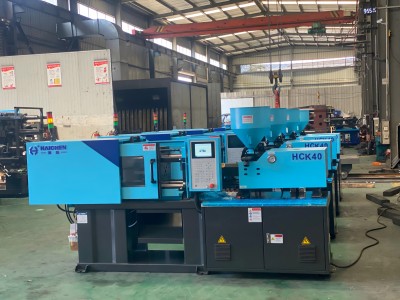
- Micro Injection Molding
- Nano Injection Molding
- Conventional injection molding
Micro Injection Molding
It is an extension of conventional molding, whereby molten plastic is injected into tiny mold cavities and cooled to form the desired product. Its distinguishing feature is its ability to produce precision parts weighing less than 1 gram and with dimensions in the micron to millimeter range. Compared to conventional injection, micro-injection molding is more demanding on molds and equipment, requiring higher precision and more complex mold designs.
Nano Injection Molding
It is an advanced manufacturing method that combines nanotechnology and traditional technology. Its core is to use nanotechnology to treat the surface of a metal, and then inject and mold plastics directly onto that metal surface, thus realizing the integrated integration of metal and plastics. This method has a wide range of applications in modern manufacturing, especially in electronics, automotive, and medical fields.
Conventional injection molding
It is a process widely used in the production of plastic products, the basic principle is to inject heated molten plastic material into the mold cavity, cooling and curing to form the desired shape. This process is characterized by high efficiency, low cost and strong adaptability, and is suitable for the production of plastic products of various specifications and complex shapes.
How thin can injection molding be?
Thin wall injection molding can achieve wall thicknesses as low as 0.5 mm (0.020 in). For example, some specially designed thin-wall molds can even achieve wall thicknesses of 0.3 mm (0.012 in.). However, wall thicknesses below 1 mm can present additional process challenges, such as uneven flow and long cooling times.
Small Part Injection Molding Process
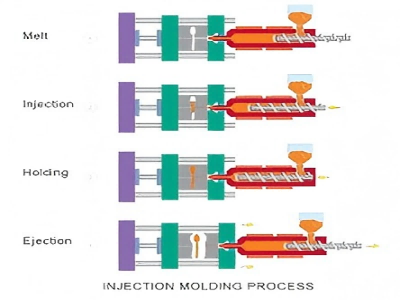
- Material melting
- Injection
- Cooling and Curing
- Demolding
Material melting:
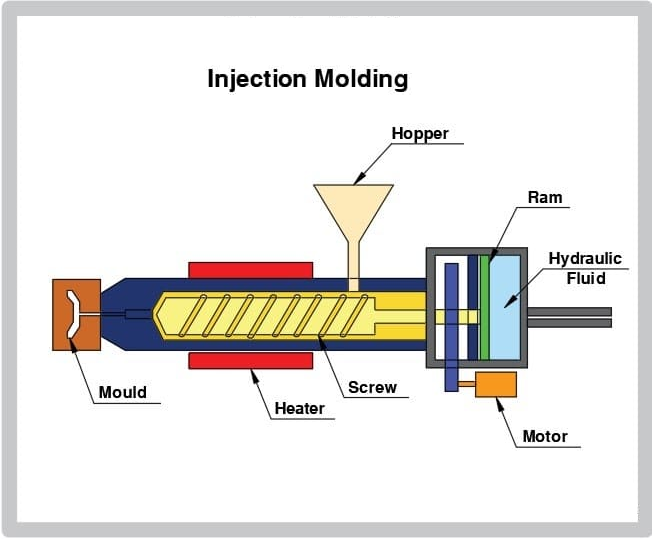
The plastic granules heat to a molten state in the hopper of the injection machine and then pushed through the screw or plunger into the mold cavity.
Injection:
The molten plastic is injected into the mold cavity at high pressure, ensuring that all details are filled and defects are avoided.
Cooling and Curing:
The plastic inside the mold cools and cures within a set time to form the final shape.
Demolding:
After cooling is complete, the mold is opened and the molded small part is removed.
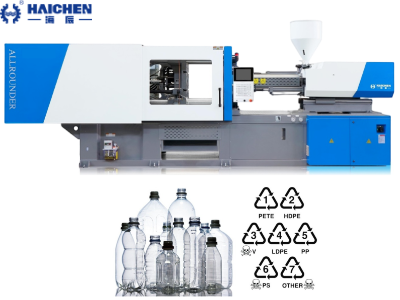
Haichen small injection molding machine
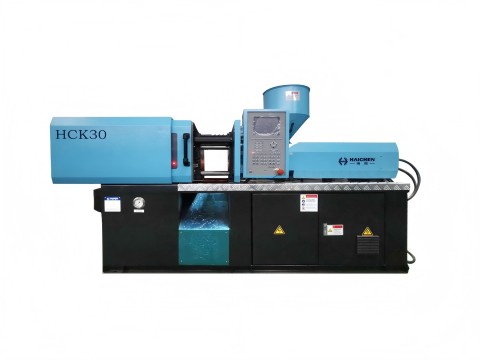
Haichen Machine is a supplier of small machines. Welcome to consult us.
The advantage of Haichen small machine
Miniaturized Design: Haichen’s small injection molding machines feature a miniaturized design concept with a small footprint that takes up little space, making them ideal for home use or laboratory teaching.
Highly Applicable: We ideally suit these machines for small batch machine production, laboratory teaching use, and small prototyping.
And the processing needs of high-precision and micro-shape products.
High Efficiency and Flexibility: Haichen’s small machine have the characteristics of rapid stability, high efficiency and flexibility.
We use small machines in many industries due to their flexibility. We employ these machines to manufacture miniature parts and produce small batches, offering efficient and cost-effective solutions.