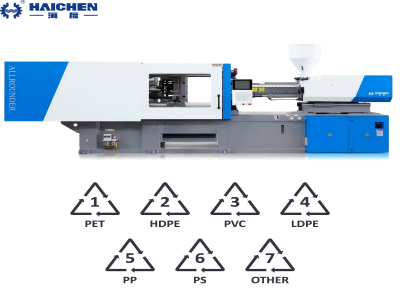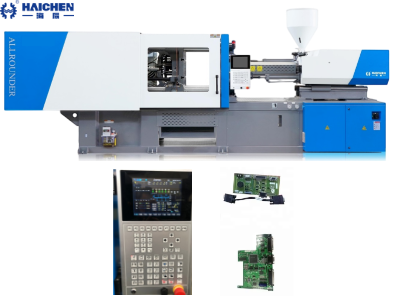
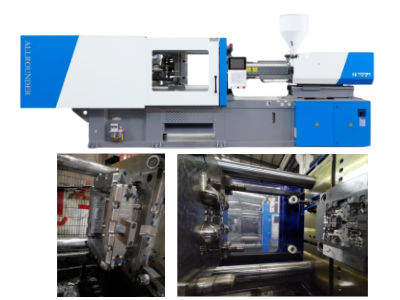
When a new injection molding machine is complete and ready for use, it is important to ensure that the mold maker performs a test run on the injection molding machine.
The using process for an injection molding machine is often more than just loading the mold, securing the mold, and pressing the start button. In fact, there are several key things that need to be completed after the injection mold is clamped. This article will explore each step in the injection molding machine setup process to ensure the best possible finished product.
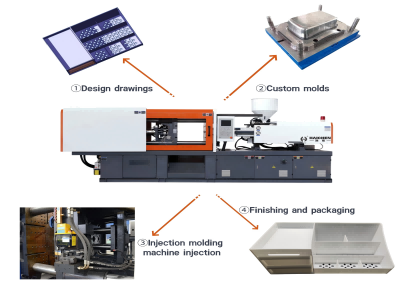
The injection molding process is not complicated—at its simplest, it involves only two steps: obtaining a mold and using the mold to make the part. In addition, in almost all cases, injection molding is the most economical method for producing parts in medium to large batches.
Using a plastic injection molding machine involves a series of steps to melt plastic pellets, inject them into a mold, and produce finished parts.
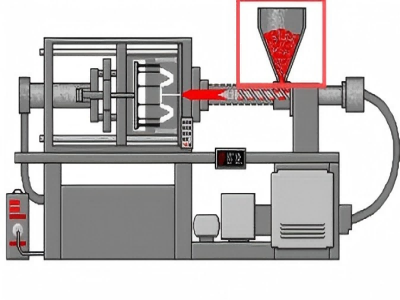
How to implement the injection molding steps?
Come, let me give you a brief list
- Preparation
- Machine Setup
- Operation Cycle
- Post-Processing
Preparation
- Material Preparation:
- Select the appropriate thermoplastic (e.g., ABS, polypropylene, nylon).
- Dry the plastic pellets (if required) to remove moisture (typically 2–4 hours at 70–100°C).
- Mold Setup:
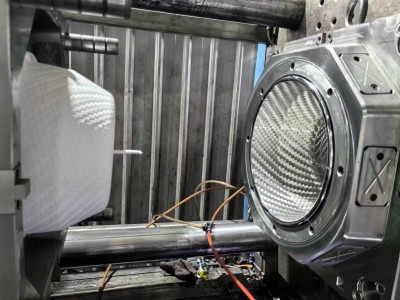
- Install the mold (tool) into the plastic injection molding machine, ensuring proper alignment.
- Secure the mold halves to the machine’s platens (stationary and moving sides).
- Connect cooling lines to the mold for temperature control.
Machine Setup
- Temperature Settings:
- Preheat the barrel to the material’s melting temperature (e.g., 200–300°C).
- Set the mold temperature (e.g., 40–120°C) using a thermolator (temperature controller).
- Injection Parameters:
- Adjust injection pressure (typically 500–2,000 bar), injection speed, and holding pressure.
- Set cooling time (varies with part thickness) and cycle time.
Operation Cycle

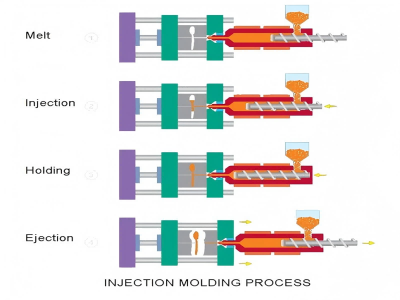
- Clamping:
- Close the mold using the hydraulic or electric clamping unit.
- Injection:
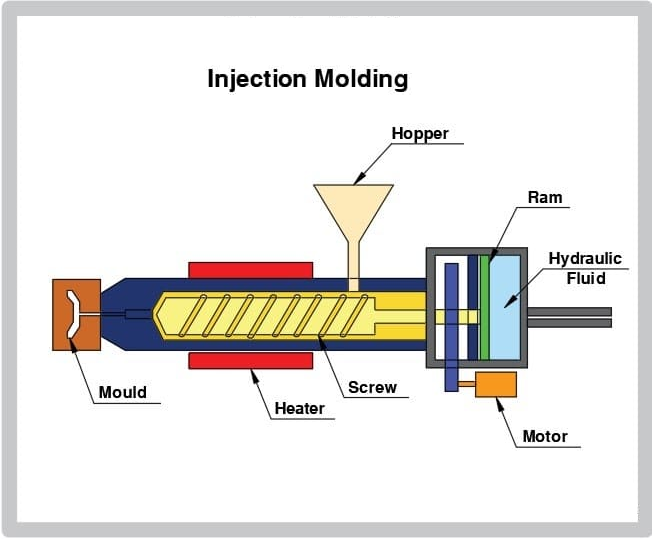
- Plastic pellets are fed into the hopper and conveyed into the barrel.
- A reciprocating screw rotates, melting the plastic as it moves forward.
- The screw acts as a plunger, injecting molten plastic into the mold cavity under high pressure.
- Holding & Cooling:
- Holding pressure is applied to pack additional material into the mold to compensate for shrinkage.
- The part cools and solidifies inside the mold.
- Screw Recovery:
- The screw retracts, rotating to melt and prepare the next shot of plastic.
- Mold Opening & Ejection:
- The mold opens, and ejector pins push the part out.
- The cycle repeats automatically.
Post-Processing
- Trimming: Remove excess material (flash, sprues, runners) using cutters or automated systems.
- Inspection: Check parts for defects like sink marks, warping, or voids.
- Secondary Operations: Apply finishing steps like painting, assembly, or annealing (if needed).
Key Parameters to Monitor
| Parameter | Purpose |
|---|---|
| Melt Temperature | Ensures proper flow and avoids degradation. |
| Injection Speed | Controls fill rate to prevent air traps or incomplete filling. |
| Clamping Force | Prevents mold flashing (leakage) during injection. |
| Cooling Time | Ensures part solidifies fully before ejection. |
Safety Tips
- Wear heat-resistant gloves and safety glasses.
- Never bypass machine safety interlocks.
- Keep hands clear of the mold during operation.
- Follow lockout/tagout (LOTO) procedures during maintenance.
Common Issues & Fixes
- Short Shots (incomplete filling): Increase injection pressure/speed or melt temperature.
- Flash (excess material at mold seams): Check clamping force or mold alignment.
- Sink Marks: Extend cooling time or adjust holding pressure.
- Warping: Optimize cooling rate or mold temperature.
Machine Types
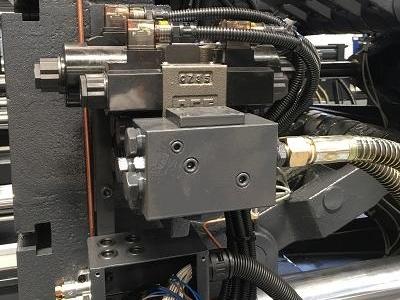
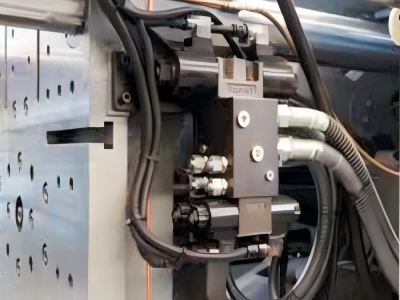
- Hydraulic: High power, traditional, but energy-intensive.
- Electric/Hybrid: Energy-efficient, precise, and quieter.
What is the working principle of plastic injection molding machine?
The working principle of plastic injection molding machine is to heat and melt the plastic raw materials, and inject them into the closed mold cavity under high pressure, and then cool and solidify them into the desired product.
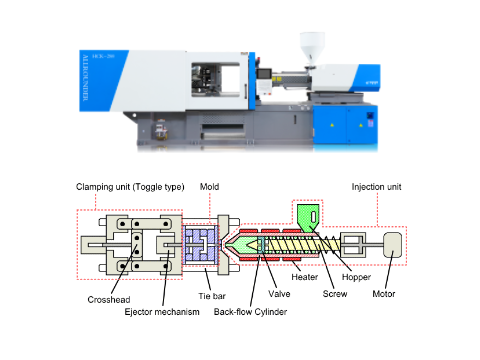
The specific process can be divided into the following key steps, which are explained as follows in combination with multiple evidences:
- Raw material addition and melting and plasticization
- Injection stage
- Holding pressure and cooling
- Mold opening and ejection
- Key mechanisms and technical features
Raw material addition and melting and plasticization
Plastic particles or powders enter the barrel (barrel) of the injection molding machine through the hopper.
The outside of the barrel is heated by the heating ring, and the screw rotates to generate shear force and friction heat, so that the plastic gradually melts and homogenizes.
When the screw rotates, the raw material is pushed to the front end, and the screw moves backward due to the reaction force, forming a space for storing molten plastic (called “metering process”).
Injection stage
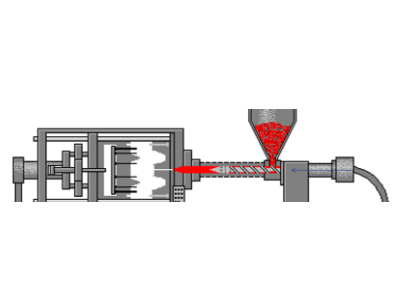
When the molten plastic accumulates to the set amount, the injection cylinder pushes the screw forward and injects the molten plastic into the closed mold cavity through the nozzle, runner and gate at high pressure (usually more than 1000 bar).
The injection pressure ensures that the molten material quickly fills every corner of the mold to avoid air holes or insufficient filling.
Holding pressure and cooling
Holding pressure: After injection, the screw maintains a certain pressure (holding pressure stage) to prevent the molten material from flowing back and compensate for material shrinkage, ensuring product density and dimensional accuracy.
Cooling: The cooling channel in the mold accelerates the solidification of the plastic through circulating water or other media. The cooling time depends on the material properties and product thickness, and usually accounts for more than 50% of the entire cycle.
Mold opening and ejection
After cooling, the movable mold and the fixed mold of the mold are separated (opening the mold), and the ejection mechanism (such as the ejector pin) pushes the molded product out of the mold cavity.
The mold is then closed again and enters the next cycle.
Key mechanisms and technical features
Screw drive system: The screw has both rotational plasticization and axial injection functions and is the core component of the injection molding machine. Its design directly affects the melting efficiency and injection pressure control.
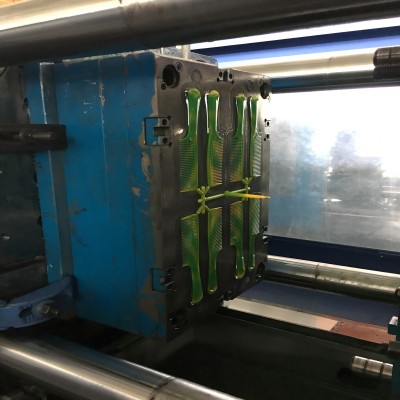
Mold closing and clamping force:
The hydraulic or electric clamping system ensures that the mold withstands high pressure (up to thousands of tons) during the injection and holding pressure stages to prevent the molten material from overflowing from the parting surface.
Temperature control:
The barrel and mold require precise temperature control.
The barrel temperature is set in multiple stages to adapt to the melting characteristics of different materials, and the mold temperature affects the cooling rate and product surface quality.
Cyclic and efficient production:
The injection molding process is a fully automatic cycle, with a single cycle time ranging from a few seconds to several minutes, which is suitable for mass production of plastic parts with complex shapes.
Plastic injection molding requires careful setup of temperature, pressure, and cycle parameters. Proper mold design, material selection, and operator training are critical for producing defect-free parts. Always consult the machine’s manual and material datasheets for specific guidelines.
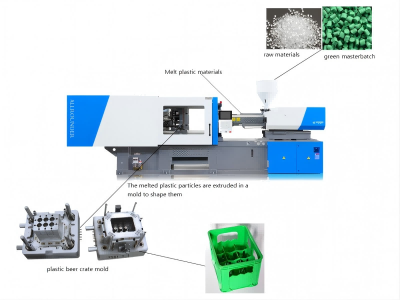
Haichen injection molding machine takes servo energy-saving technology as the core, combines high-rigidity structure, intelligent control and flexible configuration, and performs outstandingly in energy efficiency, precision and reliability. At the same time, it guarantees the continuity of customer production through perfect after-sales service. It is the preferred equipment for the production of small, medium and large plastic products.

Welcome to write to us for more details about the injection molding process. We are dedicated to serving you.