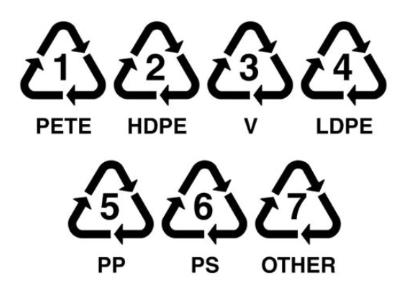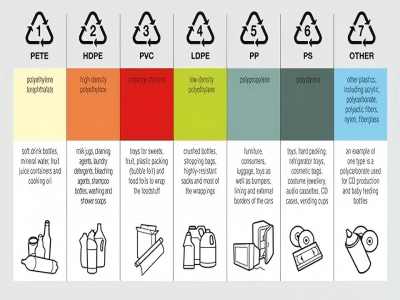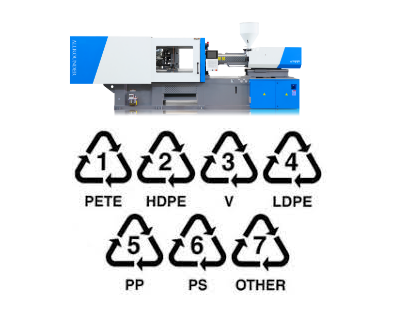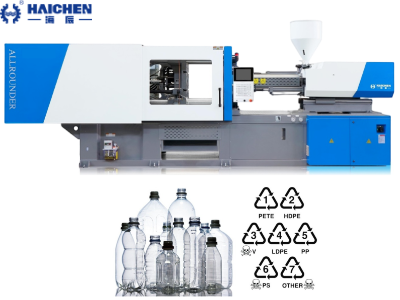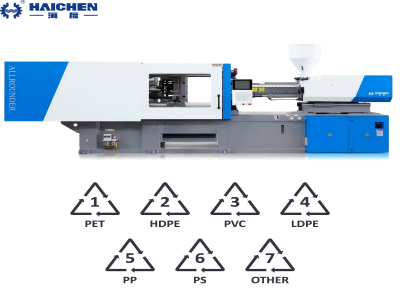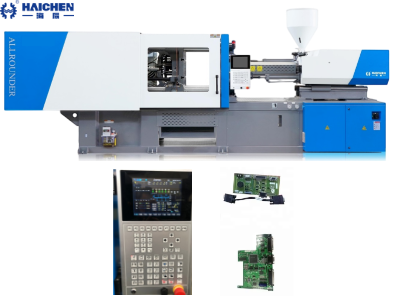
All about injection-molded plastic bowls and kitchen containers. Plastic bowls and kitchen containers are used to protect goods during transport and keep them neat and organized during storage. They can hold large quantities of product and can be stacked when not in use, saving storage space and reducing shipping costs. They come in a variety of colors and add a touch of life.
Plastic bowls, as a very common household plastic product, are similar to the injection molding industry we are familiar with. Choosing the right injection molding machine is crucial for the production of plastic products. It not only affects product quality, but also production efficiency and cost control.The selection of plastic bowl injection molding machine needs to consider clamping force, injection volume, mold adaptability, material process parameters and cost-effectiveness.
Let us introduce to you the selection details of various plastic bowl injection molding machines that we have compiled based on our years of project experience with dozens of professional kitchen and bathroom customers.
Injection Molding Machine Recommendations for Plastic Bowl Production
- Key Machine Selection Parameters
- Mold Compatibility Requirements
- Equipment Recommendations
- Auxiliary Equipment & Process Optimization
Key Machine Selection Parameters
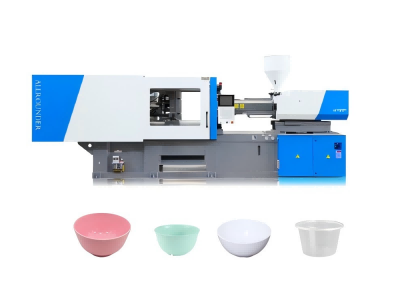
- Clamping Force
- Calculate based on melt pressure:
PAparting≤FmachineWhere P = average cavity pressure (30-50 MPa for PP), Aparting = projected area of the bowl and runners on the parting surface. - Example: For a 500 cm² projected area, clamping force ≥ 1,500 kN (at 30 MPa).
- Prioritize machines validated through multi-criteria decision-making (MCDM) methods.
- Calculate based on melt pressure:
- Injection Volume
- Total volume (bowl + runners) should occupy 35%-80% of the machine’s maximum capacity (optimal: 50%-80%).
- For a single-cavity mold: Minimum injection volume ≥ 125 cm³ (bowl: 100 cm³ + runners: 25 cm³). Multiply for multi-cavity molds.
- Injection Pressure & Speed
- PP material: Recommended injection pressure = 700–1,050 bar.
- Use screw-type injection units (avoid plunger-type machines) for stable high-pressure delivery.
Mold Compatibility Requirements
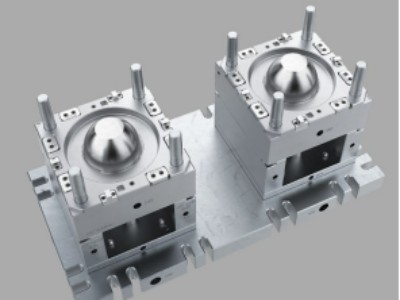
- Mold Dimensions
- Ensure mold thickness aligns with machine platen spacing limits.
- Match sprue bushing dimensions with the machine nozzle (±0.5 mm tolerance) to prevent leakage.
- Cooling System Optimization
- Cooling channels: Diameter ≥ 8 mm, distance from cavity surface ≤ 10 mm.
- Use conformal cooling channels or hot runner systems to reduce cycle time.
Equipment Recommendations
- Horizontal Injection Molding Machines
- Ideal for medium/large-scale bowl production due to stability.
- For cost-sensitive projects, consider refurbished high-speed machines (verify clamping force and injection unit condition).
- Multi-Cavity Mold Compatibility
- Select machines with injection volumes of 200–500 cm³ and clamping forces of 1,200–2,500 kN (adjust based on cavity count).
Auxiliary Equipment & Process Optimization
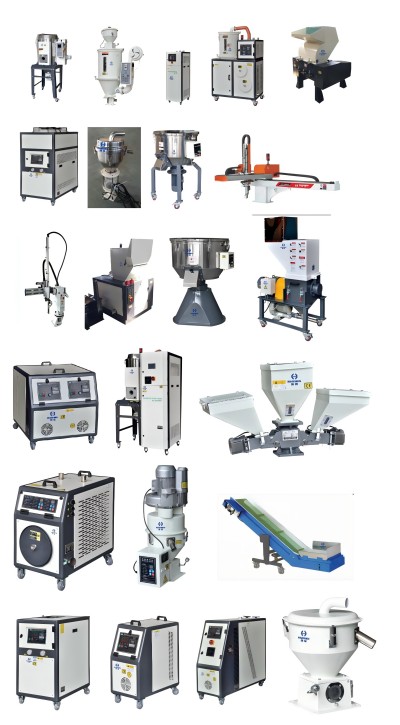
- Peripheral Equipment
- Essential: Auto-loading systems, mold temperature controllers (50–95°C), and robotic part removal systems.
- PP requires no pre-drying, eliminating the need for dryers.
- Process Tuning
- Injection speed: ≥90% of maximum rate to prevent melt-front cooling.
- Packing pressure: ≤750 bar (optimize via mold flow analysis).
- Cooling time: Typically >60% of cycle time (adjust based on wall thickness).
By Our summary
- Machine Requirements: Screw-type units with ≥1,500 kN clamping force and multi-cavity support.
- Validation: Conduct mold flow analysis to verify filling pressure, clamping force, and cooling uniformity.
- Documentation: Record optimized parameters (e.g., injection speed stage 3, packing time 5 sec) for batch consistency.
These guidelines are derived from PP material properties and injection molding principles, ensuring efficient production of food-grade plastic bowls. Adjust specifications based on budget and production scale.
It is particularly important to choose a professional injection molding machine manufacturer, such as Haichen.
Haichen best plastic bowlInjection molding machine
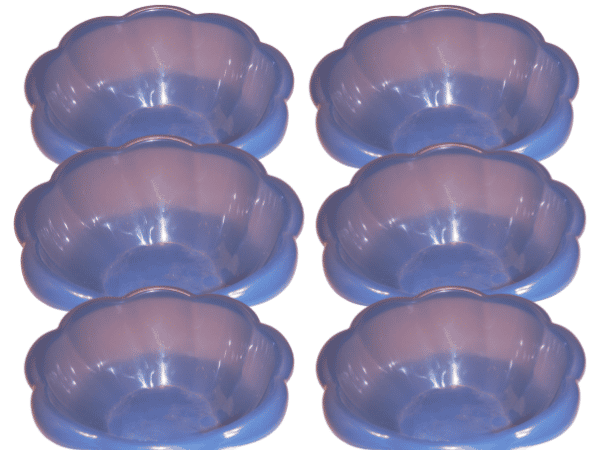
- Core Technologies for Plastic Bowl Molding
- Key Machine Series
- Customisation & Support
- Model Recommendations
Core Technologies for Plastic Bowl Molding
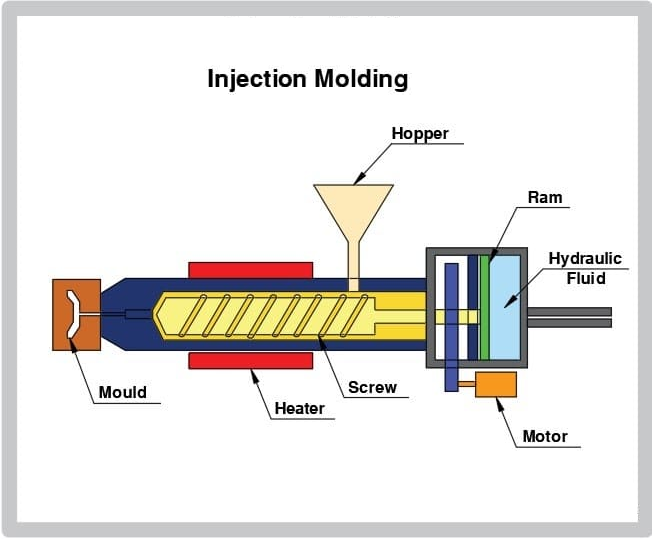
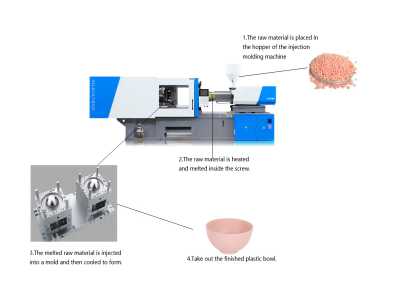
Haichen’s machines follow standard injection moulding processes:
- Melting & Injection: Plastic granules melted at 170–200°C and injected under 500–1,500 bar pressure.
- Cooling: Rapid cooling via water-circulation systems.
- Automated Demoulding: Robotic arms remove finished bowls and trim excess material.
Key Innovations:
- High-Precision Moulds: Custom-designed for bowl dimensions (e.g., diameter, wall thickness), ensuring ±0.05mm consistency.
- Servo Energy-Saving Tech: Servo motors adjust pressure/flow in real-time, reducing energy use by 15–70% vs. hydraulic systems.
- Post-Processing Automation: Integrated robotic arms and trimming systems for seamless handle removal and sorting.
Key Machine Series
E-Series (servo series)
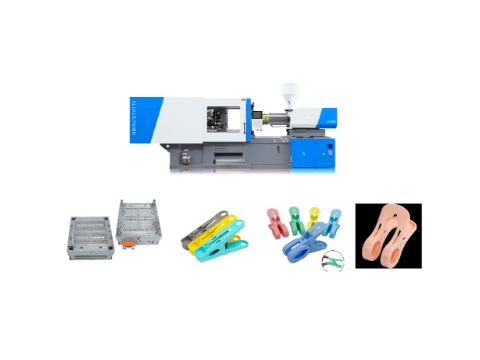
- Applications: Mass production of standardised bowls, cutlery, and PET preforms.
- Specifications:
- Clamping Force: 100–150 tonnes (e.g., HCE100, HCE120).
- Shot Capacity: 106–213g (PS material reference).
- Advantages: Modular design for quick mould changes (<30 mins), ideal for small-batch orders.
HC-Series (High-Precision Models)
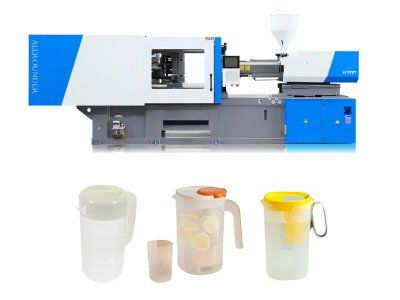
- Features:
- Dual-cylinder injection system for ±0.3% weight consistency.
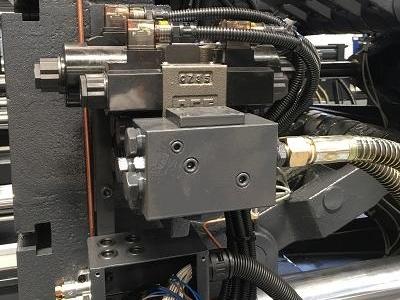
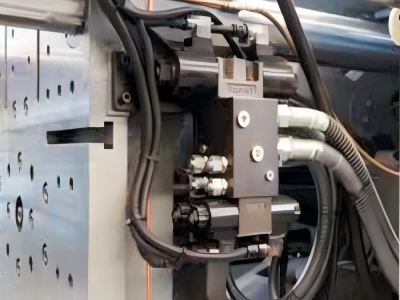
- Proportional valve-controlled hydraulics for multi-stage pressure/speed adjustments.
- Five-point double-toggle clamping mechanism (accuracy: ±0.02mm).
- Material Compatibility: PP, PE, and engineering plastics (e.g., PEEK). Custom screws/barrels available.
Hybrid (Oil-Electric) Series
- Design: Hydraulic clamping + electric injection.
- Benefits:
- Thin-Walled Bowls: High-speed injection (up to 300mm/sec) reduces cycle time by 20%.
- Thick-Walled Bowls: Parallel cooling and demoulding cuts total time by 15%.
- Energy savings: 40–60% vs. full-hydraulic machines.
Customisation & Support
- Tailored Options:
- Mould thickness: 220–570mm.
- Ejection stroke: Up to 150mm.
- Voltage: 220V–415V (50/60Hz compatible).
- After-Sales:
- 1-year warranty with 24/7 remote diagnostics.
- On-site training by certified engineers (global coverage).
- Multi-language manuals and troubleshooting guides.
Comparison with Haitian MAⅢ/h Series
| Aspect | Haichen HC-Series | Haitian HTF250X1 |
|---|---|---|
| Clamping Force | 170 tonnes | 250 tonnes |
| Injection Speed | 200–300mm/sec | 400mm/sec (high-speed) |
| Energy Use | 15–18kW/hr (hybrid) | 22–25kW/hr (hydraulic) |
| Target Market | Food-grade bowls/containers | Industrial components |
Haichen’s Edge: Lower upfront cost (£35k–£80k vs. Haitian’s £50k–£120k) and automated post-processing for(tableware).
Model Recommendations
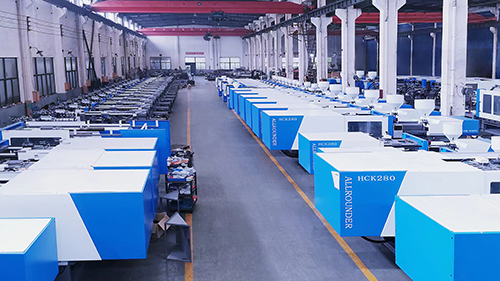
- Budget-Friendly: E-Series HCE120 (£38k) for <50,000 bowls/month.
- High-Mix Production: HC-Series HCS170 (£65k) for multi-material or textured bowls.
- Premium Efficiency: Hybrid Series (£75k–£110k) for large-scale (thin-walled) production.
For bespoke solutions, provide material specs (e.g., PP melt flow rate, colourant type) and annual output goals. Haichen offers plastic bowl injection molding machine FOB or CIF shipping terms globally.