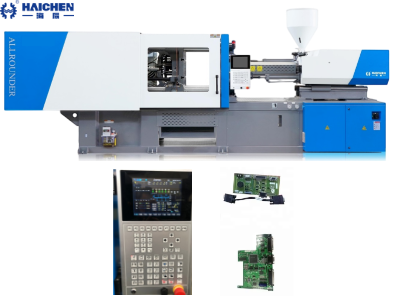
Minimum mold thickness and maximum mold thickness, directly affect the quality and production efficiency of the molded parts.
In the injection molding process of plastic products, the design and use of molds are crucial.
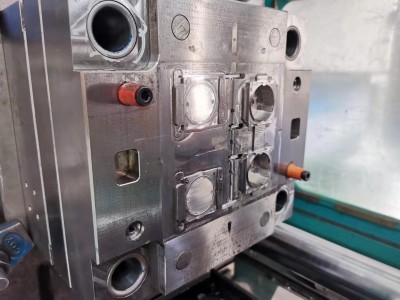
Overview of injection molding machine mold thickness
The mold used by the injection molding machine needs to be within a certain thickness range. This ensures that the plastic melt can evenly fill the mold and form high-quality products. The thickness of the mold directly affects the flow channel and cooling time of the plastic.
The minimum and maximum mold thickness of the injection molding machine refers to the minimum and maximum mold thickness that the injection molding machine can adapt to.
The minimum mold thickness refers to the thickness of the thinnest mold that the injection molding machine can install. The maximum mold thickness refers to the thickness of the thickest mold that the injection molding machine can install. These two parameters determine the mold thickness range that the injection molding machine can adapt to. Ensure that the mold can work normally during the injection molding process.
Minimum Mold Thickness
-The minimum mold thickness refers to the minimum distance between the moving mold plate and the fixed mold plate when the mold is in the mold-closing state. This parameter sets the minimum thickness of the mold that can be assembled on the injection molding machine.
-The minimum mold thickness ensures that the mold can be completely locked by the elbow of the injection molding machine when closed, ensuring mold stability and injection quality. If the mold is too thin, the elbow may not lock completely, causing the mold to shift or get damaged during the injection molding process.
-If the mold thickness is less than the minimum required, you need to add a mold thickness adjustment block when assembling the mold. Otherwise, the normal clamping force cannot be achieved, and parts may get damaged.
Maximum Mold Thickness
-The maximum mold thickness refers to the maximum distance between the moving mold plate and the fixed mold plate when the mold is in the mold-closing state. This parameter determines the maximum thickness of the mold that can be assembled on the injection molding machine.
-The maximum mold thickness ensures that the mold is within the mold adjustment range of the injection molding machine when the mold is closed. If the mold is too thick, the elbow may not be fully expanded. This will cause incorrect mold installation or problems during the injection molding process.
-If the mold thickness is greater than the maximum mold thickness, the mold cannot be closed normally after installation. The specified clamping force cannot be reached and the injection molding machine cannot work.
Therefore, the minimum mold thickness and maximum mold thickness of the injection molding machine are important components of the injection molding machine specification parameters. They determine the mold thickness range that the injection molding machine can adapt to. Ensure the smooth progress of the injection molding process.
The impact of mold thickness on the injection molding process
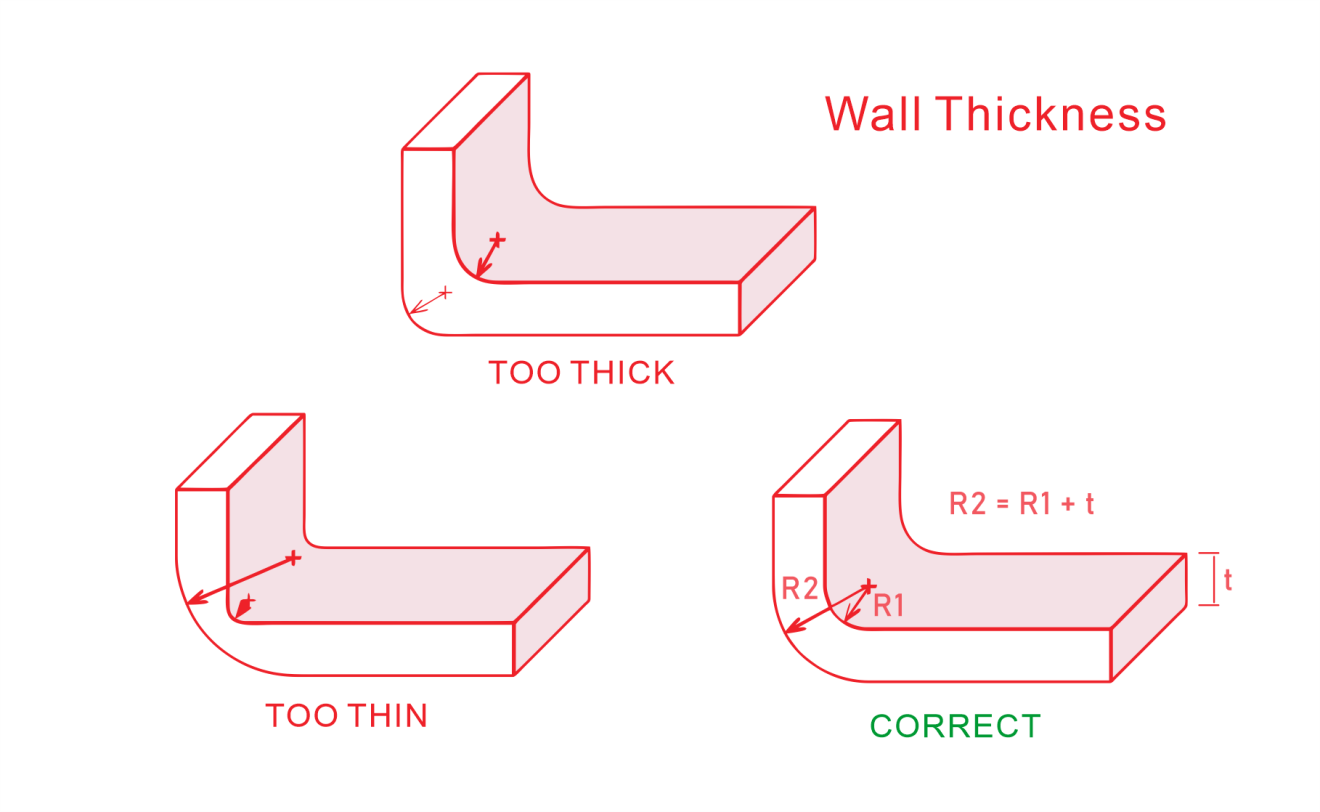
The mold wall thickness directly affects the flow state of the plastic melt in the mold cavity
Thicker mold walls can provide better support, keep the plastic melt stable during the filling process, and reduce defects caused by uneven flow. However, if the wall thickness is too thick, it will increase the material flow resistance, increase the injection pressure, and prolong the cooling time, which will increase the difficulty of molding.
Increasing the mold wall thickness helps improve the dimensional accuracy and shape consistency of the product.
This is because thicker mold walls are better able to resist deformation caused by injection pressure and temperature changes. However, if the mold wall thickness is insufficient, it may cause plastic deformation or rupture of the mold during the injection process, which in turn affects the dimensional accuracy of the product.
The mold wall thickness also affects the cooling rate of the product.
Thinner mold walls lead to faster cooling rates, which may cause warping and shrinkage deformation of the product. Therefore, inconsistent wall thickness should be avoided when designing the mold to ensure uniform cooling rates.
The mold wall thickness also determines the durability of the mold.
Thicker molds generally have higher strength and rigidity. They can withstand higher injection pressures and temperature changes, thus extending the life of the mold. In contrast, thinner molds are suitable for a variety of plastics. But they are easily affected by injection pressure and temperature changes, leading to early damage.
The mold wall thickness has a significant impact on the molding quality.
Appropriate wall thickness can avoid defects such as pores and shrinkage, while also ensuring the rigidity and strength of the product. For example, for high-density polyethylene (HDPE), increasing the wall thickness can improve its tensile strength and elastic modulus.
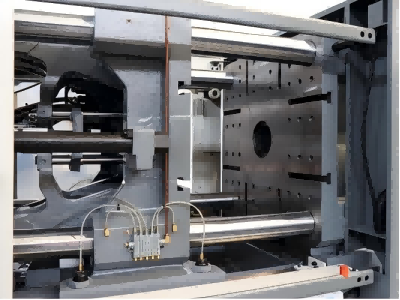
How to choose the right type of injection molding machine based on the mold wall thickness?
Mold thickness:
The specification parameters of the injection molding machine generally have a maximum mold thickness and a minimum mold thickness. Represents the mold thickness that the injection molding machine can accommodate. So first you need to determine the maximum thickness of the mold. Make sure it is within the range allowed by the injection molding machine.
Mold opening stroke:
The mold moving stroke of the injection molding machine is limited. So you must ensure that the mold opening stroke is sufficient to remove the product. If the mold is thick, you should choose an injection molding machine with a larger mold opening stroke to facilitate smooth mold opening and product removal.
Technical parameters of the injection molding machine:
When selecting an injection molding machine, in addition to the mold size, you also need to check other technical parameters of the injection molding machine, such as injection pressure, clamping force, nozzle temperature, etc. These parameters should match the requirements of the mold design and plastic material.
Thin-wall injection molding:
When the mold wall thickness is thin (less than 1mm), it is called thin-wall injection molding. In this case, the injection molding machine needs to have the ability to fill quickly, high-speed models are usually selected, and there are special requirements for molds and plastic materials.
Mold width and height:
The width and height of the mold should preferably be within the mold plate size range, and at the same time meet the minimum mold size recommended by the injection molding machine. Too small or too large will affect the installation and use of the mold.
Understanding the minimum and maximum mold thickness of the injection molding machine is crucial for the production of plastic products.
These two parameters not only affect the quality and performance of plastic parts. They are also related to production costs and efficiency. Injection molding machine users should choose an injection molding machine that can meet the mold thickness requirements according to specific production needs. In order to achieve efficient and high-quality plastic product production.