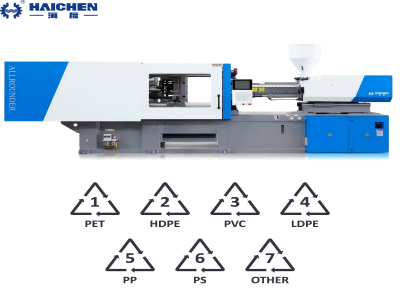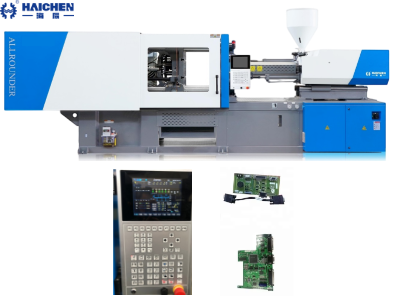
The plastic light switch panel injection molding machine is a device that heats and melts plastic particles, injects them into a mold, and cools and solidifies them to form the desired shape. This device widely uses in industries such as electronics and home appliances to manufacture touch switch panels with complex structures and high-precision requirements.
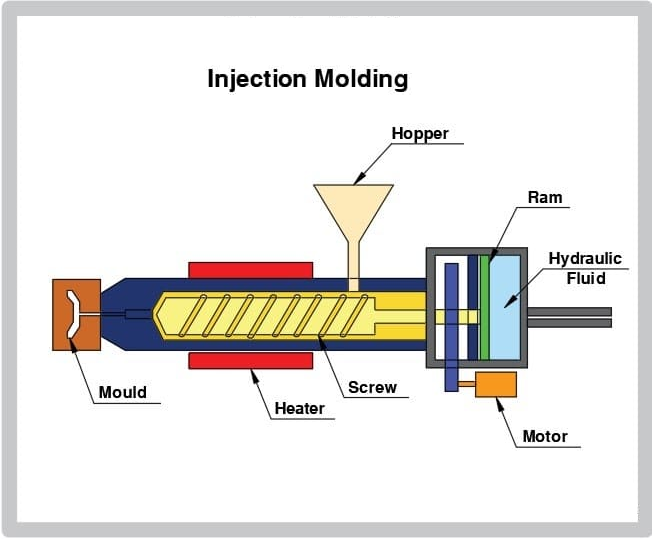
The injection molding machine heats and melts plastic particles. And then uses the rotation and propulsion of the screw to inject them into the mold. Allowing the plastic to cool and solidify in the mold to form the desired shape of plastic products. The entire process includes steps such as heating, plasticizing, injection, cooling, and demolding. Specifically, plastic particles enter the material barrel from the hopper, heat to a molten state by a heating belt. And then push into the nozzle by a screw before being injected into the mold cavity through the nozzle. The mold remains closed, and the plastic cools and solidifies in the mold, forming the final product. After demolding, the product is taken out.
Switch injection molding machine is a kind of equipment which use to produce plastic light switch panels. The following are some detailed information about the plastic switch panel injection molding machine:
- Material selection and optimization
- Mold design
- Injection molding process
- Control system
- Innovation and improvement
Material selection and optimization
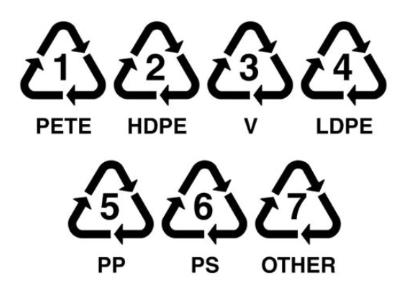
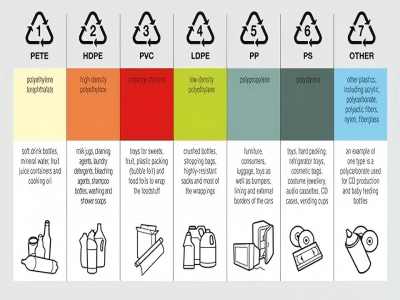
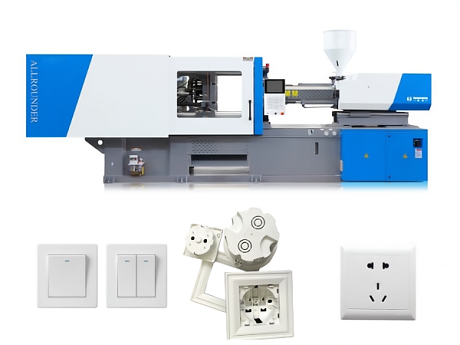
Common materials for plastic switch panels include polycarbonate (PC), polyvinyl chloride (PVC), polymethyl methacrylate (PMMA), and polypropylene (PP). These materials widely use in the manufacturing of switch panels due to their excellent insulation, heat resistance, mechanical strength, and processability.
Polycarbonate (PC)
PC has high impact strength, good transparency, and weather resistance. It commonly uses in switch panels that require high transparency and impact resistance. For example, the L86 series and U86 series switch panels of Meilan Rilan are made of imported PC materials. And they have the characteristics of flame retardancy, aging resistance, and resistance to yellowing.
Polyvinyl chloride (PVC)
PVC has good electrical insulation, chemical resistance, and cost-effectiveness. And it widely uses as an insulation material for wires and cables, as well as for the outer shell of switch panels. However, ordinary PVC releases toxic substances during combustion, so non plasticized PVC (i.e. PVC without plasticizers) is more favored because it is more environmentally friendly and has better thermal stability.
Polymethyl methacrylate (PMMA)
PMMA knows as organic glass, has high transparency and good UV resistance. It commonly uses as a transparent component in the fields of construction and lighting. The disadvantage of PMMA is its high brittleness and easy scratching.
Polypropylene (PP)
It has good toughness and low cost. But it has a high shrinkage rate, making it suitable for structural components with large aspect ratios, such as injection molded bracket lights. The application of PP material in switch panels requires reasonable structural design and mold technology to overcome shrinkage problems.
ABS (acrylonitrile butadiene styrene copolymer)
It has good impact resistance and heat resistance, and is commonly used in electronic and electrical casings and connectors. The proportion of ABS materials used in waste electronic equipment is relatively high, accounting for 24%.
Polyethylene terephthalate (PET)
It has good mechanical strength and chemical stability, and is suitable for the casing and structural components of precision electronic devices. The application proportion of PET in the field of electronics and electrical engineering is about 26%.
Polyamide (PA)
It has good wear resistance and chemical resistance, and is suitable for switch panels that require high mechanical strength.
Selecting the right plastic material is crucial to producing high-quality switch panels. Studies have shown that by optimizing injection molding parameters such as mold temperature, melt temperature, and injection pressure, defects can be significantly reduced and the overall quality of the product can be improved.
Injection molding process
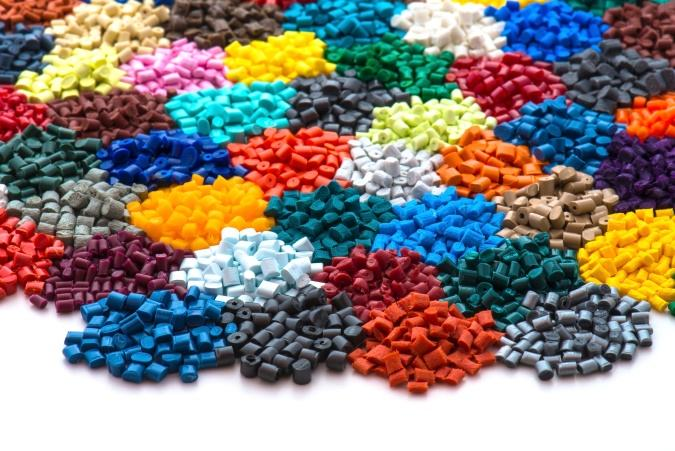
Plastic injection molding is a process in which plastic material is heated to a molten state and then injected into the mold cavity under high pressure.
Plastic switch panels injection molding machine follows the standard injection molding process, but needs to be optimized for the characteristics of thin wall and high precision:
Mold Close Stage
The mold is tightly closed under high pressure to ensure the sealing of the molding cavity and avoid material overflow. The switch panel requires high mold precision (such as cone precision positioning lock design).
Filling Stage
Molten plastic is injected into the mold through a nozzle, and speed and pressure control are key. Switch panels often use multi-point gates (such as balanced 4-point gates) to ensure uniform filling and avoid insufficient filling in thin-walled areas.
Packing&Holding Stage
Fill and shrink gaps to prevent shrinkage marks. The holding pressure (120 MPa) and time (14-20 s) are crucial for dimensional stability.
Cooling Stage
Plastic solidifies in the mold, with cooling time accounting for over 60% of the cycle. The conformal cooling water channel can improve efficiency and reduce warping (such as a circulating water channel that reduces warping by 40% compared to a straight through water channel).
Ejection Stage
The ejector mechanism (push rod/push plate) pushes the product out. Due to high surface quality requirements, switch panels are commonly equipped with hidden gates or push plates to avoid top marks.
The entire plastic switch panel production process is a cyclic process, usually including stages such as mold closure, injection, pressure holding, cooling, and demolding
Mold design
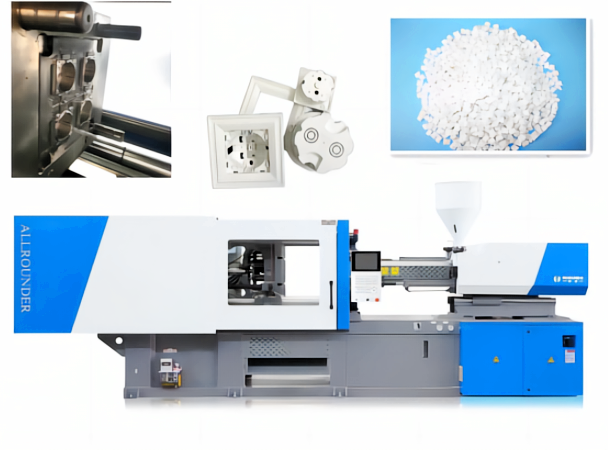
Mold design is one of the key steps in injection molding. For example, the mold design of the switch panel needs to consider the gate location, runner system, and how to avoid air bubbles and weld marks. Moldflow software often uses to simulate and optimize mold design to ensure the best filling effect and product quality.
Gate position and quantity
Reasonable gate position and quantity are crucial for reducing warping deformation and air pockets. Through Moldflow software simulation analysis, the gate position can be optimized, thereby shortening the mold design and manufacturing cycle.
Design of core pulling mechanism
Due to the lateral groove or protruding obstacle body of the light switch panel, it is necessary to use structures such as inclined pin slider external core pulling mechanism, inclined push rod internal core pulling mechanism or parting surface to achieve smooth demolding.
Cooling system design
The design of the cooling system directly affects the molding efficiency and product quality of the mold. A reasonable cooling system can reduce molding time and improve production efficiency.
Material selection: Based on the material characteristics of the light switch panel (such as polycarbonate PC), suitable mold materials and process parameters need to be selected to avoid problems such as cracking and deformation.
Appearance and functional requirements
Mold design should avoid setting gates or demolding structures on surfaces with appearance requirements to ensure the appearance quality of the product.
Process optimization
By using Moldflow software for filling simulation, it is possible to predict weld lines, air pockets, and warping deformation, thereby optimizing mold design and process parameters.
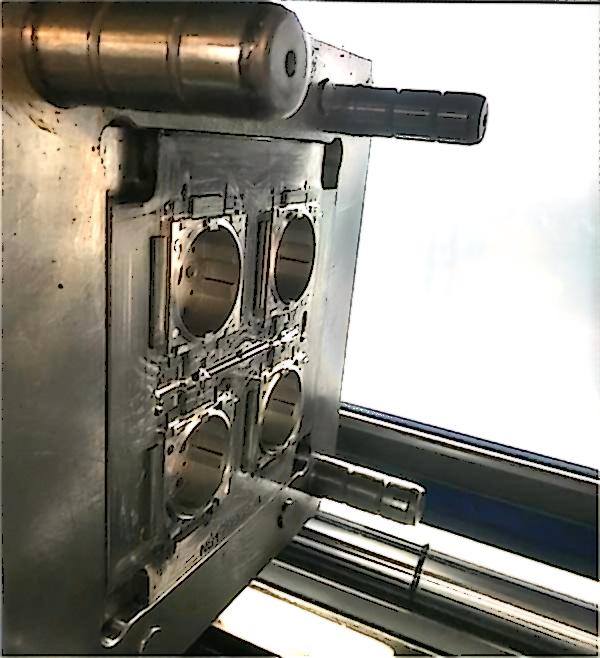
Multi cavity mold design
for mass production, the the first mock examination multi cavity structure can be used to improve production efficiency and reduce costs.
Process parameter optimization
By optimizing process parameters such as mold temperature, melt temperature, holding pressure, and holding time, the shrinkage and warping defects of the product can be effectively reduced.
These design considerations work together to ensure that the mold for the light switch panel can efficiently and stably produce high-quality products.
Innovation and improvement
With the development of technology, the design of injection molding machines is also constantly improving. For example, some new injection molding machines use the internal circulation material removal technology of the flow channel-free switching valve. This design can improve material utilization and reduce production costs.
Plastic light panel injection molding machine is a complex and highly automated equipment. Its design and operation need to comprehensively consider multiple factors such as material properties, mold design, process parameters and control system to ensure the quality of the final product and production efficiency.
Haichen plastic light switch panel injection molding machine
Haichen is one Chinese injection molding machine manufacturer in Ningbo for more than 10years. Our servo energy saving injection molding machines quality are under CE safety standards certificated.
Haichen have rich experience of producing plastic switch socket making machine , with many successful plastic switch panel production case for your reference. We can supply complete plastic light switch panel injection molding machine production line as per customer’s specific demand.