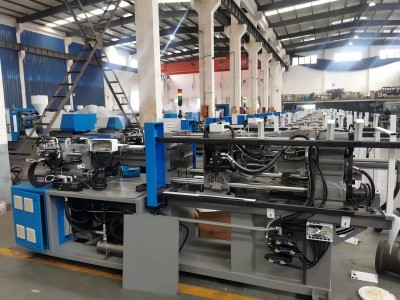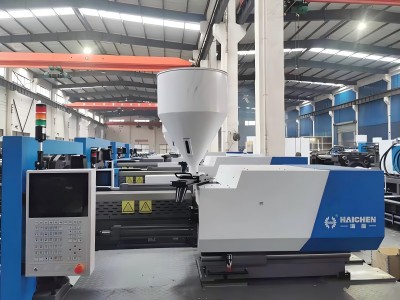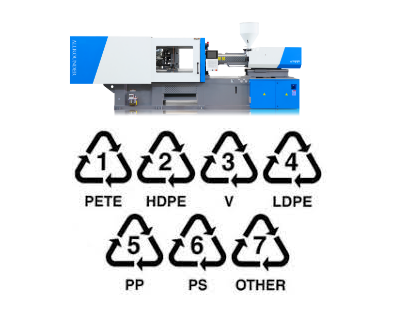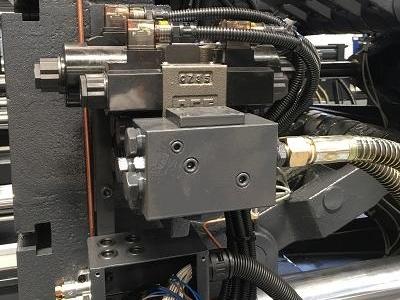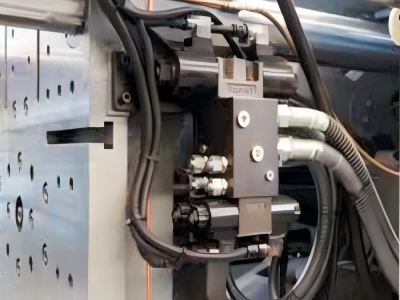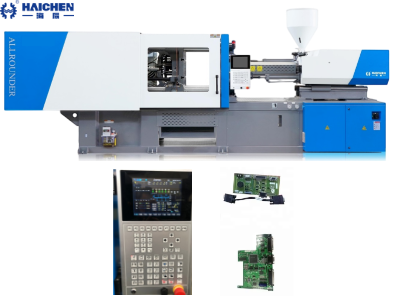
The plastic stool injection molding machine uses to produce plastic stools. It is usually a horizontal type with high precision and an automatic mold adjustment function. That can adjust according to the production needs of the products.
Plastic stool injection molding machines feature high-tonnage clamping, servo energy saving, multi-material compatibility, and intelligent automation as their core advantages. Combined with long-life mold design and a global technical service network, they support efficient and low-cost large-scale production. Different models can be flexibly selected based on production requirements (such as single-cavity/multi-cavity molds) and plastic types.
Working principle
The plastic stool injection molding machine’s working principle is to melt the plastic raw material(PP or PC) by heating and compression. Then convey the molten plastic into the plastic stool mold through the screw. And laterly cool and solidify it into the final product-plastic stool in the mold.
The main purpose
- Achieve uniform melting of the plastic to avoid unmelted particles that can cause product defects.
- Improve melt homogeneity (e.g., color and additive dispersion) through mixing.
- Preserve sufficient melt at a stable temperature for the injection stage.
Plastic stool injection molding machine characteristics
In the production process of plastic stools, the injection molding machine needs to have the following characteristics:
Energy-saving and Highly Efficient
Servo energy-saving technology significantly reduces energy consumption.
- Some models (such as the SK530A) have reduced energy consumption by over 25% through optimized hydraulic circuits and programming.
- Fully automatic hydraulic models (such as the 26,000kg machine) boast power up to 92.1kW, but their energy-saving design balances efficiency and cost.
- The energy-saving twin-platen injection molding machine boasts a power of 58.45kW and an injection rate of 694g/s, achieving a balanced balance between speed and energy consumption.
Multi-Material Compatibility
Processes a wide variety of plastic materials to meet diverse stool requirements:
- Supports general-purpose plastics such as PP, ABS, PC, and PVC. Some models are also compatible with engineering plastics such as PET, PA, and TPU.
- Specialized models (such as the SK530A) can even process bio-based materials (such as polylactic acid) and recycled plastics.
Automation and Intelligence
Integrated automation features improve production efficiency:
Robotics automatically remove parts, label, and remove rough edges, reducing manual intervention.
High precision
The mold is usually made of high-strength metal and requires high-precision processing to ensure the quality of the parts.
Fast cycle
The injection molding process is very fast, usually completed between a few seconds and two minutes, suitable for large-scale production.
The high degree of automation
Modern injection molding machines are mostly automated equipment, which can be operated unmanned for a long time, reducing labor costs.
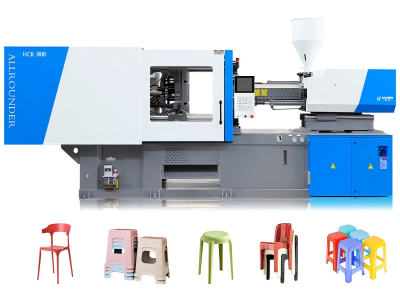
Plastic stool injection molding machine production process
The production process of plastic stool injection molding machine is mainly as follows:
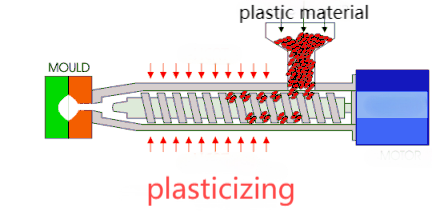
Plasticizing
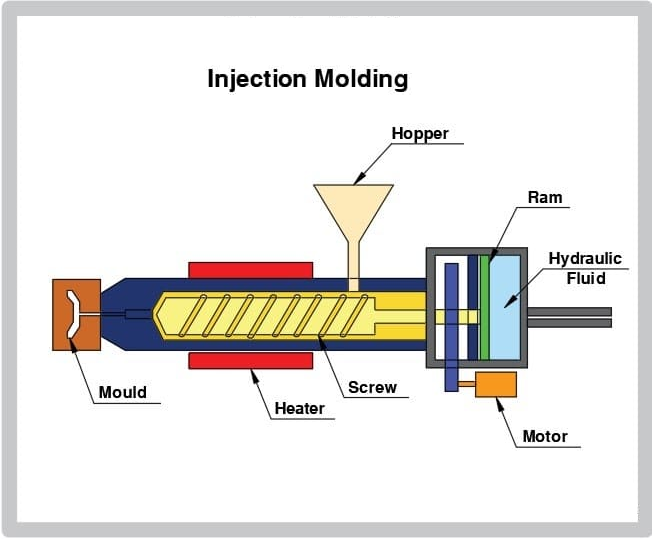
Plastic particles(PP, HDPE or PC) enter the machine from the hopper. The screw in the barrel heats and melts the plastic particles by rotating. The rotation of the screw can also mix colors and generate friction heat. So as to more accurately control the injection amount of plastic.
Temperature
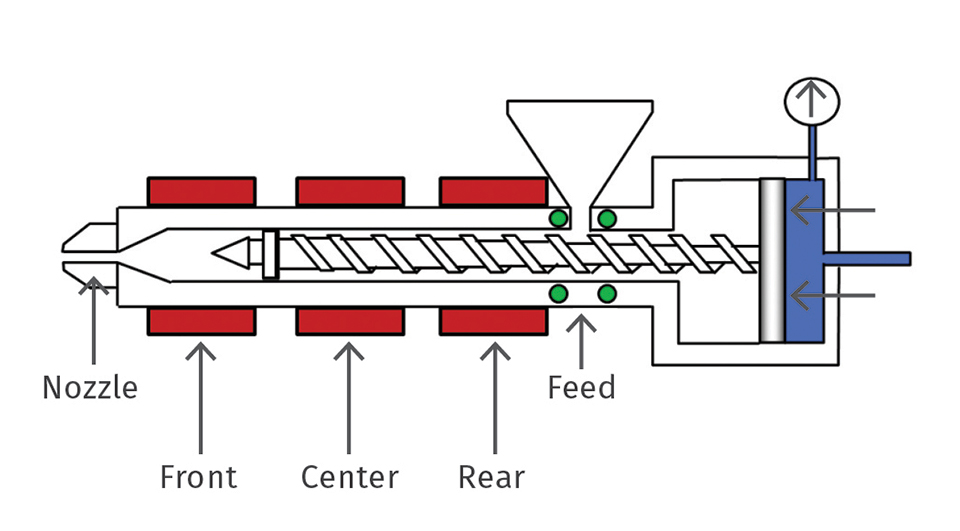
The barrel temperature is controlled in sections (usually 3-5 zones) to avoid local overheating and degradation.
Screw speed
This affects shear heat and melting rate and needs to be adjusted based on the plastic’s properties.
Back pressure
The reverse pressure during screw retraction affects melt density and mixing uniformity.
The significance of plasticization in plastic stool production
- A uniform melt ensures a dense stool structure, free of bubbles or unmelted particles that affect product strength and appearance.
- Large products (such as stools) require more precise metering and temperature control to avoid under-injection and material degradation.
Clamping
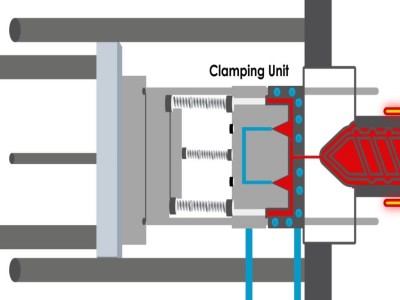
This unit uses to ensure that the plastic stool mold remains tightly closed during the plastic stool injection process. Thus, it can prevent the molten plastic from leaking or the mold from separating. It locks the plastic stool mold by applying sufficient force to ensure the plastic stool molding quality.
The core purpose
Before molten plastic is injected into the mold, the clamping unit tightly closes the two halves of the mold (cavity and core). This ensures the mold remains sealed during the injection process and prevents plastic leakage.
The clamping unit must exert sufficient clamping force to withstand the pressure generated by the molten plastic injection.
Time and Efficiency Factors
Mold closing time depends on machine specifications: Larger machines (higher clamping force) or longer mold opening and closing strokes require more time to close the mold.
The Impact of Mold Clamping on Product Quality
- Insufficient clamping force can cause the mold to open slightly under injection pressure, resulting in plastic flash (burrs) or dimensional deviations in the product.
- Mold clamping accuracy determines mold alignment and affects product structural consistency, which is particularly critical for hollow products such as plastic stools.
Injection
The molten plastic enters the mold cavity through the nozzle. And then the injection process completes by the forward movement of the injection screw.
Raw Material Preparation
Plastic pellets (usually resin pellets) enter the barrel of the injection molding machine through a hopper.
Heating and Plasticizing
Within the barrel, the pellets are melted by the following methods:
- External heating bands provide a base temperature.
- The rotation of the screw generates shear heat, thoroughly mixing the pellets and melting them into a uniform liquid.
Injection Action
Molten plastic accumulates at the front end of the screw to a predetermined amount (called the “shot”).
After the mold is closed, the screw or plunger injects the melt into the mold cavity through the nozzle at high pressure (typically tens to hundreds of MPa).
Factors Affecting Quality
- Inadequate raw material pretreatment (e.g., under-drying) can lead to bubbles or defects.
- Insufficient injection pressure or excessive injection speed can cause incomplete filling or weld lines.
- Uneven cooling can cause warping or residual stress.
Cooling and solidification
The plastic stool mold remains closed, and the molten plastic cools and solidifies in the mold to form the required plastic stools. The cooling time depends on the type and complexity of the stool, and it usually cools by the water system.
Holding Pressure and Shrinkage Compensation
- After injection, the holding phase begins: Maintaining pressure compacts the melt during solidification, preventing shrinkage and dimensional deviation.
- This phase compensates for volumetric shrinkage (typically about 1-5%) as the plastic cools by controlling the flow of additional melt into the mold cavity.
Cooling System Design
Cooling Channels: Customized cooling channels are built into the mold. Complex structures (such as the curved surface of a stool leg) require conformal cooling to improve efficiency.
Temperature Control: Precisely control the coolant temperature (±1°C) to ensure uniform mold temperature and prevent local overheating.
Mold opening and demolding
After the mold is opened, the finished stools are removed from the mold by the ejection mechanism.
Mold opening
Controlled by the clamping unit, the mold is separated hydraulically or electrically. Larger machines require greater clamping force, resulting in longer mold opening times.
Demolding Necessity
After cooling, the part shrinks and may adhere to the mold cavity, requiring external ejection.
Demolding Mechanism
- Ejector: Commonly hydraulic ejector pins or pneumatic valves are used to push the part out of the mold cavity via an ejector plate.
- Special Design: If the part is retained on the fixed mold side due to shape constraints, a demolding mechanism (such as a linkage) may be required in the fixed mold.
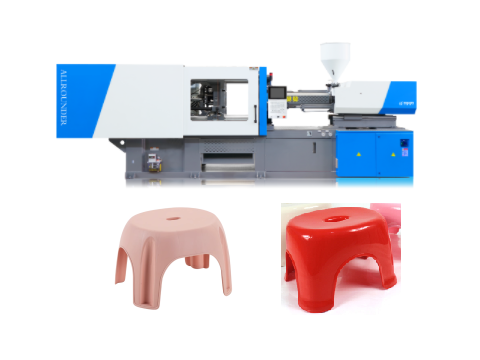
Haichen plastic stool injection molding machine
Above all, the injection molding machine for plastic stools is an efficient and precise manufacturing equipment. It widely uses in the production of various plastic products.
Haichen is one of the manufacturers of plastic injection molding machines in Ningbo, China. It has produced high-grade plastic molding machines for over ten years. We will select and optimize the comprehensive consideration of mold design, injection molding process parameter optimization, equipment selection, automation control, and maintenance strategies. By adopting advanced design and control technology, we can help our clients improve the production efficiency and product quality of plastic stools.