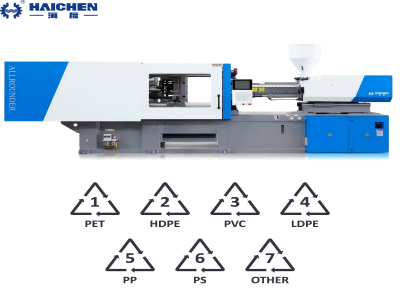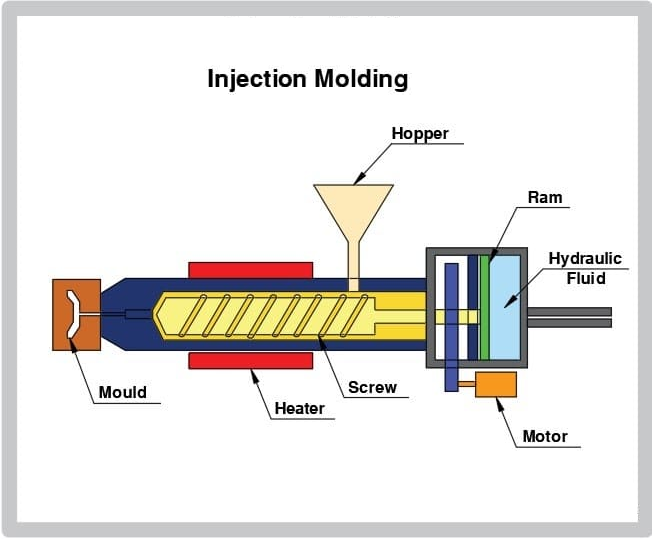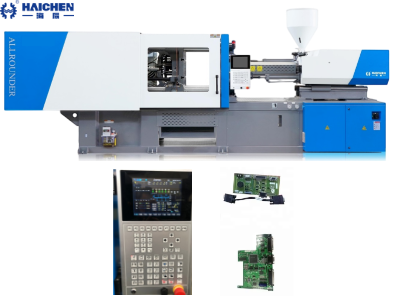
The PP plastic clothes peg injection molding manufacturing process can be roughly divided into raw material preparation, drying, plasticizing, injection, pressure holding, cooling, ejection and post-processing.
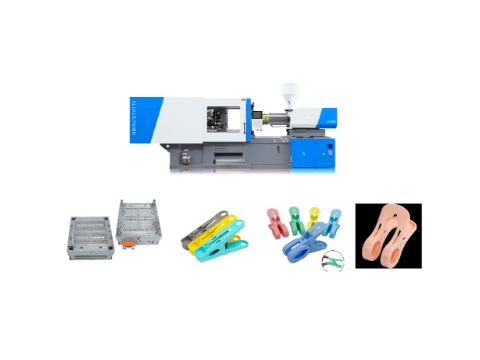
A clothespin (Us English), clothes-peg (UK English) or peg (AU English) is a fastener used to hang up clothes for drying, usuay on a clothes line.Clothespins often come in many different designs.
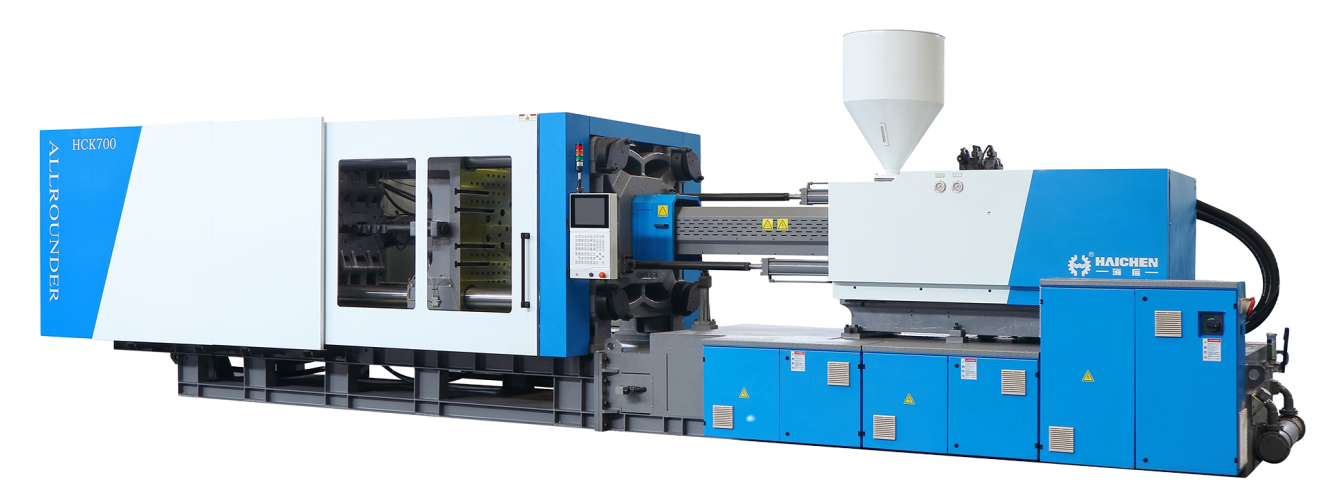
Haichen has been selling affordable plastic clothes peg injection molding machines to customers worldwide. We offer a wide variety of injection molding machines to meet your individual needs. We provide comprehensive global technical support, so please feel free to contact us if you require any of our services.
Polypropylene (PP) Clothespin Injection Molding Manufacturing Process
- Raw Material Preparation and Drying
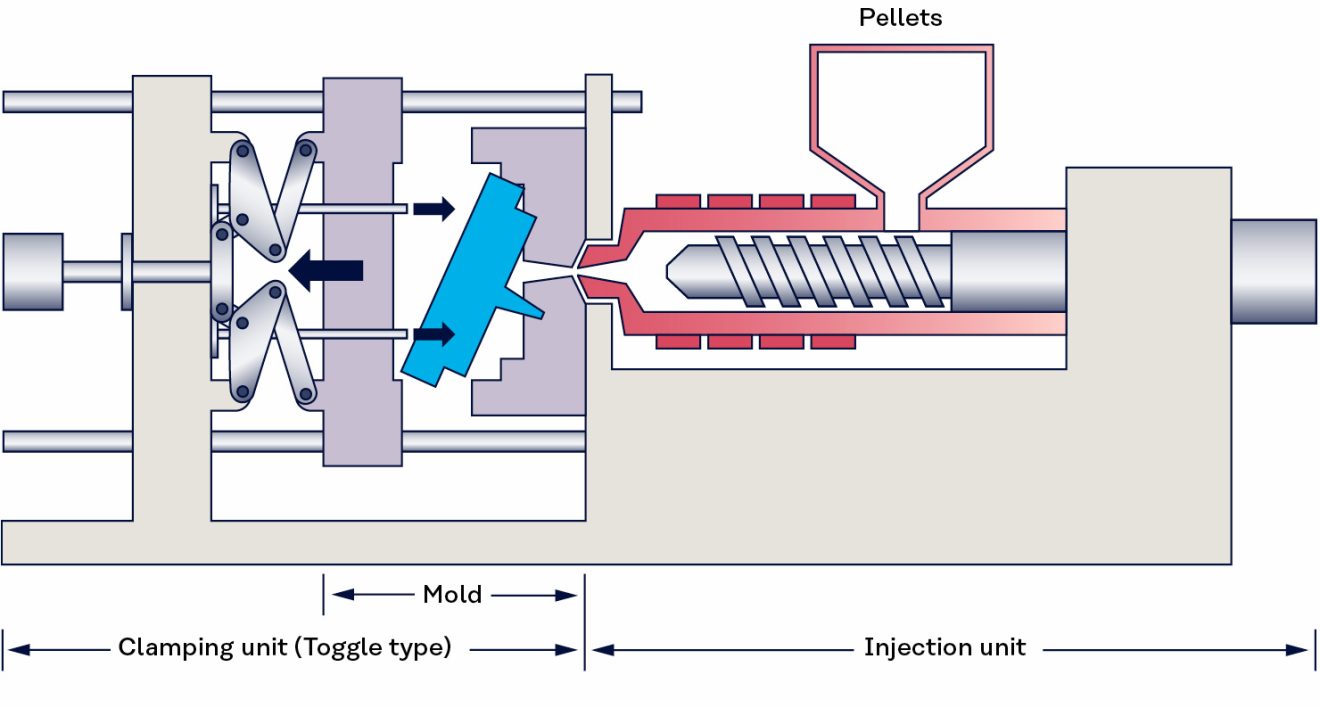
- Plasticization and Injection
- Mold Filling and Packing
- Cooling and Ejection
- Post-Processing and Quality Control
Raw Material Preparation and Drying
- Material Selection: Polypropylene (PP) granules or powder are used as the primary raw material. Select resin grades with appropriate melt flow index (MFI) based on product requirements (e.g., toughness, heat resistance).
- Drying: Dry PP at 80–100°C for 2–4 hours to reduce moisture content to ≤0.05%, preventing bubbles or silver streaks during molding.
Plasticization and Injection
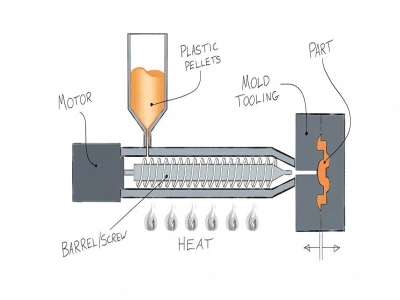
- Temperature Control:
- Rear Barrel Zone: 160–180°C (pre-plasticization)
- Middle Barrel Zone: 180–200°C (melting)
- Front Barrel Zone: 200–220°C (homogenization)
- Nozzle Temperature: 200–280°C (prevents cold slug blockage).
- Screw Parameters: Compression ratio 2:1–3:1, screw speed 20–60 rpm. Shear heat enhances melt flowability.
- Injection Pressure: 40–70 MPa ensures complete filling of complex structures (e.g., clothespin spring hooks).
Mold Filling and Packing
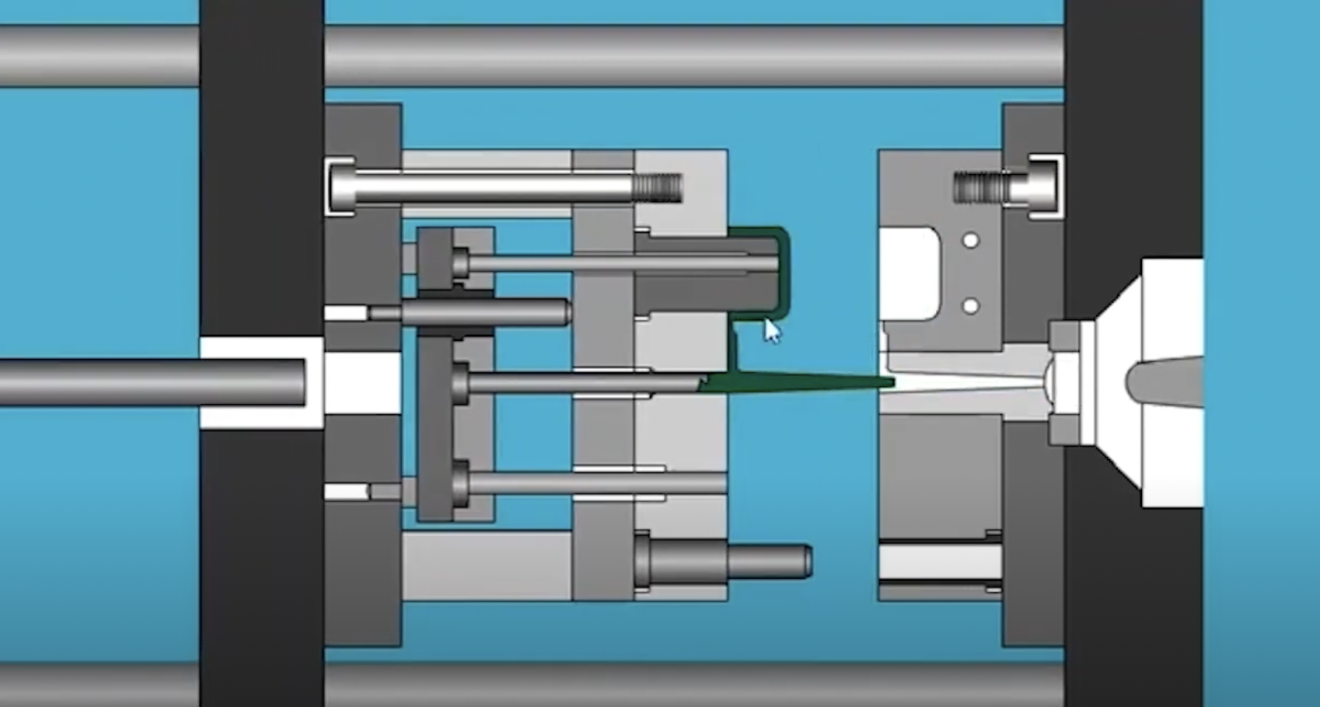
- Filling Control: Use multi-stage injection speeds (e.g., slow-fast-slow) to avoid jetting and surface flow marks.
- Packing Phase: Maintain packing pressure at 100–120% of injection pressure for 20–60 seconds (extend 5–10 seconds per 1 mm wall thickness) to compensate for shrinkage and improve dimensional stability.
Cooling and Ejection
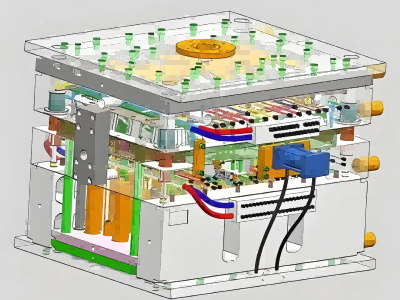
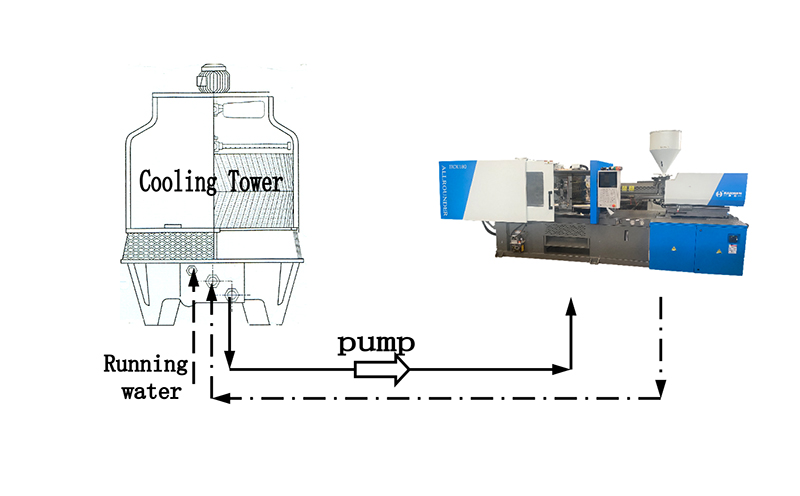
- Mold Temperature: 60–80°C. Temperature difference between core and cavity ≤5°C minimizes warpage from internal stress.
- Cooling Time: 20–60 seconds. Use conformal cooling channels to accelerate heat dissipation.
- Ejection Design: Balanced ejector pins or robotic systems prevent deformation of slender clothespin parts.
Post-Processing and Quality Control
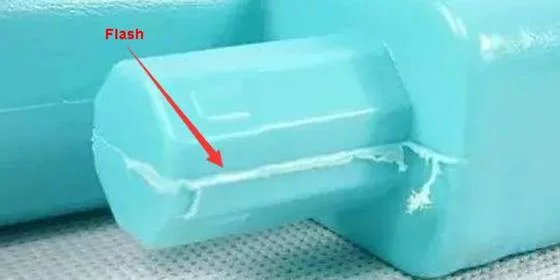
- Deburring: Trim gates and flash for smooth edges.
- Surface Treatment: Apply water-based coatings (e.g., UV paint) and dry at 60–80°C for 15 minutes.
- Quality Standards:
- Dimensional Tolerance: ±0.1–0.3 mm (varies by clothespin size).
- Mechanical Properties: Tensile strength ≥30 MPa, clamping force ≥5 N.
- Visual Inspection: No sink marks, bubbles, or short shots.
Key Process Optimization
- Shrinkage Control:
- Increase packing pressure to ≥60 MPa and extend packing time to 60 seconds.
- Design molds with 1.5–2% shrinkage allowance (PP shrinkage rate: 1.0–2.5%).
- Defect Prevention:
- Bubbles/Silver Streaks: Ensure thorough drying and reduce melt temperature (≤220°C).
- Warpage: Optimize cooling channel layout for uniform mold temperature.
- Mold Design:
- Gate Type: Prioritize pin-point gates (diameter 0.5–1 mm) to minimize shear heat.
- Runner Design: Balanced runners (4–7 mm diameter) reduce filling time.
Environmental and Waste Management
- Exhaust Treatment: Activated carbon adsorption systems reduce VOC emissions.
- Wastewater Recycling: Coolant and coating wastewater are filtered and reused.
- Material Recycling: Regrind sprues and rejects (≤10% blend with virgin material).
Production Case Studies
- Case 1: Haichen HCK310 plastic clothes peg injection molding reduced cycle time to 40 seconds per clothespin using multi-stage injection (“fast-slow-fast” speed profile), achieving 98% yield.
- Case 2: Optimized parameters (barrel temperature 260°C, injection pressure 127.6 MPa) increased PP clothespin tensile strength to 120 MPa, 20% higher than standard processes.
Note: Parameters should be fine-tuned based on equipment and mold specifics. Mold flow analysis is recommended to simulate filling and optimize production efficiency.
Haichen plastic clothes peg injection molding case
Haichen Injection Molding Technology: Empowering Efficient and Intelligent Clothespin Manufacturing
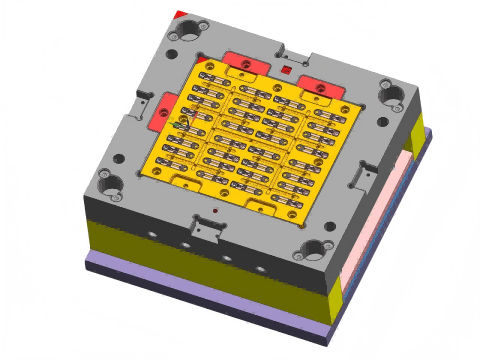
As a pioneer in injection molding innovation, Haichen delivers high-efficiency, energy-saving, and precision-driven solutions for global clothespin production through our advanced E-Series injection molding machines and intelligent manufacturing systems. Here are our core strengths and technical highlights:
- Smart Equipment: Precision-Tuned for Clothespin Production
- End-to-End Automation: Streamlined Cost and Labor Savings
- Material Versatility: From Traditional to Eco-Friendly
- Mold Technology: Precision + Durability
- Global Support: End-to-End Partnership
Smart Equipment: Precision-Tuned for Clothespin Production
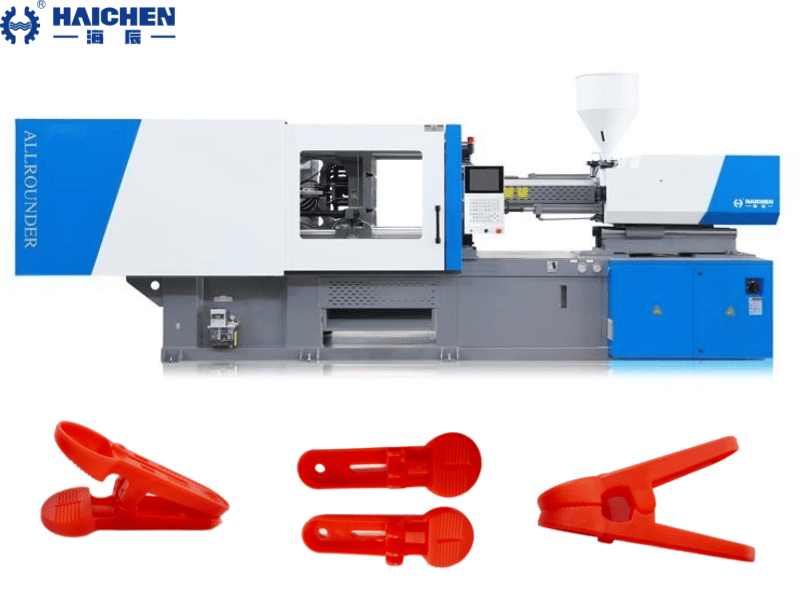
Our E-Series Machines (e.g., HCE100/HCE120) are optimized for small plastic items like clothespins, offering:
- Flexible Adaptability: Clamping force from 110 to 1200 tons, tailored to diverse clothespin specifications.
- Energy Efficiency: Servo-driven systems reduce energy consumption by up to 70% while boosting production speed by 15%+.
- Ultra-Precise Control: Multi-stage injection pressure/speed adjustments ensure zero flash, zero short shots, and >99% yield rate.
End-to-End Automation: Streamlined Cost and Labor Savings
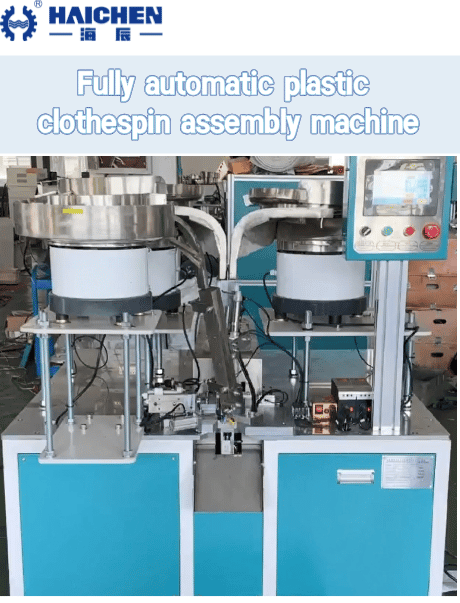
Haichen’s integrated automation enables seamless, “lights-out” clothespin production:
- Smart Mold Management: Auto-adjustable mold-opening stroke and speed via electronic sensors, cutting mold change time by 30%.
- Automated Post-Processing: Robotic arms handle part removal and precision cutting, enhancing throughput by 20%.
- Real-Time Quality Assurance: Infrared inspection monitors dimensions and surface quality, achieving near-zero defect rates.
Material Versatility: From Traditional to Eco-Friendly
We support all materials, including biodegradable alternatives:
- PP/PE: Guided drying protocols (e.g., PP pre-dried at 110°C) ensure optimal flow.
- PLA/PBAT: Corrosion-resistant screws and chrome-plated barrels with precise melt temperature control (130–190°C) for eco-friendly materials.
- Recycled Plastics: Custom screw compression ratios and backpressure settings enable stable high-recyclate production.
Mold Technology: Precision + Durability
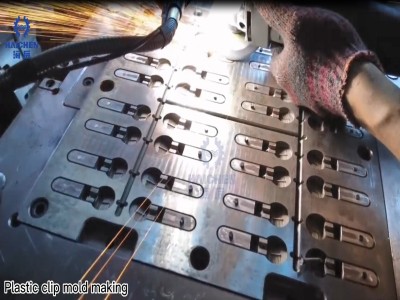
Haichen’s proprietary mold cooling optimization and FEA-reinforced designs deliver:
- Rapid Cooling: Water-channel systems reduce cycle time to <60 seconds (referenced from bowl production cases).
- Extended Lifespan: Dual-column balanced injection + hardened cavities boost mold longevity by 50%.
- Fast Iteration: 3D mold flow analysis services optimize clothespin mold designs in 10 days.
Global Support: End-to-End Partnership
We provide one-stop solutions:
✅ Pre-Sales Consultation: Free feasibility analysis and cost modeling.
✅ Custom Development: Collaborate with 30+ global mold partners for 15-day mold delivery.
✅ 24/7 After-Sales: On-site engineer dispatch within 48 hours and lifetime maintenance.
Success Stories: Haichen’s E-Series machines have empowered clients in clothespin, tableware, and household goods production to achieve 100,000+ daily outputs and 25% cost reduction.
Contact Haichen Today for Your Custom Clothespin Solution!