What are the raw materials for making ballpoint pens?
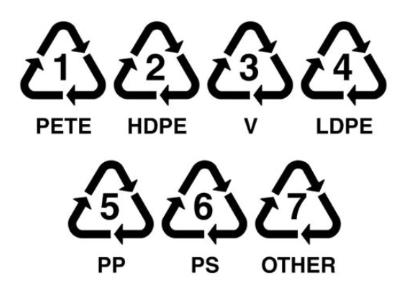
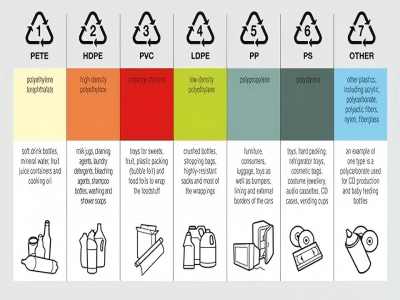
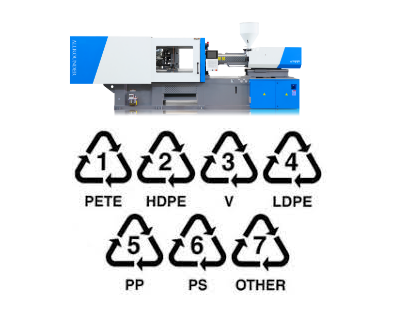
The raw materials required for ballpoint pen production mainly include the following types:
- Polypropylene (PP)
- Polyethylene (PE)
- Polyvinyl chloride (PVC)
- Polystyrene (PS)
- Polycarbonate (PC)
We introduce how do you make pens, now we write an article on raw materials for making ballpoint pens.
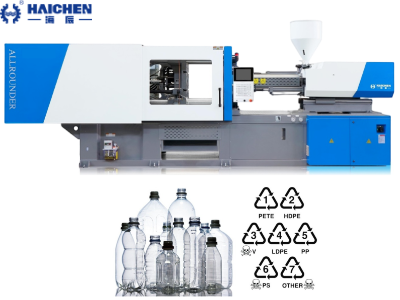
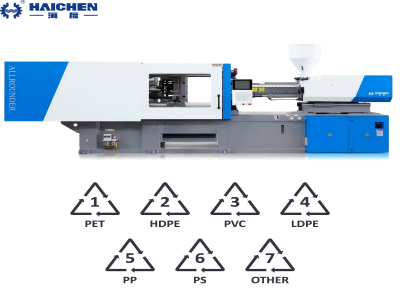
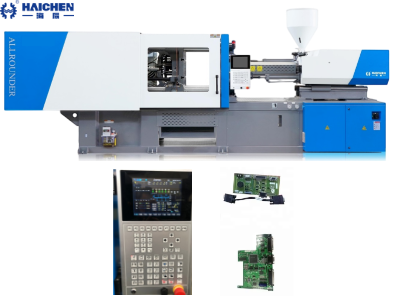
Our Haichen machinery is a professional injection molding machine factory located in Ningbo City which is one of the most important production bases in China. Haichen Machinery can offer professional technical support for pen making.
Polypropylene (PP):
Polypropylene is a common general-purpose plastic with good mechanical properties and heat resistance, commonly used in the manufacture of various pen parts products. Like ballpoint pen tube and pen cap.
Features for Polypropylene (PP)
1. Low density: The density of PP is only 0.89-0.91g/cm³, which is one of the lightest varieties of all plastics.
2. Good chemical stability: PP has good chemical stability, can resist the erosion of most acids, alkalis, salts, and organic solvents, and is not easy to react chemically. However, strong acids and water will corrode PP and cause it to swell.
3. Heat resistance: PP has good heat resistance can be used at around 100℃, and can withstand high temperatures of up to 230℃ for a short time. But below the freezing point, PP becomes very fragile and easy to break.
4. Mechanical properties: PP has higher strength, stiffness, and hardness, which is better than low-pressure polyethylene. It has greater tensile strength and high impact strength, but its strength will decrease after moisture absorption.
5. Electrical properties and insulation: PP has good electrical properties and high-frequency insulation, and is not affected by humidity.
6. Low water absorption: PP is particularly stable in water, and its water absorption in water is only 0.01%.
7. Molding processability: PP has good molding processability, but poor heat sealing performance, and is usually used for composite materials. Its molding temperature range is 160-220℃, and the mold temperature is recommended to be 40-80℃.
8. Crystallinity: PP is a semi-crystalline polymer, and the degree of crystallization is mainly determined by the mold temperature.
9. Wide application: Due to its excellent comprehensive performance, PP is widely used in food packaging, medical equipment, the automotive industry, machinery manufacturing, and other fields.
10. Environmental protection: PP is a non-toxic, tasteless, and odorless material that meets environmental protection requirements.
PP is A thermoplastic resin made by polymerizing propylene monomers. Its main component is propylene, and it usually contains a small amount of ethylene copolymer. PP is non-toxic, odorless, and tasteless, and is a highly crystalline milky white solid.
Polyethylene (PE):
Polyethylene with good chemical resistance and low temperature resistance, is commonly used in the manufacture of injection molded pen parts.
Features for Polyethylene (PE)
1. Physical properties:
Density: The density of polyethylene is low, usually between 0.91 and 0.97 g/cm³, depending on its type and manufacturing method.
Color and form: Polyethylene is usually a milky white waxy solid or translucent granules, and feels like wax.
Mechanical properties: Polyethylene has good flexibility and elongation, but its mechanical strength, stiffness, and hardness are low.
Water absorption: Polyethylene has low water absorption and is insoluble in general solvents at room temperature.
2. Chemical properties:
Chemical resistance: Polyethylene has good chemical stability and can withstand corrosion from most acids and alkalis, but is not resistant to oxidizing acids.
Low-temperature resistance: Polyethylene has excellent low-temperature resistance, and the lowest operating temperature can reach -70℃ to -100℃.
Electrical insulation: Polyethylene has excellent electrical insulation properties, especially at high frequencies.
Polyvinyl chloride (PVC):
Polyvinyl chloride is an engineering plastic with good chemical and heat resistance, commonly used in the manufacture of ball pen plastic parts.
Features for Polyvinyl chloride (PVC)
1. Chemical resistance: PVC is highly resistant to oxidants, reducing agents, and strong acids, but not to concentrated sulfuric acid and nitric acid.
2. Electrical insulation: PVC has good electrical insulation, but its electrical properties vary depending on the amount of residues in the polymer and the heat exposure.
3. Heat and cold resistance: PVC has poor heat resistance and is easily decomposed at high temperatures, producing acidic gases that corrode the mold. At the same time, hard PVC becomes brittle at low temperatures, while soft PVC becomes hard.
4. Processing performance: PVC has good processing performance and can be made into various products through processes such as mixing, calendering, and vacuum forming. However, its fluidity is poor, and the molding temperature is close to the decomposition temperature, which is prone to defects during processing.
5. Cost-effectiveness: PVC is an inexpensive material with a wide range of applications. It is one of the five general-purpose synthetic resins.
6. Weather resistance and water resistance: PVC has good weather resistance and water resistance, and is suitable for residential construction, civil engineering, and factory equipment.
7. Flame retardancy: PVC has certain flame retardancy and is not flammable.
8. Lightweight and heat insulation: PVC material is lightweight and has good heat insulation performance, suitable for building decoration.
9. Decorativeness: PVC material has a variety of specifications, colors, and patterns, and is very decorative. It can be used for the decoration of indoor walls and ceilings.
10. Non-conductivity: PVC is non-conductive and is not affected by electrolysis and current erosion, so it does not require secondary production and processing.
11. Chemical resistance: PVC has a good tolerance to a variety of chemicals.
12. Processing additives: By adding different additives, PVC materials can present different physical and mechanical properties. For example, adding plasticizers can improve its softness and processing performance.
Polystyrene (PS):
Polystyrene with good transparency and mechanical properties, is used in the production of pen shells and precision ball pen parts. Like the barrel of ball pens.
Features for Polystyrene (PS)
1. Transparency: PS has extremely high transparency, with a light transmittance of 88%-92%. This transparency makes it very popular in packaging and optical applications.
2. Rigidity and hardness: PS is a rigid material with good dimensional stability and hardness. However, ordinary PS is also brittle and easy to break.
3. Processing performance: PS has good fluidity and is easy to mold, such as injection molding, extrusion and blow molding. Its water absorption rate is low (less than 0.2%), which makes it less likely to absorb moisture during processing.
4. Electrical insulation performance: PS has good electrical insulation properties and is suitable for electronic and electrical applications.
5. Chemical resistance: PS has good chemical resistance to aqueous solutions, but has limited resistance to certain solvents (such as chloroform, dichloromethane, etc.).
6. Thermal properties: PS has good thermal stability, with a softening temperature of about 80°C and a thermal decomposition temperature of above 300°C. Nevertheless, PS has poor heat resistance, and its mechanical properties will drop significantly at high temperatures.
7. Density and weight: PS has a density of about 1.05 g/cm³, which is a lightweight material. This makes it very useful in making lightweight foam plastics.
8. Environmental protection and recycling: PS is a recyclable material, but its recycling process is not always economically feasible. In addition, some additives (such as flame retardants, foaming agents, etc.) may be harmful to the environment and human health.
9. Wide application: PS is widely used in food packaging, electronic equipment, building insulation materials, medical equipment, toys, and other fields.
Polycarbonate (PC):
Polycarbonate is an engineering plastic with excellent mechanical properties and heat resistance, used in ballpoint pen manufacture.
Features for Polycarbonate (PC)
1. Heat and low-temperature resistance: PC has good heat and low-temperature resistance and can maintain its physical properties in a wide temperature range, from -40°F to 280°F (-40°C to 138°C).
2. High impact strength: PC has one of the highest impact strengths among all thermoplastics, which makes it very popular in engineering applications.
3. Transparency: PC has extremely high transparency, with a light transmittance of more than 90%, making it the only material with good transparency among the five major general engineering plastics.
4. Mechanical properties: PC has excellent mechanical properties, including high tensile strength, flexural strength, and compressive strength, as well as low creep and high dimensional stability.
5. Electrical insulation and corrosion resistance: PC has good electrical insulation and corrosion resistance, making it widely used in the electrical and electronic industries.
6. Chemical resistance: PC has good tolerance to weak acids and weak bases, but is sensitive to strong bases, esters, and aromatic hydrocarbon solvents.
7. Processing characteristics: PC has a wide processing temperature range, the molding temperature is between 230-320℃, and the molding shrinkage is 0.5-0.8%. Due to its high viscosity and poor fluidity, it requires higher injection temperature and pressure.
8. Environmental characteristics: PC is a relatively environmentally friendly material with low toxicity and easy to recycle.
9. Wide application: Due to its excellent comprehensive performance, PC is widely used in medical equipment, automotive parts, lighting equipment, electronic equipment housings, optical lenses, and other fields.
Conclusion
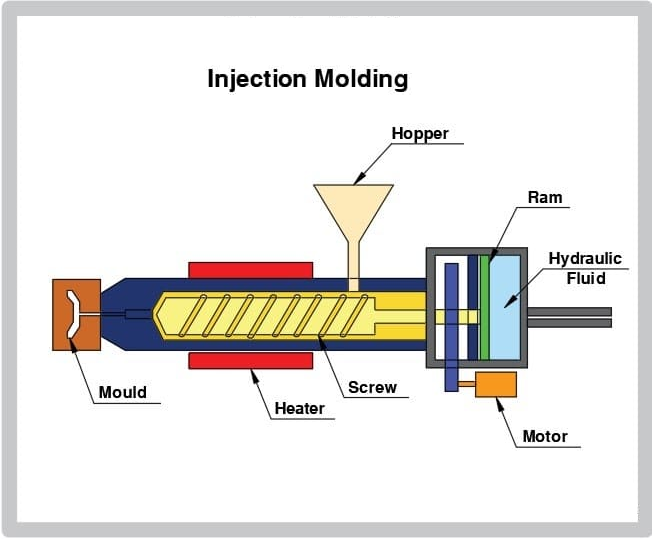
These plastic particle raw materials are processed and mixed to form specific plastic materials, which are then manufactured into the required ballpoint pens through processes such as extrusion and injection molding. Plastic injection molding machine is widely used for making pens, if you are interested in it, please visit our website: https://haichen-machine.com/