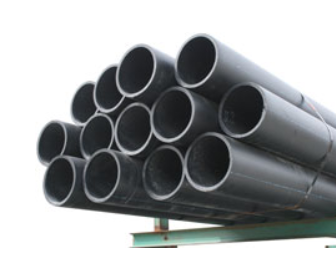
SDR pipe classification, that is, the ratio of the outer diameter to the wall thickness, the smaller the value, the thicker the wall, and the stronger the pressure capacity.
SDR Pipeline Definition
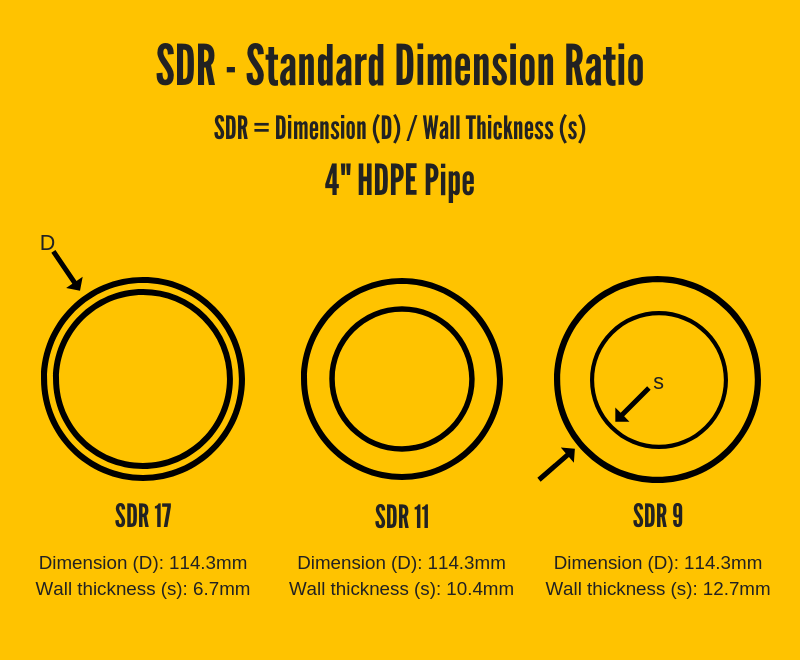
Standard Dimension Ratio (SDR) is the ratio of the outer diameter (OD) of the pipe to the wall thickness (s).
The smaller the SDR value, the larger the wall thickness, the stronger the pressure-bearing capacity, but the flexibility is reduced.
Conversely, the higher the SDR value, the thinner the wall thickness, which is suitable for low-voltage scenarios.
For example, SDR11 means that the outer diameter is 11 times the wall thickness.
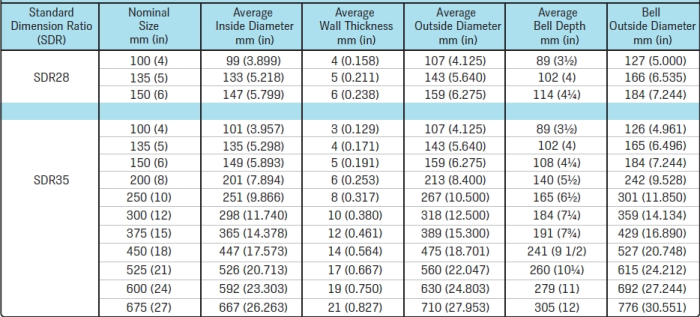
While the wall thickness of SDR35 is only 1/35th of the outer diameter.
SDR pipeline application field
High-pressure scenario (low SDR value)
Gas transmission: SDR11 (1.6 MPa) and SDR9 (2.0 MPa) PE pipelines, suitable for natural gas and liquefied petroleum gas.
Industrial high pressure: SDR6 (PN25) polypropylene (PP) pipes are used for chemical media transportation.
Medium and low voltage scenarios (medium to high SDR values)
Water supply and irrigation: SDR17 (PE) and SDR13.5 (HDPE) are used for agricultural irrigation and urban water supply.
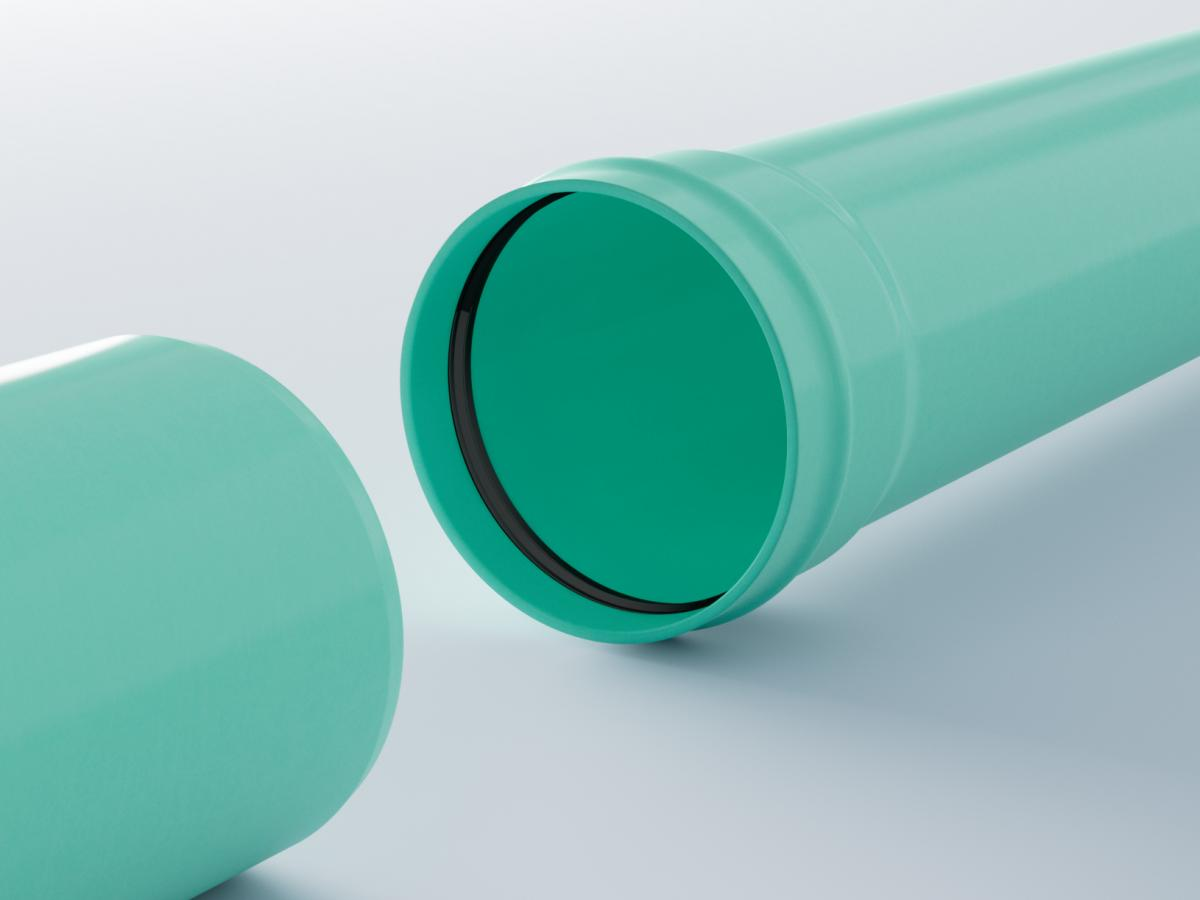
Drainage system: SDR35 (PVC) is used in stormwater drainage and gravity sewage systems, which is chemically resistant and affordable.
Fire & Industrial Processes: Pipes from SDR21 to SDR26 are used for fire protection trunks and industrial fluid transportation.
Special scenes
Geothermal & Embedded
SDR7.4 fiberglass composite pipes are used in geothermal energy systems to achieve both strength and lightweight.
Communications & Cable Protection
HDPE pipes in SDR11 and SDR13.5 are used in fiber optic and cable channels to support directional drilling.
Classification criteria for SDR pipe
Classification Criteria
SDR (Standard Size Ratio) is the ratio of the outer diameter of a pipe to the wall thickness.
And is used to measure the geometry and pressure-bearing capacity of the pipe.
The lower the SDR value, the greater the wall thickness and the higher the pressure.
The higher the SDR value, the smaller the wall thickness, making it suitable for lower pressure applications.
Standard SDR values include 7.4, 9, 11, 13.6, 17, 21, 26, etc., which are commonly used in piping designs for different pressure classes.
SDR pipe classification parameter range
SDR value range
Common SDR values include 7.4, 9, 11, 13.6, 17, 21, 26, etc., or higher or lower SDR values such as 33 and 41.
Wall thickness range
The lower the SDR value, the greater the wall thickness.
For example, SDR 7.4 typically has a wall thickness of more than 10mm, while SDR 26 has a wall thickness of only about 2mm.
Pressure level
Different SDR values correspond to different pressure levels.
For example, SDR 11 is suitable for 1.6 MPa, SDR 17 is suitable for 1.0 MPa, and SDR 26 is suitable for 0.6 MPa.
Applicable scenarios
Low SDR values (such as SDR 11 and SDR 9) are suitable for high-pressure systems.
Such as water supply pipelines), and high SDR values (such as SDR 26.
And SDR 35 are suitable for low-pressure systems (such as sewage pipes).
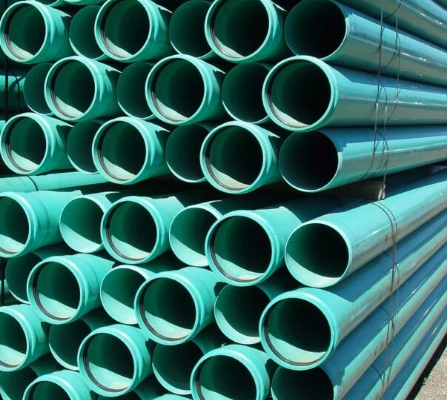
Classification related to SDR piping
Technical standard for polyethylene gas pipeline engineering (CJJ63-2018)
This standard specifies the classification and application of SDR values in detail.
For example, SDR11 and SDR17.6 series are respectively suitable for gas pipelines for different purposes.
Such as artificial gas, natural gas and liquefied petroleum gas, and clarify their maximum allowable working pressure.
Technical specification for trenchless repair and renewal of urban gas pipelines
This specification mentions the importance of SDR value in pipeline rehabilitation and renewal.
and cites the explanation of SDR terminology in the Technical Standard for Polyethylene Gas Pipeline Engineering (CJJ63).
Code for Construction and Acceptance of Urban Gas Transmission and Distribution Projects (CJJ33-2005)
It stipulates the connection methods of polyethylene gas pipelines with different SDR values, such as electric fusion connection.
The standards for buried polyethylene (PE) piping systems for gas
GB15558.1 and GB15558.2 specify the general requirements for PE gas pipes and fittings, including the application of SDR values.
International Standards and ASTM Codes
The ASTM D2241-24 standard specifies the size, performance, and testing requirements for SDR series pressure rated pipes.
Other relevant standards, such as ISO/TS 10839-2000, EN12007, etc., also relate to the application of SDR values in gas pipelines.
SDR value is an important parameter to measure the ratio of outer diameter to wall thickness of pipes.
Which is widely used in the design, manufacture and installation of plastic pipes.
Such as PE and PVC to determine the pressure-bearing capacity and mechanical properties of pipes.