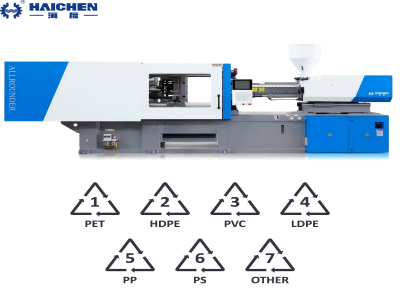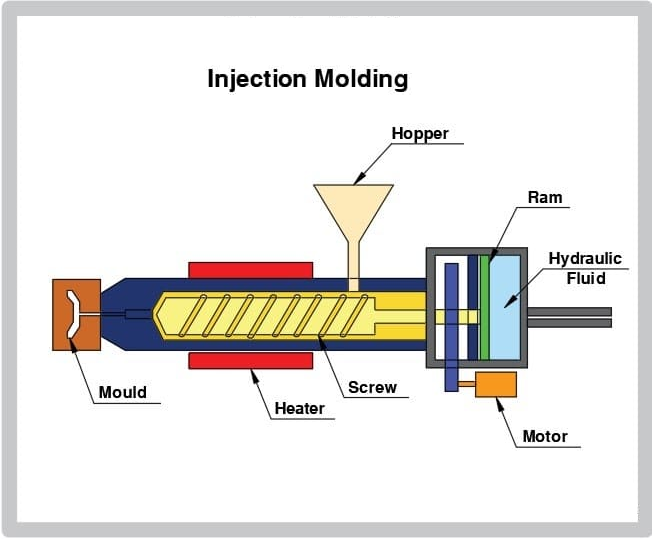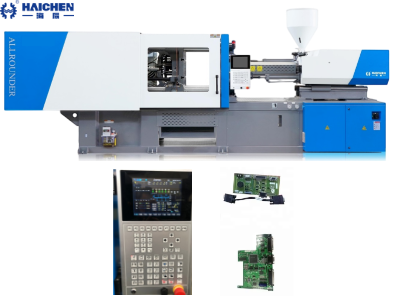
The hot chamber die casting machine has an advanced system structure and is equipped with various automated units, which is the most ideal machine to produce high-quality die casting in enormous quantities.
The hot chamber die casting machine unit of the machine adopts the double toggle connecting rod expanding force unit, ensuring a prompt die opening and die closing action and an excellent die clos ing precision and stability. The thickness of the die casting moulds is adjustable. At the same time, the machine uses the oil motor-driven wheel transmission unit with special emphasis on ease of operation and ensuring an accurate depth of parallelism between the moving platen and the fixed platen.
Advantage of hot chamber die casting machine
- High production efficiency
- Low metal loss
- The high degree of automation
High production efficiency:
There is no need for casting procedures, the process is simple and the production efficiency is high.
Low metal loss:
The molten metal always flows in a closed channel, and oxide inclusions are not easily involved. The molten metal entering the cavity is clean and the casting quality is good.
The high degree of automation:
Simple structure, easy operation, easy-to-realize automated production
Die-closing unit
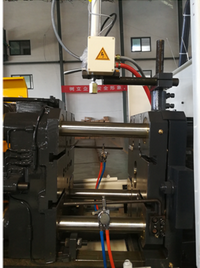
The mold clamping device mainly plays the role of closing and opening the mold, locking the mold, and ejecting the product. It is mainly composed of a fixed mold seat plate, a movable mold seat plate, a tie rod, a mold clamping hydraulic cylinder, an ejection mechanism, a mold adjustment device, a safety door, etc.
The die-closing unit consists of platens, oil cylinders, four tie bar,s and other parts. The action of the moving platen is performed by the piston rod which can drive the toggle unit. As the process of die-closing is carried out from high speed to lower, it is impossible to induce an impact case. The expanding force of the toggle unit, and ultimate die-closing stability, ensure a prompt die-opening and die-closing action.
The adjustment device for the thickness of the die-casting mould is installed on the bed plate of the die-closing cylinder. With this unit, it is easy to adjust the thickness of the die-casting mould and ensure an accurate depth of parallelism between the moving platen and the fixed platen.
The four tie bars are made from alloy steel of high quality, whose surface are processed through quenching and tempering with a coating of hard chrome plating, so it have a very long service life.
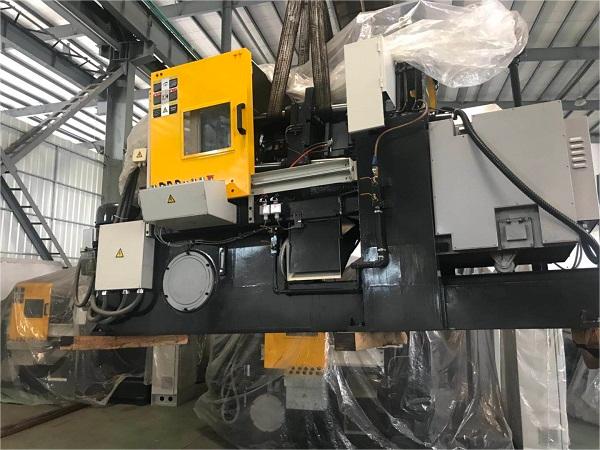
The whole die-closing unit was allocated at a slope bracket, on which was embedded quench hardening steel rail. Adjust the position of the eccentric pouring gate through the tilt oil cylinder. Six cushions with a height of 60mm should be placed under the bracket.
Injection unit
The injection unit of hot chamber die-casting machine has the following characteristics: The die-casing chamber and the piston are immersed into molten metal; The gooseneck kettle is equipped with a layer of steel jacket; A jet pipe is mounted on the mouth of the gooseneck kettle, nozzle is connected closely with the fixed platen; Molten Metal is injected from the gooseneck kettle into the die-casting mould by the vertically-moving piston; When the injection piston returns, the molten metal will return into the gooseneck kettle automatically.
The oil cylinder for injection is installed on the top of the injection bracket. The upper piston rod and lower piston rod are connected through a fitting. The injection piston with piston rings is mounted on the tail end of the lower piston rod.
The gooseneck kettle is made of high-quality corrosion-resistant material and its surface has been processed through special techniques, so it has characteristics of excellent hardness and corrosion resistance. The gooseneck kettle can be removed separately. After removing the block plate, the gooseneck kettle can be drawn out from the injection bracket.
The nozzle is heated by a closed electric heating housing which can avoid the risk of the heating wire short circuit caused by overflowed molten metal and the risk of damage caused by shock.
An independent heating device is mounted on the top of the gooseneck kettle, which can ensure that the channel of the gooseneck kettle is unclogged.
The heating devices for the nozzle and the gooseneck kettle are all fitted with automatic temperature-control units. Because the injection piston rings are operating under the state of high temperature, high speed, and high pressure, replacing them frequently is necessary.
The oil cylinders for tension are mounted on both sides of the injection bracket. Its piston rod is connected to the fixed platen. The oil cylinders for tension enable the die-casting moulds to connect closely to the nozzle. It can also push the die-opening unit backward a long distance to remove the nozzle, heater, and other parts easily.
The complete injection unit is fixed on the machine base bracket, which is a part of the machine base.
Ejection unit for casting
The machine is equipped with a hydraulic ejector with an ejection force of 60kN. Various types of ejection rods can be installed according to actual needs. These ejection rods can be inserted into the moving platen conveniently. The ejection plate in the die-casting mould can be drawn backward through the sliding push plate of the ejector or two haul rods allocated in the sliding push plate. The ejection speed can be determined by adjustment of the throttle. You can set the ejection times in the human-computer interface.
Casting push-off unit
The machine is equipped with a pneumatic push-off unit which is mounted on the fixed platen.
After die-opening and ejection, the push-off unit begins to start. The piston rod with a spade pushes the casting down into the tilted scoop. The push-off distance depends on push-off time which can be set in the human-machine interface.
The push-off rod can be adjusted according to your demand.
Automatic detect unit
The working process of the automatic detect unit is as follows: After the casting is pushed down into the tilted scoop, it moves through the swaying gate and triggers the switch to act responsively. Then the casting is picked up and the next working cycle can proceed. If, by any reason, the casting hasn’t been pushed down timely and can’t be picked up, the machine will stop automatically and give an alarm. These are some of the issues about the structure and operational principle of the machine. If there is more you want to know, please feel free to consult us.
Spraying die-casting molds with lubricant
When it comes to spraying lubricants on die-casting molds, it is recommended to use water-soluble lubricants. Using oily lubricants for die-casting requires caution to prevent fire hazards. Therefore, it is important to choose the appropriate lubricant for die-casting machines. Water-soluble lubricants disperse evenly in water, providing high stability and solubility. They form a protective demolding film on the mold surface, capable of withstanding the high temperatures and pressures involved in the die-casting process. This ensures excellent demolding performance.
For machines operating in semi-automatic or fully automatic modes, automatic spraying of the inner surface of the die-casting mold with lubricant can be implemented after the casting has been picked up. The spraying interval can be adjusted according to user requirements through the human-computer dialog box. The lubricant-painting unit allows for adjustment of the spraying position, while the amount of lubricant applied can also be set through the human-computer dialog box.
Hydraulic pipeline system
There are hydraulic pipeline system
- Working pressure
- Multi-level pressure system and multi-flow control system
- Injection system with accumulator
- The piping system and hydraulic combination plate
- A shut-off valve (CV1) on the injection system hydraulic assembly board
- Testing and maintenance
Working pressure:
Ensure that the working pressure of the hydraulic system is set to 12 MPa (megapascals) as recommended by the machine specifications.
Confirm that the hydraulic components (such as pumps, valves, and cylinders) can withstand this pressure.
Multi-level pressure system and multi-flow control system:
Configure a multi-level pressure system for the hydraulic system. Ensure accurate control of pressure levels at different stages of the die-casting process.
Implement a multi-flow control system to adjust the flow of hydraulic oil according to specific requirements and optimize performance.
Injection system with accumulator:
Install an accumulator in the die-casting machine’s injection system to ensure the stability of the injection force and provide consistent and reliable performance.
Verify that the accumulator is correctly connected to the injection system and that its pressure is set according to the machine specifications.
The piping system and hydraulic combination plate:
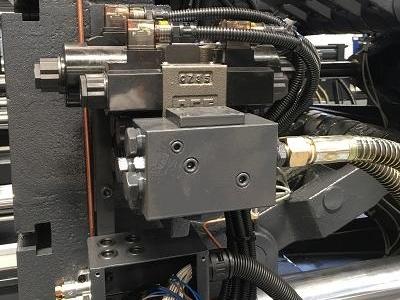
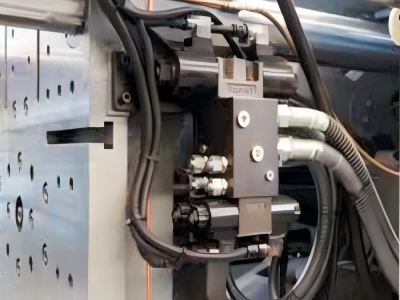
The piping system consists of three hydraulic combination plates: pressure clamping control, injection system, and ejection hydraulic plate.
Install and fix all hydraulic components (such as pumps, valves, filters, and sensors) to their respective hydraulic plates.
A shut-off valve (CV1) on the injection system hydraulic assembly board:
Place a shut-off valve (CV1) on the injection system hydraulic assembly board to provide an additional safety measure.
Make sure the valve is properly connected and operating properly.
When opening the valve, the pressure in the pipeline should be released to zero.
Testing and maintenance:
- Before operating the die casting machine, conduct a comprehensive test of the hydraulic pipe system. Check for any leaks, loose connections, or abnormal pressure readings.
- Routine maintenance of the die casting machine is required, including inspection and replacement of worn seals, filters, and hoses, regular fluid analysis, and system flushing to maintain optimal performance.
Electrical control system:
The electrical control system is responsible for monitoring and controlling the entire die casting process to ensure that each component operates according to the predetermined program
Melting furnace
The die casting machine uses a fully automatic combustion furnace as a smelting device, which can melt metal efficiently and reliably.
Melting furnace components:
The smelting furnace consists of a fully automatic combustion furnace with a power of 0.18KW. When running continuously, the fuel consumption is 6kg/h.
It uses light oil with a viscosity range of 3~6.2mm2/S as fuel, and the designed operating power supply is 220V, 50Hz.
The oil supply system consists of an oil tank, an oil valve, an oil filter, an oil suction device, and an oil pump, which work together to ensure a stable and controllable supply of fuel to the burner.
Oil pump and pressure:
The oil pressure of the pump must be limited to within 0.2Mpa to prevent damage to the pump.
The working pressure of the oil pump is recommended to be within the range of 0.9~1.05Mpa to provide the best fuel delivery for the burner and achieve efficient smelting.
Burner usage procedure:
Open the oil valve, turn on the power, and the burner starts to run.
If the burner fails to start, press the reset button.
If it still fails to burn after 10 seconds or more, the controller will automatically stop running and the red fault indicator light will light up.
After three minutes, press the reset button again and the red light will go out. Then the burner starts to work automatically.
If the burner still cannot be started after multiple attempts, professional maintenance personnel should be asked to check and repair it.
Maintenance precautions
Make sure to use clean light diesel oil and clean the fuel tank regularly.
Make sure the burner is away from flammable and explosive items.
The oil filter should be cleaned or replaced regularly.
When adjusting the oil pressure, a pressure gauge must be used to measure the pressure. The pressure of the oil pump is not allowed to exceed 2Mpa.
The nozzle should be cleaned and cleaned with compressed air regularly. The injector must be replaced after one year of use.
Check the photoelectric detector and ignition electrode regularly and remove oil stains.
Temperature control and thermocouple:
The furnace has a temperature control function that can automatically adjust the temperature of the metal in the crucible.
Thermocouples and automatic temperature regulators are used to accurately monitor and control the temperature.
The thermostatic control system uses an electronic regulator to start the heater circuit and monitor the temperature.
Once the desired temperature is reached, the electronic regulator automatically turns off the heater. If the temperature exceeds the allowable range, the regulator will resume operation and restart the heater to maintain the desired temperature level.
Compact design and convenient maintenance:
The furnace uses a new type of insulation material, which makes the furnace more compact without affecting performance.
Rollers are installed at the bottom of the furnace for easy maintenance and replacement of crucibles. Loosen two fastening screws to move along the track.
To ensure ventilation and prevent smoke backflow, the furnace chimney should extend to the outdoors with the chimney mouth facing upwards.
Protective coating and safety precautions:
Applying a protective coating made of chalk powder, zinc oxide, and water on the inner surface of the crucible and the outer surface of the gooseneck pot can extend their service life.
During the operation of the furnace, it is essential to keep the furnace cover closed to prevent fire hazards and ensure safe operation.
Guard gate
In order to ensure the safety of the operator and prevent accidents in the die casting machine, a protective door is installed in the mold closing unit.
Function of the protective door:
The main function of the protective door is to create a physical barrier between the operator and the mold-closing device to prevent direct contact with the molten metal during the injection process.
The protective door is designed to be sturdy and heat-resistant, capable of withstanding high temperatures and high pressures in die-casting operations.
Operation of the protective door:
The protective door is integrated into the control system of the machine and interlocked with the automatic working program.
Injection operation is not possible unless the protective door is firmly closed. This safety feature ensures that the operator is fully protected before the machine starts the injection process.
If the protective door is open or not closed correctly, the automatic working program will stop and the injection operation will not be performed. This prevents any potential accidents or injuries that may occur when the protective door is not in the correct position.
The control mechanism of the protective door:
The control of the protective door mainly relies on the travel switch located at a strategic position inside the die casting machine.
The travel switch is a mechanical device that detects the position of the protective door. They are designed to perform interlock protection, ensuring that the operation of the machine depends on the correct positioning of the protective door.
When the travel switch detects that the protective door is closed, the machine is allowed to continue the automatic working procedure, including the injection operation.
On the contrary, if the travel switch detects that the protective door is open or not closed correctly, the interlock protection system will prevent the injection operation to ensure the safety of the operator.
Cooling system
Cooling Water System Components:
The cooling water system consists of several basic components, including a chiller, water pipes, and return tanks.
Chillers are used to regulate the temperature of the hydraulic oil, prevent overheating, and maintain optimal viscosity for efficient operation.
The water pipes are responsible for circulating cooling water throughout the machine, facilitating heat transfer to the hydraulic system and die casting molds.
The return tank serves as a collection point for used cooling water, allowing proper drainage and preventing any potential problems caused by stagnant or contaminated water.
Cooling Hydraulic Oil:
The hydraulic oil in the die casting machine is subjected to high pressure and high temperature during operation. Cooling this oil is essential to maintain its performance and extend its service life.
The chiller components within the cooling water system effectively remove excess heat from the hydraulic oil, ensuring that it remains within the recommended operating temperature range.
By cooling the hydraulic oil, the lubrication effect of the machine is improved, the wear of parts is reduced, and the overall system efficiency is improved.
Cooling the die casting mold:
The die casting mold is subjected to high temperatures during the casting process and requires effective cooling to solidify the molten metal and facilitate the timely removal of the finished product.
The cooling water system plays a vital role in heat dissipation from the mold, which can promote faster and more uniform cooling.
The water pipe delivers cooling water to the mold, absorbs heat from the mold surface and regulates the temperature to ensure that the injected metal solidifies correctly.
Importance of clean fresh water:
Supplying clean fresh water to the cooling water system is essential to maintain its effectiveness and prevent potential problems.
Impurities such as minerals, sediments, or contaminants can accumulate within the cooling system over time, resulting in reduced cooling efficiency and possible damage to the machine.
Regularly monitoring the quality of cooling water and providing a clean fresh water source can help prevent blockages, corrosion, and other problems that may affect the cooling performance and overall function of the die casting machine.
Lubrication system
The die casting machine uses a reliable central oil lubrication system to ensure the best performance and service life of its various components.
Central Oil Lubrication:
The die casting machine uses a central oil lubrication system to effectively distribute lubricant to key components to minimize friction, reduce wear, and maintain smooth operation.
This centralized approach ensures consistent and precise lubrication, thereby improving the overall performance and reliability of the machine.
It is necessary to ensure that the lubricant used in the system is clean and free of contaminants to prevent potential damage to machine components and maintain the required lubrication performance.
Recommended Lubricant:
For best results, 46# anti-wear hydraulic oil is recommended as a lubricant for the die casting machine.
It is critical not to replace the recommended oil with other types or grades of lubricants, as they may not provide the necessary lubrication performance or compatibility with the machine’s lubrication system.
Replacing the recommended 46# anti-wear hydraulic oil with other lubricants may cause clogging of the lubrication device, thereby affecting the effectiveness of the lubrication system and causing operating problems.
Lubrication Interval:
The lubrication interval determines the frequency of the lubrication cycle and can be easily set and adjusted through the die casting machine’s user-friendly human-machine interface.
It is very important to establish a suitable lubrication interval based on specific operating requirements and environmental conditions.
Regular lubrication ensures that all key components are fully lubricated, reducing friction and extending their service life
Conclusion
Haichen hot chamber die casting machine has been designed by the Chinese national standard of JB/T8083 2000 Die casting machines Basic parameters ). Its technical performance complies with JB/T 6309.3 2005 Hot chamber diecastin g machine Part 3: Technical requirements ) and JB 6309.2 2005 Hot chamber diecasting machine Part 2: Testing of the accuracy ). It meets related requirements of GB 20906 2007 standard ( Safety requirements for high-pressure metal diecasting units ) in safety and of GB 5226.1- 2002/IEC60204-1:2000 ( Safety of machinery Electrical equipment of machines Part 1: General requirements).