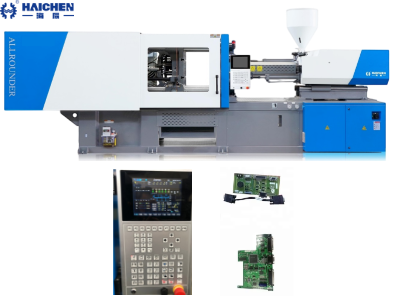
Types of injection mould materials include steel, aluminum, copper, and P20 steel, which can meet different plastic part production needs.
Plastic injection molding technology can manufacture a variety of plastic parts and is widely used in manufacturing production processes.
As a key tool for plastic molding, the material selection of injection molds directly affects part precision, production efficiency and mold life.
The ideal mold material must take into account wear resistance, thermal stability, processing cost and corrosion resistance.
Currently, the mainstream injection mold materials are divided into four categories: steel, aluminum alloy, copper alloy and P20 pre-hardened steel.
These materials provide different performance combinations according to production needs. For example, steel is suitable for high-precision mass production, aluminum alloy is suitable for rapid manufacturing of lightweight parts, copper alloy optimizes heat dissipation efficiency, and P20 steel strikes a balance between cost and performance.
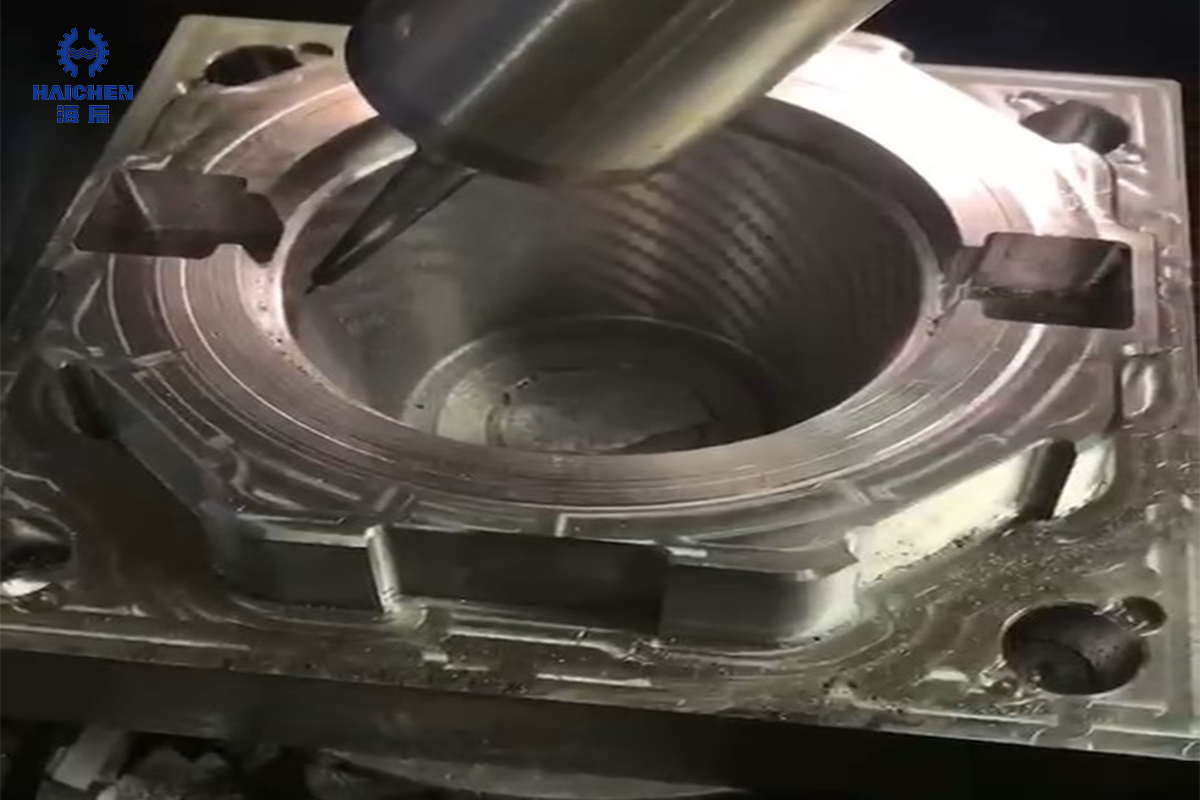
Here are some common types of injection mould materials for plastic injection moulds:
- Steel
- Aluminum
- Copper
- P20 Steel
Steel
Material properties
- Hardness and wear resistance: Tool steel (such as H13) has a hardness of 48-52 HRC, can withstand more than 1 million injection molding cycles, and resist the wear of glass fiber reinforced plastics.
- Thermal stability: Maintain dimensional stability at high temperatures of 300℃ to avoid thermal deformation.
- Surface treatment capabilities: Mirror polishing can reach Ra<0.025μm, meeting the high gloss requirements of medical and optical parts.
Application scenarios
- Automobile/home appliance field: Structural parts molds such as bumpers and shells (material: 718HH alloy steel).
- Precision electronics: Micro connector molds (material: S136 stainless steel, excellent corrosion resistance).
- Mass production: Preferred when the production capacity is >500,000 pieces.
Limitations
- High cost: Material and processing costs are 30-50% higher than aluminum.
- Low cooling efficiency: Thermal conductivity is only 40-50 W/m·K, and the cooling time is 30% longer than that of aluminum molds.
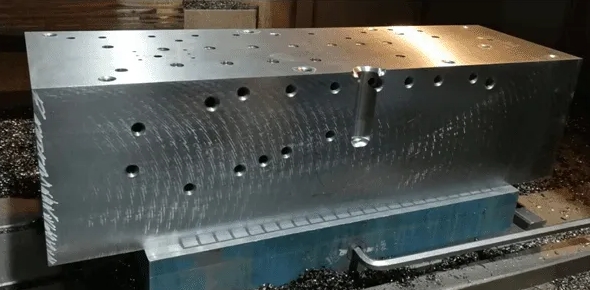
Aluminum
Core advantages
- Excellent thermal management: thermal conductivity 237 W/m·K (5 times that of steel), cooling time shortened by 50%.
- Lightweight and processing efficiency: density is 36% of steel, CNC processing speed is increased by 6 times, and mold delivery cycle is shortened to within 15 days.
- Cost-effectiveness: mold manufacturing cost is 15-30% lower than steel, suitable for small batch orders.
Applicable scenarios
- Prototype verification: trial production of automotive interior parts and consumer electronics housings.
- Short-term production: small and medium batch orders of <10,000 pieces (such as customized daily necessities).
- Complex structural parts: thin-walled parts with frequent design iterations.
Key limitations
- Insufficient wear resistance: glass fiber-containing plastics will accelerate cavity wear, life span <20,000 pieces.
- Not applicable to high temperatures: thermal deformation is prone to occur when the melt temperature is >300℃.
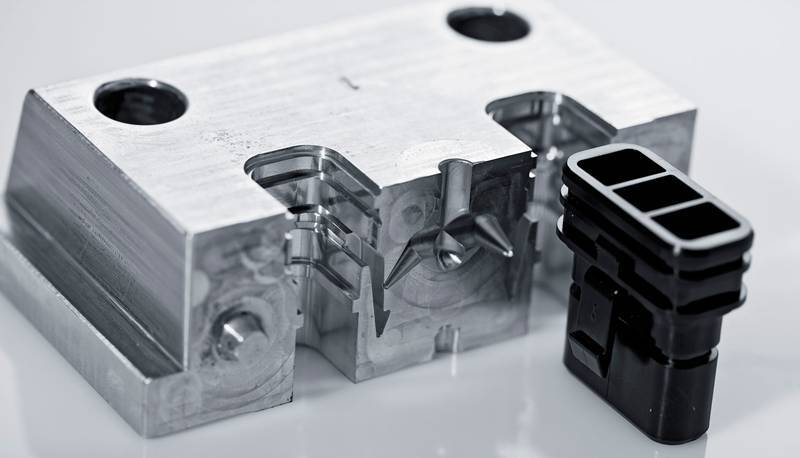
Copper
Core Value
- Extreme thermal conductivity: Pure copper has a thermal conductivity of 401 W/m·K, and its heat dissipation efficiency is 8 times that of steel.
- Precision surface treatment: The surface roughness after polishing is Ra<0.1μm, which improves the finish of plastic parts.
Typical applications
- Local mold enhancement: Beryllium copper inserts are used for mold cores and sliders to solve the cooling bottleneck in high-temperature areas.
- Small precision parts: connectors, optical lens molds (material: Beryllium copper C17200).
Economic considerations
- High material cost: The price of Beryllium copper is 3-5 times that of P20 steel, and it is only used in key parts.
- Processing challenges: Ductility leads to cutting sticking, and special tools are required.
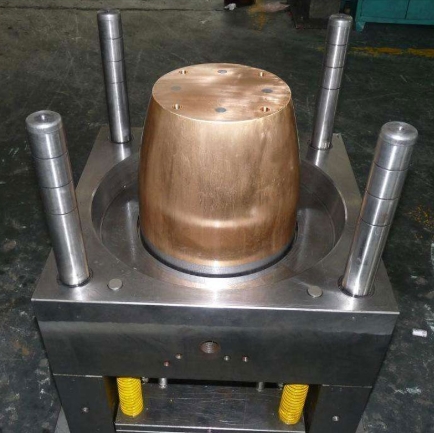
P20 Steel
Performance positioning
- Out of the box: pre-hardened to 30-36 HRC, eliminating the need for heat treatment.
- Overall performance balance:
- Wear resistance is better than aluminum (lifespan 200,000-300,000 pieces)
- Processing cost is 40% lower than tool steel
Mainstream application
- Medium-scale batch production: home appliance housing (TV, washing machine) molds.
- Fast delivery project: 2-4 week delivery cycle (50% shorter than H13 steel).
Material upgrade path
- Surface strengthening: Nitriding treatment increases surface hardness to 60 HRC.
- High gloss requirements: Etching processing achieves matte/textured surface.
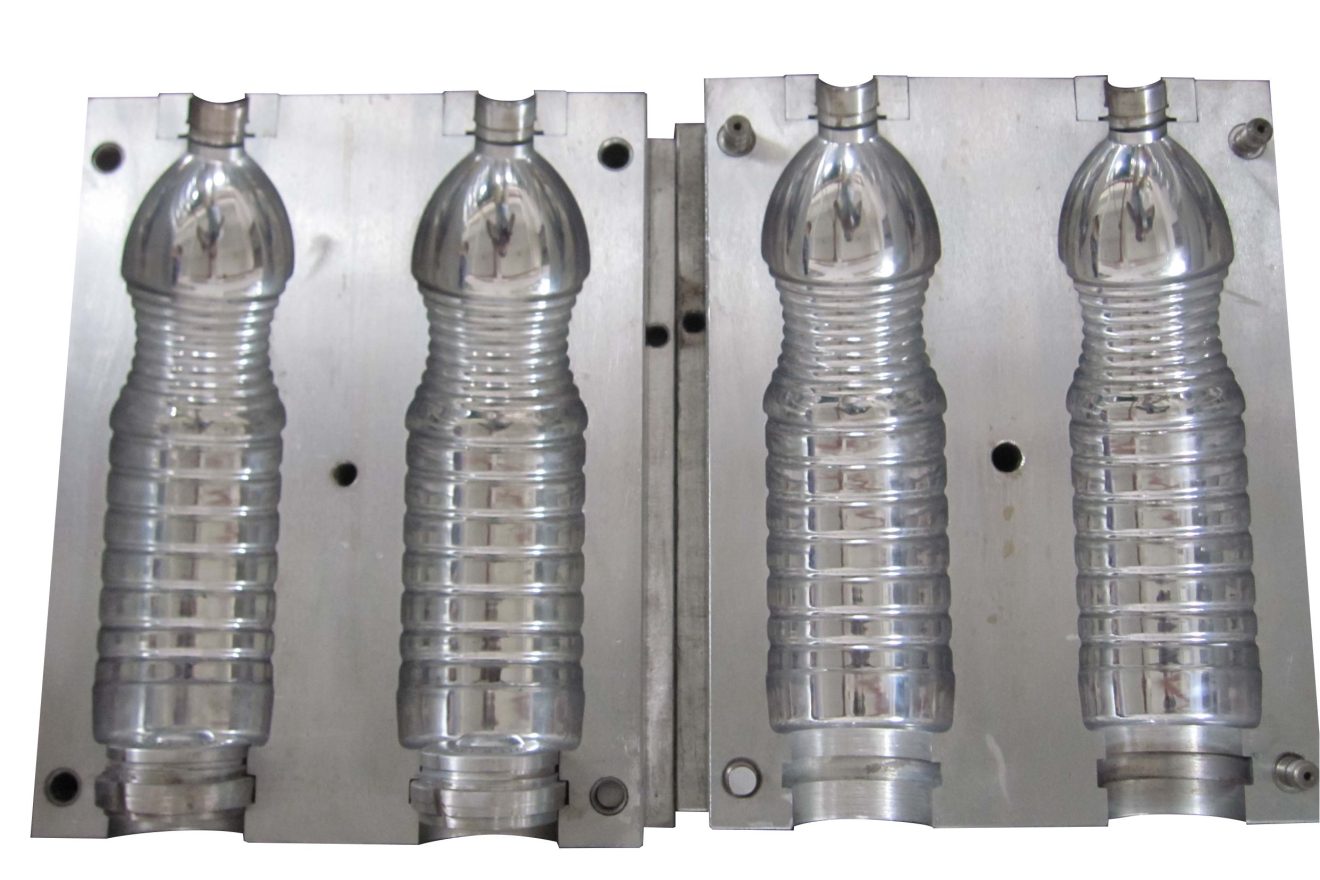
Performance comparison and selection guide of four types of materials
| Performance index | Steel | Aluminum | Copper | P20 steel |
| Thermal conductivity (W/m·K) | 40-50 | 150-237 | 380-401 | 40-45 |
| Mold life (10,000 pieces) | >50 | <2 5-10 (inserts) | 20-30 | |
| Processing cycle | 6-8 weeks | 1-2 weeks | 3-4 weeks | 3-4 weeks |
| Cost index | 1.5-2.0 | 1.0 | 3.0-5.0 | 1.2-1.5 |
| Best application scenarios | Automotive structural parts | Prototype/small batch | High heat dissipation inserts | Household appliance housing |
Selection decision:
- Production capacity > 100,000 pieces? → Choose steel;
- Require delivery within 2 weeks? → Choose aluminum;
- Existing local overheating? → Add copper inserts;
- Cost sensitive and production capacity < 300,000? → P20 steel.
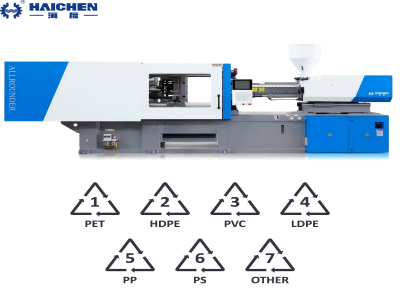
Meet HAICHEN: A Trustworthy Partner for Injection Molding Machines
HAICHEN is a company that specializes in the manufacture of plastic injection molding machines. With advanced technology and years of experience, we can provide a range of injection molding machine models to meet different production needs.
Customers choose our equipment for its precise control, stable and reliable performance and efficient productivity during operation, which together guarantee the high quality of the final plastic parts.
We attach great importance to the Thai market and have established solid cooperative relationships with many local manufacturers, committed to providing them with localized support and services.
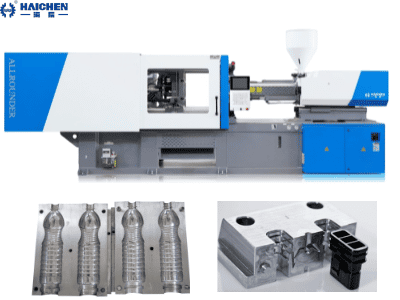
Choosing the right injection mold material can directly improve production results.
For example, steel (such as P20) is strong and wear-resistant, suitable for long-term mass production;
Aluminum alloy is light and has fast heat dissipation, which can shorten the molding cycle of large thin-walled parts;
Copper alloy (such as beryllium copper) has outstanding thermal conductivity and is particularly suitable for precision parts with high cooling efficiency requirements.
Manufacturers match materials according to product requirements, which can simultaneously ensure part quality, mold life and production efficiency.