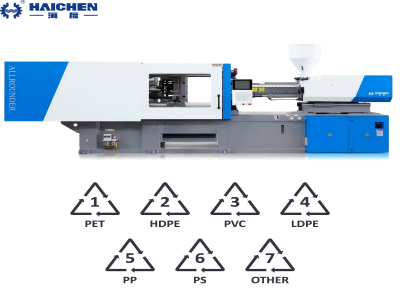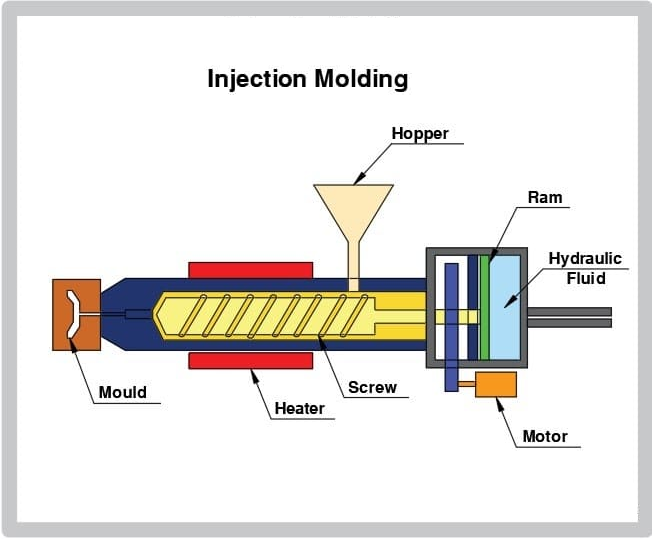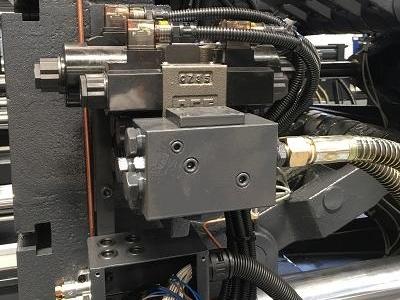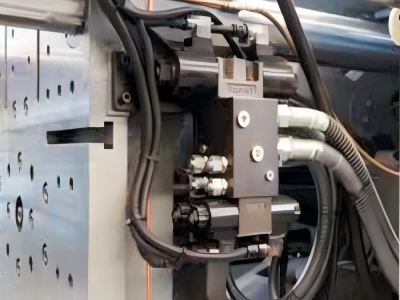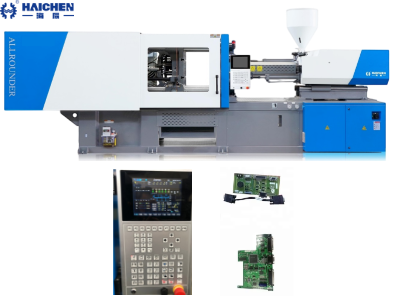
A hydraulic clamping cylinder in injection molding is a critical component that uses hydraulic pressure to securely hold the mold halves together during the injection process, ensuring precise alignment and preventing material leakage while the plastic is injected and solidifies.
During the injection molding process, the hydraulic clamping cylinder directly determines the quality stability of the plastic parts. It is responsible for providing enough pressure to firmly press the two halves of the mold together when the molten plastic is injected into the mold to prevent material leakage or flash.
In addition, at the end of each injection cycle, the hydraulic system must quickly open the mold and cooperate with the ejection mechanism to remove the finished product.
This article will explain in detail the working mechanism of the hydraulic clamping cylinder and its actual role in the production line.
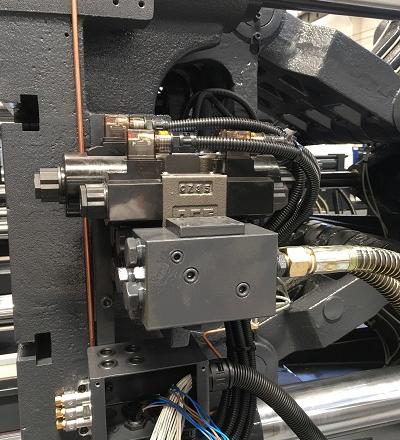
What is a Hydraulic Clamping Cylinder?
The hydraulic clamping cylinder is a key component in the injection molding machine. The operator uses it to apply and maintain the required clamping force to ensure that the mold is always tightly closed during the injection process. This device uses the pressure generated by the hydraulic system to tightly fix the two parts of the mold together. The main purpose of doing this is to prevent the molten plastic from escaping from the gap in the mold, while ensuring that the final molded plastic product can meet the preset quality standards.
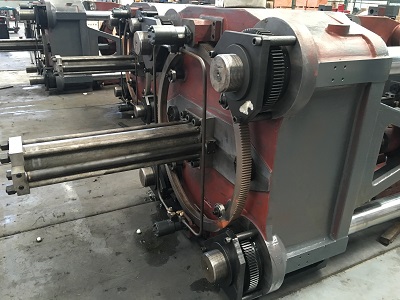
Why is the hydraulic clamping cylinder indispensable?
In injection molding production, the hydraulic clamping cylinder plays a very critical role, which is mainly reflected in three aspects:
- First, it protects the mold itself. During injection molding, the molten plastic will exert a lot of pressure on the mold. The role of the clamping cylinder is to firmly lock the mold, prevent it from being stretched and deformed, and prevent the plastic from leaking out of the gap.
- Secondly, it ensures the stability of product quality. Continuous and uniform clamping force means that the size of each part produced is highly consistent, and the surface is smoother and more beautiful.
- Finally, it directly improves production efficiency. Reliable clamping allows the entire injection molding process to proceed smoothly, greatly reducing the need for downtime due to product defects, and the machine will naturally run more effectively.
How It Works?
When the injection molding process starts, high-pressure oil drives the hydraulic clamping cylinder to work. At this time, the clamping cylinder will quickly generate a strong thrust to tightly close the mold and keep it locked throughout the process. During the entire process of plastic injection and cooling, the clamping cylinder always maintains a stable clamping force and will not release the pressure until the plastic is completely solidified.
Structure and working principle of hydraulic clamping cylinder
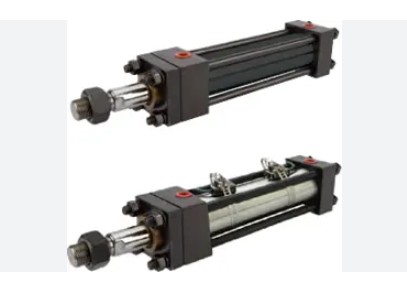
Core components
| Components | Function | Material/design points |
| Cylinder Barrel | Contains piston and hydraulic oil, withstands high pressure | High-strength alloy steel, anti-expansion design |
| Piston | Converts hydraulic energy into linear mechanical force | Surface hardening treatment to reduce wear |
| Seals | Prevent oil leakage and maintain system pressure | Polyurethane or rubber material, resistant to high temperature and high pressure |
| Guide Sleeve | Ensures linear motion of piston rod and reduces eccentric load | Low friction coefficient material |
Workflow
- Clamping stage: The hydraulic pump presses the oil into the cylinder, pushing the piston to generate tension, and locking the mold through the connecting rod mechanism.
- Pressure holding stage: The sealing system maintains constant pressure to resist the expansion force of the molten plastic.
- Reset stage: After the pressure is released, the spring pushes the piston back to its original position and the mold is released.
Comparison of hydraulic vs. mechanical/electric clamping systems
| Characteristics | Hydraulic clamping cylinder | Mechanical | Electric |
| Clamping force | High (up to thousands of tons) | Medium-low, dependent on bolt lever | Medium, limited by motor power |
| Accuracy | ±1% Clamping force control | Highly affected by wear | Depends on servo system, high cost |
| Response speed | Fast (milliseconds) | Slow (manual adjustment) | Medium |
| Applicable molds | Large/thick-walled molds | Small and simple molds | Small and medium-sized precision molds |
| Maintenance cost | Seals need to be replaced regularly | Simple structure, less maintenance | Motor is prone to overheating, maintenance is complicated |
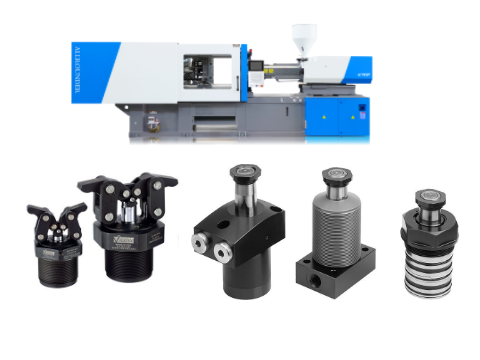
Hydraulic clamping cylinders play an irreplaceable role in the high-precision and high-efficiency production of injection molding machines. Compared with mechanical or electric solutions, hydraulic systems have significant advantages in high-pressure stability and adaptability to working conditions. With the development of intelligent control and lightweight technology, manufacturers represented by HAICHEN are pushing hydraulic clamping cylinders to upgrade to higher reliability and lower energy consumption, providing a new generation of injection molding solutions for the automotive, aviation, medical and other fields.
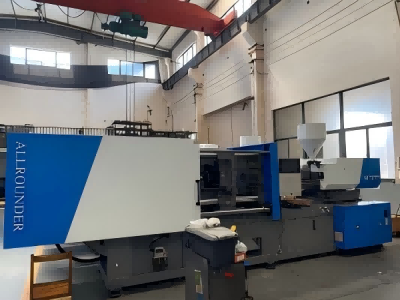
Understanding the function of hydraulic clamping cylinders is crucial to achieving high-quality injection molding production. This component applies a continuous and stable clamping force to the mold to ensure that the mold does not open during high-pressure injection of the molten plastic, thereby accurately molding complex parts. Insufficient clamping force will result in incomplete plastic filling, surface atomization or dimensional deviation; excessive pressure may damage the mold or cause sticking. Therefore, scientific selection of hydraulic clamping cylinders based on product size, plastic properties and cavity pressure is the core link to maintain production efficiency and part quality.