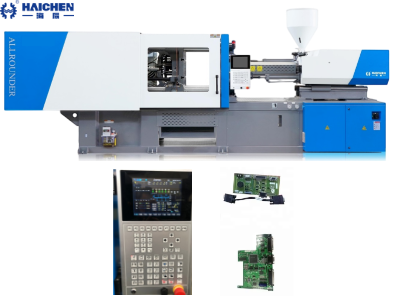
A PVC pipe fitting mold is a tool for injection molding PVC fittings, ensuring precision and consistency for plumbing and industrial use.
Injection molds for PVC pipe fittings create essential components like elbows, tees, and couplings – the vital connectors in plumbing and industrial systems.
These molds must endure high pressure and heat to shape PVC material into structurally precise forms, ensuring every fitting seals securely and functions reliably.
This article examines how PVC pipe fitting molds are engineered, from their internal cooling channels to specialized steel construction.
We’ll also discuss how modern manufacturing techniques help engineers streamline production while maintaining strict quality standards.
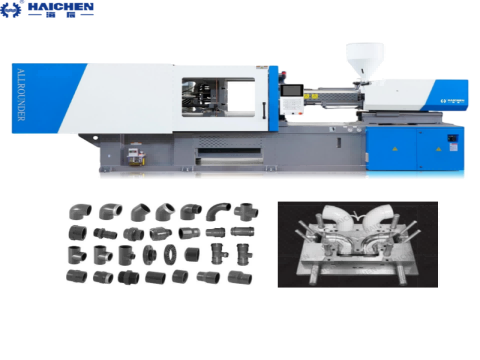
Significance of the Molds for PVC Pipe Fitting
The core function of PVC pipe fittings molds is to ensure the precise manufacturing of various joints, elbows and other pipe fittings.
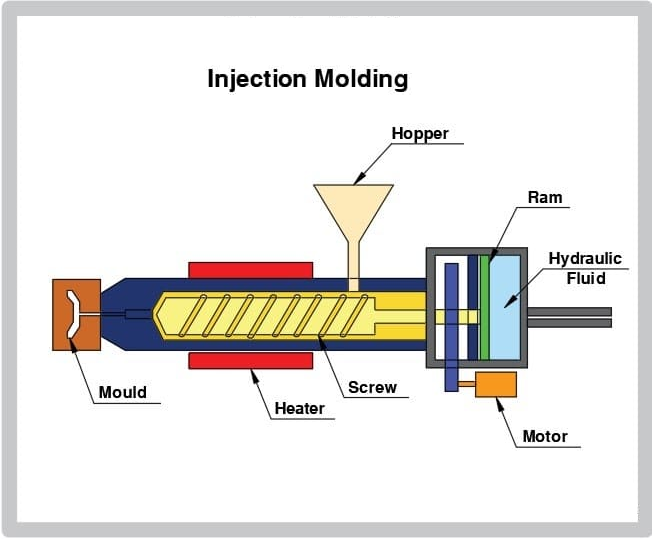
When the high-temperature molten PVC raw materials are injected into the steel mold under high pressure. The cavity structure inside the mold directly determines the final shape and size specifications of the pipe fittings.
High-quality molds can not only ensure the precise size and smooth surface of each pipe fitting, but also achieve the consistency of batch products. This is especially critical for water pipe systems that need to be assembled seamlessly. Because any slight deviation may lead to engineering risks.
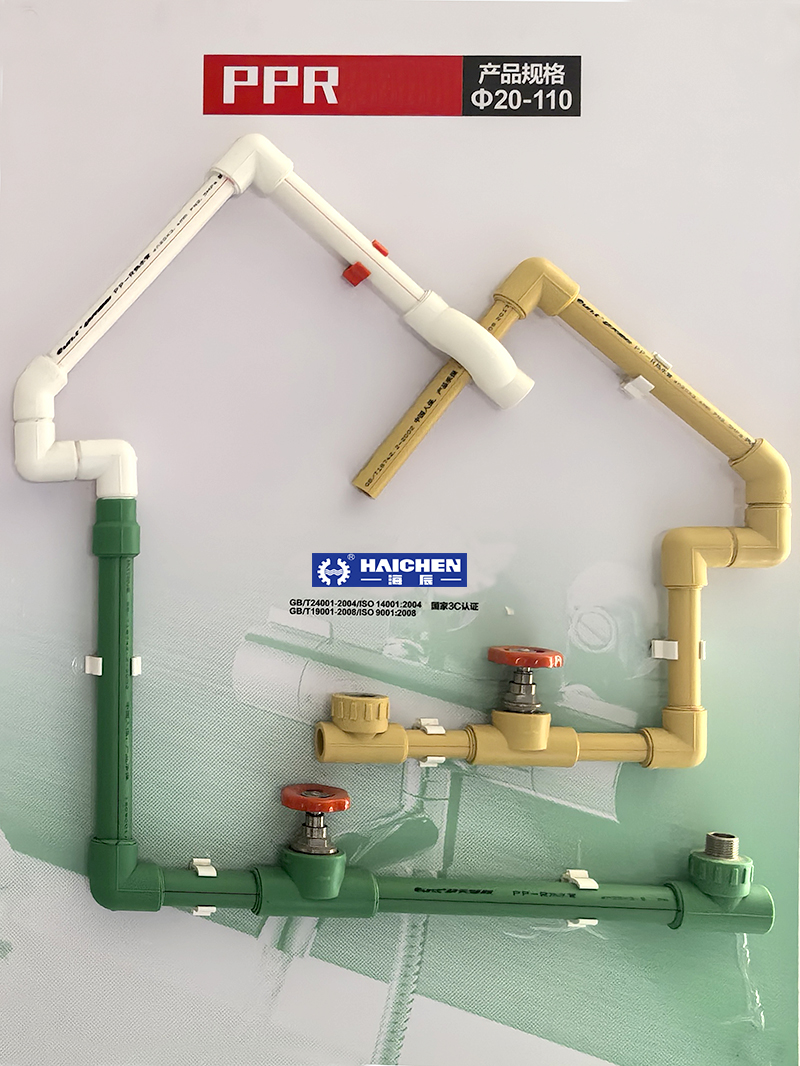
Classification of Molds of PVC Pipe Fitting
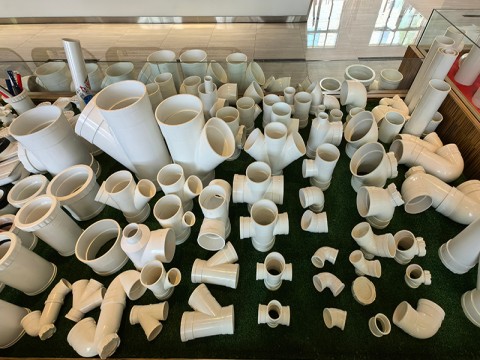
PVC pipe fittings molds are divided into many types according to functional requirements, and each mold has its own special application scenario:
- Elbow mold: used to produce 90-degree or 45-degree pipe elbows to help change the direction of the pipe;
- Tee mold: manufacture T-shaped pipe fittings to connect three pipes;
- Direct mold: produce straight-through joints for straight-line connection of pipes of the same specification;
- Different diameter mold: manufacture variable diameter pipe fittings to solve the connection problem of pipes of different diameters.
All molds must undergo rigorous testing before production to ensure that the PVC material can completely fill the mold cavity and meet the basic performance requirements of the pipe fittings in terms of strength, sealing, etc.
Structure of a PVC Pipe Fitting Mold
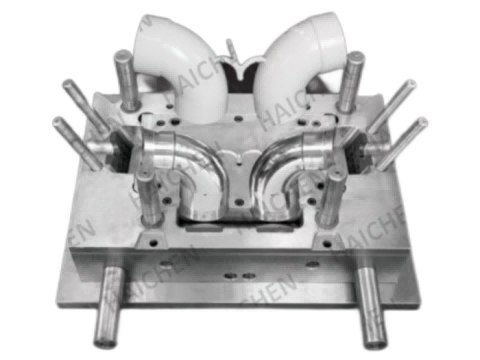
- Cavity Design
- Venting System
- Cooling System
- Ejection System
- Guide Pins and Bushings
Cavity Design
The cavity is the core part of the mold, which directly determines the final size and shape accuracy of the pipe fittings.
When designing, two key considerations should be made: first, strictly following industry standards for pipe specifications, and second, accurately calculating the matching relationship between cavity volume and plastic shrinkage rate. Reasonable cavity design can effectively control the problem of molding shrinkage and avoid dimensional deviations.
For PVC materials, an additional 0.5% shrinkage compensation space needs to be reserved, while ensuring that the cavity wall avoids sharp corners to prevent material degradation.
Venting System
The system plays a critical role in exhaust during the injection molding process: when molten plastic is injected into the mold, the exhaust groove will actively discharge the air inside the mold cavity and trace gases evaporated from the plastic. Its core values are reflected in three aspects:
- Eliminate product bubbles or void defects caused by gas retention
- Prevent plastic burning caused by local heating of high-pressure gas
- Ensure that the surface of the pipe fittings is smooth and flawless, without the need for subsequent polishing treatment
- The exhaust groove is usually set at the end of the melt flow (such as the parting surface). And the depth needs to be precisely controlled at 0.2-0.3mm according to the characteristics of the PVC material. If it is too deep, overflow may occur, and if it is too shallow, insufficient exhaust will occur.
Cooling System
The cooling system achieves temperature control through internal circulation channels. When cooling water flows inside the mold, it absorbs the heat released by the solidification of molten PVC, causing the molded parts to quickly cool down.
This active temperature control method can significantly shorten the production cycle, usually reducing cooling time by about 60%. A reasonable layout of cooling water channels can ensure uniform cooling of pipes and prevent deformation problems caused by temperature differences.
The optimization of this system directly improves production efficiency. For example, in medical pipe fitting molds, a specialized inner diameter cooling device can achieve synchronous cooling of the inside and outside of the pipe wall.
Ejection System
The ejector system is responsible for separating the cured pipe fittings from the mold cavity. The system consists of three parts working together:
- Execution components: including ejector pin and ejector pin, directly contacting the pipe fittings to apply thrust
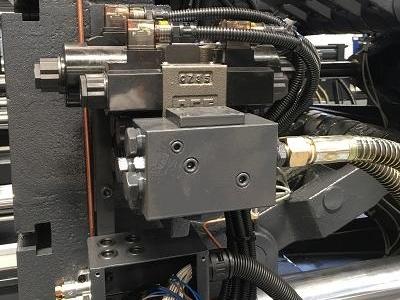
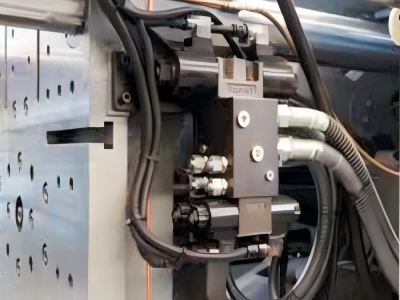
- Transmission mechanism: Pushing the top rod through hydraulic or mechanical drive
- Reset device: The reset spring or reset rod ensures that the components return to their original position after being pushed out
The workflow is: mold opening → advance of the ejector pin → ejection of the ejector pin from the pipe → contraction of the reset spring → system reset standby. In PVC pipe fitting molds, the design of this system needs to be matched with a sliding core pulling mechanism to meet the demolding requirements of complex pipe fittings such as tees and elbows.
Guide Pins and Bushings
Guide pins and bushings play a key role in the structure of PVC pipe fittings molds. They ensure that the injection molded parts are accurately aligned with the pipe fittings. And achieve positioning functions through hole matching. This matching mechanism can ensure the dimensional accuracy of all cavities and core components inside the mold. And keep each component in the correct position along the center axis.
Function of a PVC Pipe Fitting Mold
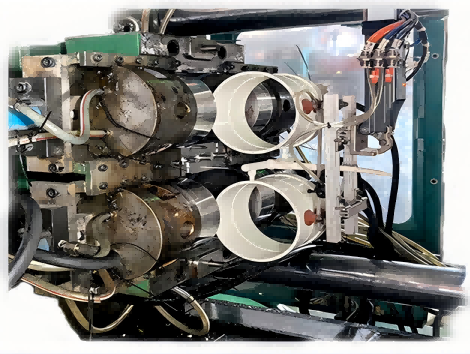
- Injection
- Cooling
- Ejection
Injection
During the operation of the PVC pipe fitting mold, the molten PVC raw material is first injected into the closed mold cavity under high pressure (up to 1500bar) through the injection molding machine. At this stage, the melt temperature needs to be precisely controlled within the range of 185-205℃ to ensure that the material flows fully. And completely fills the cavity details (such as the threads or connection structures of the pipe fittings).
Cooling
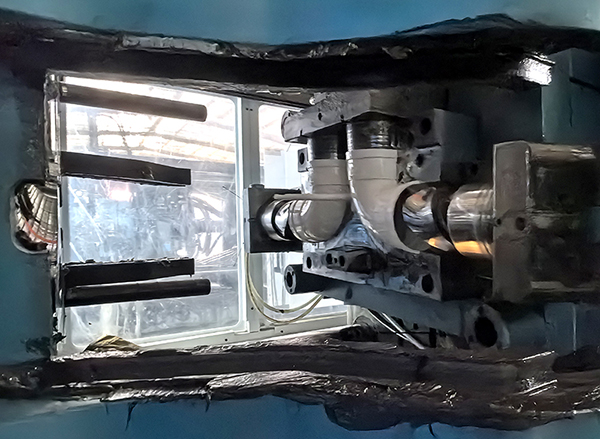
Then enter the cooling stage, the circulating water system inside the mold quickly cools the molded parts with a temperature control medium of 20-50℃. This process needs to calculate the cooling time according to the wall thickness of the pipe fitting (usually 2-3mm). To ensure that the PVC is fully solidified and fixed. And to avoid deformation or internal stress caused by uneven cooling.
Ejection
After the pipe fitting is completely solidified, the ejection mechanism of the mold (such as the ejector or hydraulic push plate) will smoothly push the finished product out of the mold cavity. At this time, it is necessary to ensure that the ejection action is smooth and without stagnation. And the end face of the ejector must be 0-0.1mm lower than the core surface to prevent damage to the surface of the pipe fitting. The removed pipe fittings can directly enter the trimming or quality inspection process,. And some precision pipe fittings also need to be calibrated.
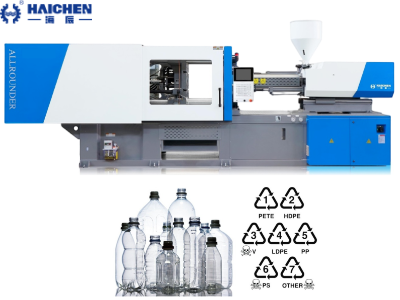
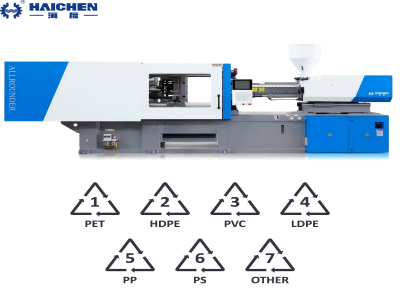
Haichen: Injection molding machine manufacturer
Their new technology and high-standard equipment make the production of PVC pipe fittings more accurate, efficient, stable and reliable. As a leader in the industry, Haichen is committed to bringing their machines to customers around the world.
Haichen’s injection molding machines have the following outstanding features:
- Advanced control system: Haichen’s machines are equipped with a sophisticated control system that can help you more accurately adjust. And manage the entire injection molding process to ensure that every link runs on demand.
- Significant energy saving effect: Haichen’s machines incorporate energy-saving technology to help you effectively reduce power consumption in daily operations. Which not only saves costs, but also reflects our sense of responsibility for environmental protection.
- Efficient automated operation: Haichen’s machines generally adopt automated design, which can automatically complete key steps such as mold handling,. Material injection and product ejection. This greatly improves production efficiency while reducing the factory’s dependence on manpower.
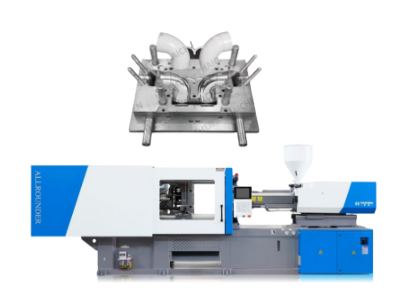
The automation technology of PVC pipe fittings molds has significantly improved production efficiency, product precision and manufacturing stability. Which is especially important for products with strict quality requirements such as industrial-grade pipe fittings.
Manufacturers represented by Haichen Co., Ltd. continue to make breakthroughs in the field of injection molding technology. With the capacity layout of emerging manufacturing bases such as Thailand, the entire PVC pipe fittings industry is welcoming new development opportunities. Whether it is civil construction pipelines or industrial pipeline systems. The core position of this type of mold in modern manufacturing has never changed.