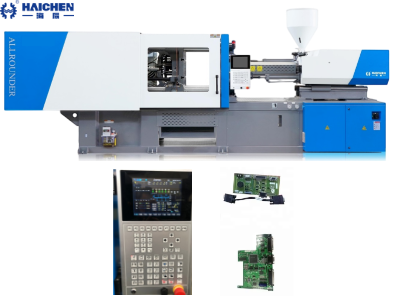
What is a servo injection molding machine?
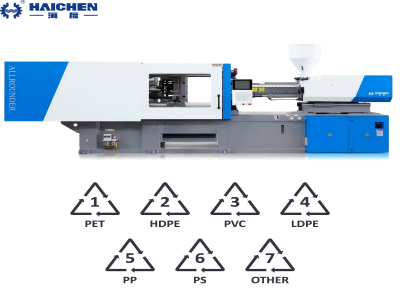
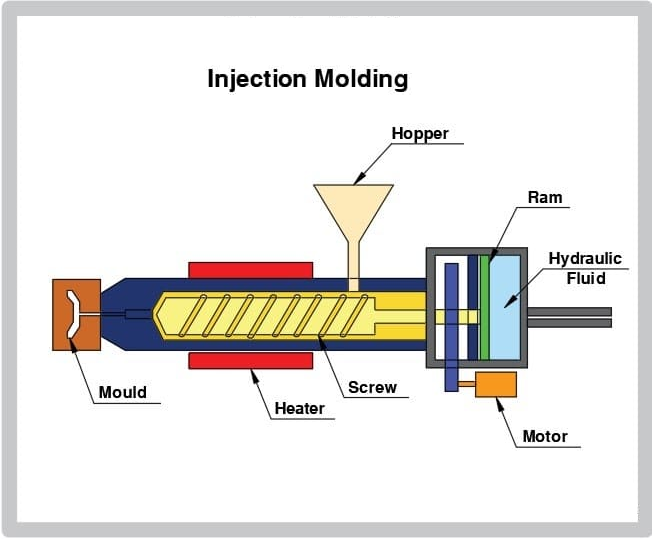
The servo injection molding machine is an injection molding machine driven by a servo motor.
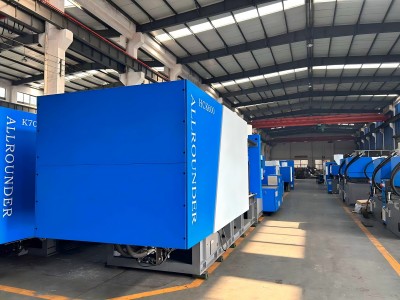
The working principle is to use servo motors to replace traditional hydraulic systems, which will improve performance and provide economic benefits during operation.
The servo motor is a typical closed-loop feedback system. The motor drives the reduction gear set, and its terminal (output end) drives a linear proportional potentiometer for position detection. The potentiometer converts the angular coordinates into electrical signals to achieve precise control. The working principle of the servo motor is similar to that of an ordinary motor. It consists of a stator and a rotor. There are two windings on the stator, namely the excitation winding and the control winding. The two windings differ by a 90° electrical angle in space.
What is the main difference between a servo motor and a normal motor?
There are significant differences between injection molding machine servo motors and conventional motors in many aspects, mainly in terms of response speed, accuracy, energy consumption, and control method.
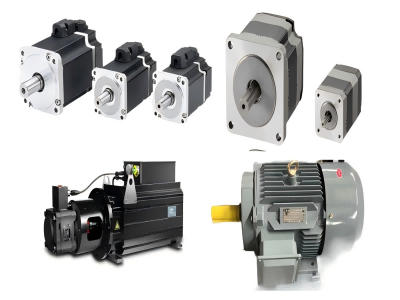
Response speed:
It takes only ±0.5 milliseconds from a standstill to the rated speed. In addition, the servo motor has very high precision, and the precision of repeated products can be improved to more than 5/1000, meeting the requirements of ultra-precision injection molding. In contrast, the current of traditional motors at startup is 5 times that of normal operation, and the startup time is longer.
The time it takes for the servo motor to reach the working state required to complete the command from obtaining the command signal is shorter. The shorter the time to respond to the command signal, the higher the sensitivity of the servo system and the better the rapid response performance.
In contrast, conventional motors are generally inferior to servo motors in terms of response speed and sensitivity, especially in application scenarios that require rapid changes in load or frequent speed adjustments.
Accuracy
Servo motors use a closed-loop control system that can monitor and adjust the motor’s operating status in real-time to ensure precise control.
Closed-loop control system: Servo motors usually use a closed-loop control system that can achieve extremely high position, speed, and torque control accuracy. This control system can compare the control signal with the actual output and make adjustments based on the deviation, thereby achieving high-precision control.
Encoder resolution: The accuracy of a servo motor is directly related to the encoder it is configured with. Servo motors are usually equipped with high-resolution encoders, such as 20-bit encoders (1,048,576 steps), which allows their positioning accuracy to reach very high levels, such as 0.001mm. Ordinary motors usually do not use such high-resolution encoders, so their control accuracy is lower.
Hardware accuracy: The hardware accuracy of the servo drive also has an important impact on the control accuracy. The servo drive can achieve more precise control through energy processing and signal processing at high carrier frequency.
Feedback system: The precise control of the servo motor is based on a high-precision position feedback system, which is usually equipped with a high-precision reducer and an efficient transmission system to ensure the output torque while improving the speed and speed response.
Application scenarios: Servo motors are suitable for scenarios that require high-precision motion control, such as CNC machine tools, semiconductor equipment, medical equipment, etc. These applications have extremely high precision requirements. In contrast, conventional motors are usually used in some simple or low-precision applications.
Energy consumption
The servo motor adopts a closed-loop control system, which can adjust the power output according to the needs, thereby achieving energy saving. The energy-saving rate of servo injection molding machines is as high as 30-70% compared with ordinary injection molding machines. This is because the servo motor can provide the corresponding torque according to actual needs, avoiding the situation where traditional motors still consume a lot of electricity when not working
The energy consumption of servo motors is divided into levels. Unlike ordinary motors, it is not divided according to efficiency levels but is measured by the energy efficiency ratio (such as IE3, and IE4 levels) and efficiency of the motor. The control system of the servo motor can accurately control the speed and torque of the motor according to actual needs to achieve the best operating state. The use of advanced control algorithms and intelligent control strategies can reduce the energy consumption of the motor and improve the efficiency of the entire production process.
Servo motor control method
Torque control is to set the torque output of the motor shaft through external analog input or direct address assignment. This method is suitable for application scenarios that require high-precision torque control, such as precision machining and automated assembly lines.
Speed control can be controlled by analog input or pulse frequency. In the case of a host computer control device, the speed mode can also be combined with external loop PID control. This control method is widely used in occasions that require precise speed regulation, such as robot arms and conveyor belt systems.
Position control is usually achieved by sending pulses, and the number of pulses determines the angle of motor displacement. In addition, some servo systems also support communication methods to directly assign speed and displacement. Position control is widely used in equipment that requires precise positioning, such as CNC machine tools and laser cutting machines.
Why would you use a servo motor?
The servo-driven injection molding machines can save 20% to 80% of energy compared with traditional injection molding machines.
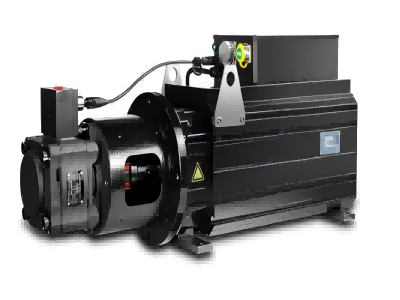
Significant energy-saving effect:
The servo motor can adjust the speed and torque according to actual needs, so as to realize on-demand oil supply and avoid overflow loss. This not only improves energy utilization efficiency but also reduces energy consumption.
Improve production efficiency:
The servo motor has the characteristics of fast response, which only takes a few milliseconds from 0 to rated speed, greatly shortening the startup time and improving production efficiency. In addition, the closed-loop control technology of the servo system can accurately adjust the pressure and flow to ensure the stability and efficiency of the injection molding process.
Improve product quality:
The servo system can achieve a more stable injection molding process, reduce the scrap rate, and improve the dimensional accuracy and mixing effect of the product through high-precision position and speed control. This precise control is particularly important for precision products.
Reduce noise and vibration:
The low vibration characteristics of the servo motor make it smoother during operation, reduce mechanical noise and vibration, and thus improve the working environment.
Extend the service life of the equipment:
Due to the soft start function and automatic protection mechanism of the servo motor (such as undervoltage, overvoltage, overload, etc.), the impact on the machinery can be reduced and the service life of the equipment can be extended.
Environmental benefits:
The servo system reduces the energy loss of high-voltage throttling, reduces the workshop temperature, and helps reduce carbon dioxide emissions and other pollutants.
Servo injection molding machine application
A servo injection molding machine is an efficient, energy-saving, and high-precision injection molding equipment, which is widely used in many fields. Servo injection molding machine is mainly used in home appliances, automobiles, and general plastics.
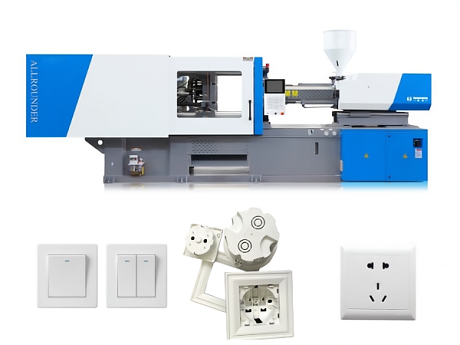
Home appliances field
A servo injection molding machine is mainly used to produce various home appliance parts, such as housings, buttons, etc. Due to its high precision and high efficiency, it can meet the quality and production speed requirements of home appliance products like plastic pen making machine.
Automobile field
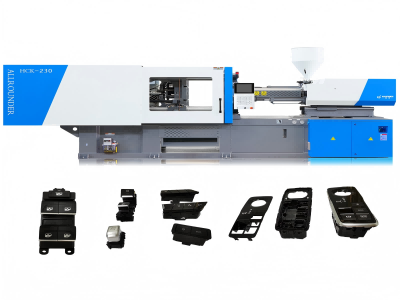
A servo injection molding machine is used to manufacture automotive parts, including dashboards, headlight housings, seat parts, etc. These applications require high precision and consistency, and the servo injection molding machine ensures high quality and consistency of products by precisely controlling pressure and temperature.
General plastic field
Servo injection molding machine also plays an important role. It is suitable for various types of plastic raw materials and can carry out complex molding processes to meet the needs of different industries. For example, in 3C (computer, communication, and consumer electronics) products, a servo injection molding machine is used to produce precision parts such as mobile phone housings and computer keyboard covers.
Conclusion
There are many well-known injection molding machine brands in China, such as Haitian Plastic Machinery, Chen Hsong Machinery, Tederic Machinery, Yizumi, Haichen Machine, etc.
The price advantage of domestic servo injection molding machines is obvious, 30% lower than similar foreign products, which makes domestic equipment more competitive in terms of cost performance. In addition, domestic companies have made breakthrough progress in the research and development of servo systems. Some high-end servo systems have been able to replace imported products and have been widely used in aerospace, military, new energy, and other fields. It is expected that as the technology and innovation advantages of my country’s injection molding industry gradually become dominant, the trend of domestic substitution for imports will become more obvious. Overall, the development prospects of the domestic servo injection molding industry are broad, and it is expected to achieve a wider range of import substitution goals in the future.