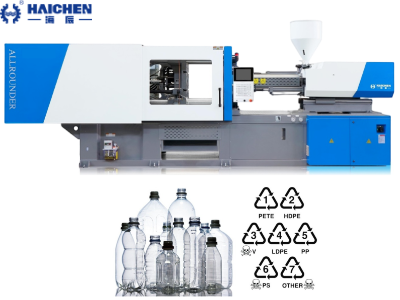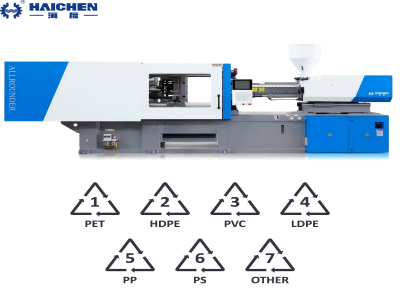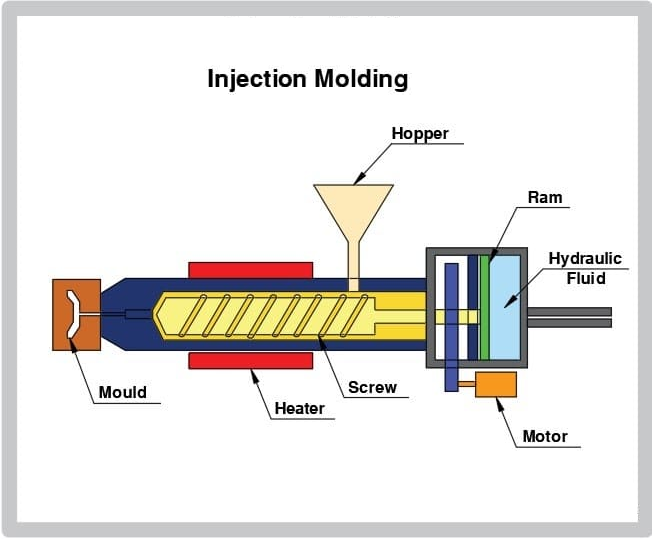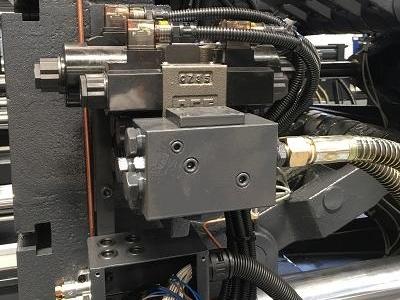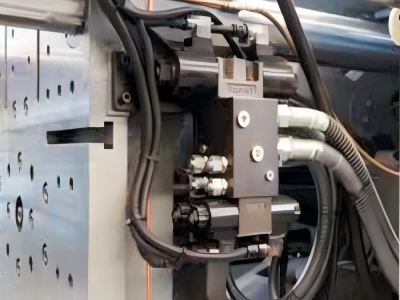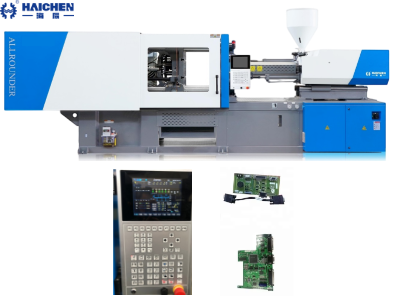
The smallest machine required to produce a plastic stool is an injection molding machine.
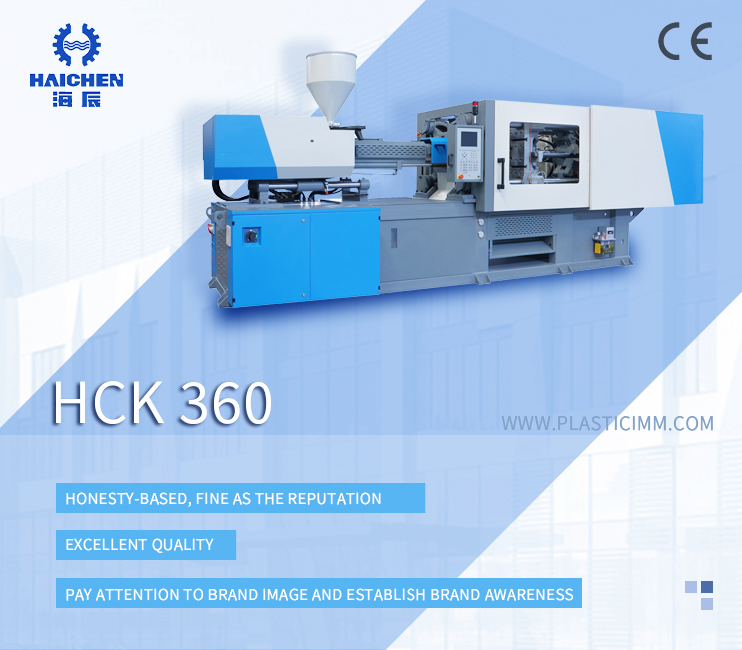
The Minimum machine to produce a plastic stool, Haichen HCK 360 tons or less of injection molding machines is sufficient.
The degree of automation of plastic stool injection molding machines has significant advantages in terms of production efficiency, cost, quality, safety and management.
Although manual operation is flexible in some cases, it has obvious deficiencies in terms of efficiency, cost, quality and safety.
Therefore, with the development of automation technology, the degree of automation of injection molding machines will increasingly become the mainstream trend.
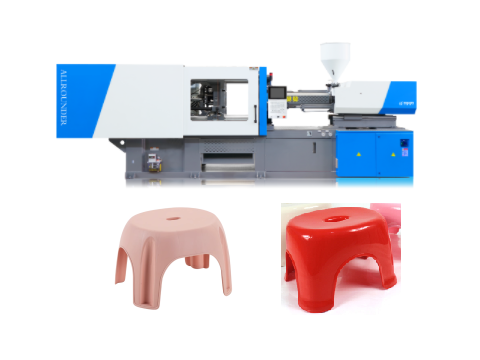
Why choose injection molding machines to produce plastic stools
Injection molding machines have become the preferred process for plastic stool production due to their high efficiency in mass production, integrated molding of complex structures, low cost and high stability.
Its technical features perfectly match the demands of plastic stools for “large volume, lightweight and durability”.
And at the same time, it solves the problems of demolding, strength and functionality through mold optimization.
Such as round hole design, forming an irreplaceable comprehensive advantage.
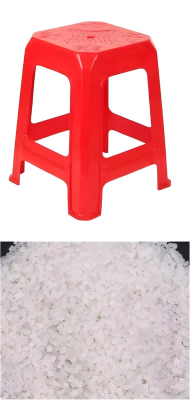
How to determine the Minimum machine to produce a plastic stool
In the production process of plastic stools, the influence of the tonnage of the injection molding machine on the quality of the product is mainly reflected in the following aspects:
- Product size and weight
- Material type
- Product Structure and Complexity
- Production efficiency
- Cost control
- Product quality stability
- Mold matching
Product size and weight
The tonnage of the injection molding machine directly affects the maximum pressure it can withstand and the mold locking force.
For large or heavier plastic stools, higher tonnage injection molding machines are required to ensure that the mold is not stretched open during the injection molding process, thus guaranteeing the integrity and quality of the product.
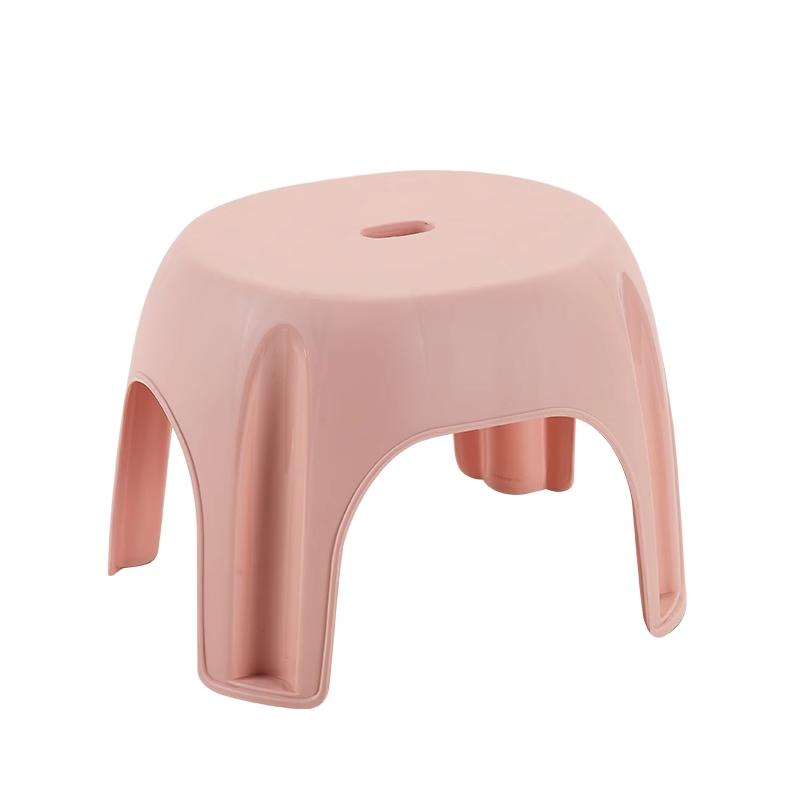
Material type
The characteristics of different materials will affect the choice of injection molding machine.
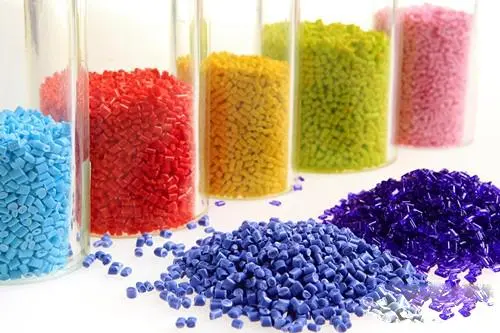
For example, when using special materials such as glass fiber reinforcements, higher tonnage injection molding machines are required to ensure sufficient injection pressure to avoid uneven flow or defects in the mold.
Product Structure and Complexity
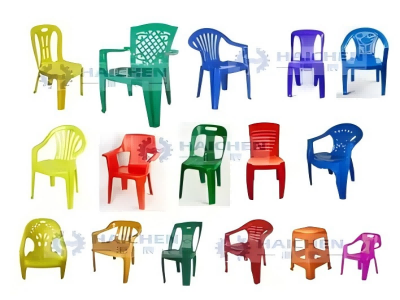
Products with complex structures or more details require higher tonnage to ensure stability and precision in the injection molding process.
High-tonnage injection molding machines can provide greater injection pressure and dwell time.
Thereby improving the surface quality and uniformity of the internal structure of the product.
Production efficiency
Injection molding machines with larger tonnage can complete more work in the same injection cycle, thus increasing production efficiency.
This is especially important for businesses that produce plastic stools on a large scale.
Cost control
Although the initial investment in a high-tonnage injection molding machine is higher, it can reduce downtime due to insufficient equipment in the production process, thereby reducing overall production costs.
In addition, high-tonnage injection molding machines typically have higher stability and durability, reducing maintenance and replacement costs.
Product quality stability
The high-tonnage injection molding machine can provide more stable injection pressure and holding time.
Thereby reducing the internal stress and deformation of the product, and improving the dimensional stability and appearance quality of the product.
Mold matching
The matching of the injection molding machine and the mold directly affects the product quality.
Choosing the right tonnage can ensure that the mold will not be deformed due to insufficient pressure during the injection molding process.
So as to ensure the accuracy and consistency of the product.
Injection molding machine tonnage calculation
The relationship between the tonnage of the injection molding machine and the production size of the plastic stool is mainly reflected in the direct impact of the clamping force (i.e., tonnage) of the injection molding machine on the size and weight of the product.
According to this, tonnage is the maximum clamping force that the injection molding machine can provide, which directly affects the size and weight of the products that the machine can produce.
The formula for calculating tonnage is as follows
tonnage = clamping force = average pressure per unit area of forming space × coefficient of projected area of forming space.
When calculating, it is necessary to consider factors such as the length and width of the finished product.
The diameter of the screw, and the density of the plastic material.
High-efficiency production of plastic stool injection molding machines
- Purchase Costs
- Operating Costs
- Production efficiency
Purchase Costs
Small injection molding machines (under 100 tons) are usually less expensive.
While large injection molding machines (more than 500 tons) are more expensive.
Therefore, if you have a limited budget, it may be more economical to opt for a small injection molding machine.
Operating Costs
Small tonnage injection molding machines have a great price advantage in China due to their low degree of automation and high labor costs.
In contrast, the labor cost of a large-tonnage injection molding machine accounts for only about 30% of the total cost.
Which is much lower than the proportion of small-tonnage injection molding machines.
This means that on large-tonnage injection molding machines, long-term operating costs are likely to be lower, despite the higher initial investment.
Production efficiency
Efficient production often requires larger tonnage injection molding machines.
For example, high-speed injection molding machines are suitable for production in fields with high requirements for product size and surface quality.
While ordinary injection molding machines are suitable for scenarios that do not require high production efficiency but have certain requirements for cost control.
Therefore, for products such as plastic stools, which do not require high precision, it may be more appropriate to use ordinary injection molding machines.
Overall, for a relatively simple and large batch size such as a plastic stool, it may be more cost-effective to choose a medium or small injection molding machine.
These machines are able to meet basic production needs and keep costs under control during operation.
However, if a company is looking for higher production efficiency and product quality, investing in a large injection molding machine is also an option worth considering.