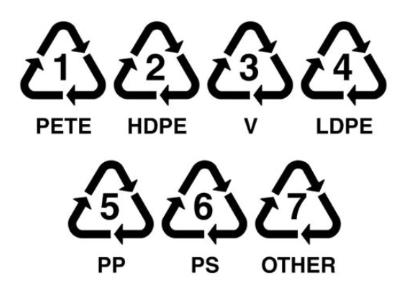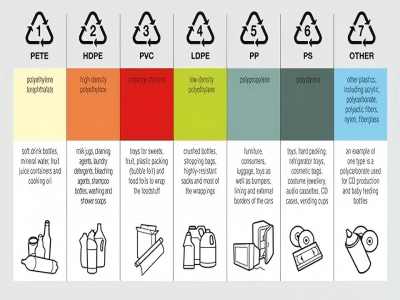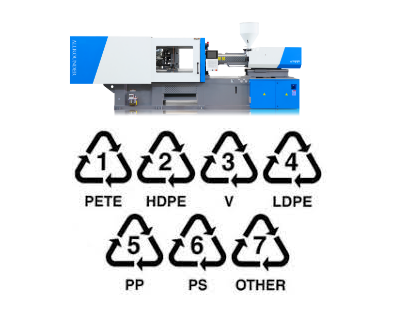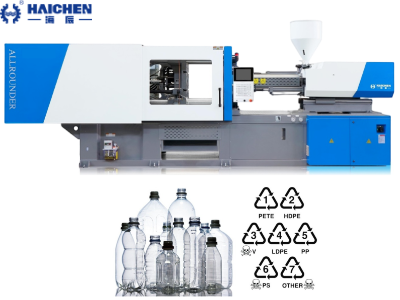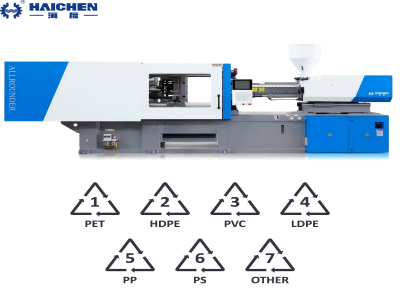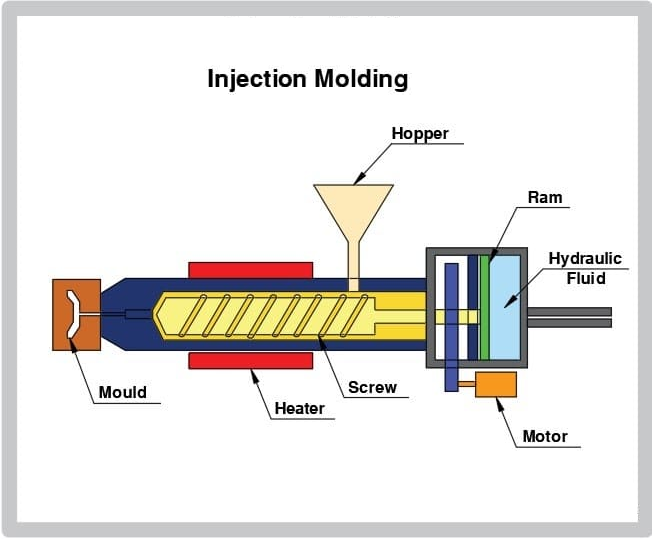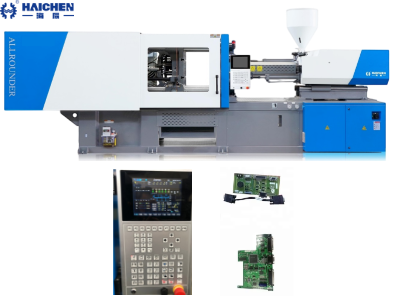
Injection molding technology is a manufacturing process widely used in the production of plastic products.
The basic principle of which is to inject molten plastic material into a mold under high pressure, cool and solidify it to form a plastic part of the desired shape.
Injection molding technology
Injection molding technology is used in a wide range of fields, including automotive parts, medical devices, electronics, building construction and textiles.
As technology advances, injection molding processes are continuously optimized, for example through the use of high-performance materials.
Multi-component technologies, and automation systems to improve production efficiency and product quality.
In addition, injection molding technology has a variety of variants and extended applications, such as dual-stroke injection molding,
insert injection molding, overmold injection molding, etc., which can meet the customization needs of different products.
Injection molding plays an important role in modern industry as an efficient, precise and widely used manufacturing method.
Through continuous technological innovation and optimization, the injection molding process will continue to promote the development of the plastic products industry.
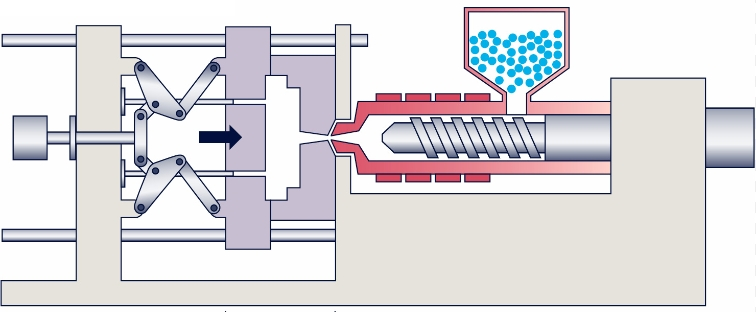
Advantages of Injection Molding Technology
High Production Efficiency:
Injection molding can achieve high-volume, high-speed production, greatly improving production efficiency. It can produce large quantities of plastic parts in very short cycle times.
Cost-effectiveness:
Although the initial investment is high, injection molding is a highly cost-effective manufacturing process, especially suitable for producing large quantities of products. By utilizing the full material injected into the mold to reduce waste, its high efficiency and production speed can lower labor costs.
Precise dimensions and high surface smoothness:
Since injection molded products are made by precise molds, their dimensions and surface smoothness are very high.
Versatility:
Injection molding can handle extremely complex parts and produce millions of nearly identical parts. It is suitable for producing complex precision products, such as automotive parts.
The scope of application is wide:
Injection molding can use a wide range of materials and manufacture products with complex shapes and sizes ranging from large to small.
High automation:
Injection molding operations can be automated, reducing labor costs and ensuring good appearance of the parts.
Disadvantages of Injection Molding Technology
One of the main disadvantages of injection molding is the high initial investment required. The cost of purchasing and setting up injection molding machines, molds, and ancillary equipment can be significant.
High tooling costs:
Designing and manufacturing molds that fit a specific part geometry can be very expensive, especially for complex or complex designs.
High requirements for parameter control:
Injection molding has high requirements for parameter control, and poor control is easy to produce defects.
For example, problems such as poor flow of raw materials, poor mold fit, and foreign matter on the parting surface can lead to a decrease in product quality.
Not suitable for small batch production:
Injection molding is generally only suitable for mass production, and the production cost of small batches of plastic parts is high.
High energy consumption:
Despite the high efficiency of injection molding, it also consumes relatively high energy and has higher operating costs than electric motors.
Noise issues: Injection molding can be noisy, which may require additional noise reduction measures in some applications.
Haichen ‘s Injection Molding Machine Optimization:
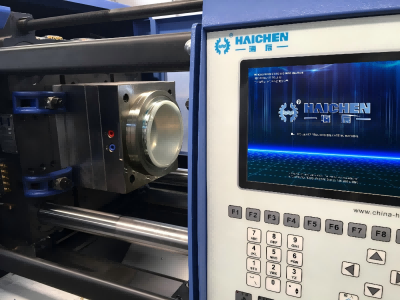
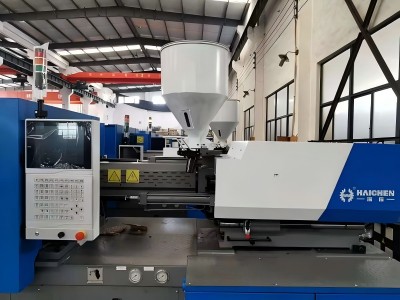
Design the mold reasonably:
Reasonable mold design, including the design of the runner, the type of sprue, the number of cavities, and the cooling and heating water channels, can significantly reduce energy consumption.
Using a hot runner mold not only saves material but also reduces energy consumption.
Using servo motor technology:
Compared to traditional proportional pump systems, Haichen’s servo motor technology can significantly reduce energy consumption while improving production efficiency and product stability.
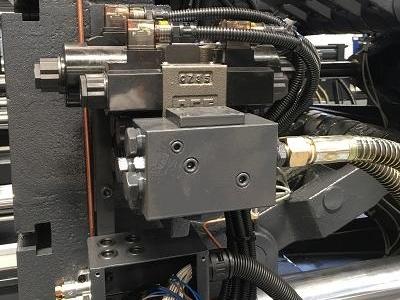
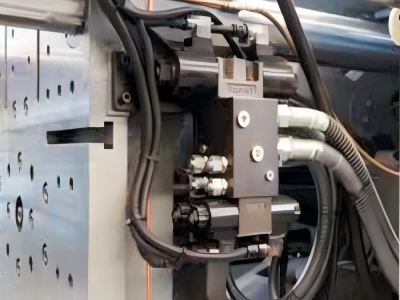
Servo hydraulic injection molding machines integrate servo motors with hydraulic systems, allowing for adjustment of energy consumption based on actual needs,
thereby reducing unnecessary energy consumption.
Optimize Process Parameters:
Carefully controlling and optimizing process parameters (such as temperature and cycle time) can significantly save energy.
Additionally, by adjusting the molding conditions, noise generation can be controlled to a great extent.
Upgrade to high-efficiency machines:
Haichen injection molding machines typically feature variable-speed drive systems and advanced heating systems, which are designed to be more energy-efficient.