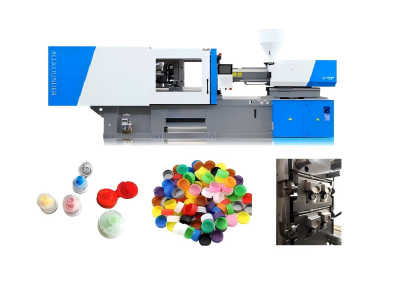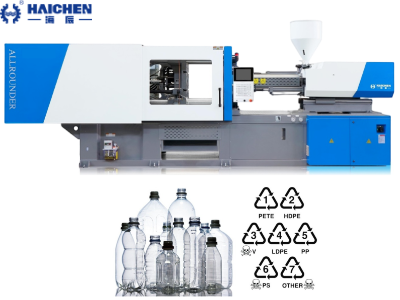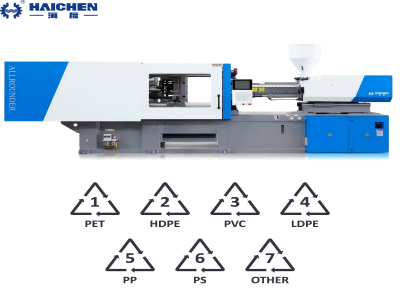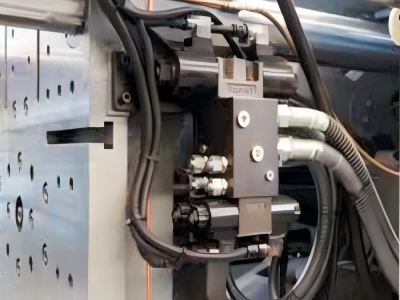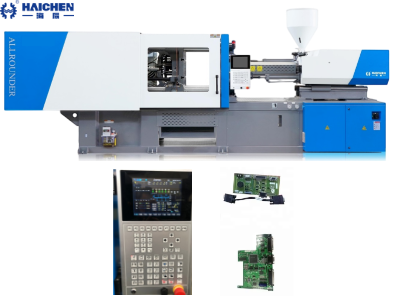
The advantages of plastic cap injection molding machines are their high efficiency and productivity, accuracy and consistency and advanced technology integration, etc.,
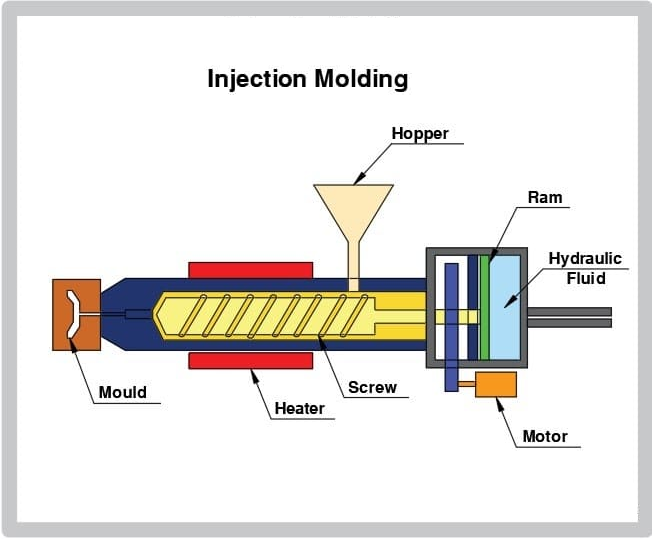
Plastic cap injection molding involve melting resin at a certain temperature so that it flows under high pressure in narrow channels, each of which fills a mold (cavity) with molten material. When the mold is opened, the cap is ejected.
Plastic cap injection molding machines have achieved significant improvements in efficiency and productivity through fast cycles. With automation, large-scale production, and low scrap rates, making them the preferred technology for large-scale manufacturing of plastic caps.
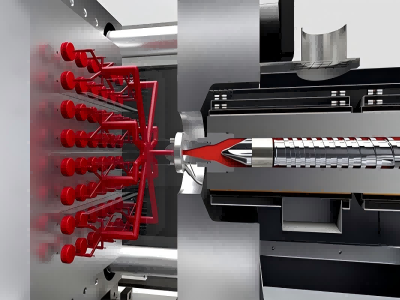
The advantage of plastic cap injection molding machine as below following:
High Efficiency and Productivity
Plastic injection molding machines are designed to run at high speeds and are capable of producing large quantities of parts in a short period of time.
The high degree of automation reduces manual intervention, thus reducing the risk of errors and increasing productivity.
Fast Production Cycles and High Output
- Injection molding cycles typically range from 10-120 seconds (depending on part complexity and size), and multiple parts can be produced per cycle (multi-cavity mold design).
- Injection molding machines support 24/7 continuous automated production, with daily output reaching thousands to millions of parts, making them ideal for large-scale manufacturing.
Automation Reduces Labor Costs
- Highly automated processes significantly reduce manual intervention, requiring only a small number of personnel to monitor equipment operation, significantly reducing labor costs.
Efficient Material Utilization and Low Waste
- The injection molding process has an extremely low waste rate, and excess material can be recycled and reused (e.g., crushed and returned to production), achieving efficient resource recycling.
Scale Benefits of Mold Design
Molds can be developed once and reused over time. Multi-cavity molds can be used to simultaneously produce multiple identical or different parts, significantly reducing unit costs as production increases.
Lower Unit Costs
- The initial mold investment is amortized, and unit costs decrease significantly as production increases.
- Injection molding has high initial mold design and manufacturing costs (referred to as “high setup costs”). However, once the mold is complete, large-scale production spreads this cost over a large number of parts, significantly reducing unit costs.
High Production Efficiency
- Short cycle times and multi-cavity mold design enable rapid, large-scale output
- The mold design, with its multi-cavity structure, allows for simultaneous production of multiple parts, significantly improving production speed and efficiency.
Automation and Low Labor Costs
- The mold design supports full automation, reducing manual intervention.
- The mold design facilitates integration with automated systems, significantly reducing labor costs in large-scale production.
Accuracy and Consistency
Injection molding uses high-precision molds that produce products of consistent size and shape.
This high degree of repeatability ensures that each product meets specifications.
Ultra-High Precision Control
- Injection molding machines inject molten plastic into mold cavities through precise programming, achieving micron-level tolerances (typically ±0.001 inches), making them particularly suitable for applications with stringent dimensional requirements, such as medical and aerospace.
- This precision ensures that each part meets exacting design specifications, preventing defects caused by minor deviations.
- For example, medical components must meet stringent geometric requirements, and injection molding technology can precisely replicate intricate details.
Ensuring Production Consistency
- Process Stability: Computer-controlled systems (CAD/CAM) monitor temperature, pressure, and injection speed in real time, ensuring high batch consistency and minimizing human error.
- Repeatability: Precision mold design and high-pressure injection processes ensure near-perfect part reproduction, with minimal batch-to-batch variation, meeting the quality consistency requirements of large-scale production (such as the sealing requirements for food and pharmaceutical packaging).
- Industry Verification: In industries such as electronics and automotive, the consistency of molded parts is directly linked to product performance reliability, and this technology is recognized as key to achieving “zero-defect production.”
Technology Synergy
- Mold Design: High-precision molds (e.g., micron-level machining) are the foundation of precision. Combined with material rheology optimization, complex geometries (e.g., thin walls, fine threads) can be formed.
- Material Adaptability: Supports a variety of materials, including polyethylene and polypropylene, maintaining molding stability across different materials through parameter adjustments.
- Automation Integration: Fully automated production lines reduce manual intervention and further enhance consistency.
Ultra-High Precision and Tight Tolerance Control
- Injection molding machines precisely control the injection of molten plastic into the mold through programming, achieving tolerances down to micrometers (0.001 inches).
- This precision is crucial for zero-defect industries such as aerospace, automotive, and medical devices, where even the slightest dimensional deviation can lead to product failure.
- Computer-controlled systems precisely regulate temperature, pressure, and injection speed, ensuring the accurate reproduction of complex geometries and fine details.
Excellent Dimensional Accuracy and Repeatability
- Injection molding machines use precise programming to control the injection of molten plastic, consistently achieving micron-level tolerances (±0.000015 inches to ±0.0002 inches).
- After a single mold is formed, millions of nearly identical parts can be repeatedly produced with minimal batch-to-batch variation, making it particularly suitable for applications such as medical and electronics, where consistency is paramount.
Capable of Precision Molding Complex Structures
- Injection molding technology can integrate complex features such as ribs, metal inserts, and side core pulls into small parts (such as a palm-sized plastic cap), achieving tolerance control far exceeding that of processes such as vacuum forming.
- Computer systems precisely control temperature, pressure, and injection speed to ensure dimensional accuracy of fine features (such as threads and snaps).
Automation Reduces Human Error
- Automated processes minimize human interaction, with mechanical control accuracy reaching ±0.001 inches, significantly reducing errors and scrap.
- Compared to CNC machining, injection molding eliminates the need for individual part positioning, eliminating the deviations caused by manual operation.
Material Compatibility and Stability
- Supports a wide range of materials, including thermoplastics and elastomers, meeting diverse mechanical performance requirements while maintaining high precision.
- Material flow and shrinkage are precisely calculated and compensated for in mold design, ensuring the desired final dimensions.
Meeting the Stringent Standards of Demanding Industries
Precision and consistency make injection molding the process of choice for industries such as medical, electronics, and precision engineering.
The medical field demands absolute precision in parts to ensure patient safety; the food and pharmaceutical industries rely on the uniformity of bottle caps to ensure seal integrity; and the electronics industry requires precision components to accommodate miniaturized designs.
Injection molding machines meet these industries’ demand for extreme reliability and functionality through high repeatability.
High Precision and Consistency
- Plastic cap injection molding machines can produce parts with exceptional precision, meeting stringent tolerances (e.g., in the aerospace, medical, and automotive industries).
- Programming controls the injection of molten plastic into the mold, ensuring that each part is precisely the same size and shape, which is crucial for seal integrity (e.g., for food and pharmaceutical packaging).
- It is emphasized that modern injection molds can produce lids that meet stringent standards, ensuring functionality and safety.
High-Efficiency Production Capability
- Plastic cap injection molding machines offer short cycle times and high speeds, making them suitable for large-scale production. For example, a single machine can produce numerous lids per hour, significantly shortening lead times and reducing unit costs.
- Injection molding offers superior mold and cooling times compared to other processes, enabling rapid response to market demands.
Material Diversity and Adaptability
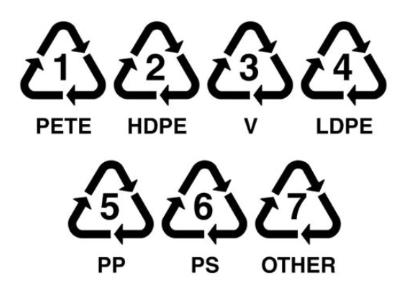
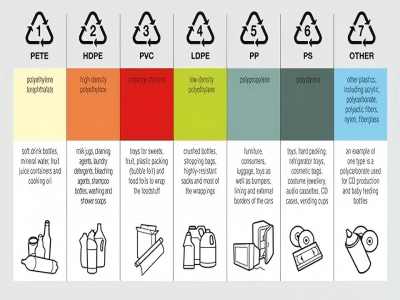
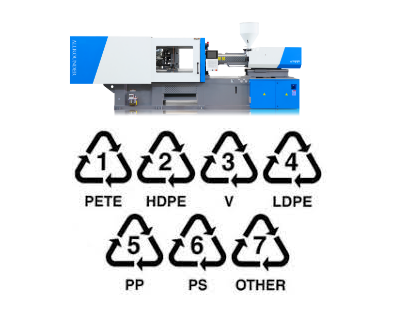
- Supporting a wide range of plastic materials (e.g., polyethylene, polypropylene, and polycarbonate), the properties can be selected based on industry requirements: chemical resistance (pharmaceuticals), lightweight (automotive), or high strength (industrial parts).
- Co-injection technology allows for the blending of different plastic types to enhance part performance (e.g., by adding fillers to increase strength).
Cost-Effectiveness
- Low Scrap Rate: Scrap generated during the injection molding process can be recycled and reused (ground and then remelted), reducing material waste and meeting sustainable manufacturing requirements.
- Automation Reduces Labor Costs: Fully automated production reduces labor reliance while ensuring consistent quality. In the long term, equipment investment can be quickly recovered through large-scale production.
Advanced Technology Integration
Equipped with advanced controls and monitoring systems for temperature, pressure, and speed, ensuring optimal performance.
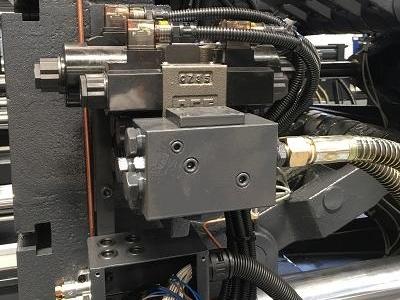
Hybrid and Electric Machines offer reduced energy consumption and quieter operations compared to traditional hydraulic systems.
High Integration and Standardized Interface Support
- Modern plastic injection molding machines achieve deep integration with production cells through standardized interfaces (such as EUROMAP or SPI), supporting automation systems, robotics, and future technology upgrades, significantly improving production flexibility and compatibility.
- This integration capability shortens the production chain (e.g., reducing post-processing steps), enabling an efficient “one-step molding” process, particularly suitable for the manufacture of complex parts.
Intelligent Control Systems and Real-Time Monitoring
Advanced injection molding machines are equipped with real-time process monitoring systems. Using sensors and computer control, they precisely adjust parameters such as temperature, pressure, and injection speed to ensure consistent product quality and reduce defects.
Digital Integration of Design and Manufacturing Processes
- CAD/CAM system integration (such as Cimatron software) automates mold design and electrode manufacturing, significantly shortening the development cycle for complex molds and reducing the risk of human error.
- Computer-aided engineering (CAE) technology reduces mold design iteration time and supports the production of high-precision, complex geometries.
Optimized Energy and Resource Efficiency
- Advanced injection molding machines utilize energy-saving technologies (such as servo drive systems) to significantly reduce energy consumption and carbon emissions, aligning with sustainable development requirements.
- High material utilization: Offcuts can be recycled and reused, reducing waste (closed-loop production model).
In summary, the advantages of plastic cap injection molding machines provide a reliable, efficient, and cost-effective solution for producing high-quality caps, meeting the needs of industries ranging from beverages to pharmaceuticals.
These advantages have become important equipment in the beverage packaging industry.
The advantage of Haichen Plastic cap injection molding machine
Haichen is a manufacturer of plastic cap making machine in China. Choose Haichen as your injection molding machine Manufacturer. With years of experience and a commitment to quality, we have helped countless factories succeed through efficient and effective production.
Haichen has rich experience in cap design, cap mold production, and lid mold testing.
If you are looking for a plastic cap injection molding supplier, please do not hesitate to contact us.