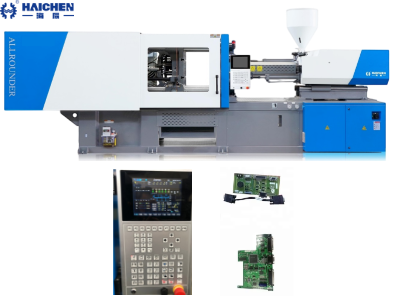
Basic material requirements for injection mould including:
- Abrasion resistance
- Corrosion resistance
- Strength and toughness
- Dimensional stability
- Ease of machining
- Compressive strength and friction resistance
- Low coefficient of thermal expansion
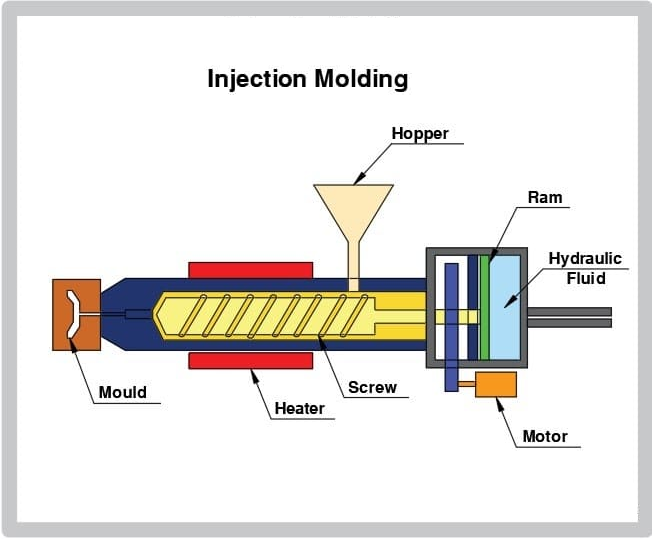
Injection mould is a tool used to produce plastic products by injecting molten plastic into the mold cavity and cooling and curing to form the desired shape of the product.
It play a vital role in modern industry and are widely used in various fields, such as automobiles, home appliances, medical equipment, etc.
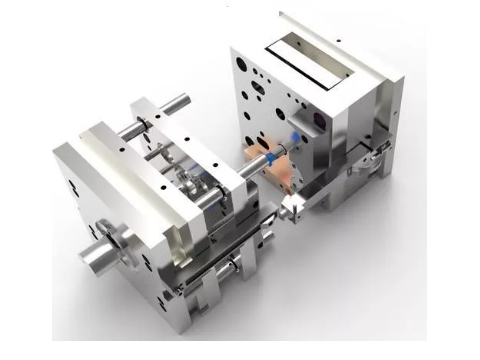
Basic material requirements for injection mould–Abrasion resistance
The mold is subject to the flow and friction of the plastic melt during the injection molding process.
So the mold material must have sufficient wear resistance.
Hardness is the main factor affecting the wear resistance of the mold, the higher the hardness, the better the wear resistance of the mold.
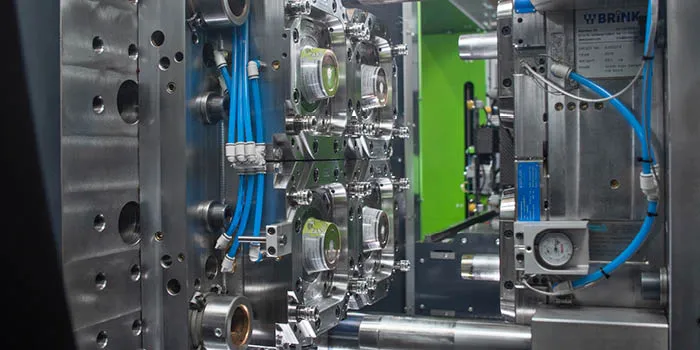
Basic material requirements for injection mould–Corrosion resistance
Plastics may contain elements such as chlorine and fluorine.
which will decompose corrosive gases such as hydrogen chloride (HCI) and hydrogen fluoride (HF) at high temperatures.
Which will have a corrosive effect on the mold surface, thereby increasing the roughness of the mold surface.
Therefore, the mold material needs to have good corrosion resistance to prevent the mold surface from being corroded.
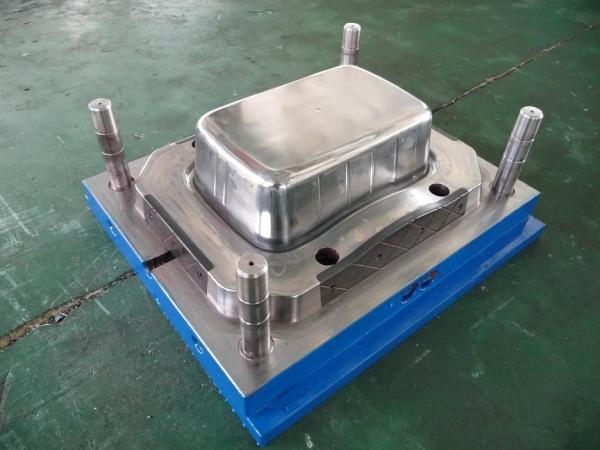
Basic material requirements for injection mould–Strength and toughness
Injection molds often need to withstand high pressures and temperatures,
so the mold material must have enough strength and toughness to prevent breakage or deformation during use.
Carbon content, grain size, and microstructure are key factors that affect the strength and toughness of mold materials.
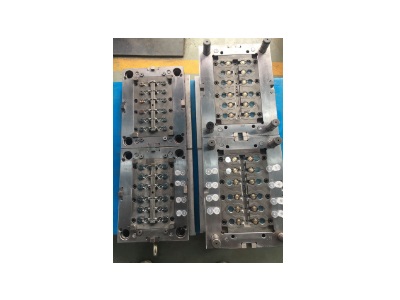
Basic material requirements for injection mould–Dimensional stability
During the injection molding process, the temperature of the mold cavity usually exceeds 300°C.
Which may lead to changes in the microstructure of the mold material, which can affect the dimensional stability of the mold.
Therefore, it is common practice to select tool steels that have undergone appropriate heat treatment, such as those that have been quenched and tempered.
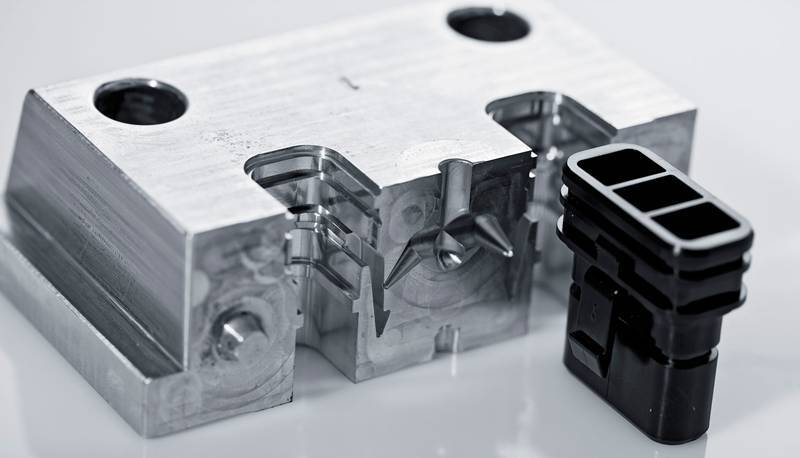
Basic material requirements for injection mould–Ease of machining
Most mold parts are made of metal, while some complex structural shapes need to be achieved by CNC machining.
Therefore, the mold material needs to be easy to process in order to shorten the production cycle and increase efficiency.
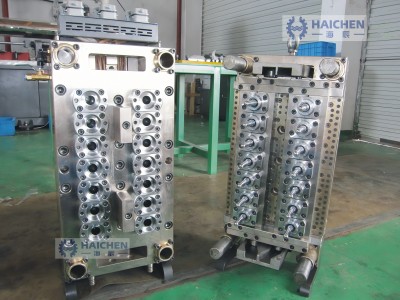
Basic material requirements for injection mould–Compressive strength and friction resistance
The mold must be able to withstand the effects of high-pressure injection and friction while maintaining shape and precision.
This requires the mold material to have sufficient compressive strength and friction resistance.
Basic material requirements for injection mould–Low coefficient of thermal expansion
The coefficient of thermal expansion of the mold material should be as low as possible to reduce deformation caused by temperature changes.
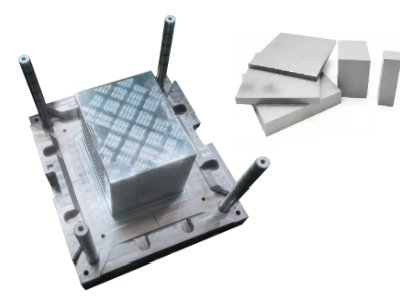
Mold materials recommended by haichen
The choice of material for an injection mold is critical to the performance, durability, and productivity of the mould.
In addition to the commonly used steels, Haichen can also provide materials with different strengths and specifications according to the customer’s requirements for molds.
- Aluminum
- P-20
- H-13 & SS420
- S-7
- Beryllium & Copper Alloys
Aluminum
Due to ease of machining, aluminum is a great fit for short-run production tooling, prototyping, or large molds.
Aluminum also has high thermal conductivity compared to steel. The downside of aluminum is poor wear resistance.
In molding applications requiring high production volumes, aluminum molds do not last or would require significant long term maintenance costs.
There are some coating available to create a higher level of surface hardness.
These coatings extend the life of aluminum tooling but do not qualify it for high volume production molding.
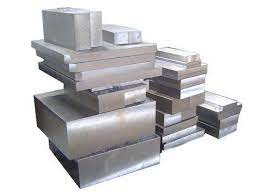
P-20
P-20 is a pre-hardened steel made for the molding industry.
It is much tougher than aluminum and can stand up to strain of higher volume production.
Since it is pre-hardened, tool builders get a balance of toughness with the simplicity of manufacturing.
With the right equipment, P-20 is easy to machine but does not require heat treatment.
Therefore, it can be machined to size and will not require any secondary machining.
P-20 is also used on larger molds where heat treating isn’t practical.
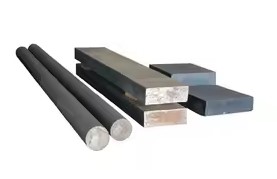
H-13 & SS420
H-13 and 420 stainless steels are used for high volume injection molding applications.
They are soft to start, so they are easy to machine but will then require heat treating.
This adds a few extra steps in the manufacturing process where the material needs to be machined twice.
Once before heat treat and once after.
Using the right equipment, machining after heat treatment is only moderately difficult but can be time-consuming and wears out cutting equipment faster.
These added manufacturing steps raise the initial investment in tooling but also yield some of the most wear-resistant molds.
S-7
Like H-13 and SS420, S-7 is rough machined, heat treated, and final machined.
S-7 is more stable during heat treatment compared to H-13 and SS420, so it can be machined closer to final size, which saves post heat treat processing.
It’s common to make inserts, lifters, and other components out of S-7.
Especially those that may be difficult to re-machine after heat treat.
Beryllium & Copper Alloys
There are a few different versions of these alloys available to mold builders.
Generally speaking, they are about as tough as P-20 in terms of resistance to wear.
However, they have 2-3 times the thermal conductivity of P-20.
These alloys strike a good balance between wear resistance and thermal conductivity but cost more than the other materials.
Because of this, it’s common to use the material selectively.
Molds may be inserted with pieces of these materials to help draw heat out in specific areas in a plastic part.