Core difference between Injection molding vs 3d printing:
- Differences in Manufacturing Principles
- Differences in application scenarios
- Differences in Cost and Efficiency
- Material Selection and Versatility
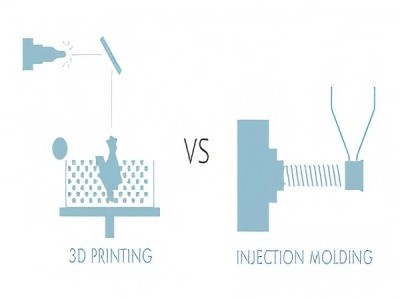
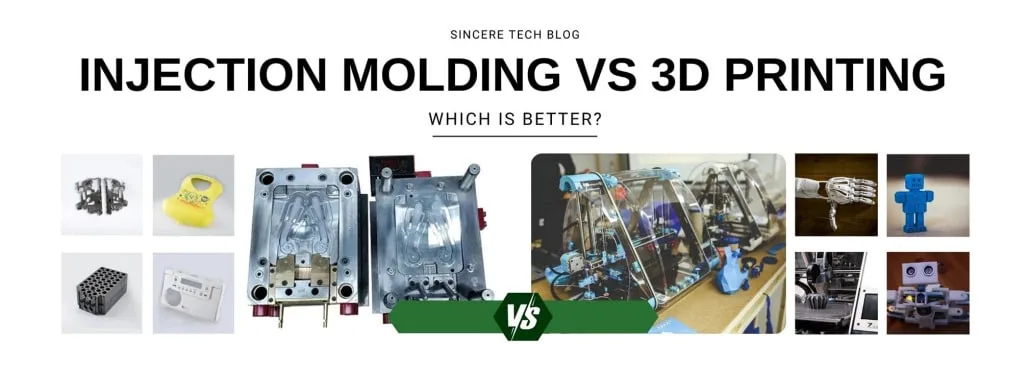
The primary difference between injection molding and 3D printing lies in their manufacturing approach.
Injection molding creates parts by injecting molten material into a mold, while 3D printing, also known as additive manufacturing, builds parts layer by layer.
This fundamental distinction leads to variations in production volume, design complexity, cost, and material properties.
3D printing
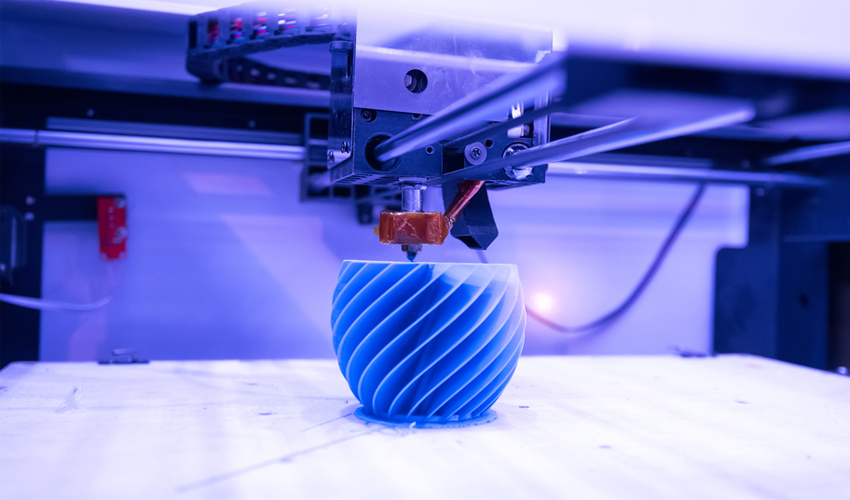
3D printing is typically used for early-stage prototypes, evolving designs, and part geometries that can’t be produced with other methods.
Because this form of additive manufacturing doesn’t require metal tooling, it’s economical for low-volume prototyping and production.
3D printing also offers shorter lead times.
However, its cycle times are longer and fewer plastic materials are available.
In addition, post-processing may be required, especially to improve surface finish, and 3D printed parts usually aren’t as strong as injection molded parts.
Injection molding
Injection molding is for later-stage prototypes, mature designs, and parts with tighter tolerances.
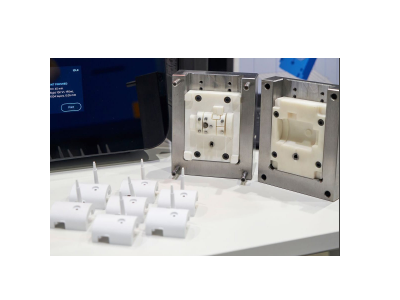
Although it requires tooling, prototype injection molding is suitable for designs that require real-world testing.
Low-volume injection molding is used for 100 to 10,000 pieces, and high-volume injection molding can produce tens of thousands of parts.
Injection molding lead times can be longer, but its cycle times are shorter.
Plus, more materials are available. Because parts can be molded with a specific surface finish, post-processing may not be necessary.
Generally, injection molded parts are stronger than 3D printed parts.
Differences in Manufacturing Principles
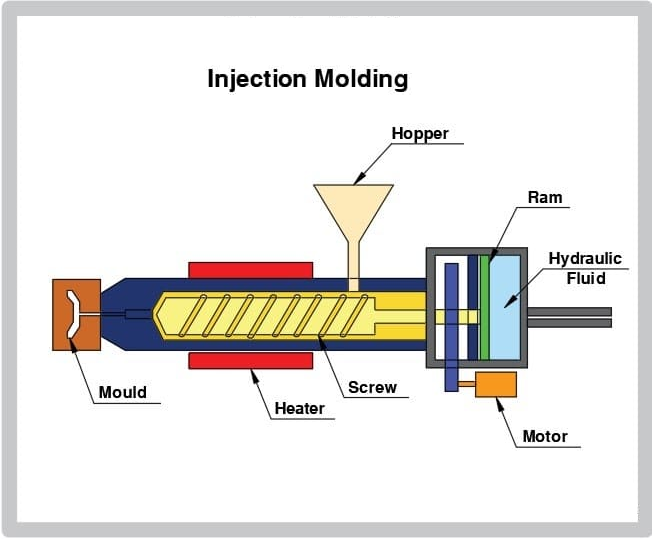
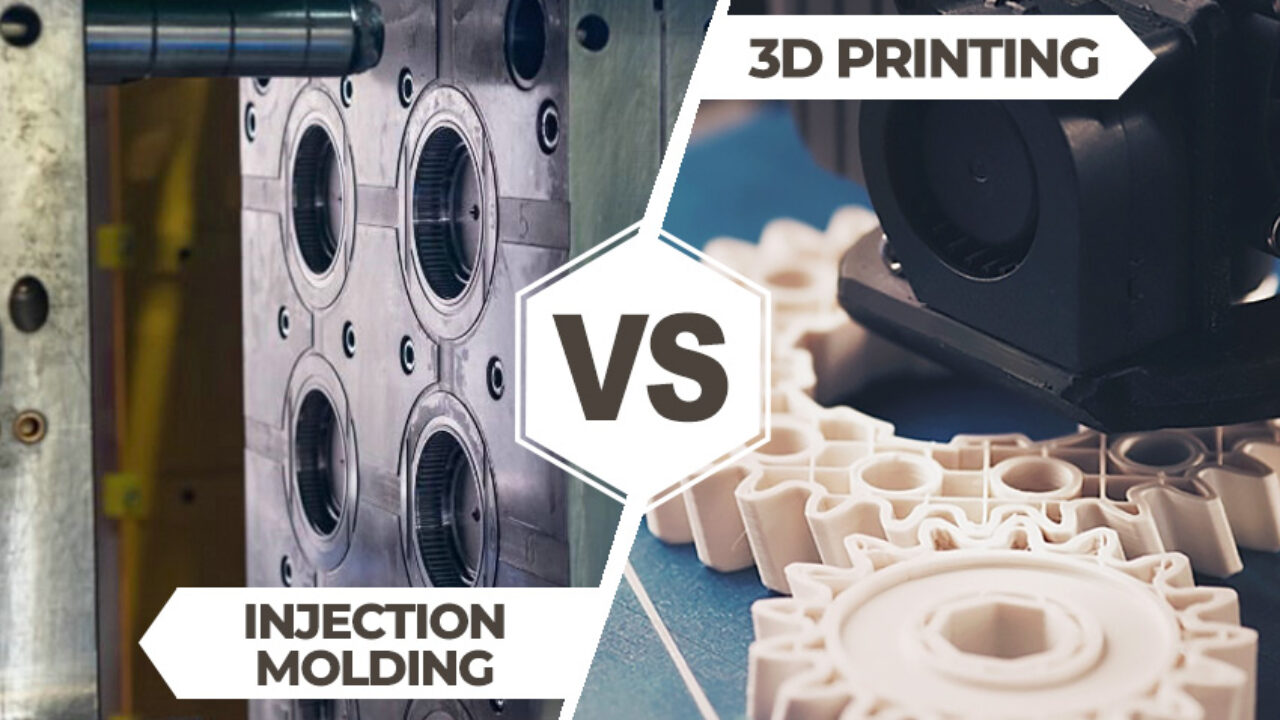
Injection Molding: Injection molding is a traditional material reduction manufacturing process that involves injecting molten plastic into a mold cavity, which is cooled and then cured to shape.
The design of the mold determines the shape of the final product, and the mold needs to be opened and closed several times during production to remove the finished product.
3D Printing: 3D printing is an additive manufacturing process that builds three-dimensional objects by stacking materials such as plastic filaments or powders layer by layer.
The entire process eliminates the need for molds and requires only a digital model for production.
Differences in application scenarios
Injection molding: suitable for mass production, especially for products that require high consistency and repeatability.
For example, automotive parts, home appliance shells, etc. Injection molding can produce parts of larger size and complexity.
But the mold design and manufacturing costs are high and suitable for long-term production.
3D Printing: Suitable for small batch production and prototyping of complex designs.
Since no molds are required, 3D printing allows for quick design adjustments and multiple iterations, making it ideal for testing and validation during the development phase of a new product.
Differences in Cost and Efficiency
Injection molding: High initial cost, including mold design and manufacturing costs.
However, the unit cost gradually decreases as the production volume increases, making it suitable for mass production.
3D Printing: Higher initial equipment and material costs, but no molds are required, making it suitable for small batch or customized production.
The flexibility of 3D printing gives it an advantage in rapid prototyping.
Material Selection and Versatility
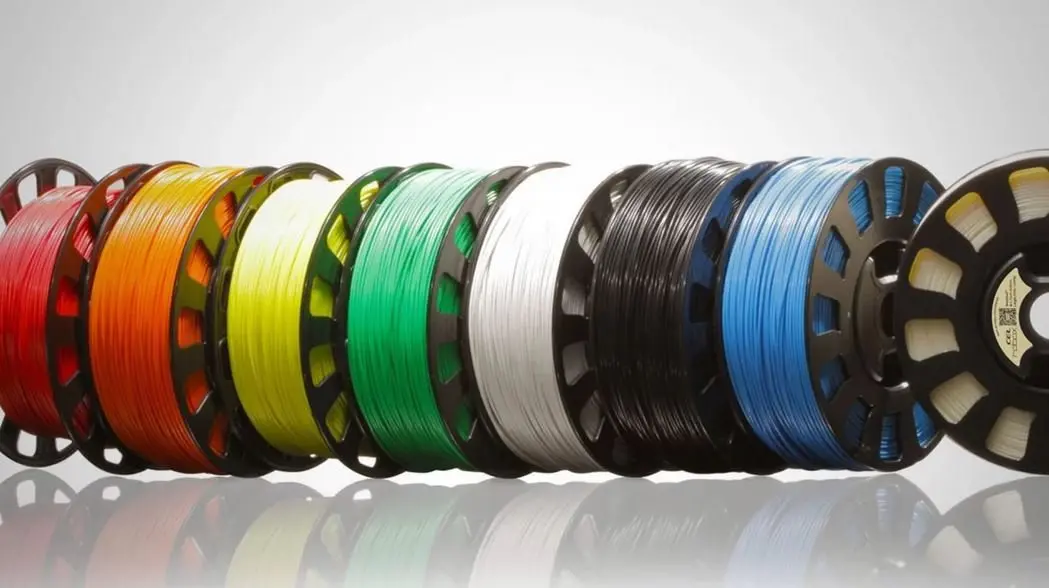
Injection molding: A wide range of materials can be used, including thermoplastics, thermosets, and rubber, for a wide range of industries.
3D printing: a relatively limited range of materials, mainly using thermoplastics and certain organic polymers.
Nevertheless, some emerging metal 3D printing technologies are gradually expanding their applications.
Production speed and scale
Injection molding: faster production speed, suitable for mass production.
However, the mold manufacturing and debugging time is long, and the initial setup cost is high.
3D printing: slower production speed, but no mold manufacturing is required, suitable for rapid prototyping and small-scale production.
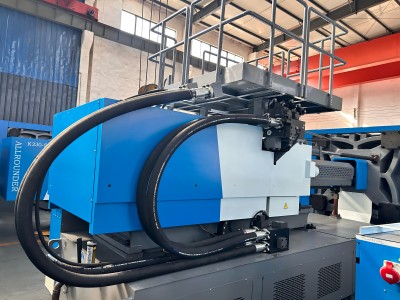
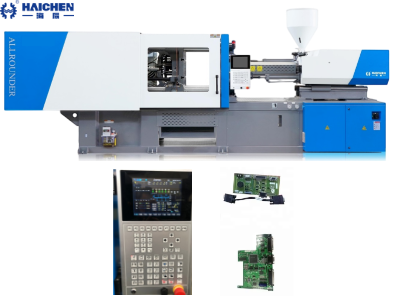
Haichen injection molding machine supplier
Haichen is a well-known Chinese manufacturer of injection molding machines, offering a wide range of machines for various industries and applications.
Key Strengths of Haichen
Energy Efficiency:
Haichen machines are known for their energy-saving features, especially in their servo and all-electric models.
Affordability:
Compared to European or Japanese brands, Haichen offers competitive pricing, making them a cost-effective choice for many businesses.
Wide Range of Models:
Haichen provides machines with clamping forces ranging from 50 tons to 6500 tons, catering to small, medium, and large-scale production needs.
Global Presence:
Haichen has a strong international presence, with distributors and service centers in many countries.
Customization:
We offer customized solutions to meet specific production requirements.
If there is any demand, welcome to consult us.