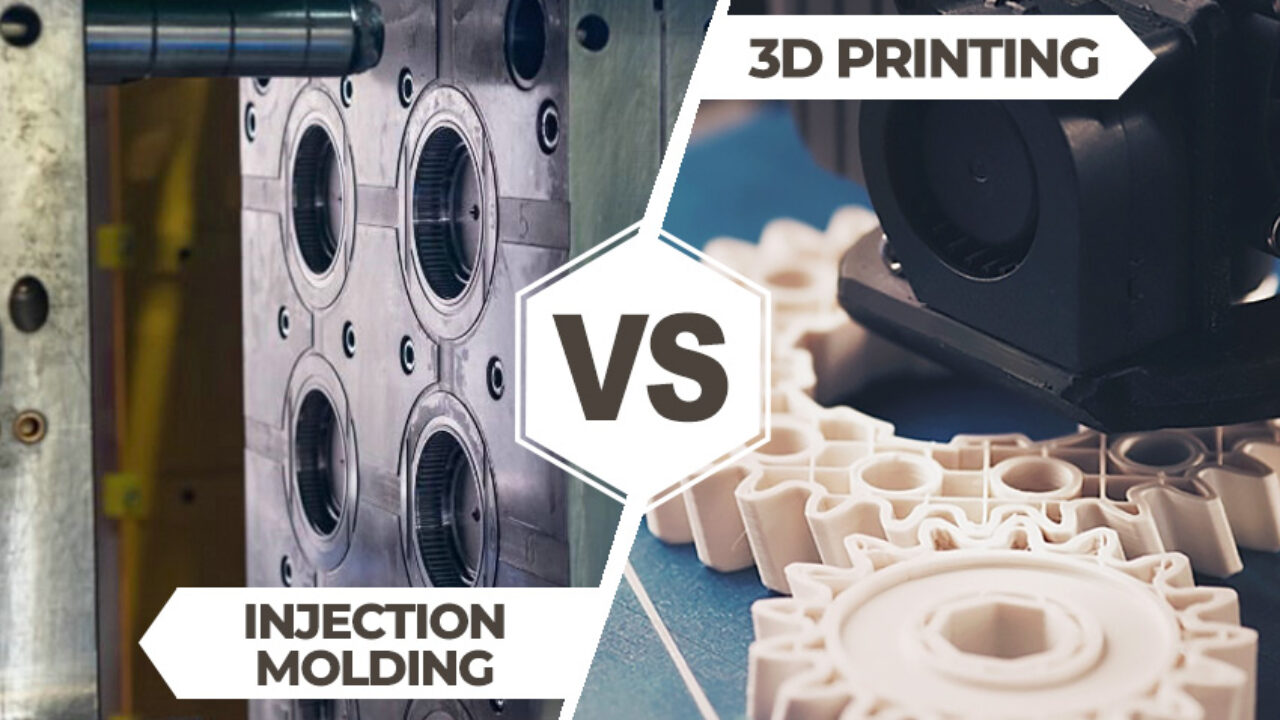
Injection molding vs 3d printing cost and efficiency includes initial investment, cost, production scale and flexibility and so on.
The cost and efficiency between Injection molding vs 3d printinganalyzed from multiple perspectives. Including initial investment, production scale, production speed, material cost, and product quality.
3D printing leads in flexibility, especially in design changes, rapid iterations, and small-batch/customized production scenarios, where its cost efficiency is significantly better than injection molding. However, injection molding remains irreplaceable in large-scale, stable production due to its economies of scale and speed advantages. The choice should be made based on a comprehensive balance of production scale, design complexity, time, and cost requirements.
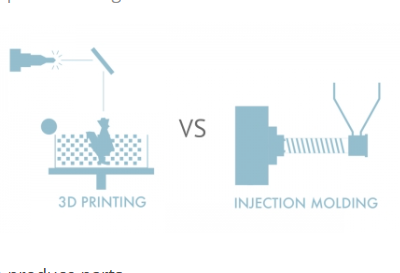
Production scale and flexibility
Small batch production and prototyping
3D printing is more cost-effective in small batch production and prototyping, suitable for design verification and small-scale trial production. It does not require mold creation and can put into production quickly.
Massive production
Injection molding has significant advantages in mass production, capable of producing thousands or even millions of products at a lower unit cost. Its molds can be reused many times, further reducing long-term production costs.
Advantages of 3D Printing
- Small-Volume Production (<10,000 pieces): 3D printing requires no molds, resulting in extremely low initial costs (materials, energy, and labor), and the first part can be completed in a matter of hours, making it suitable for prototyping and small-volume orders.
- Constant Cost: The cost per part does not decrease with increasing production volume, resulting in no economies of scale.
- Very Low-Volume Production (1-10 pieces): The cost is significantly lower than injection molding (which requires high mold costs).
Advantages of Injection Molding
- Large-Volume Production (>10,000 pieces): After mold costs (thousands to millions of dollars) are amortized, the cost per part drops dramatically, leading to significant economies of scale.
- Ultra-High-Volume Production (>100,000 pieces): Cost efficiency far surpasses 3D printing.
- Production Efficiency: Once the mold is complete, producing a single part takes only seconds, making it suitable for rapid mass production.
Initial investment
The initial investment of injection molding is high, mainly including mold design and manufacturing costs. The mold cost can be as high as tens of thousands of dollars, especially for complex molds. In contrast, the initial investment of 3D printing is lower, and the price of a 3D printer is usually between hundreds and thousands of dollars.
3D Printing initial investment
- The initial equipment cost is significantly lower than injection molding. 3D printer prices range from hundreds of dollars to tens of thousands of dollars, depending on the size and functionality of the machine.
- No mold costs are required, eliminating the high costs of mold design, manufacturing, and testing (injection molds typically cost thousands to hundreds of thousands of dollars).
- It is suitable for small-batch production or prototyping, with low initial investment risk.
Injection Molding initial investment
- The initial investment is quite high, primarily due to mold costs. CNC machining, design, and testing of the mold material (steel or aluminum) can cost thousands to hundreds of thousands of dollars.
- Mold manufacturing cycles are long (typically several weeks), and design changes require re-molding, adding additional costs.
- The initial investment can only be amortized through economies of scale when production volumes are high enough.
Unit cost
As the scale of production increases, the unit cost of injection molding gradually decreases, which is suitable for large-scale production. The unit cost of 3D printing is lower in small batch production, but as the production quantity increases, its cost will gradually rise.
3D Printing unit cost
- The cost per part is relatively stable, independent of production volume (approximately flat). Material costs are high and cannot be significantly reduced through bulk purchasing.
- Small-batch production (typically <500–10,000 pieces) offers greater cost advantages. For example, for a production of 500 pieces, the total cost of 3D printing is lower than that of injection molding (due to the absence of mold costs).
- Automation technology and industrial-grade printers are gradually reducing the cost of large-scale 3D printing, but they still cannot completely replace injection molding.
Injection Molding unit cost
The cost per piece decreases dramatically with increasing production volume (negative logarithmic curve). After mold costs are amortized, the cost per piece is extremely low in large-scale production.
Significant economies of scale
- Cost advantages begin to emerge with production volumes exceeding 500 pieces.
- Price/performance improves significantly with production volumes exceeding 10,000 pieces, and the advantage becomes even greater with production volumes exceeding 100,000 pieces.
- Low material costs (bulk purchasing is possible) and low scrap rates improve overall efficiency.
Production speed and efficiency
Production speed
Injection molding has a faster production speed and is suitable for efficient industrial production. However, 3D printing has a slower production speed and is less efficient, especially at high production volumes.
3D printing offers significant advantages
- Quick startup: No mold manufacturing required, going from design file to first finished product takes just a few hours, making it ideal for rapid prototyping or urgent orders.
- High flexibility: Design changes can be made by simply updating the file and reprinting, without additional cost or time.
- Low cost: No mold fees, fixed per-piece cost (material + energy + labor), making it suitable for customized or small-batch orders.
Disadvantages of injection molding
Time-consuming mold manufacturing: Mold development can take weeks to months, increasing upfront time and costs.
High per-piece cost: High mold costs for small batches, making it less cost-effective.
Injection molding offers overwhelming efficiency
- Extremely fast production speeds: After the mold is complete, single-piece production takes only seconds to tens of seconds, and daily output can reach thousands to millions of pieces.
- Significant economies of scale: Unit costs decrease dramatically as production increases (mold costs are shared and material utilization is high).
- High consistency: Automated production ensures consistent quality and low scrap rates.
Disadvantages of 3D printing
- Slow production speeds: Printing a single piece takes hours, making it difficult to meet high-volume demands.
- No economies of scale: Unit costs are fixed, and can even increase due to equipment ownership and post-processing costs.
Flexibility
3D printing is more flexible in terms of design changes and complex shapes, and the design can be easily adjusted during production. Injection molding requires redesigning the mold, which has a higher adjustment cost.
Fast Iteration and Modification
- 3D printing allows design changes to be implemented directly by updating the digital file, eliminating the need for additional tooling or molds, significantly reducing adjustment cycles.
- For example, when modifying a prototype or small-batch product, 3D printing can respond immediately, whereas injection molding requires re-molding (which is costly and time-consuming).
Support for Complex Geometries
- 3D printing can create complex structures (such as internal cavities and irregularly shaped surfaces) that are difficult to achieve with traditional processes, with virtually no additional cost associated with design complexity.
- Injection molding is limited by the physical structure of the mold, resulting in less design freedom.
Material cost and product quality
Material cost
Injection molding usually uses a single material, and the material cost is relatively fixed. 3D printing can use multiple materials and even achieve gradual changes in material properties in a single part.
Product quality
Parts produced by injection molding usually have higher dimensional accuracy and consistency, suitable for applications that require tight tolerances. 3D printed parts may have certain dimensional deviations, but they can be improved through post-processing.
Therefore, when choosing a manufacturing process, you should weigh it according to your specific needs (such as production scale, design complexity, cost budget, etc.). For large-scale, high-efficiency production, injection molding is a more economical choice; while for small batches, customization or prototyping, 3D printing is more advantageous.
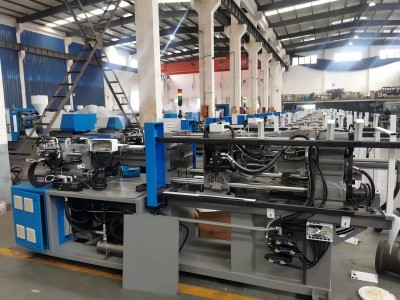
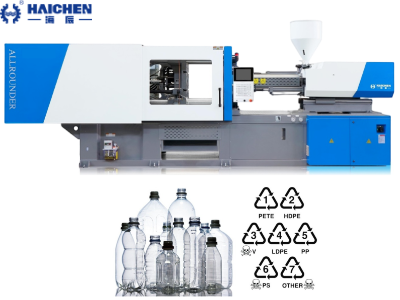
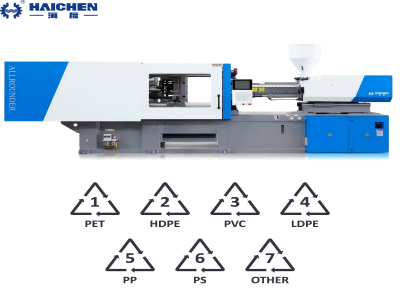
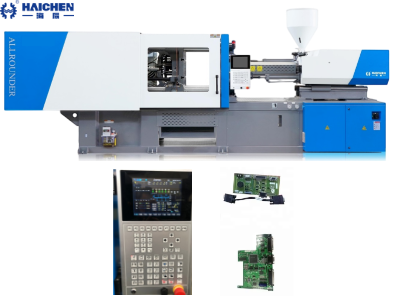
Haichen injection molding machine
Haichen is one Chinese injection molding machine manufacturer. Our servo energy saving injection molding machines quality under CE safety standards certificated.
Haichen have rich experience of producing plastic products, with successfully cases for your reference. We can supply complete plastic production line as per customer’s specific demand.
Consider the above you can choose a suitable plastic injection molding machine and mold to ensure product’s quality and production efficiency.