Melting points of plastics, the melting point of plastics is higher when the crystallinity is high.
And additives such as plasticizers will lower the melting point.
Besides,melting points of plastics vary significantly.
Which is mainly affected by their molecular structure, crystallinity, molecular weight and additives.
The melting point of plastics ranges from about 100°C for general-purpose plastics to more than 300°C for special plastics, with a wide span.
This difference is due to the complexity of the molecular structure, the diversity of crystallinity, and the regulatory role of additives.
Factors influencing the change of melting point of plastics
Molecular structure and crystallinity
Chain regularity
The more regular the molecular chain arrangement, the higher the crystallinity, the higher the melting points of plastics.
For example, HDPE has less branching and higher crystallinity (85-90%).
And a melting point (130-135°C) is significantly higher than LDPE with high branching (105-115°C).
Polar groups and hydrogen bonds
Plastics with strong intermolecular forces have a higher melting point.
For example, nylon (PA) forms hydrogen bonds due to amide groups in the molecular chain and has a melting point of up to 260°C.
Molecular weight and chain length
The larger the molecular weight, the tighter the entanglement of the molecular chain and the higher the melting point.
For example, ultra-high molecular weight polyethylene (UHMWPE) has a melting point about 10°C higher than that of regular HDPE.
Additives and copolymerization plasticizers
Reduce intermolecular forces and significantly reduce melting point.
For example, when a plasticizer is added to PVC.
The melting point is reduced from 160-180°C to about 75°C in pure resin, which is easy to process into flexible products.
Copolymers
The introduction of other monomers can destroy the crystalline structure and reduce the melting point.
For example, ABS (acrylonitrile-butadiene-styrene copolymer) has a lower melting point (about 120 °C) than homopolymer PS (240 °C).
Processing conditions and external pressure
Pressure
Under high pressure, the molecular chains are more closely aligned, and the melting point is higher.
For example, high pressure during injection molding can increase the melting point of PP by 5-10°C.
Heating rate
Rapid heating may lead to an increase in the apparent melting point due to insufficient relaxation of the molecular chains.
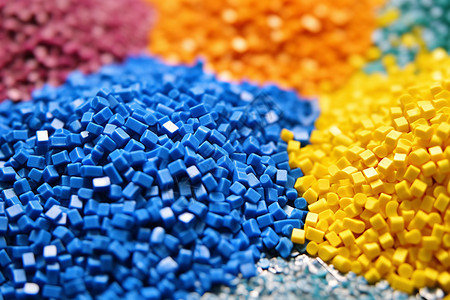
Plastic Characteristics
Analysis General plastics (such as PE, PP, PVC) generally have a low melting point (100-200 °C).
Which is suitable for low-cost and high-volume production.
For example, LDPE is suitable for making plastic wrap due to its high molecular chain branching and low crystallinity, with a melting point of only 105-115 °C.
Engineering plastics (e.g. PA, PC, PEEK) have a significantly higher melting point (200-330°C) and are more heat-resistant.
For example, PEEK can replace metals in high-temperature environments.
Due to its rigid aromatic ring and high melting point of 334°C due to its rigid aromatic rings in the molecular chain.
Specialty plastics, such as PTFE, have an extremely high melting point (330°C).
Which is related to their perfluorinated structure and strong intermolecular forces, making them suitable for extreme conditions.
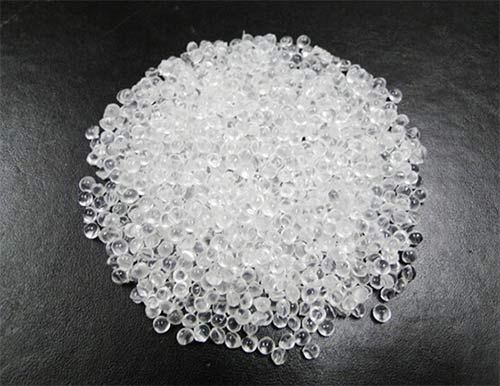
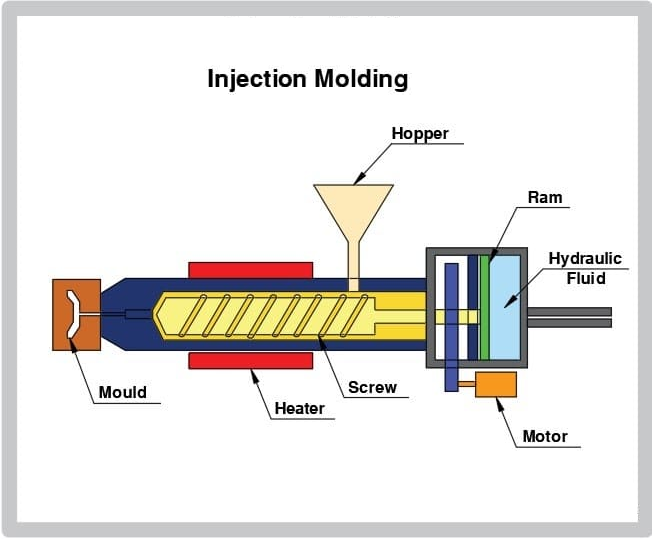
The decisive role of melting points of plastics in the selection and design of injection molding machines
Screw Design and Parameter Optimization
L/D ratio and compression ratio (ε)
High melting point plastics (such as PC, PA) require large L/D ratio screws (L/D=20-22) to enhance the plasticizing effect.
And low melting point materials (such as PS) can use shorter screws.
Selection of compression ratio
High crystalline materials such as PA require high compression ratio (ε=2.5-3.5).
While PET is selected for low viscosity ε=1.8-2.2.
Special structure screws
PC processing requires a barrier type glue head to prevent overheating and decomposition.
And PVC needs to be plated with hard chrome screws to resist corrosion.
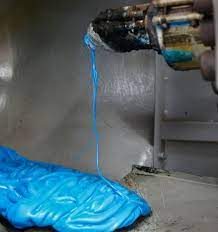
Temperature control system configuration
Barrel temperature
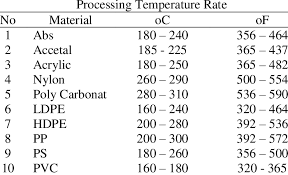
Usually set to 10-30 °C above the melting point (such as ABS melting point 160-175 °C, actual processing temperature 275 °C).
Mold temperature
High melting point materials (e.g. PA66) require a higher mold temperature (80-120°C) to reduce shrinkage.
While transparent materials such as PMMA need low temperatures (40-60°C) to prevent atomization.
Matching the clamping force to the injection volume
Due to the high viscosity of plastics with high melting points (such as PC).
Higher clamping force (calculated by projected area × material pressure) and precise injection volume control.
Such as PET needs to be filled quickly to avoid hydrolysis.
Future development trend
High melting point degradable plastics
Such as polylactic acid (PLA) modified to improve heat resistance (melting point 170-180 °C), used in heat-resistant packaging.
Nanocomposites
Graphene or carbon nanotubes are added to improve the high temperature resistance of plastics (e.g., PA nanofillers increase the melting point by 10-20°C).
Bio-based high-temperature plastics
Extracting monomers from biomass to synthesize materials with high melting points e.g., bio-based PEF instead of PET.
Which has a similar melting point but is more environmentally friendly.
Principles and Optimization Strategies for Setting Injection Molding Temperature Parameters
Segmented heating of the barrel
The segmented heating of the barrel in an injection molding machine is usually divided into 3 to 5 sections.
The temperature at the front end is slightly lower than that at the rear end to prevent the melt from overheating and degrading.
For instance, the typical segments of ABS are: 200°C at the rear end, 220°C in the middle section, and 230°C at the front end.
Nozzle and mold matching
The nozzle temperature should be slightly lower than the end of the barrel (about 5-10°C lower) to prevent sagging.
The mold temperature is adjusted according to the fluidity of the material.
For example, high-viscosity POM requires a mold temperature of 80-120°C to improve filling.
PA6 processing
Due to its strong hygroscopicity, it needs to be pre-dried to a moisture content of less than 0.1%.
The barrel temperature should be set at 230-260°C, and the mold temperature at 80-100°C to reduce crystallization defects.
Thin-walled products
The injection speed and material temperature need to be increased (for example, PC should be raised to 300-320°C) to overcome flow resistance.